
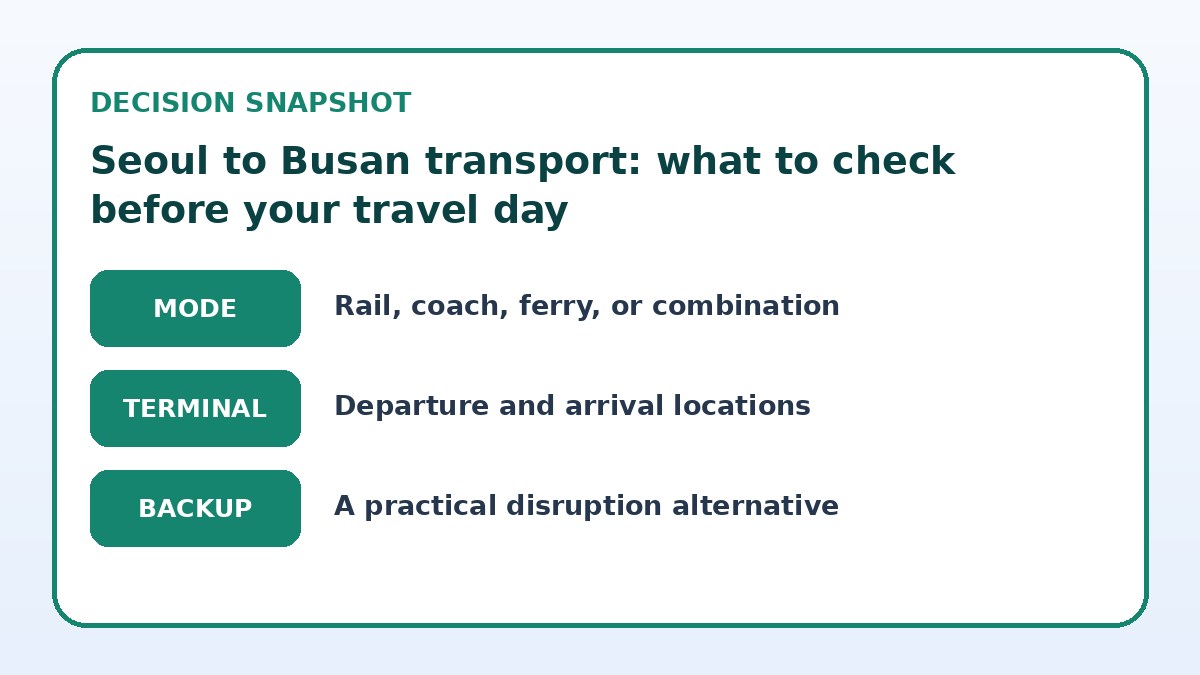
If you’re traveling Seoul to Busan for the first time, the single most useful rule is this: decide which transport mode you’ll use, then confirm three things—ticket, luggage plan, and how you’ll get to/from the stations or terminals—no later than the night before. Seoul–Busan is served by multiple credible options; picking one guides every other choice you make on the travel day. Once you’ve chosen (high-speed train, slower intercity rail, bus, or a flight), compare door-to-door travel time, where the departure and arrival points are in each city, luggage rules, and how flexible your booking needs to be. This article walks you through what to check, how to trade convenience for cost or comfort, and a simple checklist to finish the night-before preparations so your day of travel is predictable and low-stress.
See current options before you compare the details
Availability and final conditions change. Open Trip.com now or keep reading for the practical comparison.
Pick the travel mode that fits your priorities
Start by ranking what matters most: speed, location convenience, cost, or ease with luggage. High-speed rail typically cuts journey time and leaves you in central Busan, which is convenient if you want to maximize sightseeing. Intercity or slower trains may be cheaper and sometimes stop at stations that are closer to specific neighborhoods. Long-distance buses often leave from major Seoul terminals and arrive at several Busan terminals; they can be useful if your accommodation aligns with a bus terminal. Flights are an option but involve extra time for airport transfers and security, and you should compare door-to-door time rather than airborne time alone.
Consider how much you’ll be carrying and whether you want a guaranteed seat. Trains generally offer more space and simpler luggage handling than buses or budget flights, with some classes providing dedicated luggage racks or storage areas. If you travel light, buses and low-cost flights are more competitive. If you need flexibility, check which ticket types allow changes or refunds without heavy penalties. Your choice of transport sets the timetable for arrival, the kind of transfers you’ll need, and what to pack for comfort during the trip.
Verify tickets, boarding rules, and where to be
Once you’ve chosen the transport, verify your booking details on the provider’s final booking page—departure station/terminal name, platform or gate procedures, ticket collection instructions, and whether an e-ticket or physical paper ticket is required. For trains and buses in South Korea, stations may have multiple exits and transfer lines, so confirm which exit is nearest your onward transport or accommodation. If you booked a seat-assigned service, note your car or coach number and seat; if it’s open seating, plan to arrive earlier to secure preferred seats. Also double-check ID requirements and whether you need to show a passport when boarding.
Plan your route to the departure point at least twice: once from where you’ll sleep the night before, and once from where you’ll be on the morning of travel. Identify alternate routes in case of metro delays or traffic. Check the station layout if available—major stations often have separate areas for long-distance and local services. If you need to collect physical tickets, factor in a ticket-collection window or kiosk time. Finally, set alarms that allow cushion time: arriving 30–60 minutes before departure is prudent for first-time visitors who might navigate unfamiliar stations.
| Approach | Best for | Tradeoff to check |
|---|---|---|
| High-speed train (KTX) | Travelers who prioritize shortest travel time and central station arrival | Higher ticket rigidity and sometimes higher cost compared with slower options |
| Intercity or slower trains | Those wanting a balance of price and comfort with simpler luggage handling | Longer journey times and fewer departures than high-speed services |
| Long-distance bus | Budget-minded travelers whose destinations align with bus terminal locations | Potentially longer door-to-door time and less onboard space for luggage |
| Flight | Passengers connecting from far outside Seoul or seeking airline loyalty benefits | Extra transfer time to airports and more steps for check-in and security |
Ready to check the option that fits your plan?
Use your exact dates and traveler details so the provider page can show the current total and conditions.
Pack and prepare for comfort and contingencies
Create two bags: a main checked or stored luggage and a small day bag with essentials you’ll keep with you during transit. Include chargers, portable battery, travel documents, a printed or screenshot copy of reservations, medication, a light layer, and a refillable water bottle. For longer journeys, bring snacks and items for sleep or entertainment. If your transport has strict luggage size limits, measure and weigh bags the night before to avoid surprises at check-in or boarding. Also check whether your chosen option stores luggage below the cabin, in overhead racks, or in a designated car—this affects how quickly you can access items during stops.
Think about contingency items: a small umbrella, a basic first-aid kit, and contact numbers for your accommodation. If you’ll arrive late in Busan, confirm that your hotel or host accepts late check-in and have directions or a map saved offline. For foreign card usage, ensure you have some Korean won for small purchases or taxis; digital payments are common but a backup of cash protects against unexpected problems. Lastly, leave an itinerary and arrival window with someone you trust so someone knows when you’re expected to arrive.
Before you book
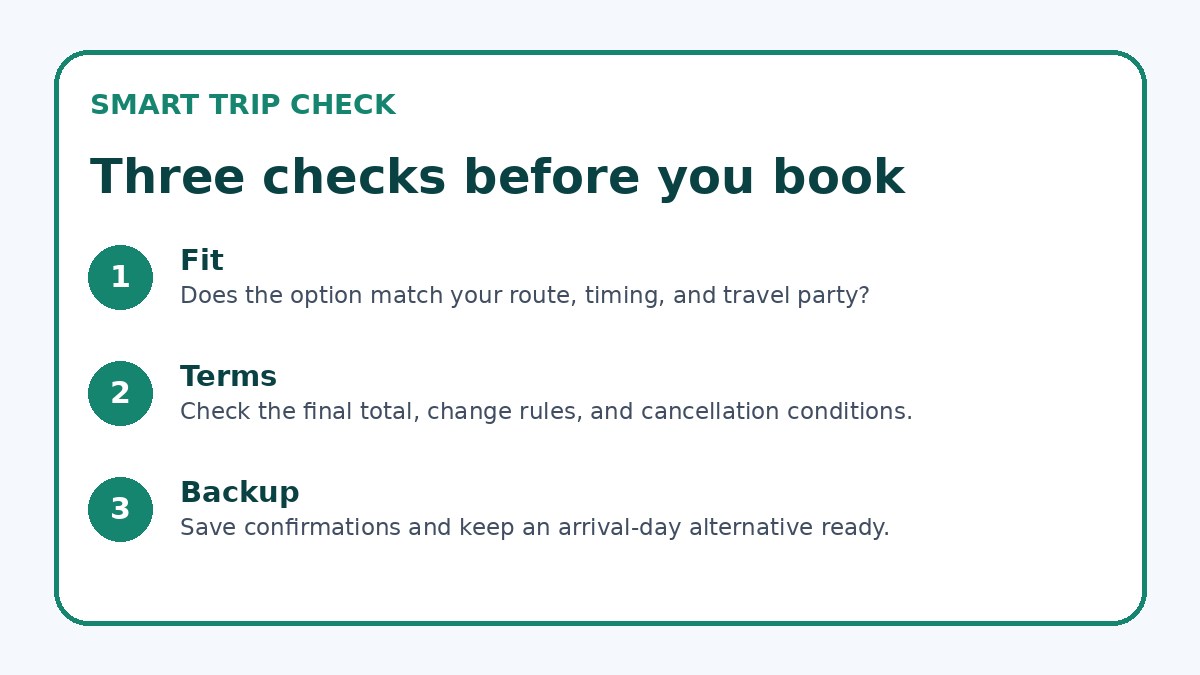
- Confirm your exact departure station or terminal name and write down the exit number nearest your onward transport.
- Print or screenshot your booking confirmation, train/bus number, and seat assignment or reference code for offline access.
- Measure and weigh your luggage to match the carrier’s stated size and storage rules; pack a compact day bag with essentials.
- Top up or buy a transit card for Seoul and Busan, and note how you’ll pay for the final taxi or rideshare at both ends.
- Save offline maps and the arrival address in Korean characters and set meeting points if someone is picking you up.
- Set alarms to leave with at least a 30–60 minute cushion, and inform your accommodation of any late arrival plans.
Manage last-mile logistics and arrival in Busan
Before you leave Seoul, research how to reach your Busan accommodation from the arrival point. Major stations usually connect to metros, buses, and taxis, but the most convenient option depends on your destination’s neighborhood and luggage. Identify the nearest metro line and exit number to your hotel, or confirm the taxi stand location and a typical travel time range so you can estimate fares. Save offline directions and station names in Korean characters to show drivers or use maps without roaming data. If you plan to use a public transit card, top it up before you arrive or know where to buy one.
On arrival, follow signs for exits and transfers and collect any stored luggage promptly. If traveling at night, choose lit taxi stands or reputable app-based taxi services; verify the driver knows your hotel name in Korean or show the address. If you planned a direct transfer or pickup, confirm the meeting point and keep your phone on for messages. Once you’re en route to your accommodation, take a moment to double-check tomorrow’s plans—local transport schedules, opening hours, or any reservations you’ll need—while you still have luggage and time to adjust plans if necessary.
Frequently asked questions
How should I compare door-to-door time rather than advertised travel time?
Advertised travel time often shows only the moving portion (e.g., time on the train or in the air). To compare door-to-door time, add the time it takes to get to the departure point, minimum check-in or boarding buffer, and time from arrival point to your final destination. Include extra padding for first-time navigation, luggage handling, and any required security checks. Doing this reveals which option is truly faster for your specific start and end locations, especially when comparing airport flights to centrally based trains.
What luggage rules matter most when choosing Seoul to Busan transport?
The key luggage considerations are allowed dimensions and whether luggage will be supervised or stored out of sight. Some trains and buses have overhead racks and designated luggage areas; others expect you to keep smaller items in your seat area. Flights enforce stricter checked and carry-on limits and may charge for extras. If you have large suitcases, prioritize options that explicitly describe onboard or station storage procedures, and verify the provider’s final booking page for exact size and weight limits before you travel.
If my plans change, how do I choose a flexible ticket?
Ticket flexibility varies by provider and fare class. Look for fare types that permit changes or cancellations and read the fine print on change fees and the deadline to modify bookings. Some advance-purchase fares are non-changeable or carry steep penalties, while more flexible fares cost more but allow same-day or later changes. When flexibility is important, compare the total cost after potential change fees, and confirm the provider’s official change and refund policy on their booking page before purchasing.
Final planning note
Preparing well for your Seoul to Busan travel day reduces stress and keeps options open. Start by choosing the transport type that matches your priorities—speed, cost, convenience, or luggage handling—and then verify the practical details: exact departure point, ticketing and boarding rules, and last-mile options at both ends. Pack deliberately with a small, accessible day bag and save key directions offline in Korean. Use the checklist the night before: confirm logistics, measure luggage, and set alarms with a cushion. With those steps done, your travel day becomes predictable and lets you enjoy the journey and arrive ready to explore Busan.
Continue planning
Check current options and final conditions
Use the provider page to confirm live availability, the final total, cancellation terms, and every condition that matters to your trip.
This evergreen planning guide was created with AI-assisted drafting and a structured quality review. It does not display live prices, schedules, availability, visa guidance, or provider rankings. Verify current details before booking. Some links are affiliate links; we may earn a commission at no additional cost to you.