
For couples deciding how to travel between San Francisco and Vancouver, the practical decision usually comes down to one question: how much schedule flexibility are you willing to trade for convenience? If you value predictable arrival and a short door-to-door time, choose a simpler itinerary and prioritize direct flights or single-connection options. If you want lower fares, more departure choices, or better times for sightseeing, accept the possibility of a longer journey with connections or off-peak departures. This guide helps couples weigh those tradeoffs, compare the visible costs and hidden hassles, and choose the itinerary that fits your relationship rhythm—whether you’re after a relaxed weekend away or a flexible multi-day trip. Where provider specifics matter, the guide tells you exactly what to verify on the airline or booking page before you commit.
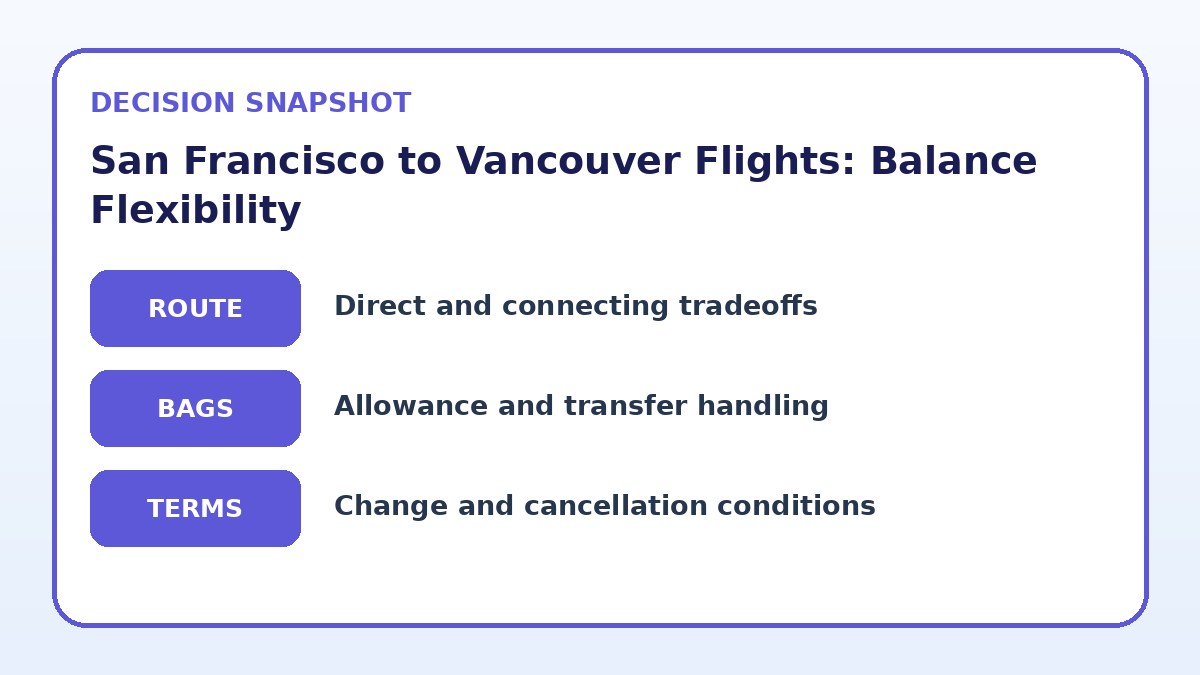
See current options before you compare the details
Availability and final conditions change. Open Trip.com now or keep reading for the practical comparison.
Why couples should define priorities before searching
Travel decisions that seem small at the planning stage—adding a connection to save money, choosing an early red-eye, or accepting a no-change fare—have different impacts when you’re traveling as a couple. One partner might value minimizing transit time and stress, while the other might prioritize lower cost or a later return. Agreeing on the core priorities first keeps the booking process straightforward and reduces second-guessing. Think through the trip’s tone: are you treating it as a relaxing getaway, a busy sightseeing run, or a flexible escape where dates could shift?
Once you’ve listed priorities, you can use them as filters: limit results to one connection if you want convenience, or widen date ranges and connections if you prize savings and options. Also consider health, mobility, and luggage needs—extra connections multiply the chance of delays, missed connections, or lost bags, which affects couples differently depending on how much you rely on each other during disruptions. That clarity helps you compare like-for-like itineraries instead of chasing the lowest headline fare that hides inconvenient tradeoffs.
Comparing direct, single-connection, and multi-stop itineraries
Direct flights (if available on the route) typically minimize time in transit and reduce stress: fewer takeoffs and landings, no re-clearing, and no rushed layovers. For couples who prefer to arrive fresh and start their plans immediately—check-in to your hotel, head to a restaurant, or catch an evening event—minimizing connections is a practical convenience. Direct options often have limited departure windows, so you may pay a convenience premium or have to accept times that don’t match your preferred schedule.
Single-connection itineraries expand departure choices and sometimes lower fares, but they require you to evaluate connection quality: airport layout, minimum connection times, and likelihood of tight turns. Multi-stop or mixed-carrier routings can offer the most flexibility and price variety, yet they introduce greater risk for missed connections and longer total travel time. When comparing these options, calculate door-to-door time, total layover duration, and the convenience of the connection airport rather than comparing only flight durations.
| Approach | Best for | Tradeoff to check |
|---|---|---|
| Prioritize convenience (direct or single-connection, fixed times) | Couples wanting short door-to-door time and low in-transit stress | Fewer departure choices and typically higher headline fares |
| Prioritize flexibility (wider dates, multi-carrier, changeable fares) | Couples who may shift plans or want more options to align schedules | Longer travel times and increased chance of connection hassles |
| Mix approach (convenient outbound, flexible return) | Couples who prefer a predictable arrival but flexible departure | Slightly higher complexity in comparing mixed fare rules |
| Value-focused but cautious (low fare plus paid protections) | Couples hunting savings but wanting cushion against changes | Extra upfront add-ons like seat or baggage fees can offset savings |
Ready to check the option that fits your plan?
Use your exact dates and traveler details so the provider page can show the current total and conditions.
How to treat fare rules, changeability, and seat choices
Fare rules determine how flexible your booking truly is. A low-priced fare with strict change penalties can cost more if your plans change, while a higher fare that allows free date changes or refundable tickets may reduce overall stress and expense in the long run. For couples, the ability to swap flights, add a stop, or adjust return dates without steep fees can be worth the premium—especially if one partner’s work or health requires adaptable plans. Always open the fare rules on the airline’s booking page to confirm change fees, refundability, and whether seat assignments or bag fees are included.
Seat selection matters more for comfort and togetherness than many travelers realize. Choose seats that keep you together, consider bulkhead or exit-row options for extra legroom if one partner needs it, and verify whether paid seat assignments are available at booking or only at check-in. If you’re comparing multiple fare types, add the total cost of seat selection, checked baggage, and change fees to the headline fare before deciding—those extras can turn a seemingly cheap option into a less convenient or more expensive choice when you factor in the needs of two people.
Before you book
- Agree with your partner on the trip’s priority: convenience (time) or flexibility (options) before searching.
- Use flexible date searches to compare nearby travel days and evaluate how much time you save or lose.
- Open and read the airline’s fare rules for change, cancellation, and refund policies on the booking page.
- Add expected seat selection and baggage fees for two people to the base fare before comparing final costs.
- If the itinerary uses multiple tickets or carriers, confirm whether you must recheck luggage or clear customs between legs.
- Reserve seats together and choose layovers that provide comfortable connection margins, not just the shortest total time.
Practical steps to balance flexibility and convenience when booking
Start with a tentative date range and run searches for direct and one-stop itineraries, comparing total travel time and the number of reasonable departure/return options. Use flexible date search tools to see if shifting a day or two shortens layovers or unlocks better times that match your shared plans. If you value convenience, filter for the shortest total trip time and keep layovers long enough to avoid stress but short enough to stay efficient; if flexibility is your priority, expand the date window and examine refundable or changeable fares even if they cost more upfront.
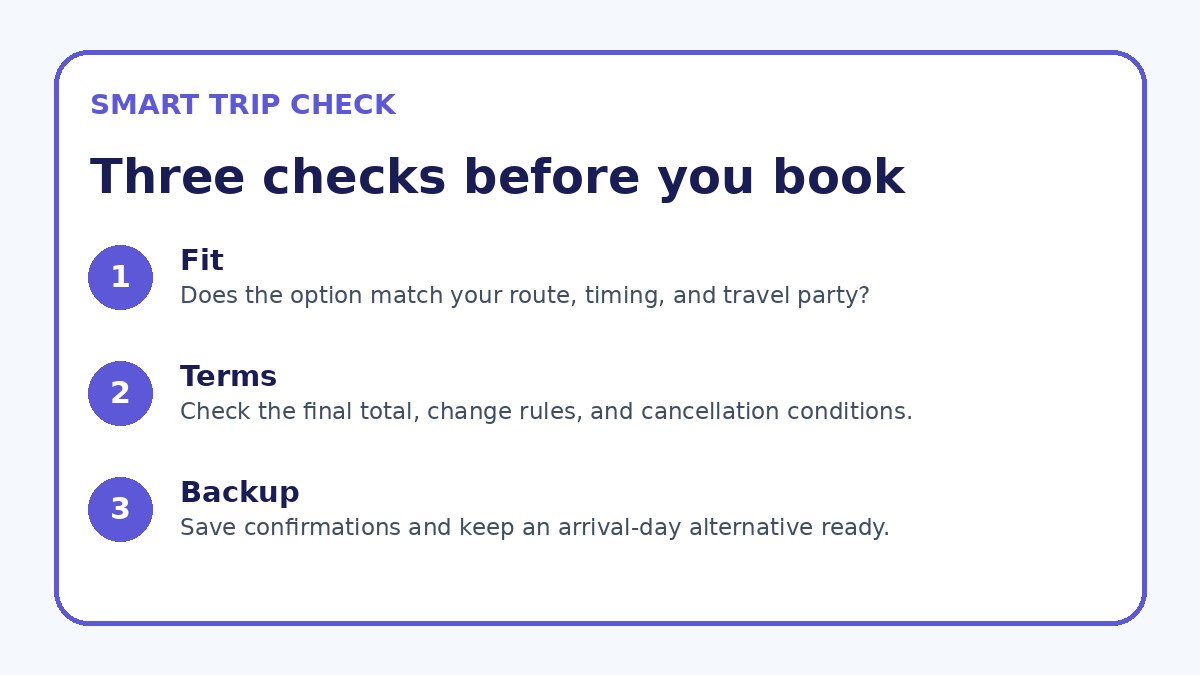
Before you commit, verify three things on the airline’s final booking page: the exact change and cancellation policies, baggage allowance and fees, and the seat assignment rules. If your itinerary involves different carriers on separate tickets, check whether you need to recheck luggage or pass through immigration and security between legs. Consider travel insurance or a fare option that covers interruptions if your schedule is uncertain—especially important for couples juggling different personal or work commitments.
Frequently asked questions
Are direct flights always the best choice for couples?
Direct flights are often the most convenient because they reduce transit time and connection stress, which matters when you want to start your trip together smoothly. However, direct service may be limited by schedules and could cost more for the specific times you prefer. If your trip dates are fixed and you prioritize arriving early or late in the day, direct flights usually win. If you’re more price-sensitive or need flexible departure windows, a single-connection option may offer a better balance—so compare total travel time and fare conditions rather than assuming direct is automatically best.
How can we keep fares flexible without paying too much more?
Look for fare classes that allow free or low-cost date changes and compare them with the cheapest non-changeable fares plus the potential change fees. Sometimes selecting a slightly higher fare with a generous change policy is cheaper overall if plans might shift. Another approach is to buy the low fare and add a change protection or travel insurance that covers fare differences; be sure to read exclusions. Always verify change penalties, refund rules, and whether the airline charges a fare difference on the booking page before choosing this strategy.
What should couples check about connections and airports?
Examine the connection airport’s layout and minimum connection times, especially if you must switch terminals or re-clear security or customs. Check whether connections are on the same ticket (airline handles missed connections) or separate tickets (you assume the risk). For international travel to Canada, verify if you need to present documents during transit; check the airline’s instructions. Also review layover duration—very short connections add stress, very long ones eat into your schedule—and pick a balance that suits both partners’ tolerance for transit time.
Final planning note
Choosing San Francisco to Vancouver flights as a couple is a straightforward exercise once you decide what you value more: convenience or flexibility. If minimizing travel time and stress ranks highest, favor direct or single-connection itineraries with predictable arrival times and seat assignments together. If shifting dates, broader departure choices, or lower headline fares matter, widen your search and prioritize refundable or changeable fare options while accepting longer total journey times. Whatever approach you take, read fare rules on the airline’s final booking page and add expected ancillary costs for two people before you click purchase. Use this balance-driven method to pick an itinerary that supports your shared trip goals rather than forcing a compromise later on.
Continue planning
Check current options and final conditions
Use the provider page to confirm live availability, the final total, cancellation terms, and every condition that matters to your trip.
This evergreen planning guide was created with AI-assisted drafting and a structured quality review. It does not display live prices, schedules, availability, visa guidance, or provider rankings. Verify current details before booking. Some links are affiliate links; we may earn a commission at no additional cost to you.