
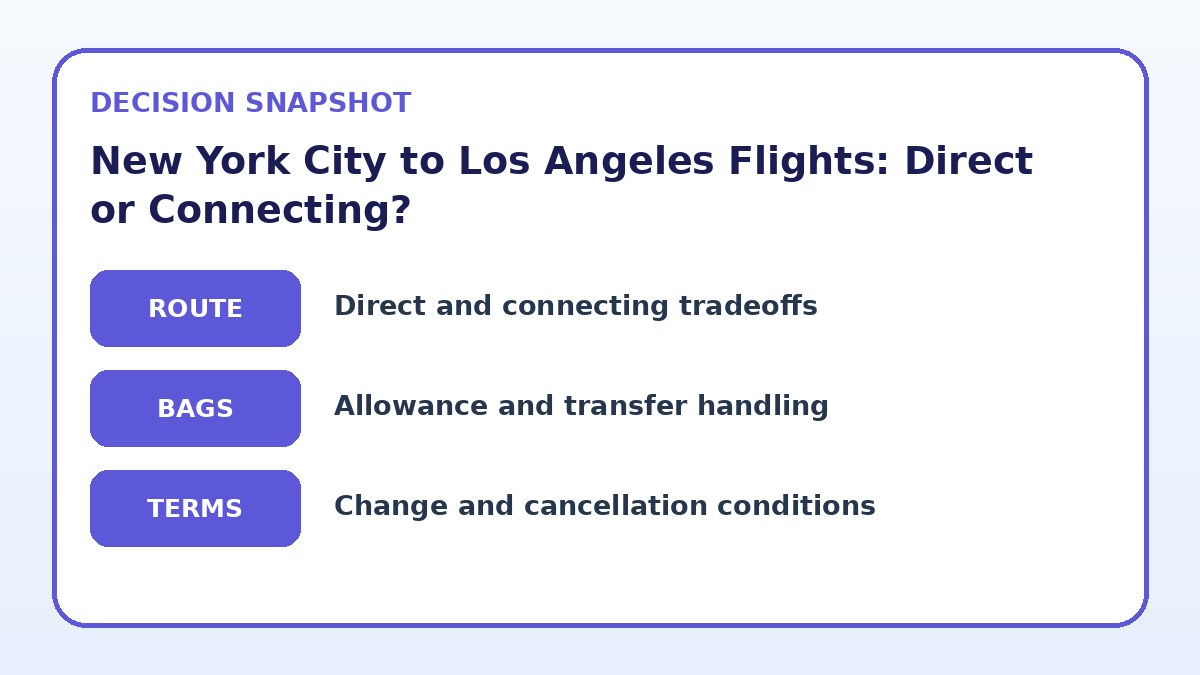
For most couples flying between New York City and Los Angeles the practical decision boils down to a tradeoff: pay for a non-stop to save time and stress, or accept a connection to access lower fares, better seat availability, or a preferred schedule. Start by identifying what matters most for this trip—sleep, luggage ease, flexibility, or maximizing daytime hours on arrival. Non-stops reduce the number of moving parts: one boarding, one arrival, fewer chances for delay to cascade. Connecting flights can unlock more convenient departure times or seats within your budget, but they require reliable minimum connection times and comfortable layovers. As you compare options, verify exact schedules, baggage rules, change and cancellation policies, and seat maps on the airline’s final booking page. You can also check Trip.com to view current availability and compare itineraries, but confirm details with the carrier before you commit.
See current options before you compare the details
Availability and final conditions change. Open Trip.com now or keep reading for the practical comparison.
Time and convenience: when direct is the sensible choice
A direct flight between New York City and Los Angeles eliminates the risk and hassle of a missed connection, shorter layovers, or extra security checks at an intermediate airport. For couples traveling on a tight schedule—honeymooners with a limited window, those with early meetings, or anyone who wants to maximize time on the ground—a nonstop flight keeps the plan simple. Consider how much you value uninterrupted cabin time: a non-stop often means a single boarding process, one inflight service routine, and fewer disruptions to sleep or relaxation.
Also weigh airport transfers and arrival logistics. A direct flight that lands at an airport convenient to your accommodation can save time and taxi or rideshare costs, even if it carries a higher base fare. Confirm the exact airports and terminals on the airline booking page; some cities have multiple airports and interchange among them can add travel time. If both partners prefer less transit stress—no sprinting between gates or watching connection clocks—a non-stop is usually the more romantic, low-drama option.
Cost and flexibility: where connecting wins for couples
Connecting itineraries often surface because they combine different carriers or route structures, and—they can—reduce the fare or open different class availability. For couples willing to trade time for savings, a single connection may unlock premium cabin seats that were unaffordable on nonstop flights, making a long trip more comfortable without paying nonstop prices. Connections can also allow you to depart at a time that prevents arriving in Los Angeles in the middle of the night, which helps couples who want to start exploring immediately.
Flexibility is another advantage: some connecting itineraries are changeable in ways direct fares are not, or they can be paired with frequent‑flyer routing to earn better award availability. But read the fine print on baggage transfer, minimum connection time, and what happens if one carrier delays the inbound flight. When providers or alliances share responsibility for a connection, the booking conditions on the final airline page will clarify who handles delays, rebooking, and compensation—important details to verify before purchasing.
| Approach | Best for | Tradeoff to check |
|---|---|---|
| Non-stop flight | Couples prioritizing speed, simplicity, and minimal transit stress | Often higher base fares and less flexible schedules |
| Single connecting flight with short layover | Couples balancing modest savings with acceptable travel time | Higher risk of rushed transfers or missed connections |
| Connecting flight with long layover and lounge access | Couples who want a relaxed transfer or an off-airport mini-break | Longer total travel time and potential extra airport costs |
| Mixed-carrier connection or separate tickets | Cost-conscious couples seeking more routing options or award availability | Less protection for missed connections and more complexity managing baggage |
Ready to check the option that fits your plan?
Use your exact dates and traveler details so the provider page can show the current total and conditions.
Comfort and experience: choosing seats, cabins, and layovers
For couples, the in-flight experience matters. If you value privacy and space, look beyond nonstop vs connecting and compare cabin options, seat pitch, and whether a short connection allows an upgrade into premium economy or business class for part of the trip. Two shorter flights with a pleasant lounge access during a long layover can feel more comfortable than a single crowded transcontinental flight. Conversely, a nonstop provides uninterrupted sleep for one partner and predictable service for the other; factor your sleep habits and motion comfort into the choice.
Layover quality also affects the pair’s travel vibe. A well-timed layover at an airport with comfortable lounges, decent dining, and good restroom facilities can be a restorative pause. But cramped or chaotic transfer airports add stress. Before booking, check terminal maps and whether your connection requires airside transfer or a change of terminals that involves shuttle buses or another security screening. These are details airlines publish on their booking pages and are worth confirming for a smooth shared journey.
Before you book
- Confirm exact departure and arrival airports and terminals on the airline’s final booking page before you buy.
- Compare total door-to-door travel time, not just airborne time, for both direct and connecting options.
- Verify checked-baggage rules and whether each carrier on a connection transfers bags automatically.
- Review change, cancellation, and rebooking policies for your fare class on the carrier’s terms.
- Check seat maps and book seats together early to secure adjacent or preferred seating.
- Plan airport transfers at both ends and add buffer time for security and potential delays.
Practical checks before booking and day-of strategies
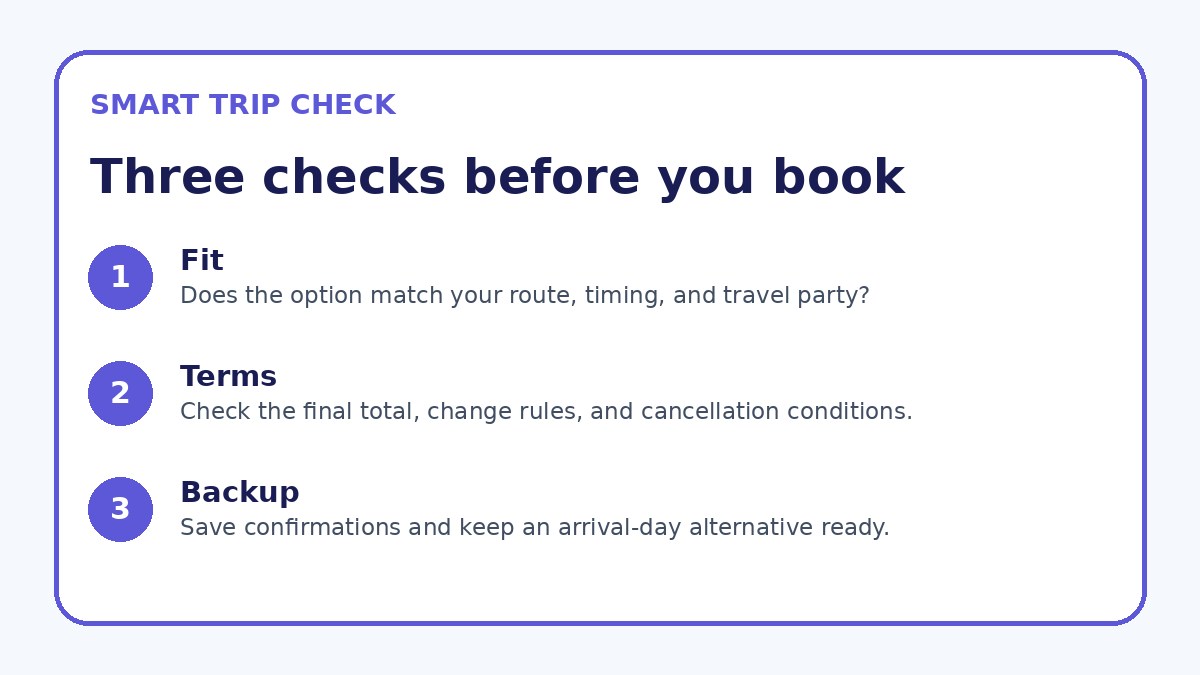
Before you finalize any ticket, verify critical operational details on the airline’s final booking page: exact departure and arrival airports, terminal information, checked-baggage allowances for each fare, seat assignments, change and cancellation fees, and minimum connection times. If traveling on separate reservations, confirm whether baggage is checked through and whether the carriers will protect you in the event of missed connections; these protections can vary widely. Also check how each fare class handles same-day changes if you need to alter plans at short notice.
On travel day, build buffer time into your schedule—allow extra time for security lines and airport navigation when traveling together—and carry an organized plan for essentials like chargers, prescriptions, and a small comfort kit. If you face a tight connection, speak to gate agents early and request expedited transfer assistance if available. And if you use Trip.com to compare options, use the airline’s booking page for definitive terms and contact information; the agent or carrier will be responsible for operational changes and rebooking decisions.
Frequently asked questions
Is it better for couples to choose a nonstop between New York City and Los Angeles?
Choosing a nonstop is often better if you and your partner value simplicity, minimal transfer stress, and shorter total travel time. Nonstops reduce the number of moving parts—single boarding, one takeoff and landing, and no intermediate gate changes—which can make the trip feel less hectic and more romantic. However, nonstops typically have fewer scheduling options and may be pricier. If price, seat availability, or departure times are more important than shaving off an hour or two, a carefully selected connecting itinerary can still be an excellent choice for couples.
How long should a layover be if we choose a connecting flight?
Aim for a layover that balances risk and comfort: enough time to clear arrival gates, change terminals if needed, and pass security without rushing. Short domestic connections can work well if both flights are on the same ticket and the airport is easy to navigate, but very tight connections increase stress. Conversely, excessively long layovers lengthen your travel day. Check the airline’s published minimum connection time and add margin for delays, mobility needs, or leisurely transfers. Verify exact terminal transfer requirements and security re‑entry rules on the carrier’s site before booking.
If we book separate tickets for a cheaper connection, how do we protect ourselves?
Booking separate tickets can save money but reduces protection for missed connections and baggage handling. To protect yourselves, allow a generous buffer between flights, ideally several hours; keep all luggage with you if possible; and avoid tight back-to-back connections. Consider travel insurance that covers missed connections on separate reservations, and familiarize yourselves with the check-in and baggage policies of each carrier. If possible, use airports with easy transfers or book at least one leg on a carrier that will cooperate with rebooking in case of delays.
Final planning note
For couples planning New York City to Los Angeles flights, the right choice depends on how you value time, comfort, and budget. Nonstop service simplifies travel and reduces the chance of connection-related disruption, making it a strong pick for romantic getaways or tight itineraries. Connecting flights can lower costs, open seat or upgrade opportunities, and allow more flexible departure times, but require careful attention to layover quality, baggage transfer, and fare rules. Before booking, compare total travel time, seat options, and the carrier’s terms on the airline’s final booking page, and consider using Trip.com to scan available itineraries. With a clear list of priorities and these practical checks you and your partner can choose the flight that preserves the best parts of your trip together.
Continue planning
Check current options and final conditions
Use the provider page to confirm live availability, the final total, cancellation terms, and every condition that matters to your trip.
This evergreen planning guide was created with AI-assisted drafting and a structured quality review. It does not display live prices, schedules, availability, visa guidance, or provider rankings. Verify current details before booking. Some links are affiliate links; we may earn a commission at no additional cost to you.