Decide your stay area first: for a solo traveler, picking the neighborhood will shape every day — how long your walks take, where you can eat late, and whether you’ll feel safe returning late at night. If you prioritize short walks to main attractions and transit, central neighborhoods like the Plateau or Downtown are logical. If you want quieter streets, cheaper rooms, or a locally residential vibe, Outremont or Verdun can work better. This guide gives a practical, decision-first approach: a quick neighborhood selector, how daily-route friction changes your day, what room features matter for one person, and what booking terms to check before you click reserve. After reading, you should be ready to shortlist one or two areas and know which room tradeoffs you’re willing to accept.
Check live stays in the areas that fit
Use your dates and party size to compare current rooms after you narrow the neighborhood fit.
Neighborhood fit: choose by activity, not by name
Start by listing the three activities you’ll do most: museum visits and cafés, evening concerts and bars, or long daytime walks and parks. Match each activity to a neighborhood vibe. For museums, galleries and a compact daytime loop, the Plateau-Mont-Royal and Mile End put you within easy walking distance of many cultural spots. For nightlife and convenience to business areas, Downtown and the Quartier des Spectacles concentrate venues and restaurants. For green, quieter streets with local bakeries, Outremont or the Lachine/Griffintown edges offer a more residential rhythm.
Consider safety and comfort after dark in your assessment: well-lit streets and active storefronts reduce late-night friction for solo travelers. Also think about the language and social vibe; parts of the Plateau feel very tourist-friendly and bilingual, while some residential neighborhoods are quieter and more francophone. Finally, check transit nodes: having a metro station within a 5–10 minute walk changes the calculus — it shrinks the city and reduces tired-foot decisions at night.
Choose an area-selection strategy
| Area approach | Best for | Tradeoff to check |
|---|---|---|
| Stay central (Downtown/Quartier des Spectacles) | Short walks to museums, performances and restaurants; easy nightlife return | Higher noise and smaller rooms for the same nightly budget |
| Choose Plateau/Mile End | Cafés, boutique shopping and a lively daytime street culture | Hills and fewer direct transit lines to some attractions |
| Pick a quieter residential area (Outremont/Verdun) | Lower noise, local bakeries and more apartment-style rooms | Longer transit rides to central attractions and nightlife |
| Opt for Griffintown/Old Port edge | Close to waterfront walks and newer apartment hotels with kitchens | Tourist footfall on weekends and variable restaurant hours |
Daily-route friction: how transit and walking shape your days
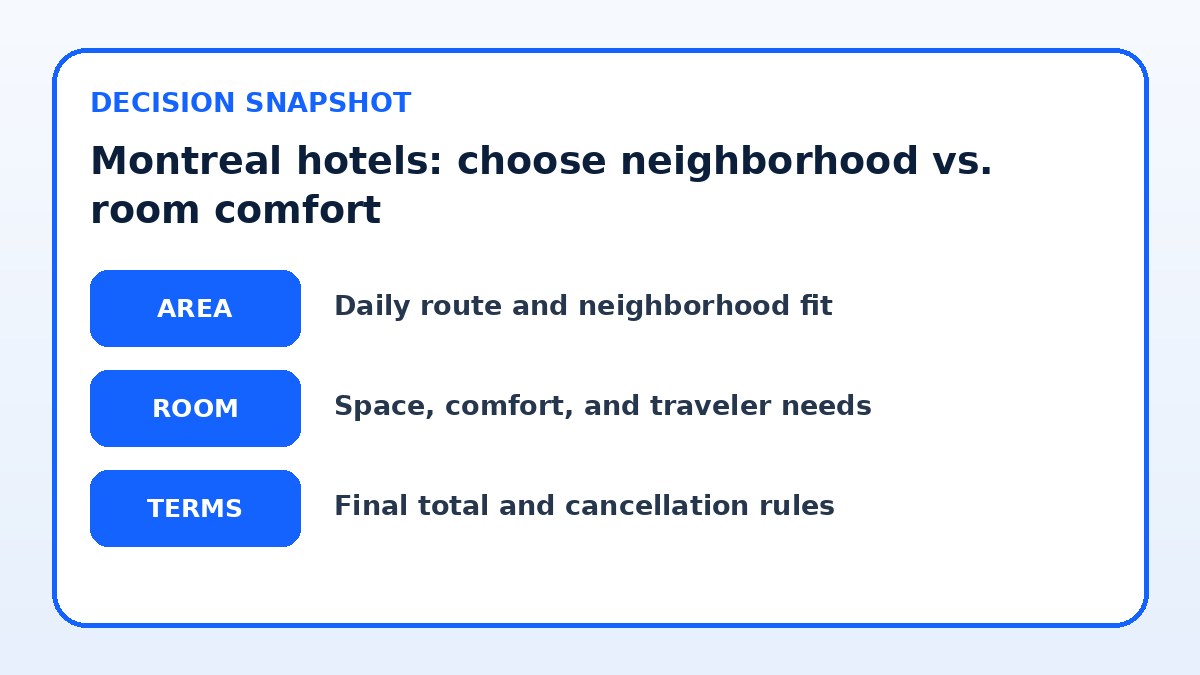
Daily-route friction is the invisible cost of choosing a hotel. A central stay saves time but can cost more or feel noisier; a cheaper room farther out increases commute time and reduces flexibility for last-minute plans. When evaluating options, mark your must-visit sites on a map and draw walking radii for 10, 20 and 30 minutes. If most points fall inside 20 minutes from one neighborhood, that area will keep your days simpler. Also note uphill streets and winter conditions: Montreal’s hills and winter weather can turn a short walk into an unpleasant trek.
Transit connections shift friction dramatically. The metro network runs well through core neighborhoods; check how many transfers you’ll need to get from a hotel to common destinations. If you plan to use buses or the BIXI bike-share, scout where stations are and whether the hotel stores bikes or luggage securely. Remember that late-night transit frequency and taxi availability matter for solo travelers returning after midnight, so look for neighborhoods with active nighttime transport links or plenty of ride-hailing activity.
Now compare like with like
Keep the same dates, guests, room needs, and cancellation preferences while you compare the final choices.
Room and party needs: what solo travelers actually use
When you’re booking, focus on room elements that improve daily life. Good lighting and a stable table or desk matter if you work or plan routes from your phone. A comfortable bed and strong blackout curtains help recover after long days; a reliable shower and good water pressure make early mornings easier. Storage for a few days’ clothes and a secure place for valuables keeps packing light practical. If you anticipate late returns, soundproofing and a street-facing versus courtyard-facing room choice can change whether you sleep through noise.
Decide whether you want hotel services or an apartment-style room. Hotel rooms give predictable cleaning, 24-hour reception, and luggage storage — useful when you arrive early or leave late — but sometimes at a higher price. Aparthotels or short-term rentals give more space and a kitchenette, ideal if you prefer to cook simple meals. If you choose a rental, verify check-in procedures, building access, and whether the host provides clear photos and descriptions; these details influence safety and day-to-day convenience for a solo traveler.
Hotel booking check before payment
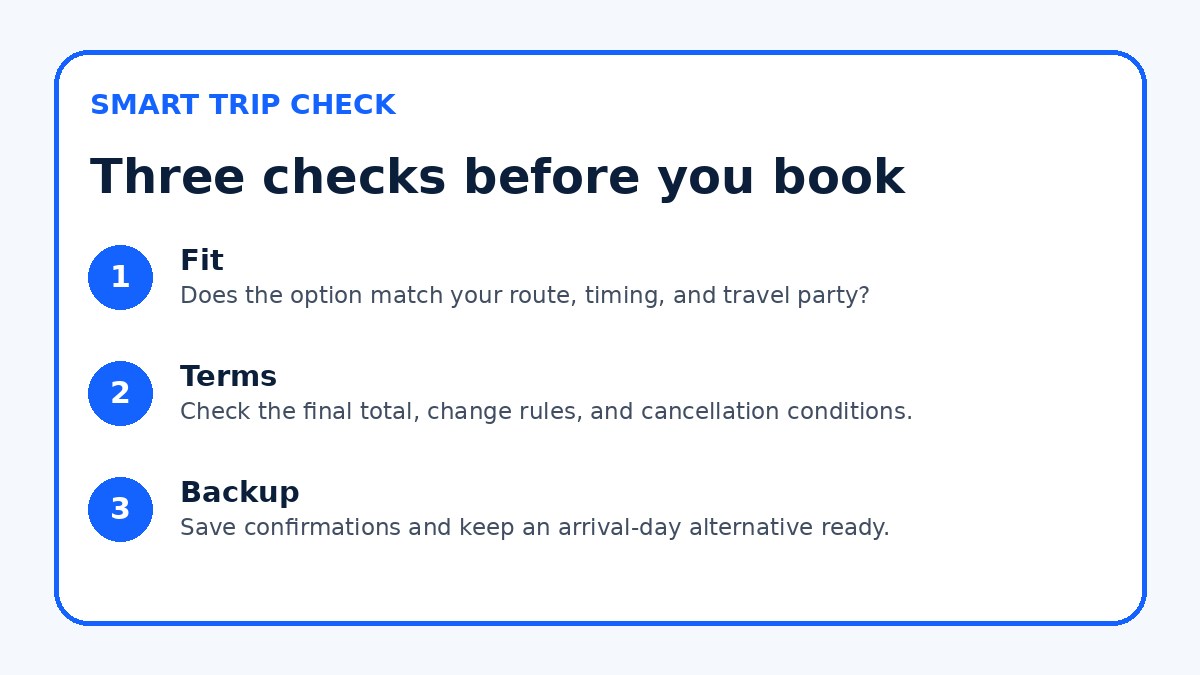
- Mark three daily priorities (sights, nightlife, work) and map them against a hotel’s 10–20 minute walking radius.
- Confirm the hotel’s check-in window and late-arrival procedure on the property’s booking page.
- Verify proximity to the nearest metro or major bus stop and the number of transfers to your main destinations.
- Look for photos or room descriptions that explicitly mention desk space, blackout curtains, and soundproofing.
- Ask the property about luggage storage options and 24-hour reception if you’ll arrive early or leave late.
- If booking a rental, request recent photos and written confirmation of building access, elevator availability, and cleanliness protocols.
Final booking terms: exactly what to verify before you reserve
Before you click confirm, read the booking terms carefully. Check the cancellation and modification rules and whether the rate shown includes taxes and any mandatory tourism or facility fees. For arrivals outside normal reception hours, verify check-in instructions and whether a late check-in fee applies. If dealing with a third-party platform, confirm the property’s own policy on refunds and guest identity verification on the property’s final booking page — policies sometimes differ between the booking agent and the host property.
Confirm essentials that affect solo travelers: whether the property has 24-hour reception or a secure self-check-in, luggage storage on arrival or departure days, and whether the building requires carrying identification at check-in. Ask whether daily housekeeping is included or optional, and whether the property enforces quiet hours. If mobility, allergy, or accessibility needs apply, request specifics in writing and get confirmation of features like elevator access, ground-floor rooms, or hypoallergenic bedding before you book.
Hotel Guide questions travelers ask
Which Montreal neighborhoods are safest and most convenient for a solo traveler who likes late-night dining?
For late-night dining and a solo-friendly vibe, prioritize neighborhoods with active evening scenes and good transit. Downtown and the Quartier des Spectacles have many restaurants and theaters clustered together, which keeps streets busier late. The Plateau has lively dining options that stretch into the evening on main streets. In any area, pick a hotel on a well-lit street with nearby 24-hour transport or reliable ride-hailing coverage. Always check recent guest comments about safety and late-night noise, and confirm how late transit runs on the routes you’ll use.
If I want the cheapest room but still stay central, what tradeoffs should I expect?
Cheaper central rooms often mean smaller space, fewer in-room amenities, and more street noise. You may get a compact single bed, minimal storage, and a small bathroom; some budget properties limit housekeeping or lack a staffed reception. To manage expectations, verify room size and included services on the booking page, and check whether the property offers luggage storage if you arrive early. Consider booking a budget room in a slightly quieter adjacent neighborhood and using the metro to keep walking time reasonable while saving money.
How should I compare hotels and short-term rentals for a week in Montreal as a solo traveler?
Decide what matters: predictable services (reception, daily housekeeping, onsite staff) favor hotels, while space and a kitchenette favor rentals. Compare cancellation and check-in procedures carefully — hotels often have 24-hour desks, while rentals may require host-arranged check-ins. Look at exact photos and amenity lists rather than blurbs. If you work from your room, confirm reliable Wi-Fi speed with the host or hotel. Finally, review the property’s location relative to metro stations and evening transport to minimize daily friction, and verify policies on late arrivals and security deposits.
Final decision note
For solo travel in Montreal, start by choosing the neighborhood that matches your daily priorities — culture, nightlife, or quiet walks — then pick a room that supplies the basics you’ll actually use: a good bed, workable table, and dependable bathroom. Use a simple map exercise to measure daily-route friction and compare transit connections so you won’t spend your trip tired from long commutes. Before booking, read the final booking page for check-in, cancellation and fee details, and confirm photos and described amenities. With that shortlist-ready neighborhood and clear room priorities, you’ll be able to compare live inventory confidently and pick the option that keeps your days flexible and comfortable.
Continue planning
Check current options and final conditions
Use the provider page to confirm live availability, the final total, cancellation terms, and every condition that matters to your trip.
This evergreen planning guide was created with AI-assisted drafting and a structured quality review. It does not display live prices, schedules, availability, visa guidance, or provider rankings. Verify current details before booking. Some links are affiliate links; we may earn a commission at no additional cost to you.