If you’re traveling to Melbourne with extra luggage, the simplest practical question is: should you rent a car at all? Driving can be liberating when you need space for bags, gear or oversized items, but rental fuel policies, daily mileage caps and extra-kilometre fees can wipe out the convenience. The practical answer: rent a car only after you’ve confirmed the fuel purchase/return option, the daily or total mileage allowance and how excess weight or rooftop carriers affect insurance and wear-and-tear charges. Read on for the tradeoffs—when driving genuinely improves your trip, what to look for in insurance wording, how pickup and return work with heavy loads, and a solid non-driving fallback you can use if a rental proves more hassle than help.
Decide whether driving genuinely improves your Melbourne plan
Start by mapping what you will actually do with the car. If your itinerary is airport–CBD–one-side excursion with most time spent within central Melbourne, public transport and occasional rideshares usually beat rentals in cost and convenience. However, if you plan multiple day trips to regional Victoria, carry sports equipment, or have a lot of heavy luggage, the ability to load and shift on your own schedule can be a clear advantage. Think about door-to-door time, trunk volume you need, and whether carrying luggage on trams or trains would be feasible or costly for your group.
Next, estimate kilometres and realistic driving days. Short hops inside the city rack up parking and congestion frustration; long day trips eat into fuel and mileage allowances. If your planned driving is fragmented—several short runs inside Melbourne plus one long coastal day—compare the total mileage to typical rental caps and zap the extra-kilometre fees into a quick calculation. That will reveal whether paying for a larger trunk or a day hire with unlimited kilometres is justified.
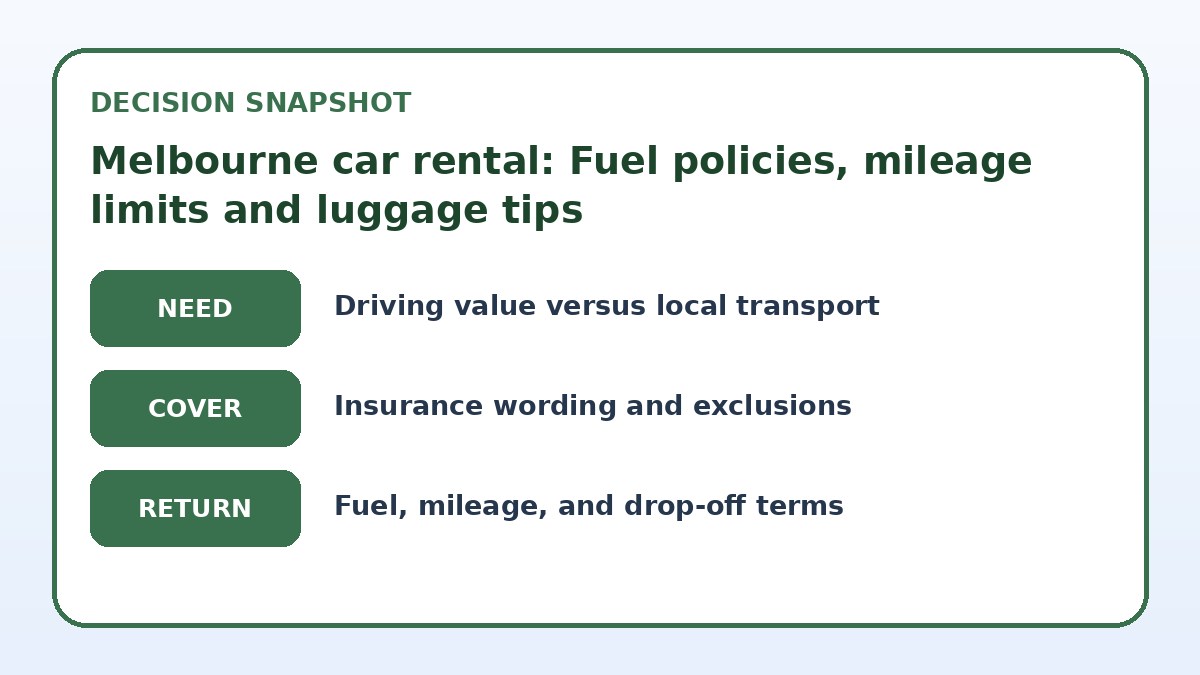
Decide whether driving earns its place
| Mobility strategy | Best for | Cost or friction to check |
|---|---|---|
| Rent a mid-size car with limited mileage | Travelers with moderate luggage and short trips who want private transport. | Lower daily rate but potential excess-kilometre charges for long excursions and tighter boot space. |
| Rent a large SUV or people-mover with unlimited mileage | Groups with lots of baggage or frequent day trips outside Melbourne. | Higher rental and fuel costs; verify roof-load rules and insurance endorsements for bulky gear. |
| Stick to public transport and rideshares | City-focused travellers with light or managed luggage who prefer avoiding rental complexity. | Less flexibility for regional day trips and possible extra cost for multiple rides with bulky items. |
| Use airport transfer plus local luggage-friendly tours | Those with one-off large items or single long excursions who want minimal driving hassle. | May limit spontaneity and require careful timing; confirm tour operators’ gear policies before booking. |
Check live rental choices only after the route test
Use the exact driver, dates, pickup point, and return plan to compare current conditions.
What to verify in insurance and fuel wording
Insurance wording can hide exclusions that matter with extra luggage. Standard collision damage waivers and liability coverages often relate to vehicle condition, but terms about roof racks, trailers or heavy loads can void parts of the policy. Ask explicitly whether rooftop boxes, soft luggage on the roof, or a filled tow bar are permitted and whether they require an extra endorsement. Also check whether personal effects in the vehicle are covered; many rental contracts exclude personal items or limit recovery to minimal amounts.
Fuel policy is equally significant. Full-to-full is transparent: you return the tank as you received it. Pre-purchase refuels can save time but often leave unused fuel at no refund, which is wasteful if you won’t drive far. Some suppliers charge an administrative refuel fee on top of per-litre costs. On the contract’s final booking page, verify the exact wording for 'fuel service charge', how fuel level is assessed, and whether the company uses estimated rather than meter-recorded refuelling.
Compare the full rental conditions
Confirm insurance wording, exclusions, deposit, fuel, mileage, and return terms on the final page.
Pickup, return friction and handling bulky luggage
Pickup logistics matter more when you have oversized bags. Airport counters with shuttle buses, off-airport depots and limited loading zones add time and physical effort. Find out if the rental desk has luggage trolleys, whether they can bring a car to a curbside loading area, and if assistance with loading and roof-mounting is offered—or if you must manage it yourself. If you’ll need an oversized vehicle, confirm the exact dimensions of the boot and any restrictions on roof-carrier sizes.
Return can create unexpected fees when weight or damage is involved. Inspect the vehicle with staff and photograph the boot, roof rails and tyres before you drive away. On return, allow extra time for staff to check for scratches or roof carrier attachments; disputes often arise from pre-existing marks not documented at pickup. If returning outside office hours, record fuel level, odometer and photos, and confirm the supplier’s out-of-hours inspection and keys-drop procedure to avoid surprise charges.
Car rental terms to verify
- Confirm the rental’s fuel policy exactly: full-to-full, pre-purchase, or charged on return, and note any fuel service fees.
- Check the daily and total mileage allowance and write down the excess-kilometre rate to calculate potential overage costs.
- Ask whether rooftop carriers, soft roof loads or trailers are allowed and whether they require an additional insurance endorsement.
- Measure or test-fit your luggage plan against the vehicle’s advertised boot dimensions and request photos if uncertain.
- Document vehicle condition with photos of the boot, roof rails and odometer at pickup and again at return, keeping timestamps.
- Verify pickup and return procedures for bulky items, including assistance availability, out-of-hours returns and keys-drop instructions.
A practical non-driving fallback for travellers with extra luggage
If renting looks like more hassle than it’s worth, build a fallback that keeps your luggage manageable and your schedule flexible. Use a combination of airport-to-city transfers that handle baggage, a centrally located accommodation with luggage storage, and local luggage-friendly taxis or rideshares for short trips. For one-day regional excursions, book small-group tours that include gear transport or luggage stowage—this avoids the rental’s fuel and mileage traps while still letting you bring larger items without juggling public transport.
Also consider short-term locker or luggage storage services near major stations and the CBD. Split heavy bags into two loads—one stored or delivered to your next stop and one light bag for daily use. For surfboards, bikes or bulky sports equipment, compare specialist carriers and hotel arrangements that accept gear; many Melbourne accommodations and tour operators have established procedures and can advise whether you should hire a vehicle instead.
Car Rental & Road Trip questions travelers ask
Will my extra luggage void the rental insurance in Melbourne?
It depends on the insurer’s wording and the rental company’s conditions. Many standard policies cover collision and third-party liability but exclude damage caused by improperly loaded roof racks, unsecured trailers or items extending beyond the vehicle’s dimensions. Ask the supplier whether roof boxes, surfboards, bikes or trailers are covered and whether those items require a separate endorsement or fee. Always get the policy section name and clause number shown on the booking page, photograph the contract and keep contact details for roadside assistance in case insurers need explicit confirmation.
Is it cheaper to pre-purchase fuel or use full-to-full when I have extra driving planned?
Pre-purchase can be convenient but often leaves you paying for unused petrol if you return the car with fuel in the tank. Full-to-full is usually fairer: you refill to the same level before return and pay only what you used. If you expect long regional drives, calculate your likely fuel consumption against the supplier’s pre-purchase cost per litre. On the booking page check whether refuelling charges are estimated or based on meter readings, and whether a handling fee applies to refuelling by the company.
How do I avoid disputes over pre-existing damage or roof-scratches related to luggage?
Thorough documentation is the key. Walk the car with a staff member at pickup and request they note any marks, especially on the roof, roof rails and boot area. Take time-stamped photos or short videos showing the odometer, fuel level and each side of the vehicle. If returning outside office hours, repeat the documentation and send it to the rental company’s stated email with proof of delivery. Keep copies of all communications and the staff member’s name; this reduces the chance of being charged later for damage that was present before your rental.
Final decision note
For travellers to Melbourne carrying extra luggage, the decision to rent hinges on clear verification: fuel policy, mileage caps and how luggage affects insurance. Driving pays off when you need trunk space and flexibility for regional trips, but the convenience is only real after you’ve calculated excess-kilometre risk, documented vehicle condition and confirmed rooftop or trailer permissions. If a rental looks complex or costly, the fallback of airport transfers, luggage storage and luggage-friendly tours often preserves mobility without the financial and administrative headache. Before you click book, read the supplier’s final booking page for exact fuel charges, mileage wording and any load-related insurance endorsements—then choose the option that matches your luggage, itinerary and appetite for handling logistics.
Continue planning
Check current options and final conditions
Use the provider page to confirm live availability, the final total, cancellation terms, and every condition that matters to your trip.
This evergreen planning guide was created with AI-assisted drafting and a structured quality review. It does not display live prices, schedules, availability, visa guidance, or provider rankings. Verify current details before booking. Some links are affiliate links; we may earn a commission at no additional cost to you.