If you’re flying solo from Manila to Cebu, your two biggest pre-flight decisions are how much luggage to bring and how much time to allow at the airport. Practical choices—carry-on only, a checked bag, or a combination—affect how early you must arrive, whether you can use express check-in, and how much stress you’ll face moving through security and boarding. This guide gives a clear starting recommendation, then lays out tradeoffs and decision criteria so you can tailor the plan to the airline you book, your departure terminal, and your comfort level with risk. Read on to make a defensible choice, check the right provider pages before you finalize, and pack and time your day efficiently for a smoother solo transfer between Manila and Cebu.
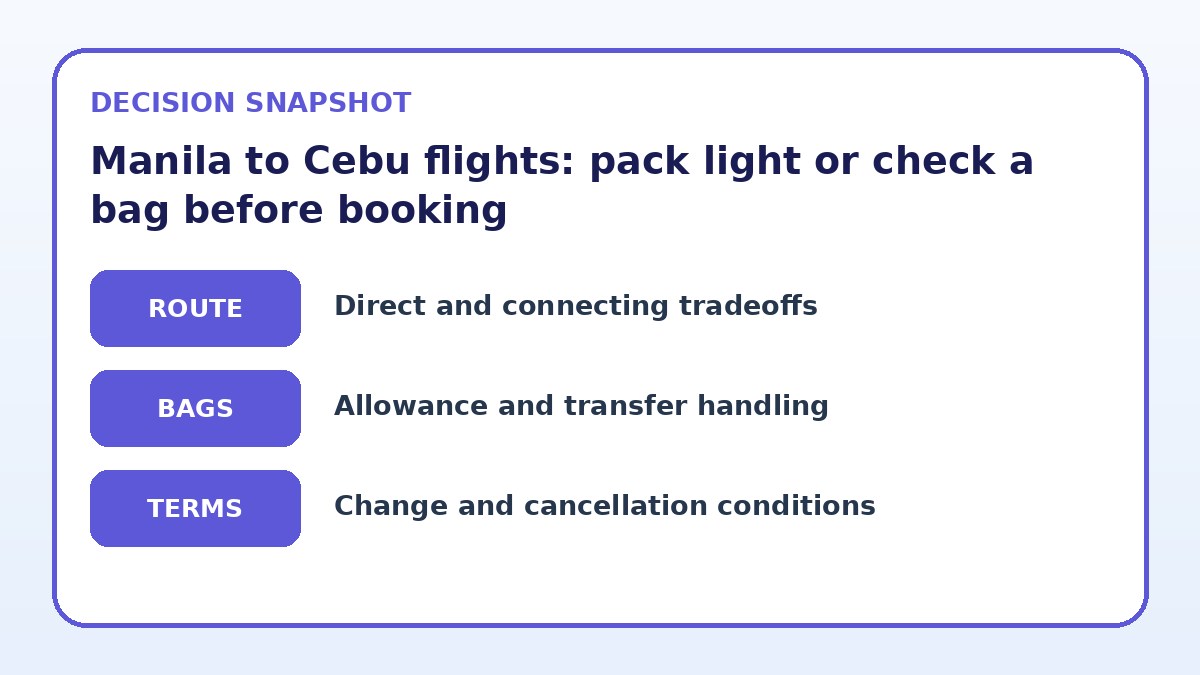
See current options before you compare the details
Availability and final conditions change. Open Trip.com now or keep reading for the practical comparison.
Deciding between carry-on only and checked baggage
Carry-on only is the simplest option for a short domestic hop like Manila to Cebu: you skip the bag drop line, avoid waiting at baggage reclaim, and reduce the risk of lost luggage. For many solo travelers a single cabin bag plus a personal item is enough for 1–4 days. Before committing, check the airline’s exact cabin dimensions, weight limits, and the gate checking policy; airlines sometimes gate-check larger cabin bags if the flight is full. Packing light usually shortens your door-to-door time and gives you more flexibility if you plan to move between accommodations in Cebu.
However, carry-on only may force you to sacrifice items like surfboard gear, bulkier electronics, or extra clothing. If you must bring a checked bag—for sports equipment, long stays, or business attire—factor in extra time at the airport and potential fees. Some airlines include a checked bag in certain fare classes; others sell it as an add-on. Compare the total cost and time impact: paying for a checked bag could still be worth it when weighed against the hassle of tight packing or shipping items separately.
How much airport time to allow for a stress-free trip
For domestic Manila to Cebu flights, many travelers aim to arrive 60–90 minutes before departure when traveling with carry-on only and with a confirmed mobile boarding pass. This window usually leaves time for security, possible short lines, and reaching your gate. If you prefer a buffer for traffic, ride-hailing drop-off delays, or last-minute changes, add another 15–30 minutes. Solo travelers who value calm transit—time for a coffee, restroom break, or last check of documents—should err on the longer side. Confirm the recommended arrival time on the airline’s booking page because suggestions can vary by carrier and terminal.
Increase your lead time if you have a checked bag, need to buy or change tickets at the counter, or require special assistance. For checked luggage plan for 90–120 minutes at the airport to cover bag drop, additional screening, and any queues at customer service. Early morning flights can have shorter security lines but also limited ground staff; late-night flights may have fewer transport options to the airport. Always check traffic patterns between your Manila neighborhood and the airport—peak commute hours and events can add unpredictable delays that eat into your buffer.
| Approach | Best for | Tradeoff to check |
|---|---|---|
| Carry-on only | Travelers prioritizing speed, simplicity, and no baggage wait | Must pack tightly and possibly leave non-essentials behind |
| One checked bag plus carry-on | Stays longer than a few days or packing bulky items | Adds bag-drop time and potential fees; risk of delayed luggage |
| Connecting flights with through-checked baggage | Cost or schedule tradeoffs that make indirect routes attractive | Longer total travel time and higher connection risk |
| Priority services and pre-paid baggage | Travelers willing to pay to reduce airport time and lines | Extra cost; need to verify exact benefits on provider pages |
Ready to check the option that fits your plan?
Use your exact dates and traveler details so the provider page can show the current total and conditions.
Packing tips that reduce airport time and stress
Organize a carry-on packing list that prioritizes essentials: travel documents, medications, a charged phone and power bank, a lightweight change of clothes, and any fragile items you don’t want checked. Use packing cubes and a toiletry bag to speed security checks and make it easy to retrieve what you need mid-journey. Keep items you’ll need during the flight—water bottle (empty through security), snacks, earphones—in an easily accessible outer pocket to avoid unpacking at the gate. A small, lockable bag can deter opportunistic theft during transit and while you’re moving between terminals.
If you do check a bag, minimize what you put in it by keeping important documents and valuables on your person. Attach an ID tag and a simple distinguishing mark so reclaim is quicker. Consider prepaying baggage online to save time at the airport, but verify costs and rules on the airline’s booking page before purchase. For fragile or valuable items, use protective sleeves or padded clothing, and photograph the packed bag and contents before handing it over—this helps with any later claims or tracking.
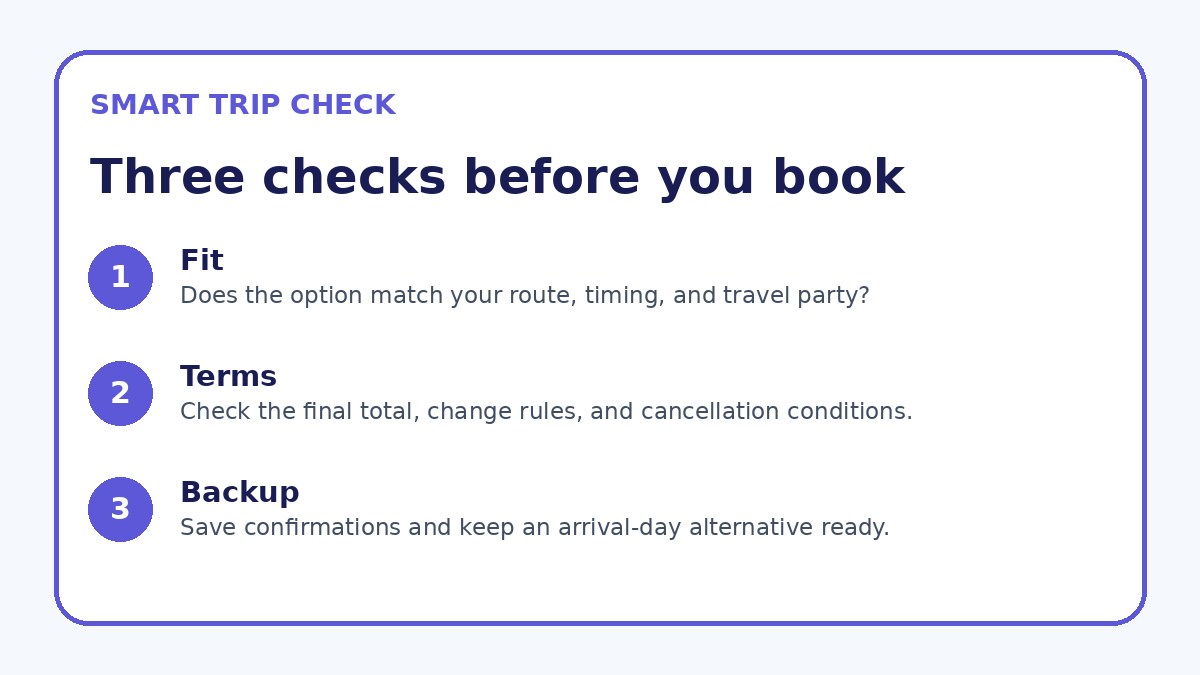
Before you book
- Confirm your airline’s cabin and checked baggage size and weight limits on its official booking page before finalizing your reservation.
- If bringing only carry-on, check in online, download the mobile boarding pass, and verify gate and terminal details the morning of travel.
- If checking luggage, prepay baggage online where possible and arrive at least 90 minutes before departure to allow for drop-off queues.
- Pack a small ‘airport essentials’ pouch with ID, phone charger, medication, and a refillable bottle to streamline security and boarding.
- Factor in local traffic and transport options by checking your route to NAIA and adding a 15–30 minute buffer for rush hours or ride-hailing delays.
- Photograph checked bags and contents, attach a visible ID tag, and keep a copy of your booking confirmation and contact details accessible.
Comparing direct and connecting options and last-minute choices
On the Manila to Cebu route direct flights are common, but depending on your schedule you may see connecting options through other Philippine cities. Direct flights minimize airport transfers and reduce the complexity of baggage handling and connection risk. If you choose a connecting itinerary, allow significantly more transfer time: you’ll need to collect and re-check bags if the connection isn’t through-checked, pass through additional security, and possibly switch terminals. When comparing options, weigh the savings or schedule benefits of a connection against the added time and the potential for delays.
If you’re booking last-minute or need to travel on a tight timeline, prioritize flights with minimal required connections and straightforward terminals. Check the airline’s official pages for guidance on minimum connection times and whether bags are transferred automatically on the itinerary you choose. Last-minute upgrades or paid priority boarding can cut queue time but confirm exactly what the service includes on the carrier’s checkout page. Trip.com may be used to compare current availability and conditions, but always verify final baggage and timing details with the airline before relying on them.
Frequently asked questions
How early should a solo traveler arrive at the airport for a Manila to Cebu flight?
For carry-on only with online check-in, arriving 60–90 minutes before departure is usually sufficient and keeps stress low. If you need to check a bag, handle counter service, or expect longer queues, plan 90–120 minutes to allow for bag drop, additional screening, and any counter wait times. Also consider local traffic to Ninoy Aquino International Airport and whether your flight departs from a terminal known for heavier crowds; check your airline’s recommended arrival time on its booking page before you leave home.
Can I rely on through-checked baggage for connecting flights between Manila and Cebu?
Whether bags are through-checked depends on the airlines involved and your particular itinerary. If your entire trip is on the same carrier or on partners that explicitly offer through-checked service, your bag may be transferred automatically—verify this on the airline’s confirmation. If different carriers are separate or you booked independent legs, you may need to collect and re-check luggage at the connection. Always check the carrier’s baggage transfer policy on the booking page and leave ample transfer time if you’re unsure.
What packing choices will save the most time at security and boarding?
Organize liquids in a clear, compliant pouch and keep electronics and travel documents in an accessible outer pocket to speed security checks. Use packing cubes so you can open your bag quickly if an agent needs to inspect it, and avoid overpacking pockets with small items that slow you at the gate. Wearing simple shoes that are quick to remove and having a lightweight jacket packed or carried can also streamline security. Finally, have your mobile boarding pass and ID ready before you reach the scanner to prevent last-minute fumbling.
Final planning note
For solo travelers on the Manila to Cebu route the clearest time- and stress-saving move is to travel with one compliant carry-on and a mobile boarding pass wherever possible. That choice trims queues, removes baggage reclaim waits, and shortens the margin for schedule disruption. If a checked bag is necessary, accept the added time and prepay or check-in online to reduce airport lines; plan on arriving earlier and visually tag and photograph checked items. Whatever you choose, always verify baggage allowances, fees, and recommended arrival times on the airline’s final booking page before you leave. Comparing options on Trip.com can help see live availability, but use the carrier’s site to confirm last-mile details so your solo trip goes smoothly.
Continue planning
Check current options and final conditions
Use the provider page to confirm live availability, the final total, cancellation terms, and every condition that matters to your trip.
This evergreen planning guide was created with AI-assisted drafting and a structured quality review. It does not display live prices, schedules, availability, visa guidance, or provider rankings. Verify current details before booking. Some links are affiliate links; we may earn a commission at no additional cost to you.