
If you’re traveling from Los Angeles to Las Vegas with extra luggage, the single most useful step before you click Book is to run a short checklist that compares how each itinerary handles checked bags, carry-on size, and connection complexity. Flights on this route can vary widely in fare-bundle rules and aircraft type; low-cost carriers often separate the base fare from luggage allowances, while legacy airlines may include one bag at higher fare tiers. Decide whether you value a smoother airport experience, cheaper base fares, or more generous baggage allowance, then prioritize options that minimize transfers and repeated baggage handling. Below you’ll find a compact pre-booking checklist, clear tradeoffs for common booking approaches, and the exact carrier details you should confirm on the provider’s final booking page before purchase.
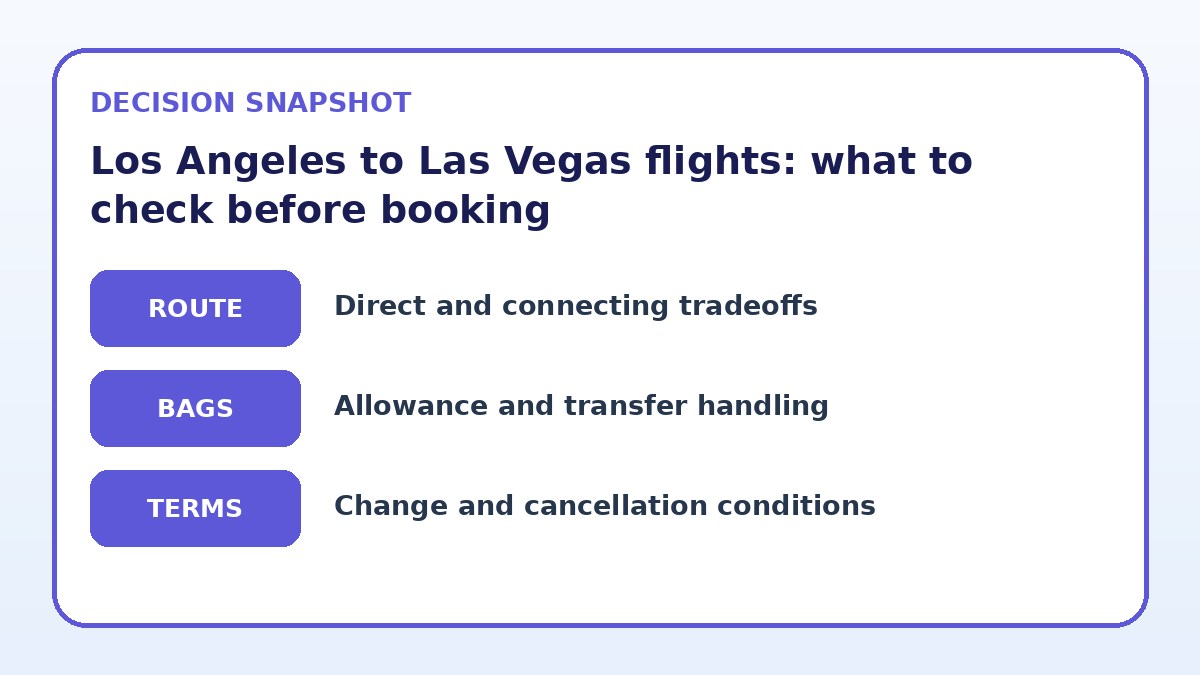
See current options before you compare the details
Availability and final conditions change. Open Trip.com now or keep reading for the practical comparison.
Why baggage rules matter before booking
Baggage rules are not an afterthought when you’re traveling with extra luggage; they change the effective cost and convenience of the entire trip. A low headline fare can become more expensive once you add checked-bag and carry-on fees, or if a connecting itinerary requires you to re-check bags. Airline fare bundles, often labeled as Basic, Main, or similar, differ not only on price but on whether baggage, seat selection, and refunds are included. Before booking, identify what matters most to you — fewer bags to carry through connections, lower upfront cost, or guaranteed overhead space — and use that priority to filter flight options.
Because operational details change, always verify the specific baggage allowance, oversize/overweight fees, and where those fees appear in checkout on the airline’s or booking agent’s final page. Don’t rely on summary pages that may omit ancillary fee lines. If you travel with items that need special handling — sports equipment, instruments, or multiple large suitcases — find the carrier’s exact policy for that item and whether it requires advance notice or a special cargo booking. Those rules often live in a distinct section of the airline’s site and can affect which carrier or fare class is practical.
How to compare direct and connecting options
Direct flights reduce the number of times your checked luggage is loaded and unloaded and eliminate re-checking at a connection, which matters when you have bulky or fragile items. For most travelers between Los Angeles and Las Vegas you’ll find direct options frequently; still, some schedules or lower fares use connections. When comparing, add 'number of baggage handoffs' as a column in your comparison: direct = 1 handling event at origin and 1 at destination; connecting flights usually add at least one more handling event and potential re-checking. That extra handling increases risk of delay, damage, or missed connections for heavy or awkward luggage.
But connections can offer cost savings or timing that better match your itinerary. If a connecting option is substantially cheaper, check minimum connection time and whether the carrier issues a single ticket (which usually protects checked baggage through to the final airport) or requires separate tickets (which generally means you must reclaim and re-check bags). Also compare aircraft type: smaller regional jets have limited overhead and cargo space, so they may impose stricter carry-on or weight limits even on the same route.
| Approach | Best for | Tradeoff to check |
|---|---|---|
| Book a higher fare that includes checked bags | Travelers valuing convenience and predictable costs | Higher upfront fare but fewer surprise fees and simpler airport experience |
| Buy a low base fare and add bags a la carte | Travelers prioritizing the lowest base fare and flexible scheduling | Cheaper base ticket but fees add up and checkout pages can hide total cost |
| Choose a connecting itinerary with cheaper segments | Travelers seeking specific departure or arrival times at lower cost | More baggage handling and higher risk of missed connections with extra luggage |
| Reserve direct flights on airlines with generous baggage allowances | Travelers with oversized or multiple heavy bags | May pay more per seat but reduce handling events and logistical friction |
Ready to check the option that fits your plan?
Use your exact dates and traveler details so the provider page can show the current total and conditions.
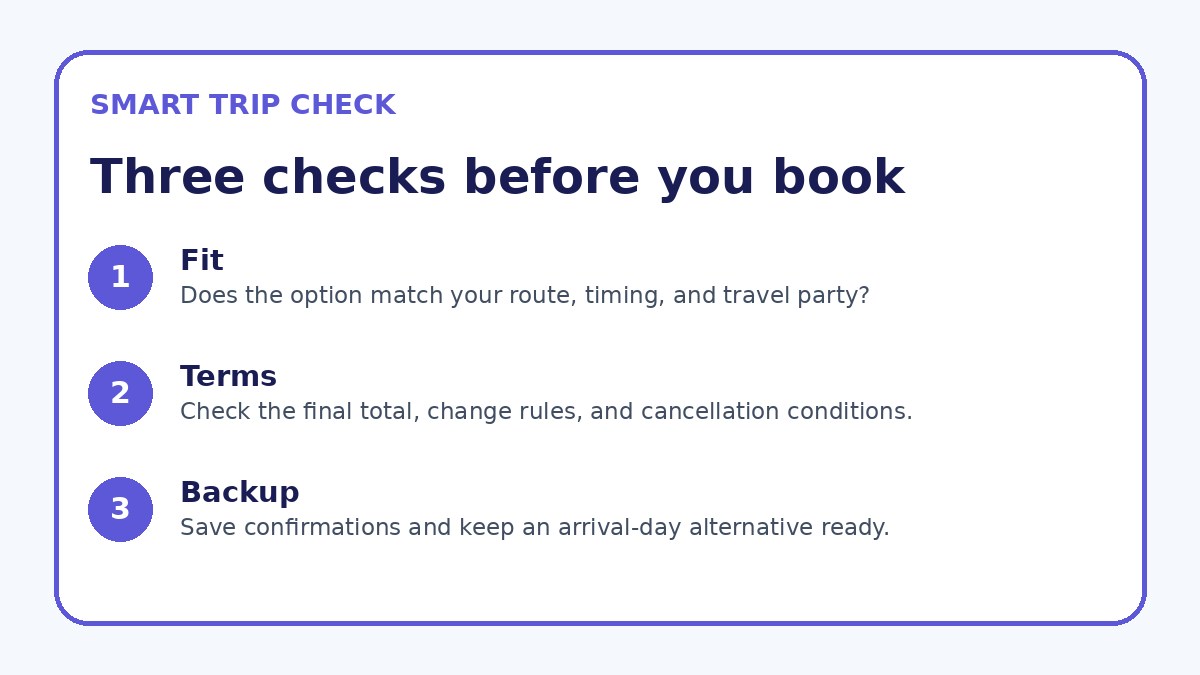
Selecting the right fare and add-ons
Fare classes determine what’s included: seat selection, carry-on permission, checked bags, and change flexibility. For travelers with extra luggage, the simple question is whether paying more for a higher fare tier that includes checked baggage is cheaper and less hassle than buying ancillaries a la carte. To evaluate, calculate the total cost of the base fare plus the exact checked-bag fees you’ll pay on the airline checkout page. Also factor non-monetary costs: longer queue times at bag drop for basic fares, or priority boarding that secures overhead space for a carry-on.
If you anticipate last-minute changes or need to bring irregular-sized pieces, consider add-ons like flexible tickets, priority boarding, or advance seat assignment that reduce stress at the gate. For special or oversized items, confirm whether the airline requires advance booking for sports equipment or instruments and whether those items travel as checked luggage or via the cargo office. Remember to check refund and change policies for any baggage-related ancillaries — some fee purchases are nonrefundable and won’t transfer to a new ticket without charge.
Before you book
- Confirm the exact checked-bag allowance and any size/weight limits for the selected fare on the airline’s final booking page before purchase.
- If flying on separate tickets, verify whether you must re-check luggage at the connection and build sufficient transfer time into your schedule.
- Check aircraft type and cargo/overhead space notes; switch to a larger aircraft option if your bags exceed typical regional-jet limits.
- Calculate total cost: add base fare, each checked-bag fee, and any priority boarding or seat fees shown at checkout to compare real totals.
- Contact the airline for special-item rules (sports gear, musical instruments) and reserve advance handling or cargo booking if required.
- Plan ground transfers: confirm rideshare/taxi luggage policies, parking options for oversized suitcases, and whether your hotel offers luggage storage.
Ground logistics and end-to-end planning
Don’t treat the flight purchase in isolation: how you get to and from airports with extra luggage is part of the decision. At LAX and the Las Vegas airport, rideshare zones, parking garages, and shuttle services have different rules and space limits. If you plan to drive and park, compare lot types (economy vs. terminal) and whether the shuttle supports large suitcases. If using rideshare or taxis, verify that your vehicle choice can fit your bags without incurring extra cost or requiring multiple vehicles.
Also plan for time at security and bag drop: arriving earlier than normal helps when you must check multiple items. If you’ll need special assistance — oversized bag handling or gate-to-ground help — request it during booking or call the airline’s accessibility team. Finally, if you’re combining air travel with car rental or a hotel stay in Las Vegas, confirm luggage capacity when selecting a rental vehicle or whether the hotel offers luggage storage to avoid carrying all pieces through early check-in or late checkout windows.
Frequently asked questions
Should I always choose a direct flight when I have extra luggage?
Direct flights reduce the number of times your checked bags are handled and typically minimize the risk of delays or lost luggage. However, direct options may cost more or have inconvenient times. If a connecting flight is substantially cheaper, check whether the itinerary is on a single ticket (which usually protects your bags through to the final airport). For separate tickets you will likely need to claim and re-check baggage, so factor in the extra handling, customs (if applicable), and required transfer time when deciding.
How can I estimate the real luggage cost before booking Los Angeles to Las Vegas flights?
Start with the carrier’s published fee table but verify the exact fees during checkout because some booking pages add fees at the end of purchase flow. Add every likely charge: base fare, checked-bag fees for each piece you plan to check, overweight or oversize surcharges, and optional extras like priority boarding. Don’t forget potential ground costs such as airport parking or rideshare upcharges when choosing a larger vehicle. Use that summed amount to compare fare classes and alternative itineraries on the booking page where fees appear.
What should I confirm about special or oversized items before booking?
Special items often have different rules than standard checked luggage: weight limits, advance booking requirements, and whether they travel in cargo rather than the passenger cabin. Before you book, find the airline’s policy page for your item type and call the carrier if the online guidance is unclear. Confirm whether you must reserve space, pay a special fee, or drop the item at a cargo office. Also ask where the fee and handling instructions will appear during online checkout so you don’t face unexpected surprises at the airport.
Final planning note
When planning Los Angeles to Las Vegas flights with extra luggage, a few focused checks before booking save money and stress. Compare the true total cost by adding fare plus baggage fees, prioritize direct itineraries if minimizing handling matters, and verify aircraft and special-item rules on the carrier’s booking page. Also coordinate ground logistics—rideshare, parking, and luggage capacity—so your door-to-door plan fits the bags you’ll bring. Take these steps before you book and you’ll have a clearer picture of tradeoffs between price, convenience, and risk.
Continue planning
Check current options and final conditions
Use the provider page to confirm live availability, the final total, cancellation terms, and every condition that matters to your trip.
This evergreen planning guide was created with AI-assisted drafting and a structured quality review. It does not display live prices, schedules, availability, visa guidance, or provider rankings. Verify current details before booking. Some links are affiliate links; we may earn a commission at no additional cost to you.