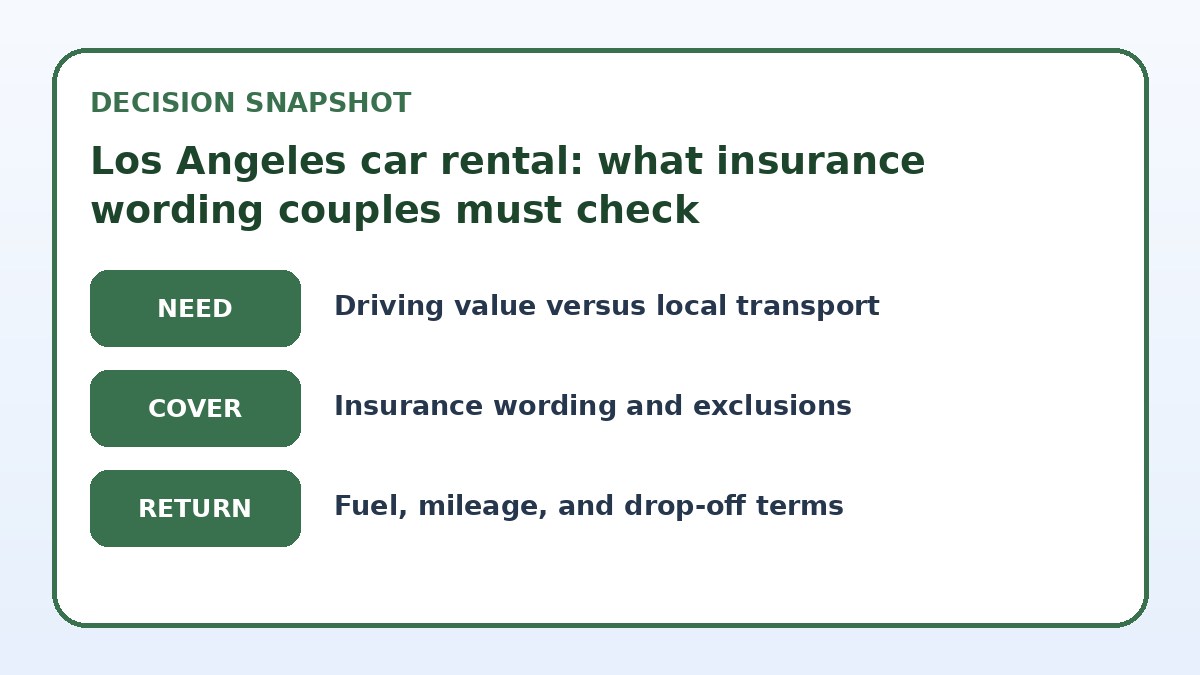
Practical answer first: when renting a car in Los Angeles as a couple, read three things on the rental contract and any insurer page—named drivers and permissive use, collision damage waiver (CDW)/loss damage waiver (LDW) wording, and liability limits and where they apply. If both partners will drive, make sure the secondary driver is explicitly named or that the rental allows additional drivers under the same booking; otherwise damage or a denied claim can become a costly surprise. Don’t assume your personal auto policy or a credit card will cover everything—confirm the exact terms and ask the rental agent to initial changes. After this quick checklist, I’ll explain the typical clauses you’ll see, tradeoffs between cover options, and how to decide together based on driving plans and peace of mind.
See current options before you compare the details
Availability and final conditions change. Open Trip.com now or keep reading for the practical comparison.
Who is covered: named drivers, permissive use, and spouses
Rental contracts use a few standard phrases to define who is allowed to drive the vehicle. A named driver is someone explicitly listed on the rental agreement; permissive use typically extends coverage to additional drivers authorized by the primary renter. Some companies automatically allow spouses or domestic partners without an extra fee, but others require each driver to be added at booking. For couples, the simplest safe option is to have both partners listed on the agreement before you sign. If you plan to add a driver at pickup, ask the agent to update the contract and note any extra fee.
Equally important is how proof is recorded: insurers and rental companies often require each driver’s valid driver’s license, a credit card in their name (or the primary renter’s), and sometimes proof of relationship. If either partner’s license is from another country, ask the rental firm about additional documentation or restrictions. Make sure the contract shows both names and that the agent initials the change; a verbal confirmation is not enough. If a partner drives without being authorized and an accident occurs, the rental company may deny coverage and pursue the primary renter for damages.
Collision and loss waivers: what the wording usually means
Collision Damage Waiver (CDW) or Loss Damage Waiver (LDW) are common terms but they’re not insurance in the traditional sense; they are contractual waivers that limit or remove the renter’s financial responsibility for damage to the rental vehicle. Wording will specify exclusions—typical exclusions include damage to tires, glass, undercarriage, theft from an unlocked vehicle, and losses from prohibited uses like off-roading. Read the exclusions list carefully: if you plan to drive to beaches, unpaved roads, or remote areas around Los Angeles, those exclusions matter. Also check whether the waiver covers loss-of-use charges—time the vehicle is out of service—which can be billed separately.
The waivers may be offered by the rental company at pickup or by third-party insurers online. Third-party policies often cover the same physical damage but differ in how they handle deductibles, reimbursing you after you pay the rental firm versus direct coverage. If you rely on a credit card benefit, verify whether it covers both CDW and theft, requires you decline the rental company’s waiver, and whether it has per-incident limits. Always request a copy of the waiver terms in writing or a screenshot of the insurer’s policy page to keep with the contract.
| Approach | Best for | Tradeoff to check |
|---|---|---|
| Rely on your personal auto insurance | Couples with comprehensive, high-limit policies who want lower upfront rental costs | You may have higher deductibles and a claim could affect premiums; verify rental coverage and whether it’s primary or secondary |
| Use credit-card rental protection | Couples with premium cards that explicitly cover CDW/LDW and provide secondary liability backup | Coverage often requires you to decline the rental firm’s waiver and may exclude certain vehicle types or losses |
| Buy the rental company’s CDW/LDW | Couples seeking convenience and immediate primary coverage without filing with their insurer | More expensive per day and may still exclude specific damage types; get written terms at pickup |
| Add supplemental liability insurance (SLI) | Couples who want higher liability limits and simpler claims handling in crowded urban driving | Adds daily cost but reduces personal financial risk if liability exceeds standard limits |
Ready to check the option that fits your plan?
Use your exact dates and traveler details so the provider page can show the current total and conditions.
Liability coverage and supplementary options for couples
Liability coverage protects you if you injure others or damage someone else’s property while driving the rental. California has state minimums, but those minimums are often too low for real-world crashes. Rental firms will offer supplemental liability insurance (SLI) or excess liability policies that raise your protection limits. Couples who plan longer drives, drive on busy highways like I-405, or park in crowded tourist spots should consider higher liability limits to avoid personal exposure if damages exceed the rental’s base coverage. Make decisions based on your personal auto policy limits as well.
If one partner is covered by their personal auto insurance, ask the agent how the rental’s liability interacts with your policy—some personal insurers treat rental claims as primary, others as secondary. If you don’t have a robust personal policy, purchasing SLI from the rental company simplifies claims handling because it typically acts as primary coverage. For couples traveling together, weigh financial risk tolerance versus convenience: paying for higher liability reduces personal exposure and potential lawsuits but comes at an extra daily cost. Confirm exact monetary limits and whether coverage follows the driver or the vehicle.
Before you book
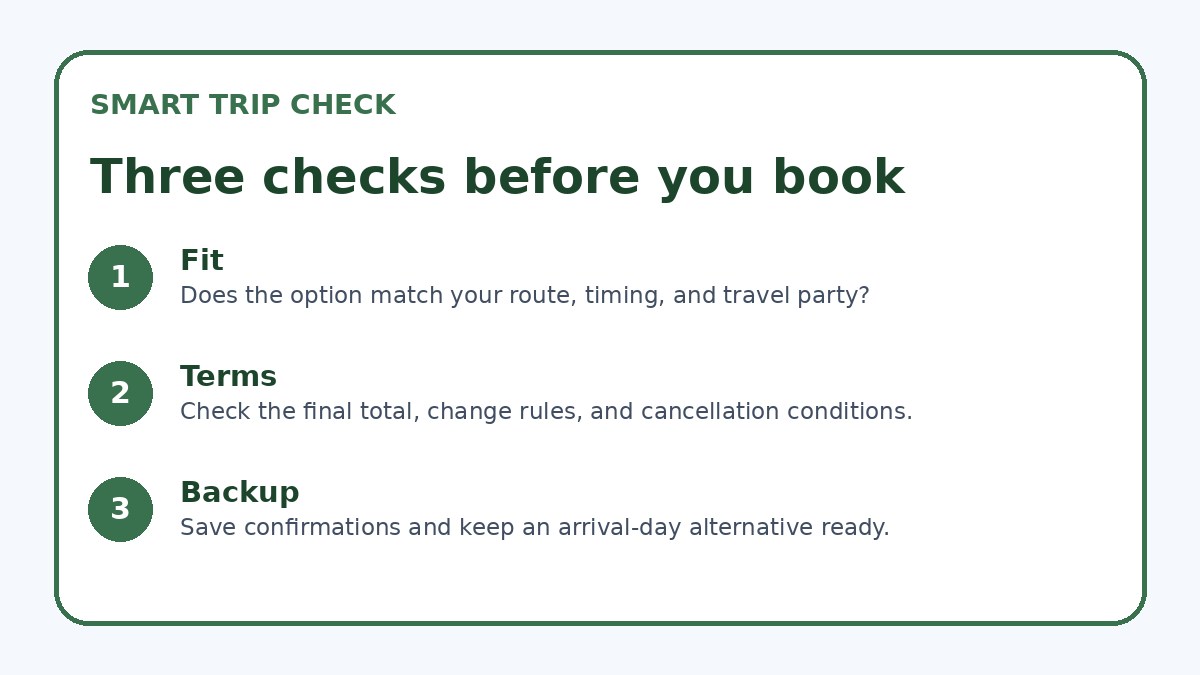
- Before booking, confirm whether both partners can be listed as drivers and what documentation each must present at pickup.
- Ask the rental company to send or print the exact CDW/LDW and liability terms and initial any contract changes at pickup.
- Call your personal auto insurer and your credit-card benefits line to obtain written statements about coverage limits and exclusions for rentals.
- Photograph the vehicle’s condition and ensure the agent records existing damage on the contract before you drive away.
- If purchasing coverage at pickup, request a physical receipt showing the coverage name, limits, and effective dates.
- If an incident occurs, file a police report, notify the rental company promptly, and keep all receipts and claim reference numbers.
Practical steps at pickup and if an incident happens
At pickup, don’t rush. Carefully review the contract line by line with your partner present. Point out and clarify any abbreviations like LDW, SLI, PAI (personal accident insurance), and PEC (personal effects coverage). Photograph existing vehicle damage from multiple angles and have the agent initial a damage checklist or write notes on the contract. If a spouse or partner is added at pickup, ensure both signatures are on the agreement and that any agreed waivers or discounts are printed on the final receipt.
If an accident or theft occurs, prioritize safety and law enforcement as needed, then document everything: police report, photos, witness names, and contact info. Call the rental company and, if applicable, your credit-card benefits number and personal insurer immediately. Keep receipts and all correspondence—rental firms and insurers will need incident dates, report numbers, and repair estimates. For couples, designate who handles calls and claim filings to avoid duplicated or conflicting information that can delay resolution.
Frequently asked questions
If only one partner’s name is on the rental, will the other partner be covered if they drive?
Not necessarily. Some rental companies allow permissive drivers such as spouses, domestic partners, or household members, but the rule varies by provider and location. If the partner drives without being added, the rental company can void coverages for damage and pursue the primary renter for costs. Always add both partners to the rental agreement before driving and have the agent initial the change. If you’re relying on a credit-card benefit, verify whether it requires the cardholder to be the primary driver and whether additional drivers are permitted.
Does my personal auto insurance or credit card cover damage in Los Angeles rentals?
It depends on your specific policy and card benefits. Many personal auto policies extend coverage to rentals, but limits, deductibles, and whether the rental is treated as primary or secondary differ by insurer. Some premium credit cards offer CDW/LDW for rentals when you pay with the card, but they often exclude certain vehicle categories, off-road use, or long-term rentals. Before relying on either, get written confirmation of covered per-incident limits, excluded losses (glass, tires, undercarriage), and whether you must decline the rental company’s waiver.
Should couples always buy the rental company’s insurance to avoid risk?
Not always. Buying the rental company’s CDW/LDW or SLI can provide immediate, primary protection and simplify claims handling, which many couples prefer for peace of mind. However, the added daily cost can be significant, and some couples are already fully covered through personal insurance or credit-card benefits. Balance financial tolerance for potential out-of-pocket expenses with convenience. If you opt for the rental company’s coverage, request the policy terms in writing and check for exclusions that matter to your planned Los Angeles driving (beaches, unpaved areas, or long-distance drives).
Final planning note
For couples renting a car in Los Angeles, the practical approach is to confirm who is authorized to drive, read the CDW/LDW exclusions, and verify liability limits before you sign. Decide together whether to rely on personal insurance, credit-card benefits, or to buy the rental company’s waivers based on your driving plans, risk tolerance, and how claims would be handled. Always get written confirmation—either a printed contract or emailed policy pages—so you have evidence if a dispute arises. At pickup, photograph the car, ensure both names are on the contract if needed, and have the agent initial any changes. These steps reduce surprises and let you enjoy your trip with clearer protection and shared responsibility.
Continue planning
Check current options and final conditions
Use the provider page to confirm live availability, the final total, cancellation terms, and every condition that matters to your trip.
This evergreen planning guide was created with AI-assisted drafting and a structured quality review. It does not display live prices, schedules, availability, visa guidance, or provider rankings. Verify current details before booking. Some links are affiliate links; we may earn a commission at no additional cost to you.