If you’re traveling solo between London and Paris, the single most practical choice is to decide whether flexibility in your schedule or door-to-door convenience matters more. Flexibility means accepting a wider range of departure times, possible connections, and extra time allowances to save stress or recover from delays. Convenience prioritizes simplicity: fewer transfers, airports closer to your accommodation, and minimal ground logistics even if that narrows your options or costs more. Start by estimating how fixed your arrival and departure windows are, how comfortable you are handling connections on your own, and how much local ground time (trains, transfers, waiting) you’re willing to accept. This article explains the tradeoffs, the decision criteria to compare options, sample booking checks, and a short checklist so you can book confidently while keeping your solo-traveler priorities in view.
See current options before you compare the details
Availability and final conditions change. Open Trip.com now or keep reading for the practical comparison.
Define your solo-traveler priorities
Start by listing constraints that matter most to you: fixed arrival windows (events, meetings), energy levels on travel days, willingness to navigate unfamiliar stations or airports, and your tolerance for uncertainty. Solo travel often magnifies the consequences of delays or missed connections because you won’t have a companion to share decisions or physical tasks like carrying luggage. If you’re visiting for a time-sensitive appointment or arriving late at night, convenience—fewer transfers and a straightforward route—usually reduces risk and stress. Conversely, if your schedule is flexible and you prefer cheaper or more numerous departure options, flexibility can expand your choices and potentially shorten waiting times between personal commitments.
Also consider your on-the-ground plan: where you’ll stay, how you’ll reach your accommodation from arrival, and whether you prefer arriving closer to the city center. Convenience frequently means choosing flights or rail-air combinations that land at airports or stations with simple, reliable onward transport. For flexibility, emphasize itineraries with alternative departure times or carriers offering easier change policies. Write down what a worst-case scenario would look like—missed connection, long wait, or lost luggage—and choose the option that keeps recovery manageable for you as a solo traveler.
Compare direct versus connecting options
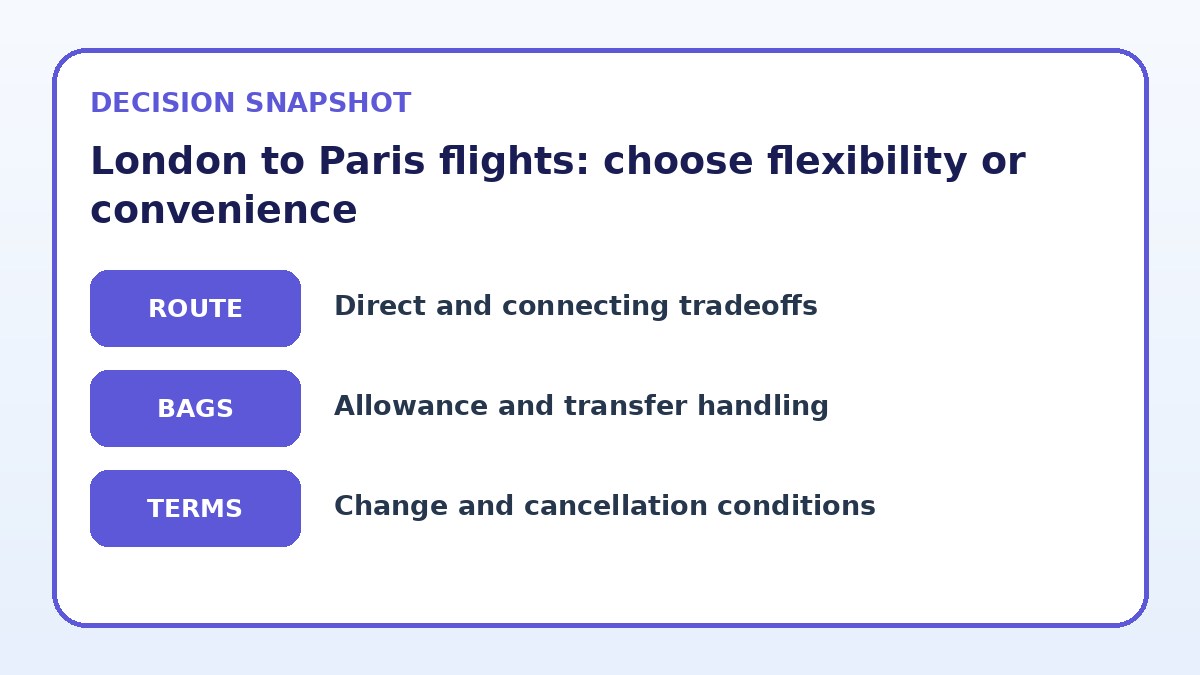
When comparing direct and connecting routes, measure total travel time door-to-door rather than focusing only on the airborne segment. A direct service that departs from an airport farther from your starting point might take longer overall than a short connecting option from a nearer airport. For solo travellers, direct journeys reduce decision points and the chances of something going wrong—but direct options can be less flexible in scheduling. If connection options exist that use friendly transfer hubs with clear signage and short change windows, they may be practical. Always check whether connections require terminal changes or transfers that could be tiring or complicated when traveling alone.
Because schedules and airport procedures can change, verify connection minimums and transfer details on the carrier’s booking page. If the itinerary includes an independent booking for a segment (for example, a separate flight and a train), make contingency plans: allow extra buffer time, buy travel protection if it helps, and know which provider to contact in case of delay. For solo travellers who dislike risk, booking a single-ticket itinerary that protects the entire journey under one carrier or alliance simplifies rebooking if something goes wrong.
| Approach | Best for | Tradeoff to check |
|---|---|---|
| Prioritize schedule flexibility | Travelers with open windows, tolerance for transfers, and a desire to maximize departure choices. | More complexity in transfers and higher risk of stress if connections are missed; requires buffer time and contingency plans. |
| Prioritize door-to-door convenience | Solo travelers who prefer straightforward logistics, minimal transfers, and predictable arrival times. | Often fewer departure options and potentially higher costs for direct or centrally timed journeys. |
| Book single-ticket itineraries | Those who want protection across all segments and simpler rebooking if disruptions occur. | May limit carrier options and flexibility; change policies depend on the ticket type and carrier terms. |
| Mix independent bookings (flight + train or separate carriers) | Flexible planners who can absorb disruption risk to get better timing or savings. | No automatic protection between legs; you must manage missed connections and rebooking yourself. |
Ready to check the option that fits your plan?
Use your exact dates and traveler details so the provider page can show the current total and conditions.
Balance price sensitivity with practical convenience
Budget is important, but the cheapest option isn’t always the least costly overall when you factor in transfers, local taxis, and potential overnight stays if schedules are tight. For solo travelers, paying a bit more for a simpler connection or an airport closer to your stay can save energy and reduce logistic friction. Evaluate whether a modest premium for earlier or later departures, better transfer options, or a single-ticket route is worth the reduced hassle. Think about how much time you value and how travel fatigue might affect your trip; for many solo travelers, a little extra convenience buys confidence and more enjoyable time at the destination.
If you’re flexible on dates or times, use that flexibility to compare several itineraries across different days; small shifts in departure time can change connection quality and transfer complexity. When assessing total cost, include predictable local expenses like airport transfers and public transport into your calculation. If provider-specific transit or baggage rules could affect your choice, check those exact details on the final booking page before committing. Trip.com can be used to compare current availability and options, but always confirm the precise itinerary, baggage allowance, and change/cancellation terms with the carrier at booking.
Before you book
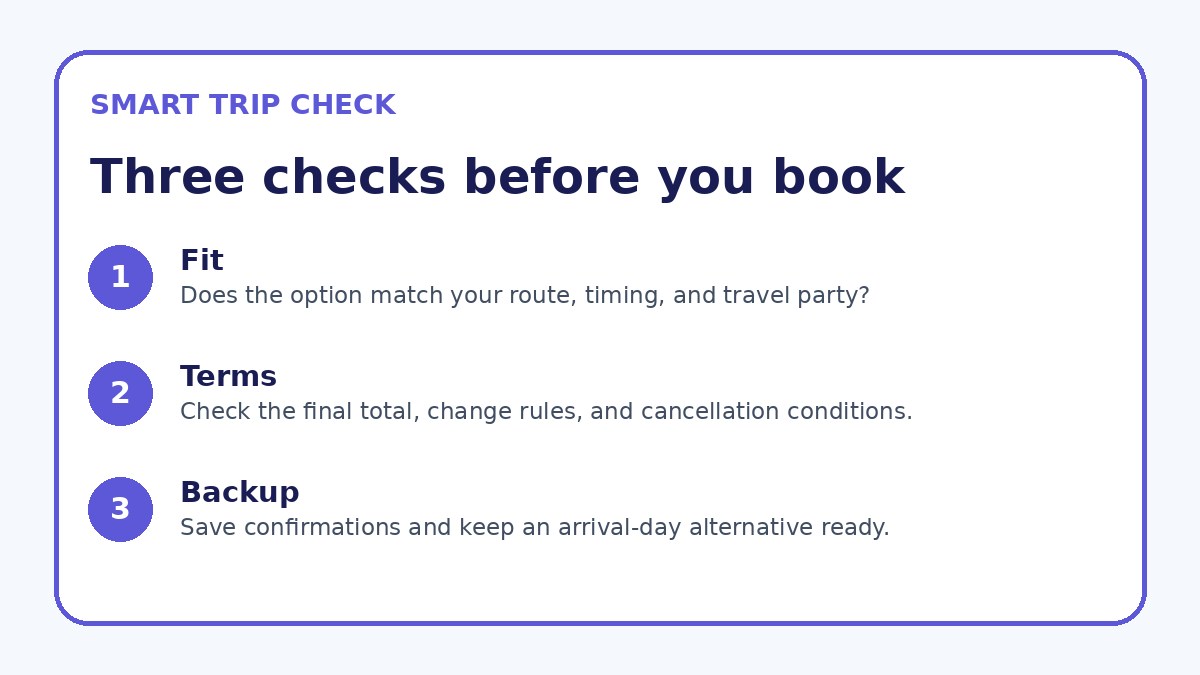
- Confirm the exact departure and arrival airports or stations and map door-to-door travel times to your lodging.
- Verify baggage allowances and fees on the carrier’s final booking page before purchasing.
- Check whether your itinerary is on a single ticket or separate bookings and note the consequences for rebooking.
- Plan buffer time for security, passport control, and transfers; increase buffers if unfamiliar with the hub.
- Download digital confirmations and save phone numbers for carriers and local transfer services.
- Leave a simple itinerary with someone at home and buy travel protection if you want cover for missed connections.
Practical booking and day-of-travel checks
Before you buy, run a checklist: confirm the airport or station names, transfer times to and from your lodgings, baggage rules, and whether your ticket is protected across connections. For solo travellers, it’s helpful to choose itineraries with longer layovers if you’re unfamiliar with the transit hub, or to pick direct routes if you prefer minimal choices on the day of travel. If you book two separate legs with different providers, prepare for the possibility of rebooking if one leg is delayed—ensure you have a plan B for overnight accommodation or later departures. Check the final carrier booking page for the up-to-date baggage and change terms since those often alter the practical convenience of an itinerary.
On travel day, arrive with digital and physical copies of confirmations, a local currency backup for incidental fees, and a realistic schedule that includes buffer time for check-in, security, and passport checks. For solo travelers, wearing comfortable, layered clothing and carrying a compact daypack with essentials (chargers, snacks, documentation) makes transfers easier. If you prefer extra assurance, add travel insurance that covers missed connections or delayed departures; verify the provider’s exact coverage terms before purchase. Finally, leave a simple itinerary with a friend or family member so someone knows your expected arrival time and route.
Frequently asked questions
Should I choose an early morning or evening departure when traveling solo from London to Paris?
Choose based on how you manage energy and risk. Early departures can reduce the chance of upstream delays affecting your journey and may leave more of the day free at your destination, but they require earlier starts and reliable early-morning transport to the airport. Evening departures might suit travellers who prefer a relaxed morning and can handle arriving later in the destination. Consider how local transport at arrival operates at those hours and whether you can reach your accommodation easily on arrival. Balance personal energy levels, the local transfer situation, and whether you want buffer time in case of delays.
How much connection time should a solo traveler allow if choosing a connecting itinerary?
Allow extra connection time compared with what you’d accept when traveling with others. Solo travelers should factor in time for gate changes, terminal transfers, passport control, and any baggage recheck. If the connection requires a terminal shuttle or a train between terminals, add more buffer. When comparing options, check the provider’s stated minimum connection time but add a safety margin that reflects your confidence navigating the hub and the consequences of a missed connection. If you’re unsure, favor longer layovers or a single-ticket itinerary that protects connections.
Is it safer to book everything through one provider or split bookings to save time or money?
Booking a single-ticket through one provider or alliance generally offers simpler rebooking and protection if one leg is delayed, which is attractive for solo travelers who want to minimize stress. Split bookings can provide better times or costs but shift the responsibility for missed connections to you and may require unplanned expenses or overnight stays. Decide based on how comfortable you are managing disruptions: if you prefer a straightforward experience, prioritize single-ticket itineraries; if you accept the risk and can absorb possible delays or costs, splitting bookings can be a viable option.
Final planning note
Choosing between schedule flexibility and convenience on London to Paris flights comes down to a personal tolerance for risk, the importance of arrival timings, and how much effort you want to spend managing logistics as a solo traveler. If you value simplicity and predictability, favor direct or single-ticket options that reduce decisions and protect connections. If you’re flexible about times and willing to navigate transfers, broader options can save time or money and expand departure choices. Whichever path you pick, compare total door-to-door time, verify baggage and change policies on the carrier’s final booking page, and use the practical checklist above to prepare. A little planning up front keeps the journey manageable and lets you enjoy Paris sooner.
Continue planning
Check current options and final conditions
Use the provider page to confirm live availability, the final total, cancellation terms, and every condition that matters to your trip.
This evergreen planning guide was created with AI-assisted drafting and a structured quality review. It does not display live prices, schedules, availability, visa guidance, or provider rankings. Verify current details before booking. Some links are affiliate links; we may earn a commission at no additional cost to you.