Practical answer first: choose a small family-friendly car (or two if you have a large party), book child seats and satellite navigation in advance, pick accommodation with secure parking, and plan daily legs under two hours to avoid brittle patience and traffic stress. For first-time visitors, drive only where it helps—day trips to the Cotswolds, Kent coast, or Windsor can be great, but central London is best explored on foot and public transport. Tradeoffs include convenience versus parking cost and congestion, the comfort of a larger vehicle versus narrow country lanes, and the freedom of driving versus the stress of unfamiliar road rules. This guide explains those tradeoffs and gives decision criteria so you can pick the right car, route, and practical checks before you click confirm.
See current options before you compare the details
Availability and final conditions change. Open Trip.com now or keep reading for the practical comparison.
Choosing the right vehicle and child safety
Start by matching vehicle size to family needs: space for suitcases, room for two child seats if required, and a comfortable rear bench for longer drives. Compact hatchbacks are easy to park in London and narrow villages but may lack boot space for larger families. Estate (wagon) or compact SUVs offer a better compromise between cargo capacity and maneuverability. If you plan to use trunk-mounted child seats, check whether the rental has ISOFIX anchor points and request appropriate seats when you book. When in doubt, choose the next size up rather than squeezing into the smallest class.
Child seats and boosters are often charged separately; reserve them at booking and verify the manufacturer or certification details on the provider’s page. Confirm that the vehicle’s seat layout fits two seats side-by-side if you need them; some family cars have narrow rear benches. For family comfort, consider built-in climate control and the ability to fit soft luggage rather than rigid suitcases that limit boot flexibility. Finally, photograph the vehicle on pickup and note existing damage on the rental agreement before you drive away.
Where to drive from London and how to plan routes
Decide whether the trip’s purpose is sightseeing or access to countryside accommodation; this determines how much of London you should drive through. Many visitors avoid driving in Central London because of congestion, restricted zones, and scarce parking; instead, start drives from outer London or hire from an airport or suburban location. Popular family-friendly legs from London include Windsor and the Thames Valley, the Kent coast and castles, and the scenic routes into the Cotswolds. For each potential day trip, plan a realistic itinerary with clear start and end points and known stops for fuel, groceries, and toilets.
Use route planning that blends motorway efficiency and scenic secondary roads—motorways save time but can be noisy and less interesting for children, while B-roads are slower but often more engaging. Compare door-to-door travel time estimates, but add buffer time for family stops and unexpected delays. Check height and width restrictions for rural lanes or village parking if you’re in a tall vehicle. Before departure, download offline maps and directions in case of patchy mobile reception and check whether tolls or low-emission zones apply on your intended route; verify any applicable restrictions on official pages or the rental booking details.
| Approach | Best for | Tradeoff to check |
|---|---|---|
| Compact car | City driving and tight parking | Less boot space and may feel cramped on long rural drives |
| Estate or compact SUV | Families needing luggage room and rear-seat comfort | Wider footprint can be harder to park in narrow village bays |
| Two smaller cars | Large groups wanting flexibility and easier parking | Higher total cost, extra coordination, and two drivers required |
| Public transport + occasional rental | Avoiding London driving hassles while still visiting countryside | Less spontaneous freedom and more planning for timed connections |
Ready to check the option that fits your plan?
Use your exact dates and traveler details so the provider page can show the current total and conditions.
Parking, low-emission zones, and London driving rules
Central London includes congestion and low-emission zones that affect rental cars; many visitors avoid the center’s driving restrictions entirely. If your route must enter restricted zones, verify on the rental provider’s booking page whether the vehicle and your booking include the correct emissions classification and who pays zone charges and fines. Find accommodation with designated parking when possible—on-street parking in residential areas often requires permits or timed bays, and public car parks in tourist areas vary widely in height clearance and size of spaces. Planning where you will park each day reduces frustration significantly.
Understand basic UK driving conventions before you set off: drive on the left, roundabouts circulate clockwise, and speed limits are posted in miles per hour. Familiarize yourself with local signage for single-track lanes, passing places, and narrow bridges common in rural England. If you’re unsure about automatic versus manual transmission, request an automatic when you book; manuals are common in Europe. Finally, confirm fuel type and nearest fuel stations to your route, and check the provider’s policy on returning the car with a full tank versus the fuel purchase options at drop-off.
Before you book
- Reserve the correct child seats and confirm ISOFIX or seat-belt compatibility on the booking page.
- Choose vehicle size that fits your luggage with at least one spare boot configuration tested in photos.
- Book accommodation that explicitly states secure on-site parking and vehicle size limits.
- Capture dated photos of the car’s condition at pickup and ensure all damage is recorded on the rental agreement.
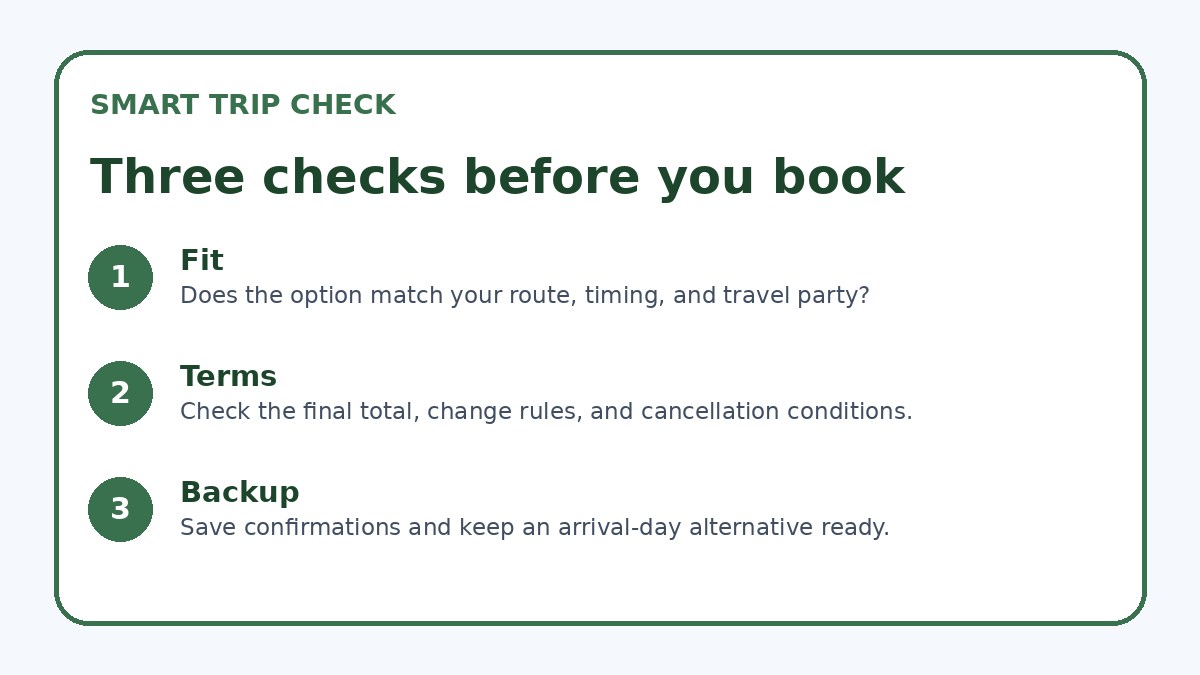
- Verify mileage allowance, cross-border permissions, fuel policy, and who pays congestion or emissions charges on the provider page.
- Carry the main driver’s licence, payment card in the driver’s name, booking confirmation, and printed contact for roadside assistance.
Booking decisions, insurance, and final checks
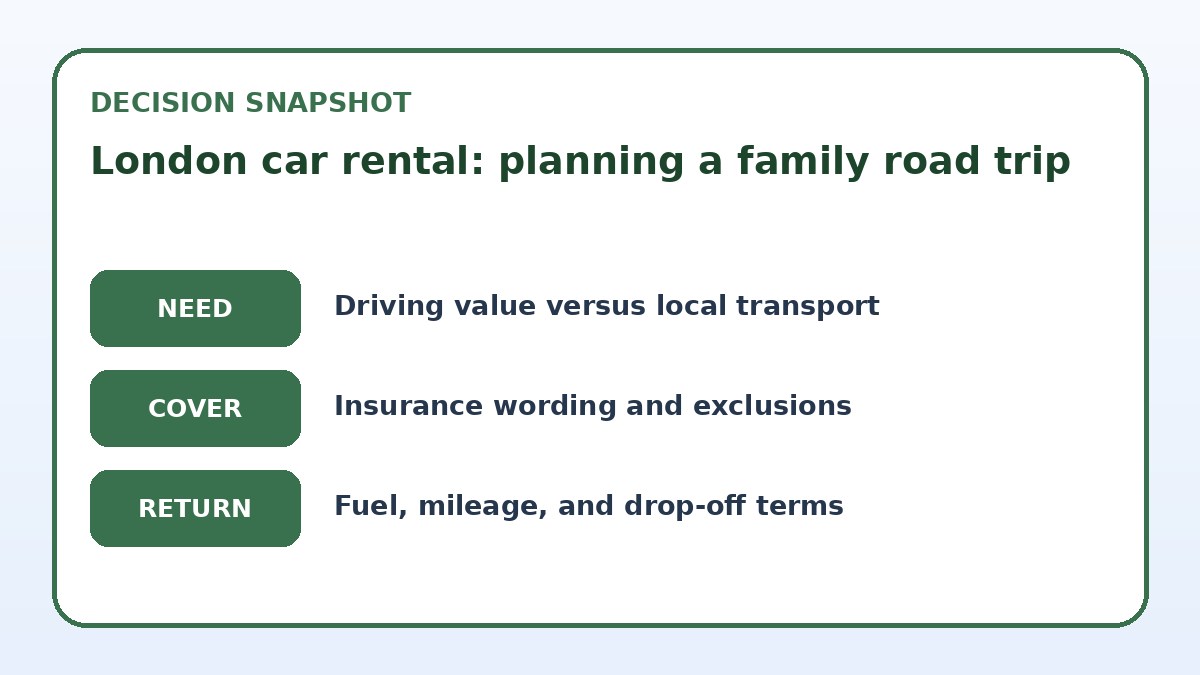
When comparing booking options, balance cancellation flexibility, included mileage, and the level of damage protection. Many providers offer supplementary waivers and excess-reduction products; read the rental’s booking page to see exactly what is covered, what excess remains, and how claims are handled. Check also whether roadside assistance is included and what the contact process is in case of a breakdown. If you plan to cross into mainland Europe, confirm cross-border permissions and any additional fees or documentation required by the provider on their official booking details.
Before you confirm, prepare a checklist for pickup: driver’s licence (and international permit if required), credit or debit card in the lead driver’s name, booking confirmation, child seat vouchers, and photographic ID. At collection, inspect the car thoroughly and get all existing damage recorded on the agreement; test the lights, horn, and demisting, and confirm the fuel level and tyre condition. If anything is unclear on the rental page—charges, mileage caps, or deposit handling—ask the provider directly and save email confirmation of their response. You can compare current availability and options on sites such as Trip.com, but always verify critical policy details on the rental company’s own booking page.
Frequently asked questions
Is driving in London necessary for a family visiting for the first time?
No—central London is compact and best explored by walking and public transport; many attractions are linked by Tube and buses. Renting a car makes sense if you plan day trips outside the city to places that are poorly served by direct public transport, such as remote countryside cottages or a multi-stop regional itinerary. Consider a hybrid approach: use trains or Tube for inner-city days and hire a car for specific day trips or when moving between rural bases. Assess the convenience of parking at each planned stop before deciding to include driving in your itinerary.
What should I check about insurance and liability when I book a London car rental?
Read the rental booking page carefully to see what standard cover includes and what the excess (financial liability after a claim) would be. Providers often sell reductions of excess and supplementary protection—verify whether these are administered by the rental company or a third party. Confirm whether roadside assistance and theft cover are included, and ask how claims are processed and whether examples of possible charges are listed. If using a credit card or separate insurer for collision coverage, verify acceptance by the particular rental company on their booking page before declining onsite options.
How do I handle parking and low-emission zones when driving from London?
Identify whether your planned driving area includes the Ultra Low Emission Zone (ULEZ) or other city restrictions and confirm on the rental provider’s page who is responsible for related charges and fines. For parking, prioritize accommodation with secure on-site space or book public car parks in advance when possible. Check height and width limits for car parks if you have a taller vehicle. On arrival at any new town, look for official long-stay car parks outside central zones and use short walking distances or local transit to reach attractions to reduce central driving and parking stress.
Final planning note
Planning a family road trip from London is about balancing convenience, comfort, and local constraints. Choose a vehicle that matches luggage and child-seat needs, favor accommodation with clear parking, and plan short daily driving legs to keep children on routine and adults relaxed. Verify insurance details, zone charges, and any cross-border rules on the rental company’s booking page before you commit. Use public transport for central London days and reserve driving for countryside legs where a car genuinely adds value. With the right prep and realistic daily plans, driving can expand your family’s access to England’s quieter sights without turning the trip into a logistical headache.
Continue planning
Check current options and final conditions
Use the provider page to confirm live availability, the final total, cancellation terms, and every condition that matters to your trip.
This evergreen planning guide was created with AI-assisted drafting and a structured quality review. It does not display live prices, schedules, availability, visa guidance, or provider rankings. Verify current details before booking. Some links are affiliate links; we may earn a commission at no additional cost to you.