Practical answer first: for many families visiting central Kyoto a rental car is more hassle than help — narrow streets, limited parking, and excellent public transit often mean you’ll gain more comfort by staying near transit hubs. However, if your plans focus on outlying attractions (e.g., Amanohashidate, rural temples, or day-trips into Kansai countryside) and you value schedule flexibility or managing small children and luggage, a car can be a clear win. This article helps you decide by testing your route value (what you want to see and where it sits), explaining insurance language you’ll encounter, mapping pickup and return friction, and giving a solid non-driving fallback that keeps a family itinerary realistic. Read this with your exact day list in hand and you’ll know whether to book wheels, reserve a family-friendly rail-first plan, or combine both approaches.
Route value: when driving genuinely improves a family trip
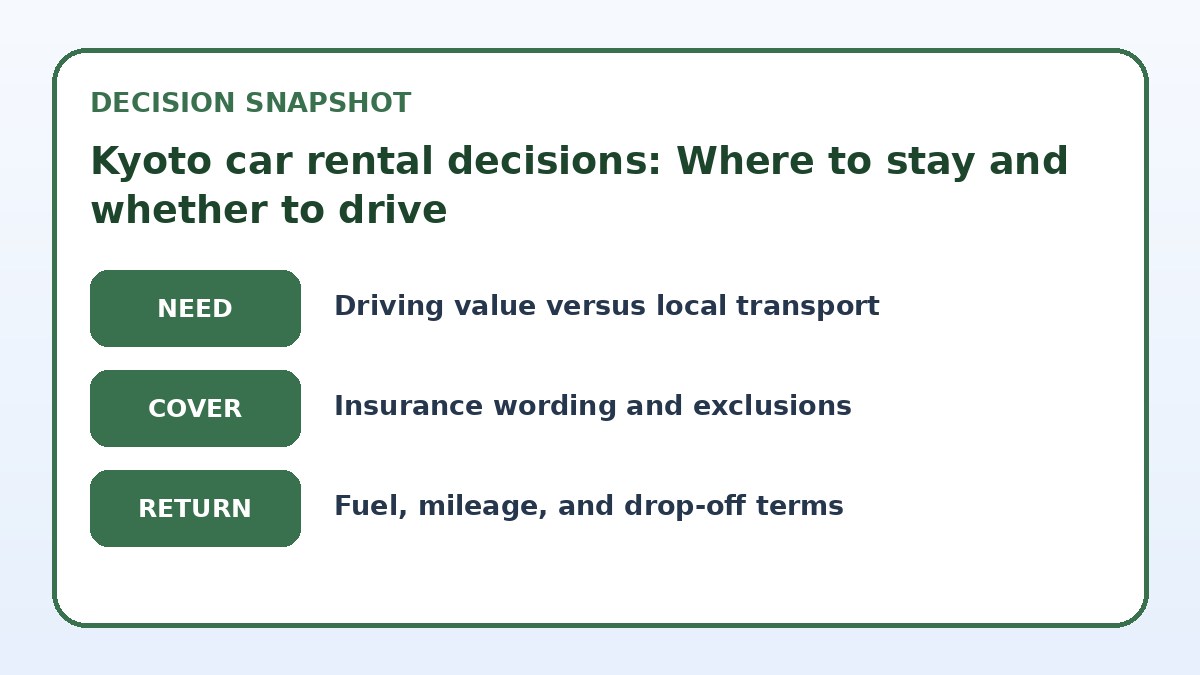
Start by mapping your must-see stops and noting whether they cluster inside central Kyoto (Gion, Higashiyama, central shrines and temples) or stretch into rural areas. Driving adds clear value when itineraries include attractions with poor public transit links, early-morning or late-night departures, or when hauling strollers, multiple suitcases, and child seats would make transit transfers unpleasant. If your family enjoys scenic side trips—coastline viewpoints, small temples beyond main rail lines, or multiple shrine visits across wider Kansai—driving reduces repeated transfers and timetabling stress.
Also weigh the frequency of daily stops. For a day with many short, dense stops inside Kyoto, a car increases parking time and frustration more than travel time savings. Conversely, if your plan is a handful of long-distance hops with multi-hour gaps between sites, a car’s door-to-door convenience often offsets tolls and parking fees. Use a rough mileage estimate and travel-time comparison (door-to-door driving versus combined train/bus transfers plus walks) to identify whether the car shortens actual family time or just moves the same delays to different places.
Decide whether driving earns its place
| Mobility strategy | Best for | Cost or friction to check |
|---|---|---|
| Full rental car (whole trip) | Families with multiple rural day-trips or heavy luggage and flexible driving confidence. | Easier long-distance access but added parking, city driving stress, tolls, and potential insurance complexity. |
| Hybrid plan (rent only for specific days) | Families who mostly use transit but need a car for one or two remote excursions. | Saves city hassle and cost on non-driving days but requires coordination and potentially two sets of pickups. |
| Transit-first (trains, buses, taxis) | Families staying central who want predictable scheduling and minimal parking headaches. | Less flexibility for remote sites and more handling of luggage and strollers on transfers. |
| Private driver or guided day-trip | Families wanting door-to-door service for a day without dealing with insurance or navigation. | Higher per-day cost than driving yourself and less control over spontaneous schedule changes. |
Check live rental choices only after the route test
Use the exact driver, dates, pickup point, and return plan to compare current conditions.
Insurance wording families must verify before booking
Insurance descriptions vary. On the booking page check three elements: liability coverage limits, collision damage waiver (CDW) specifics including deductible amounts, and whether the quoted rate includes roadside assistance. For families, pay particular attention to language about who is an authorized driver (are additional drivers included), and whether child-seat damage or lost items during an accident are excluded. If the rental site mentions only general liability or ‘basic insurance,’ contact the provider to get exact limits and confirm what the excess (deductible) would be in a typical claim.
Also verify how insurance interacts with any personal travel insurance or credit-card coverage you have. Many cards require specific wording, such as refusal of supplementary CDW at pickup, to enable their protection. If you plan to decline the rental company’s CDW to rely on your card, ask for written confirmation of the rental company’s position and confirm that roadside assistance remains available. Finally, keep copies (digital and print) of the rental agreement, insurance declarations, and emergency contact numbers in case you need them away from the counter.
Compare the full rental conditions
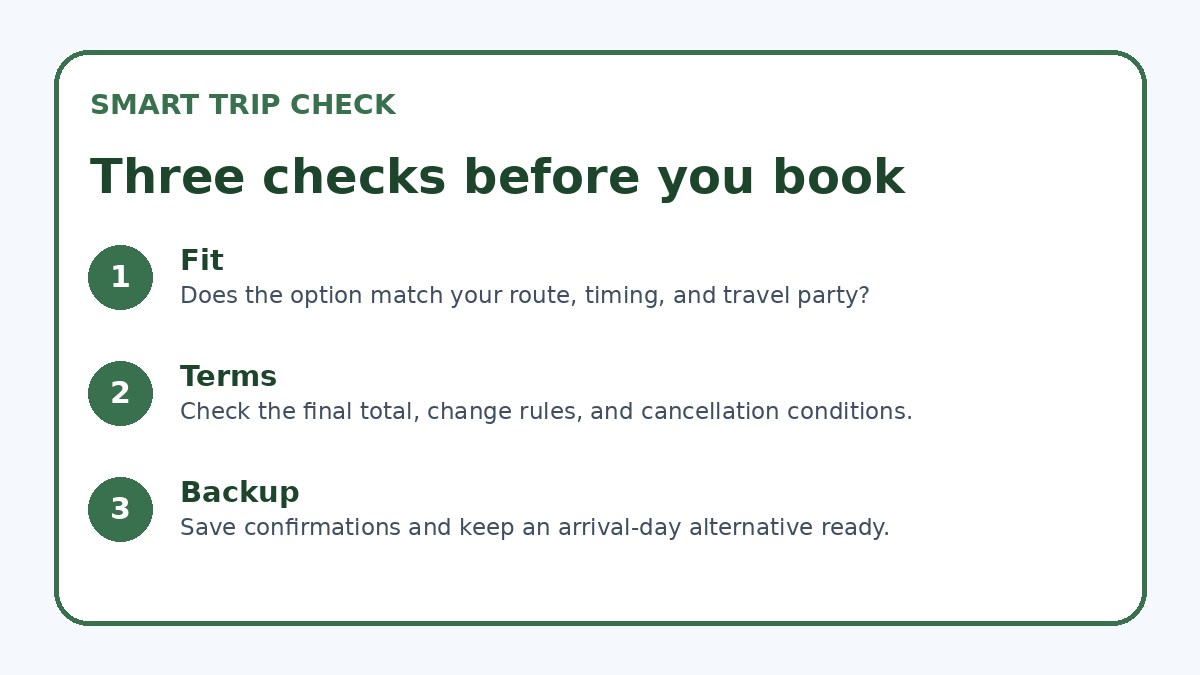
Confirm insurance wording, exclusions, deposit, fuel, mileage, and return terms on the final page.
Pickup and return friction: practical logistics with kids
Pickup location matters for family stress levels. Airport counters often offer bilingual staff and more space for stroller assembly, but returning at a busy airport after a long drive can add lines and waiting. City-center desks may be closer to your lodging but could be smaller and less flexible with luggage during pickup. Check where child seats will be fitted: some companies pre-install them if requested; others provide booster options that require you to install. Ask whether staff will help with installation and whether there is a fee for driver changes or late returns.
Consider tolls, parking, and narrow-street navigation as part of the pickup/return calculus. Kyoto’s older neighborhoods have tight streets and limited on-street parking; finding a convenient parking lot large enough for your vehicle and stroller can add minutes or even half-hours per stop. Also check the rental company’s policy on fuel: prepaid fuel options may seem convenient but can be more expensive if you can refuel locally before returning. Finally, ask about child-friendly extras—roof racks for bulky gear are rare; a comfortable family car with enough trunk space matters more than luxury options.
Car rental terms to verify
- List every attraction and estimate door-to-door travel time by car and by transit to compare real family time saved.
- Confirm rental insurance details: liability limits, CDW deductible, roadside assistance, and authorized driver names in writing.
- Check pickup and return locations for space to assemble child seats and whether bilingual assistance is available at the counter.
- Estimate parking availability and cost near your primary accommodations and main sites; mark at least one backup parking lot.
- If relying on public transit, reserve lodging near a major station and identify taxi ranks for late arrivals or tired children.
- If booking a car for only certain days, reserve identical pickup and drop-off locations to minimize return friction and extra fees.
Non-driving fallback: build a stress-free plan without a car
A strong non-driving plan for families in Kyoto pairs a well-located base with a mix of subway, bus, taxi, and occasional day-trip trains. Choose lodging near a major subway station or Kyoto Station itself to minimize transfers and trunk hauling. Buses serve many temples and scenic districts, though they can be crowded; plan visits early or late morning to avoid peak commuter times. For short hops with luggage or tired children, taxis offer reliable, door-to-door relief—budget them into the trip for at least a couple of afternoons.
For day-trips beyond central Kyoto, use regional trains that connect to coastal or rural areas, and pre-plan transfers with buffer time for rest and meals. When public transit doesn’t match needed timing, consider a hybrid approach: rent a car just for one or two specific days instead of the whole stay. That gives the benefits of driving for remote excursions but avoids city parking hassles. If you use a car for a day, book the same pick-up and drop-off location to minimize time lost in returns.
Car Rental & Road Trip questions travelers ask
Are child seats easy to get with a Kyoto car rental?
Most rental companies in Japan offer child seats for an extra fee and sometimes by age group (infant, toddler, booster). Availability varies by location and model, so request and confirm the seat type when you make the reservation and again two days before pickup. Ask whether staff will install the seat at the counter; if not, factor installation time into your schedule and bring any mounting instructions or familiar straps if you prefer to install it yourself. Always check the rental agreement’s wording on seat damage and cleaning fees.
How do tolls and parking typically affect family driving costs in Kyoto?
Tolls on expressways add up on longer day-trips outside Kyoto, and many urban parking lots charge hourly or daily rates that can exceed expectations. When estimating costs, map likely parking locations near each attraction and note their posted hours and rates; some sightseeing areas have limited lots that fill early. Consider whether a single parking fee for a longer stay plus walking is cheaper than repeated short-term parking for many stops. On booking pages, verify whether tolls are billed separately or included in the rental invoice.
Can I combine a rental car with Japan Rail passes or local rail tickets?
Yes; many families use rail for city travel and reserve a rental car for specific side trips. Compare schedules: if a regional rail route offers few daily services to your desired rural spot, a car day may be preferable. If you hold a rail pass, check whether lines you need are covered and whether reserving seats is necessary. When booking the car, note where you will pick it up—near a station or at an airport—and factor the time and cost to transfer between the train and rental desk. Keep tickets and car reservations easily accessible.
Final decision note
Deciding whether a Kyoto car rental fits your family trip comes down to route geometry and stress tolerance. If your days cluster inside central Kyoto with frequent short visits and easy access to subways and buses, you’ll likely prefer a transit-first approach that avoids parking and tight-street navigation. If you plan several long day-trips, travel with bulky gear, or need flexible timing for young children, renting for those specific days delivers clear benefits. Whatever you choose, verify insurance wording, pickup/return logistics, and parking details before booking. Consider a hybrid option—public transit for city days and a rented car for select excursions—to balance convenience, cost, and family comfort.
Continue planning
Check current options and final conditions
Use the provider page to confirm live availability, the final total, cancellation terms, and every condition that matters to your trip.
This evergreen planning guide was created with AI-assisted drafting and a structured quality review. It does not display live prices, schedules, availability, visa guidance, or provider rankings. Verify current details before booking. Some links are affiliate links; we may earn a commission at no additional cost to you.