If you’re booking Honolulu for business, the headline fare or room rate rarely equals the amount you’ll pay. The practical first step is a short cost sheet to capture all components: base airfare, baggage or corporate fare rules, checked and carry-on charges, ground transfers from Daniel K. Inouye International Airport to your hotel, expected taxi or ride‑hail costs, hotel incidental deposits and resort fees, meeting or coworking charges, and any reimbursements your company will actually cover. Build this list before choosing dates or suppliers so you can compare total outlays across several options. This approach highlights tradeoffs—paying more for a direct flight but saving time, or choosing a cheaper hotel that adds long daily commutes and per‑day parking—and keeps your approval requests transparent and accurate.
See current options before you compare the details
Availability and final conditions change. Open Trip.com now or keep reading for the practical comparison.
Flights: add ancillary fees and schedule risk
When evaluating Honolulu flight options for business travel, look past the fare class to the ancillaries that typically land on the final charge screen. Add baggage costs (checked and oversize), seat selection fees for preferred seats, and any additional costs for flexible or refundable fares. If your company requires specific ticketing—like government fares or corporate fares—confirm whether those rates include changes or cancellations. Also verify what forms of ID or compliance codes the airline requires for corporate bookings to avoid a surprise at check-in.
Schedule risk is another cost vector: a shorter connection or a single‑stop routing may raise the chance of missed meetings if delays occur. Compare the value of a longer but more reliable itinerary versus a cheap fare that offers no protection or a tight connection. On the provider’s booking page, check the exact routing, flight durations, and the airline’s published change and delay policies. If you need current availability and conditions to finalize a comparison, you can briefly check Trip.com or the airline’s site, but always confirm the final total and policy language on the seller’s checkout page.
Hotels: beyond the headline room rate
Hotel rates often exclude mandatory taxes, transient accommodation taxes, or destination fees that appear late in checkout. For business travelers this can matter because per diems or corporate card limits are fixed. When comparing properties, record the nightly room rate, mandatory fees, estimated daily incidental deposits, and whether breakfast or meeting space is included or billed separately. If your stay requires reliable Wi‑Fi, printing, or a workspace, verify whether those services are complimentary or charged per use—those line items add up when you’re on a multi‑day business trip.
Location and transit impact cost too: a cheaper room far from your meeting venue may add repeated ride‑hail or parking expenses. If you’ll need parking for a rental car or expect frequent trips to a conference center, ask the hotel about parking fees and shuttle availability. On the hotel’s booking page, confirm the cancellation window and any prepayment requirements, and check the final price breakdown that lists taxes and mandatory fees. If your company needs invoices for reconciliation, verify the property will provide them in a format that meets accounting rules.
| Approach | Best for | Tradeoff to check |
|---|---|---|
| Book cheapest base fare and add ancillaries | Travelers covered by flexible corporate reimbursement limits | May save on upfront fare but pay more in extras and accept higher schedule risk |
| Book refundable/flexible fare with higher base price | Meetings with uncertain timing or high schedule sensitivity | Higher ticket cost but lower change fees and more operational flexibility |
| Stay near meeting venue (pay higher nightly rate) | Day‑packed schedules where time is the priority | Saves commute time but can increase room and incidental fees |
| Choose lower‑cost hotel farther away | Cost-conscious trips where meetings are few or remote | Lower room cost but adds daily transportation and potential lost time |
Ready to check the option that fits your plan?
Use your exact dates and traveler details so the provider page can show the current total and conditions.
Ground transport and local mobility
Count the typical door‑to‑door transfer cost between Honolulu Airport and your hotel as part of the trip total. Options include taxis, ride‑hail services, shuttles, car rentals, and hotel transfer services—each has different pricing behavior during peak times and holidays. For rentals, include insurance options, additional driver fees, and parking costs at your hotel and meeting venues. If you plan to use ride‑hail frequently, estimate daily ride counts and average fares to compare against a rental or shuttle pass.
Transit time can affect meeting-day productivity, so weigh faster but costlier transfers against slower, cheaper alternatives. If meetings start early, confirm first-run public transit or shuttle schedules on the provider’s page. Ask whether your hotel offers a business center with printing and courier services and add those charges into your estimate if you’ll need them. Keep receipts and note which expenses the company will reimburse to avoid personal liability for miscellaneous transport costs.
Before you book
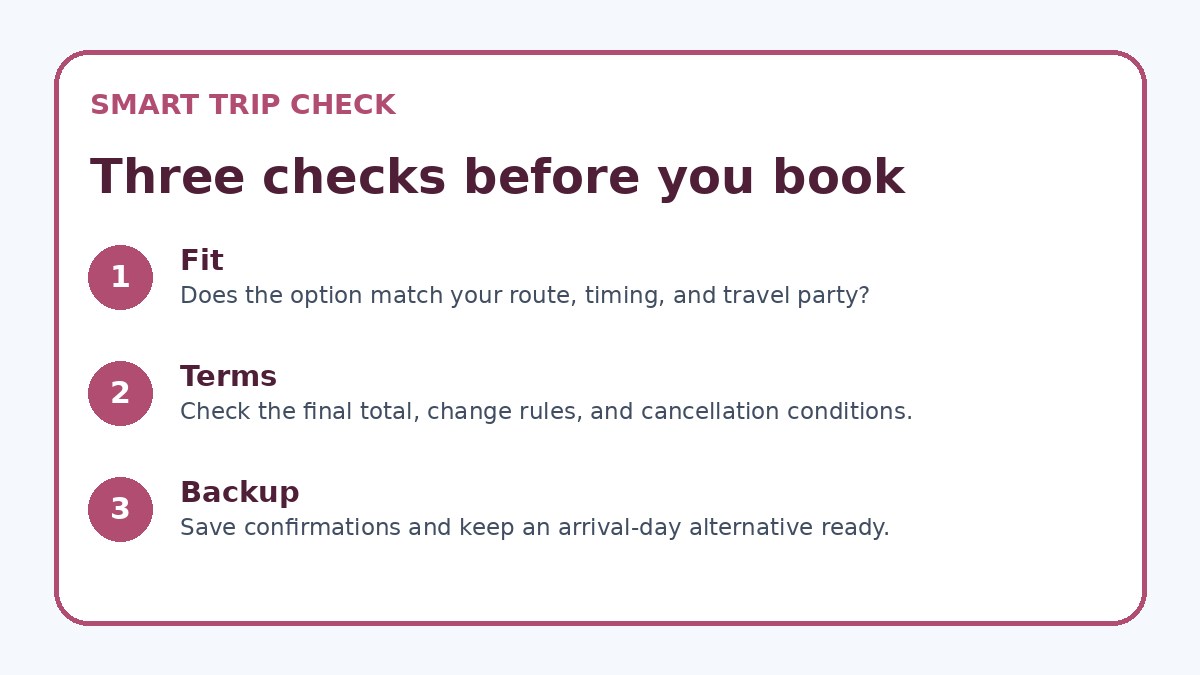
- Build a comparison spreadsheet row that lists total expected cost per option including base fare, ancillaries, taxes, and hotel fees.
- Confirm on the airline booking page: exact routing, checked baggage rules, seat fees, and change/cancellation conditions.
- On the hotel checkout page verify the nightly rate breakdown, mandatory fees, deposit policy, and invoice availability for expense reporting.
- Estimate daily ground transport costs from airport to hotel and to meeting sites and add parking or rental insurance where applicable.
- Match chosen fare classes and hotel categories to your company travel policy and secure preapproval if any item is out of policy.
- Save the final provider receipts and the full booking confirmation with line‑item totals to support expense claims and dispute resolution.
Corporate policy, taxes and paperwork to confirm
Before finalizing any booking, match the chosen options against your company’s travel policy: approved fare classes, allowable hotel categories, per diem limits, preferred vendors, and required expense documentation. If your employer requires preapproval for out‑of‑policy bookings, prepare a cost comparison that includes the added fees you identified so an approver can see the full financial impact. Also check whether certain vendors automatically issue the invoices or receipts your accounting team needs for reconciliation.
Taxes and local charges can differ for business and leisure stays; confirm on the hotel or booking page whether any business‑use declarations, occupancy tax waivers, or municipal surcharges apply. For international staff traveling to Honolulu, check customs and entry requirements separately—those are not included here—and verify the refund or change policies on the final checkout page of any vendor before paying. Keep a copy of the full booking confirmation and the final price breakdown for expense reporting and any dispute resolution.
Frequently asked questions
How do I compare total trip cost quickly when booking Honolulu travel deals?
Create a single, simple spreadsheet row for each itinerary or hotel: base fare or room rate, mandatory taxes and fees, baggage and seat charges, and estimated ground transport and incidental costs. Include whether the fare is refundable or changeable and the expected time cost for connections or transfers. This lets you sort by total expense and choose the option that best fits your company policy and schedule needs rather than focusing only on the lowest headline rate.
What should I verify on the provider’s booking page before final payment?
On an airline or hotel site check the final price breakdown that lists taxes, mandatory fees, and any prepayment or deposit requirements. Confirm change, cancellation, and refund policies and whether ancillary services (like baggage, seat selection, Wi‑Fi, or parking) are included or extra. Also verify the exact routing and timing for flights or the room type, bed configuration, and invoice availability for hotels so there are no surprises during expense reconciliation.
Should I book a direct flight or a cheaper connecting itinerary for business travel to Honolulu?
Weigh schedule certainty and total door‑to‑door time against fare savings. Direct itineraries reduce the risk of missed connections and can be worth the premium if meetings are tightly scheduled; connecting options may lower base fares but add potential delay and additional transfer costs. Compare the final all‑in cost, including any extra night, transport, or lost productivity you’d incur if a connection fails, and align the choice with how flexible your meeting schedule and company policy are.
Final planning note
For business travelers booking Honolulu, the most reliable decision comes from comparing total trip cost—not just headline fares or room rates. Assemble the full set of charges: airfare plus ancillaries, hotel nightly rate plus mandatory fees, ground transfers, parking or rental‑car insurance, and likely incidental expenses. Cross‑check the final price breakdown and policy language on the actual provider checkout page, and align selections with your corporate travel rules before seeking approval. This discipline reduces surprise outlays, speeds reimbursement, and helps you choose the option that balances time, cost, and risk.
Continue planning
Check current options and final conditions
Use the provider page to confirm live availability, the final total, cancellation terms, and every condition that matters to your trip.
This evergreen planning guide was created with AI-assisted drafting and a structured quality review. It does not display live prices, schedules, availability, visa guidance, or provider rankings. Verify current details before booking. Some links are affiliate links; we may earn a commission at no additional cost to you.