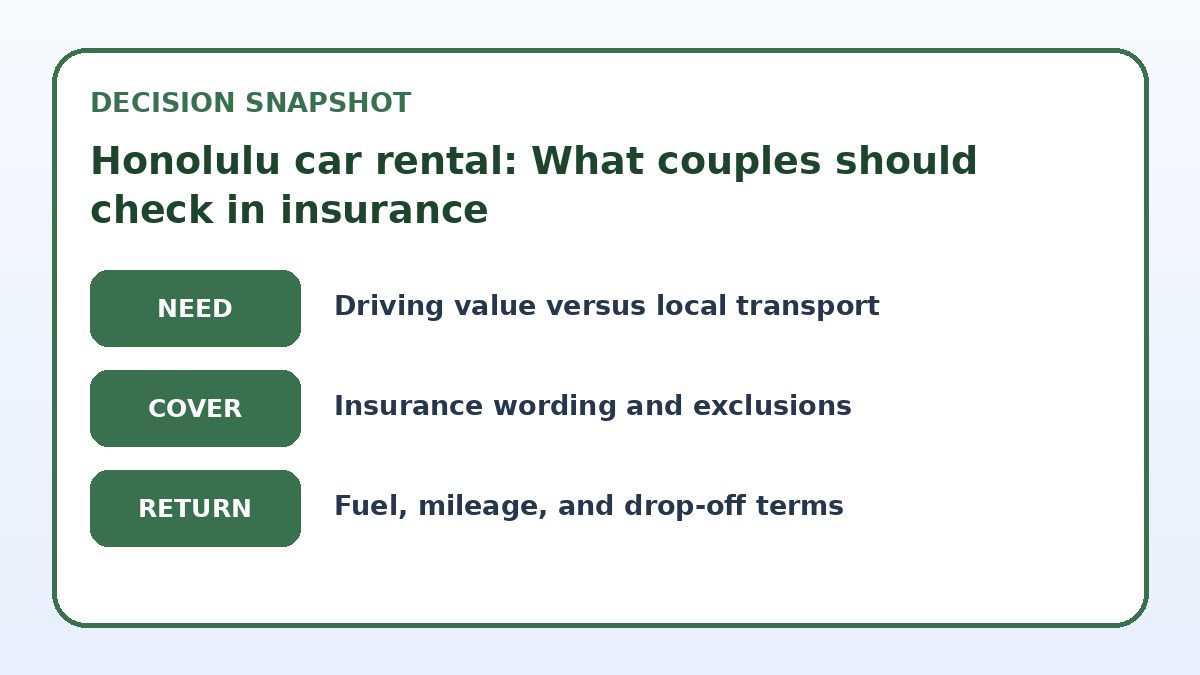
Practical answer first: when renting a car in Honolulu as a couple, read the rental contract and insurance wording closely to confirm who is named as the primary driver, who is an additional driver, what kinds of damage and liability are covered, and whether your personal auto policy or credit card will meaningfully reduce what the rental company can charge you. These four checks determine financial exposure and peace of mind during your trip. After that, compare the tradeoffs: cost versus coverage, excess (deductible) size, exclusion clauses, and whether roadside assistance and theft protection are included. This article walks through the exact terms to find, how to interpret common phrases, and practical steps couples should take before and at pick-up to avoid surprises.
See current options before you compare the details
Availability and final conditions change. Open Trip.com now or keep reading for the practical comparison.
Who is covered: primary driver, additional drivers, and permissive drivers
Rental contracts use specific wording to assign responsibility. 'Authorized driver' or 'named driver' usually means someone expressly listed on the rental agreement; only those people are covered by the rental company’s insurance. Some contracts allow 'additional drivers' at no charge if they are spouses or domestic partners, while others charge per person. Couples should verify whether both partners need to be named at booking or can be added at the counter. If only one partner is listed, the other may be an uninsured permissive driver under some circumstances and face liability or breach-of-contract penalties.
Look for clauses about 'permissive use'—this phrase can mean someone who borrows the car with the renter’s permission is covered, but providers define it differently. Also check minimum age requirements and license restrictions; one partner might be fine but the other blocked by age limits. If you plan to swap drivers frequently, ask the provider how they record drivers in their system and whether photographic ID and signatures are required for each person before driving. Always keep a copy of the signed contract listing both names in the vehicle.
Types of coverage and what the wording actually means
Insurance sections typically mention collision damage waiver (CDW) or loss damage waiver (LDW), third-party liability, personal accident insurance, and theft protection. CDW/LDW often says it 'waives' the rental company’s right to charge for damage, but many waivers still leave a deductible or exclude certain items such as windshield, tires, undercarriage, or interior damage. 'Liability' covers damage to others and their property; the wording will specify limits and whether it supplements or replaces state minimums. Couples should find the exact exclusions list and deductible amounts in the contract, not rely on shorthand descriptions.
Payment-card or personal auto policy coverage may be described in the rental terms as 'secondary' or 'primary'. If the contract states the rental company’s coverage is 'secondary', your own insurance may be billed first for a claim, which can affect your premiums back home. Conversely, if you purchase the rental firm’s waiver and it is labeled 'primary', it may prevent a claim against your personal policy. Read phrases like 'no deductible if CDW purchased' carefully and confirm whether this is unconditional or limited to certain types of damage or approved repair shops.
| Approach | Best for | Tradeoff to check |
|---|---|---|
| Use personal auto insurance as primary | Couples with comprehensive rental coverage and low excess who want to avoid extra rental fees | Possible claim on personal policy could affect premiums and may not cover some rental-specific exclusions |
| Rely on credit card rental coverage | Couples with strong card benefits that provide primary rental coverage and collision protection | Card policies vary by issuer and model; you must meet card issuer conditions and often decline the rental company’s CDW |
| Buy the rental company’s LDW/CDW | Couples seeking immediate peace of mind and lower out-of-pocket risk at the counter | Higher upfront cost and potential gaps like loss-of-use, administrative fees, or exclusions for specific damage types |
| Mix: card coverage plus limited rental waiver | Couples who want to reduce excess while keeping card benefits for primary coverage | Complex claims process if both policies must be coordinated; verify whether overlapping coverage is allowed |
Ready to check the option that fits your plan?
Use your exact dates and traveler details so the provider page can show the current total and conditions.
Common exclusions and contract traps couples should watch for
Exclusions are where most surprises happen. Common exclusions include damage from off-road driving, using unauthorized drivers, driving under influence, unauthorized drivers under a certain age, loss of personal items, and damage to roof, tires, or undercarriage. Some contracts exclude damage from beach driving or saltwater exposure—important in Honolulu if you plan to drive to beaches or coastal roads. Pay attention to wording like 'damage resulting from' or 'caused by' certain activities; that phrasing narrows coverage and shifts fault debate to the renter.
Also watch for administrative fees, loss-of-use charges (compensating the company while the car is being repaired), and towing or impound fees that may not be covered by waivers. Contracts sometimes state the renter must notify the company within a short window after an incident; missing that window could nullify coverage. Couples should flag any ambiguous sentence and request clarification in writing or an email from the provider, because a signed but unclear clause is harder to contest after the fact.
Before you book
- Before booking, read the full rental terms and insurance wording and save a copy or screenshot of the specific pages that define coverage.
- Contact your auto insurer and credit-card issuer to request written statements about rental coverage in Honolulu and whether it is primary or secondary.
- Ensure both partners are named as authorized drivers on the reservation or added at pick-up, and get the names listed on the printed contract.
- At the counter, perform and photograph a thorough walk-around inspection and insist any pre-existing damage be noted on the rental agreement.
- Ask the agent to explain exclusions aloud and request an emailed confirmation of coverage specifics, including deductibles, loss-of-use, and towing policy.
- Keep all receipts, police reports, and repair invoices if an incident occurs, and notify both the rental company and your insurer immediately per their stated notification windows.
Practical steps at booking and at the counter to lock down coverage
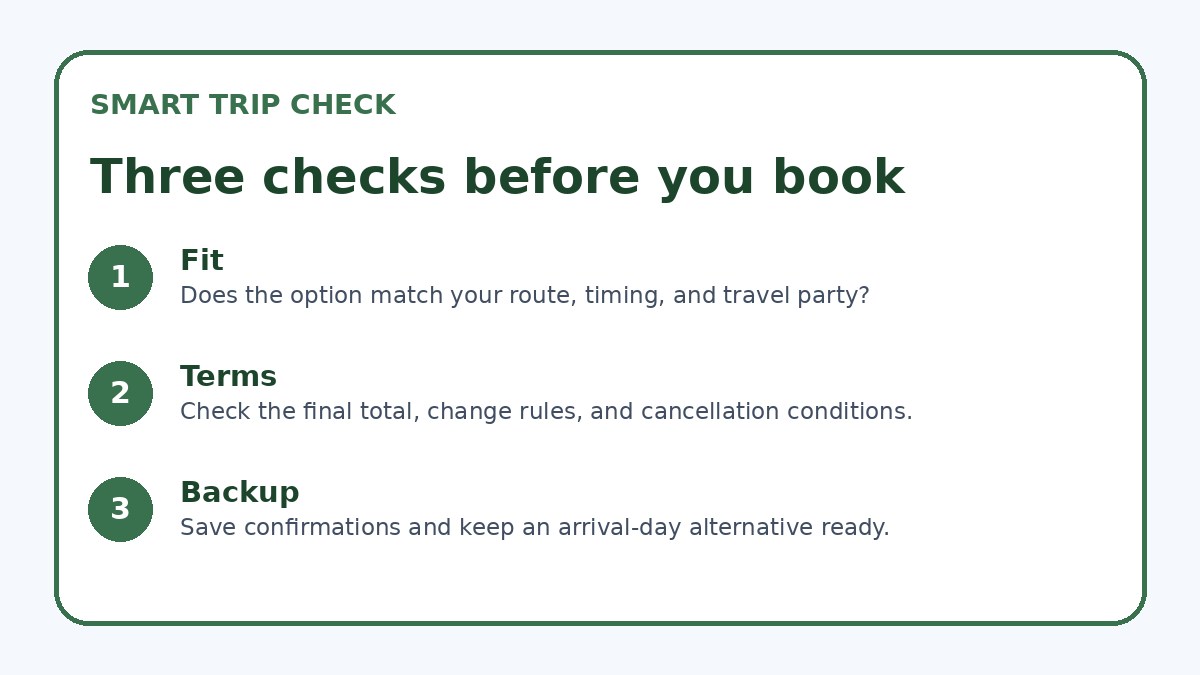
At booking: read the insurer and waiver wording before you finalize. If wording is vague online, call the rental company and ask for the exact contract language emailed to you. Compare the rental policy wording with your personal auto insurance and the credit card benefits guide to understand whether those cover rentals in Honolulu and whether coverage is primary or secondary. Keep screenshots and save confirmation emails that explicitly state the coverage level for both named drivers.
At pick-up: request a walk-around inspection and ask the agent to mark any pre-existing damage on the contract. Have both partners’ IDs and, if needed, international driving permits ready so both can be listed. Record the agent’s name and the counter time, and photograph the vehicle from multiple angles with a timestamped camera or phone. Finally, get a written or emailed confirmation that names, coverage, and any verbal exceptions were noted on the rental agreement before you drive off.
Frequently asked questions
If my credit card offers rental coverage, do couples still need the rental company’s CDW?
It depends on the card’s terms and whether the card’s coverage is primary in Hawaii. If your card provides primary CDW, you may decline the rental company’s waiver and save money, but only if you meet the card issuer’s requirements (cardholder must pay for rental, rental duration limits, geographic exclusions, authorized drivers). Couples should get the card benefits guide in writing, confirm that Honolulu and Hawaii rentals are covered, and check if both drivers must be cardholders. If any of those conditions fail, buying the rental company’s CDW may be the simpler option to avoid being left responsible for large repair bills.
How can couples avoid loss-of-use and administrative charges after a minor damage claim?
Loss-of-use charges cover income the rental company claims to lose while the car is repaired; administrative fees are processing costs. To reduce the risk, insist the agent document any pre-existing scratches and dents before driving off, and ask how the company calculates loss-of-use. If damage occurs, report it immediately, request a damage estimate in writing, and keep copies of all communications. If you purchased the company’s LDW, get a written acknowledgment that loss-of-use and administrative fees are included or excluded. If relying on your own insurer or card, notify them promptly so claims can be handled without unnecessary fees stacking up.
What wording signals that a type of damage is excluded and how should couples respond?
Look for phrases like 'not covered,' 'excluded,' 'will be charged to the renter,' or detailed lists naming items such as 'windscreen, tires, roof, undercarriage, interior.' When you see such language, ask the agent for examples of how those exclusions are applied and whether additional options can be purchased to cover those items. If you regularly plan beach or coastal driving in Honolulu, specifically check for saltwater or sand exclusions. If the contract remains ambiguous, request clarification in writing and consider buying targeted protection or using another provider with clearer, more comprehensive wording.
Final planning note
Couples renting a car in Honolulu should make insurance wording a core part of their planning: confirm who is designated as an authorized driver, read the exact coverage and exclusions for CDW/LDW and liability, and compare how your personal auto policy and credit card benefits interact with what the rental company offers. Practical steps—saving contract pages, adding both partners to the agreement, photographing the vehicle, and getting written confirmations—turn policy language into real protection. When in doubt, ask for the specific clause numbers or emailed confirmations from the provider and weigh the cost of added waivers against the potential out-of-pocket exposure. A small time investment before you drive can prevent a large, stressful dispute later.
Continue planning
Check current options and final conditions
Use the provider page to confirm live availability, the final total, cancellation terms, and every condition that matters to your trip.
This evergreen planning guide was created with AI-assisted drafting and a structured quality review. It does not display live prices, schedules, availability, visa guidance, or provider rankings. Verify current details before booking. Some links are affiliate links; we may earn a commission at no additional cost to you.