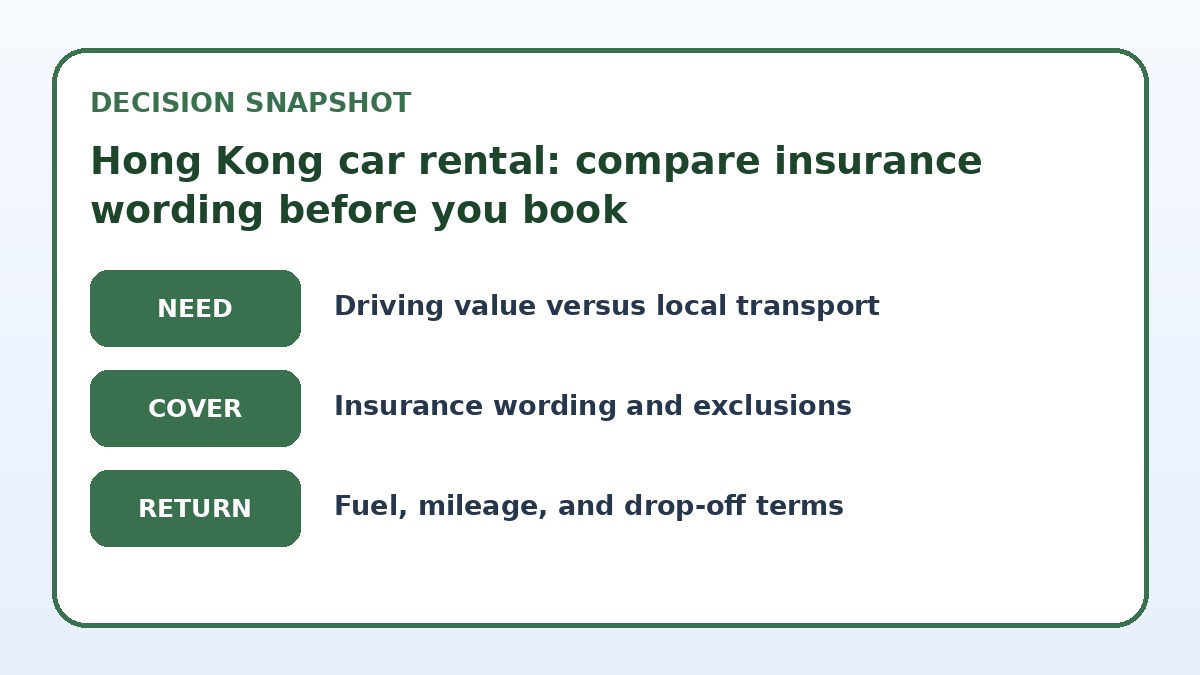
If your family plans to rent a car in Hong Kong, the practical item to handle first is the insurance wording: what your contract actually covers, who counts as an approved driver, and how liability limits or excesses apply after an accident. Read the compact policy text for collision damage, third-party liability, theft, and passenger coverage before you book. Don’t assume similar-sounding terms mean the same thing — “zero excess” can be conditional, and “loss of use” charges may apply even with collision coverage. Bring printed policy snippets to the pickup desk and confirm any verbal clarifications in writing. This article walks families through the clauses you’ll see, which choices reduce financial risk for children and co-drivers, and the right questions to ask to avoid unpleasant surprises on Hong Kong roads.
Key insurance terms families must understand
Families should start by identifying a small set of terms that determine financial risk. Collision Damage Waiver (CDW) or Loss Damage Waiver (LDW) limits how much you pay for damage to the rental vehicle; it usually does not remove all liability. Third‑party liability is separate and reimburses other people for injury or property damage you cause. Theft protection handles full or partial loss if the car is stolen and may require a police report and prompt documentation. Excess (also called deductible) is the amount you pay before the insurer or waiver covers the remainder; some waivers reduce the excess, others aim to eliminate it but impose conditions.
For families, two often-overlooked items are named drivers and passenger coverage. Policies can restrict who is authorised to drive — check whether your spouse, an older child or a grandparent must be listed to be covered. Passenger liability or personal accident coverage varies: some contracts include basic medical payments for occupants, while others explicitly exclude passenger injuries. Also read exclusions for off-road driving, ferry use, or driving into Mainland China; those limitations affect practical family plans like day trips or cross-border pickups.
How to read excesses, waivers and add-ons
The headline figure you see on booking sites is usually the gross rental charge, not your worst-case exposure. Identify the excess amount on the rental contract and ask how it is applied per incident. Many family-friendly providers offer a Super CDW or zero-excess option for an extra daily fee; read the wording to see which circumstances still leave you liable — for example, tyre, windscreen, underbody, and interior damage are commonly excluded unless specifically covered. Also watch for loss-of-use fees: if the vehicle is in repair, the company may claim compensation for lost rental days unless the insurer covers it.
Compare add-ons against independent short-term insurance options. The rental firm’s supplemental waivers may seem convenient but sometimes duplicate coverage you can get cheaper through a reputable third‑party insurer or travel policy. Before buying extras, verify whether your credit card already includes collision coverage for car rentals, what it excludes, and whether it requires you to refuse the rental company’s CDW at pickup. Always confirm on the final booking page the exact waiver name, exclusions, and the documentation required to claim — receipts, police reports, and photos are frequently requested.
| Approach | Best for | Tradeoff to check |
|---|---|---|
| Buy the rental company’s zero‑excess waiver | Families who prefer straightforward coverage and minimal claims paperwork at pickup | Higher daily cost and possible exclusions for tyres, windscreen or interior damage |
| Rely on credit card collision protection | Drivers who already have a premium card with clear rental coverage | May exclude younger drivers, require you to refuse store waivers, and need extensive claims documentation |
| Take independent short‑term rental insurance | Cost-conscious families wanting broader cover or lower excess than the rental company | You deal with a third party for reimbursements and must meet claim conditions precisely |
| Decline extras and rely on basic liability only | Experienced drivers on a tight budget who accept higher personal risk | Significant out-of-pocket exposure for vehicle damage or theft |
Practical steps at pickup and during the rental
At the pick-up desk, bring the rental confirmation, printed policy excerpts, each driver’s licence and any international driving permit if needed. Ask the agent to point to the clause describing excess and exclusions, and request written confirmation of any verbal adjustments. Inspect the car together and photograph existing damage from multiple angles, including the dashboard, seats, tyres, and roof. Families should note child-seat policies explicitly: some rentals supply seats free or for a fee, but insurance wording might exclude interior damage caused by child seats unless a specific coverage line is present.
If you’re told a condition applies only when you signed a particular form, ask to see and keep a copy. If you decline optional waivers, document that choice on the rental agreement — this can be important if a claim later relies on whether you accepted a damage waiver. Keep emergency contacts and the rental company’s claims process handy; most policies require immediate notification of incidents and a police report for theft or collisions. Finally, read how long you have to submit a claim and what evidence (photographs, repair estimates, receipts) the provider requires.
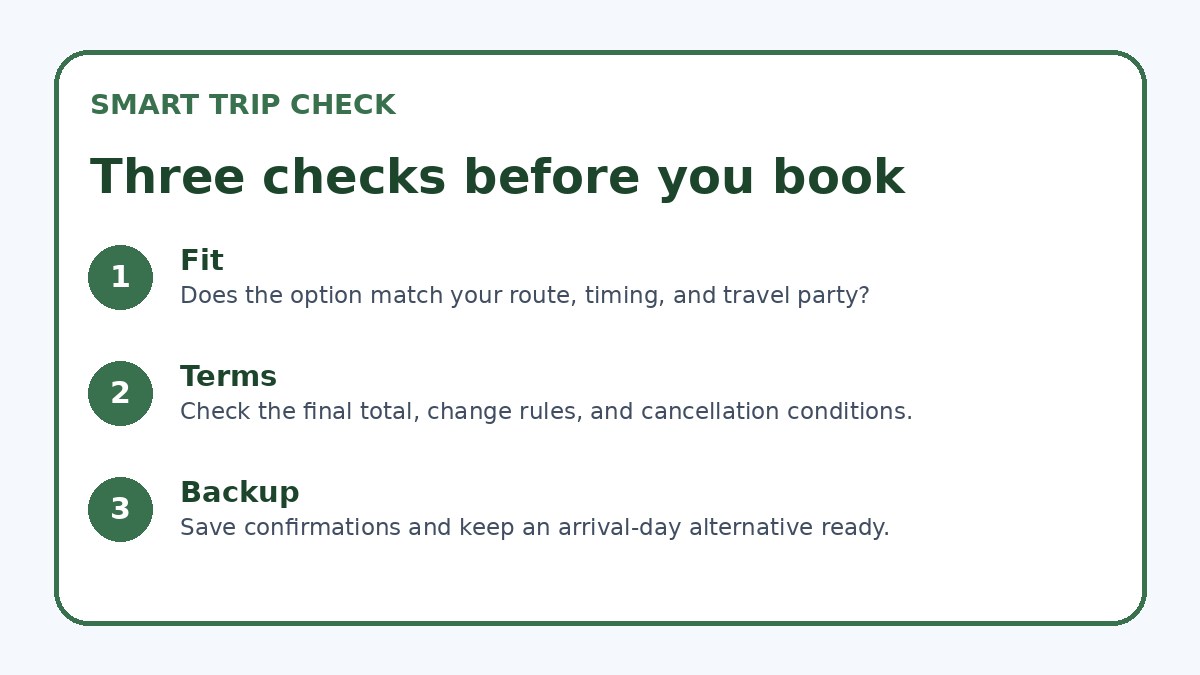
Before you book
- Print or save the exact insurance wording shown on the rental company’s final booking page and compare excess, exclusions, and named-driver rules.
- Confirm each driver is listed on the contract or permitted by the policy; add younger drivers explicitly if required.
- Photograph the car thoroughly at pickup and record existing damage on the signed inspection sheet.
- Ask the agent to point to tyre, windscreen, underbody and interior damage clauses and get any clarifications in writing.
- Call your credit card insurer or travel insurer to obtain written confirmation of rental coverage and required claims steps.
- Keep copies of police reports, repair invoices, photos, and the rental agreement for at least the claim window specified in the policy.
Decision criteria for families: what to buy and what to skip
Prioritise reducing out-of-pocket exposure for incidents that are likely with family travel: low-speed parking bumps, child-seat stains or small interior tears, and tyre or windscreen damage. If your household includes a young driver or someone with a foreign licence, check whether their presence raises excesses or requires an extra fee to be listed as an authorised driver. For longer rentals with multiple drivers or frequent short trips across town, a comprehensive waiver that meaningfully lowers excess can be worth the peace of mind. Assess whether the waiver’s exclusions leave a remaining financial risk that a separate travel insurance policy would cover better.
Skip duplicate coverage. If your travel insurance or a credit card reliably covers collision and theft for rentals in Hong Kong — confirm the exclusions — you may decline the rental company’s CDW and save the daily supplement. But don’t rely on assumptions: call the credit card insurer and get a written confirmation of coverage terms, required claims steps, and any limits on driver age or residency. For families, the practical choice balances reduced hassle at a small extra daily cost against the risk of facing a large excess after an accident; choose the option that limits stress and keeps everyone moving.
Frequently asked questions
Does Hong Kong require minimum insurance for car rentals and what does it usually cover?
Rental vehicles in Hong Kong are supplied with some level of third‑party liability by law through the owner’s policy, but this does not always protect the renter from charges for damage to the rental car itself. What you often encounter are separate waivers sold by the rental company (CDW/LDW) that reduce the renter’s liability for damage, and optional theft or personal accident protections. Because the exact policy wording and limits vary, verify the liability ceiling, whether passenger medical payments are included, and what documentation you need to file a claim on the final booking page and at pickup.
Are child seats covered under typical rental insurance wording in Hong Kong?
Child-seat provision and coverage are usually treated separately from vehicle damage insurance. Some rental companies supply child seats for a fee and accept responsibility for damage resulting from normal use, but many insurance wordings exclude interior damage or stains unless you add specific protection. Confirm whether the rental contract or waiver mentions child-seat damage or loss, whether you’ll be charged for deep cleaning or replacement, and if the company will accept third‑party seats. If in doubt, photograph the seat on install and save receipts for any hired equipment.
How should families handle claims if an accident happens in Hong Kong?
Immediately ensure everyone is safe, call emergency services if needed, and notify the rental company as the policy requires. Obtain a police report for collisions or theft — insurers commonly require this as part of a valid claim. Take comprehensive photos of scene and vehicle damage, exchange contact and insurance details with other parties, and keep receipts for any emergency repairs or towing. Submit claims promptly with the rental agreement, inspection sheet, police report, photos, and repair invoices. Check the provider’s stated deadline on the booking page for submitting a claim to avoid denial on technical grounds.
Final planning note
Families renting a car in Hong Kong should treat insurance wording like a travel health check: it reveals where you will face bills, delays, or documentary headaches. Prioritise reducing excess exposure for likely small incidents and ensure every intended driver is authorised in the contract. Don’t accept verbal assurances — get clarifications and key policy lines in writing at pickup, and keep photos and a police report for any incident. Compare the rental company’s waivers with credit-card benefits and independent policies by reading exact exclusions and claims requirements on the final booking page. If the extra daily waiver simplifies claiming and keeps children moving, it can be worth the cost; if your existing insurance already covers rental collision and theft cleanly, avoid unnecessary duplication.
Continue planning
Check current options and final conditions
Use the provider page to confirm live availability, the final total, cancellation terms, and every condition that matters to your trip.
This evergreen planning guide was created with AI-assisted drafting and a structured quality review. It does not display live prices, schedules, availability, visa guidance, or provider rankings. Verify current details before booking. Some links are affiliate links; we may earn a commission at no additional cost to you.