Practical answer up front: for most families the easiest Dubai to Abu Dhabi transport plan pairs a direct road transfer (taxi, private car, or coach) with local terminal-to-door logistics at each end — choose the road option if you prioritise door-to-door simplicity and minimal luggage transfers; choose combined public modes only if you need lower cost and accept extra walking, transfers, and timing complexity. Before you book, confirm where each service actually stops (station name, terminal building, or hotel pickup point) and how extra luggage or car seats are handled. This article breaks down terminal fit, luggage friction, timing flexibility, and a practical backup plan for disruptions. Use the criteria here to match choices to your family's mobility, time windows, and tolerance for transfers rather than to an assumed timetable or provider.
Choosing between road, public coach, rail combinations and mixed modes
Families choosing Dubai to Abu Dhabi transport should start by weighing door-to-door convenience against the number of transfers. Road options (private car, taxi, or family-friendly transfer) will generally drop you at the terminal or hotel entrance and keep luggage handling minimal, which is better for young children or seniors. Public coach or combined public modes often require walking between platforms or from bus bays to terminal entrances, adding time and the need to supervise children closely. Consider who’s carrying luggage, whether you need a ISOFIX-compatible car seat, and how comfortable your family is with walking between stops.
If you want to save money and accept extra effort, mixed modes can work: for example, a short taxi to a major coach or rail station, then a scheduled intercity coach for the core leg. That reduces driving time for adults and children but increases complexity: you must align coach or rail arrival and departure points with local drop-off/pick-up locations, and factor in the time to move between the station platform and the terminal entrance. Map each leg on a street-level map before booking to visualise transfers and curbside access.
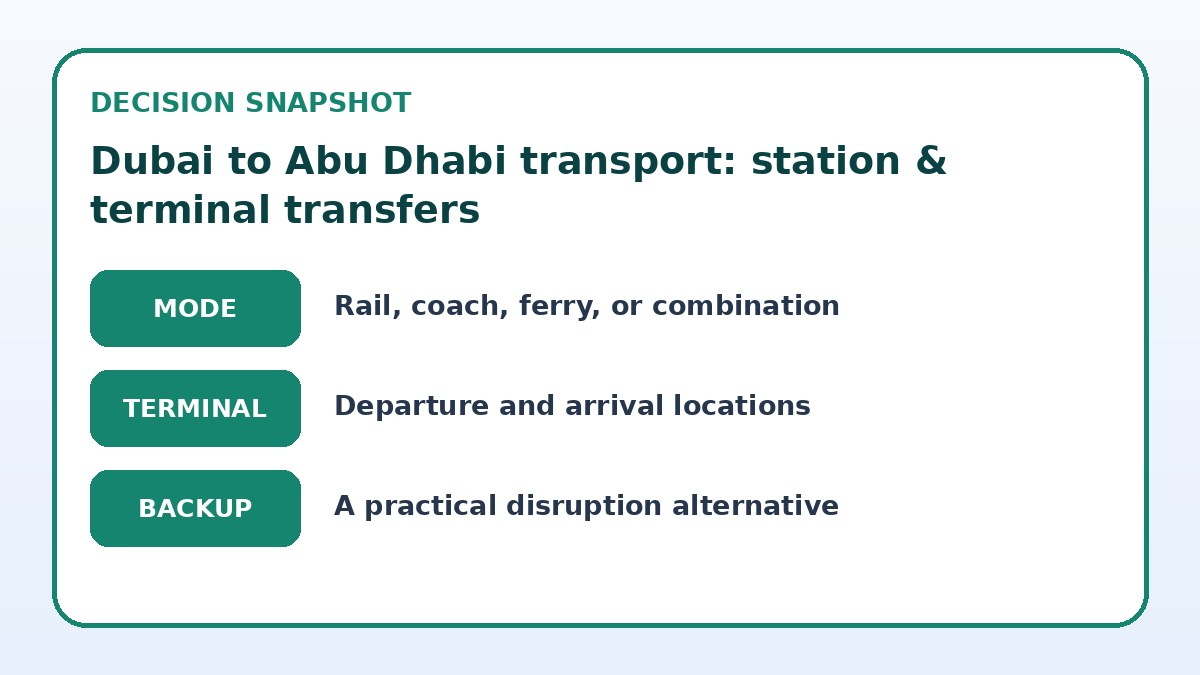
Choose the end-to-end journey plan
| Journey approach | Best for | Friction to check |
|---|---|---|
| Direct road transfer (taxi or private car) | Families wanting the fewest handoffs and door-to-door convenience | Higher cost and potential traffic exposure without intermediate shelter options |
| Scheduled intercity coach with local taxi connectors | Families balancing lower fare with predictable main-leg transport | More luggage handling and walking between coach stops and terminal points |
| Mixed public modes (metro + coach) with pre-booked meet points | Families comfortable managing short transfers to reduce driving time | Requires tight coordination and additional time buffers for connections |
| Hybrid plan: private pickup to major station then coach or rail | Families needing a shorter road leg while keeping the bulk journey on scheduled services | Adds a transfer at the station and needs precise terminal-to-platform verification |
Check live intercity options
Look beyond the ride itself and compare terminals, transfers, luggage, and arrival fit.
Terminal fit and curbside logistics for families
Terminal fit means whether a vehicle actually stops where you need it: front doors, an arrivals hall, or a remote parking bay. For families, front-door stops save energy and time. Before you commit, confirm on the provider’s booking page exactly which terminal entrance or station entrance is used, whether curbside pickup is allowed, and if there is a designated family lane or accessible entrance. Also check whether you must walk through an arrivals hall to reach taxis or rideshare pickup zones, since that changes how you plan stroller folding and luggage distribution.
If you have mobility constraints or very small children, ask about assistance at the terminal or station. Some services will meet you inside or help with large bags; others only allow curbside exchanges at specific hours. On booking pages, look for terms like 'curbside', 'meet-and-greet', or 'assisted boarding', and contact customer service to request confirmation in writing. Keep photos or screenshots of the pickup point saved on your phone so everyone in the family knows exactly where to wait.
Managing luggage, car seats and transfer friction
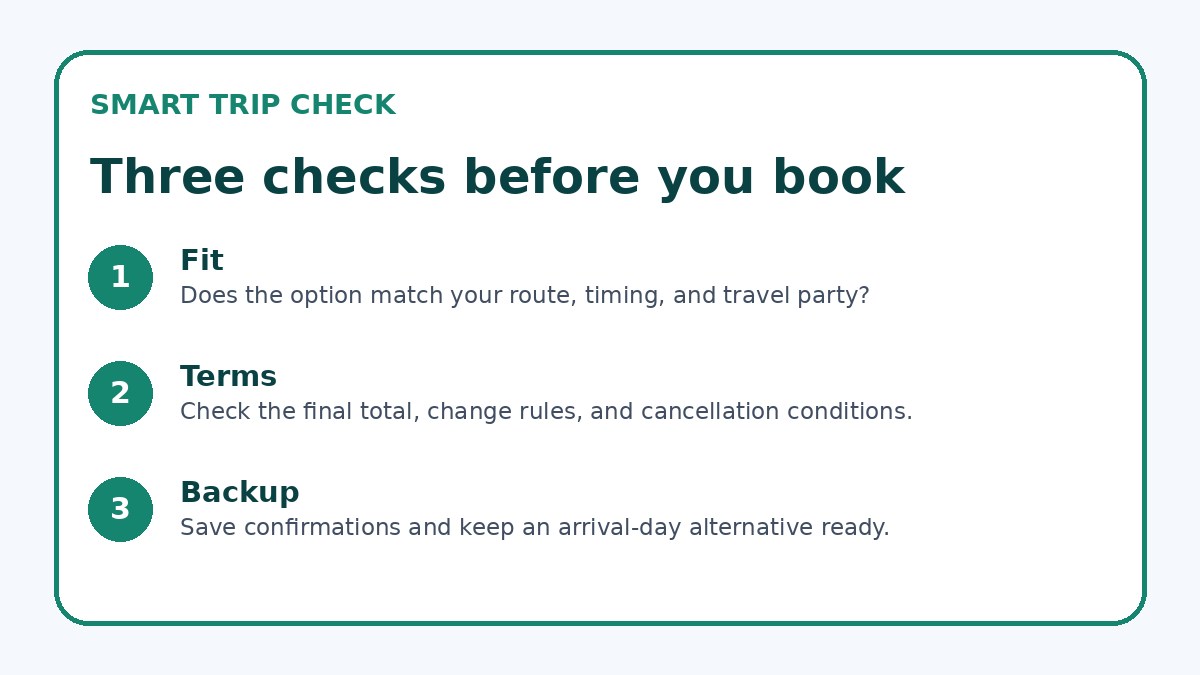
Every transfer multiplies luggage handling steps. A single road transfer usually means luggage is placed directly in one car and stays put until arrival. Switching from a coach or train to a taxi requires unloading into a station, carrying bags across concourses, and reloading — not easy with children. Before booking, list every piece of luggage, the number of child seats, and whether strollers will be broken down. Check the provider’s booking terms for baggage allowances and whether extra pieces require prior notice or a separate booking line.
If you require a car seat, verify how it will be supplied: some drivers bring booster seats by request, while others expect you to provide one. Measure the seat or stroller when folded to ensure it fits trunk and aisle constraints, and practise fitting car seats at home if you plan to install them in taxis. Pack essential items like nappies, a change of clothes, snacks, and a small toy in an easily reachable day bag so you won’t need to hunt through multiple suitcases during transfers.
Compare the practical alternatives
Use the final page to confirm what is actually offered on your dates and save a workable fallback.
Intercity travel checklist
- Verify the exact pickup and drop-off entrance names and photos on the provider’s booking page and save them to your phone.
- Confirm baggage allowance and any extra-fee policy for oversized luggage or multiple suitcases before finalising bookings.
- Request and document car-seat availability or plan to bring your own; practice installing the seat at home beforehand.
- Build at least 30–60 minutes of buffer into scheduled connections and more if travelling during peak traffic windows.
- Identify one alternate ride or coach service you can book quickly and save its contact number for fast rebooking.
- Designate a clear meeting point at each terminal (e.g., 'Main arrivals hall near the information desk') and share it with all family members.
Timing flexibility and a straightforward disruption backup
Timing flexibility is about giving your itinerary buffer minutes for unexpected delays: traffic, late connections, or slow boarding with children. Families should build extra time into both the departure and arrival side so missed connections can be handled with a single phone call rather than a stress scramble. When using scheduled public services, pick a connection with a healthy buffer and make sure replacement options exist close to your arrival times. If you must be at a specific Abu Dhabi destination at a strict time, favour fewer legs to reduce exposure to ripple delays.
Prepare a simple disruption backup: one alternate ride-hailing or transfer provider you can contact quickly, a nearby hotel or sheltered waiting area at the terminal, and a clear family meeting point if parties separate. Keep payment methods ready and ensure at least one adult carries local contact numbers and booking references. If you book through an online agent, verify their change and cancellation terms on the booking page and keep screenshots of confirmations to avoid confusion if plans need to change.
Rail & Intercity Transport questions travelers ask
How do I choose between a direct car and a coach when travelling with small children?
Choose a direct car if you want the simplest door-to-door experience with minimal luggage transfers and less walking. A coach can work if you’re prepared to manage baggage through station areas and supervise children during boarding. Compare the number of handoffs: each handoff adds time and complexity. Before booking, verify the coach stop location and whether curbside loading or an arrivals hall transfer is required so you can judge if the family can handle that level of walking and waiting.
What should I check about terminal access to avoid unexpected walking with a stroller?
On the booking pages, look for specific terms such as 'curbside pickup', 'arrivals hall', or 'terminal entrance' and find a map or photo of the exact spot. Contact customer service to confirm whether drivers are allowed to stop at the front door or must use a remote bay. Also check for lifts, ramps and covered walkways if you need them. Save a screenshot of the terminal map and note practical details like whether you must cross a road or ascend stairs to reach the pickup point.
How can I prepare a realistic disruption backup when travelling between Dubai and Abu Dhabi?
Prepare a shortlist of alternative providers you can call or app-book at short notice and keep contact details and payment ready. Choose a nearby sheltered waiting spot at each terminal and communicate a clear meeting point to the family. Keep important documents and booking references accessible in both digital and paper forms, and allow extra time in your schedule so you can switch options without missing key commitments. If you booked through a third-party site, verify change and cancellation policies on the final booking page before travelling.
Final decision note
For families, the practical choice for Dubai to Abu Dhabi transport often favours the fewest transfers and the clearest terminal drop-off. A single road transfer minimises luggage handling and reduces time spent navigating station halls, while mixed or scheduled options can save money but demand more coordination and buffer time. Before you commit, verify exact pickup/drop-off locations, baggage and child-seat arrangements, and cancellation/alteration terms on the provider’s booking page. Keep an alternate ride option and an agreed meeting point ready; these small preparations turn a potentially stressful transfer into a manageable family outing.
Continue planning
Check current options and final conditions
Use the provider page to confirm live availability, the final total, cancellation terms, and every condition that matters to your trip.
This evergreen planning guide was created with AI-assisted drafting and a structured quality review. It does not display live prices, schedules, availability, visa guidance, or provider rankings. Verify current details before booking. Some links are affiliate links; we may earn a commission at no additional cost to you.