Yes — renting a car in Boston can help a solo traveler who plans to explore outside the core city, but for many downtown stays the hassles at pickup and return outweigh the benefits. If your itinerary centers on Back Bay, the Seaport, or Logan-area meetings, you’ll likely face parking scarcity, higher garage fees, and frequent one-way surcharges. However, a car becomes valuable for day trips to Cape Cod, western Massachusetts, or coastal New Hampshire where public transit is intermittent. Start by deciding whether your trip demands flexibility beyond scheduled buses and trains; then read pickup and return terms closely: ID and payment rules, after-hours returns, fuel and mileage policies, and insurance wording are where surprise charges live. I’ll walk you through route value, insurance language to check, pickup/return friction points, and a solid non-driving fallback so you can decide with confidence.

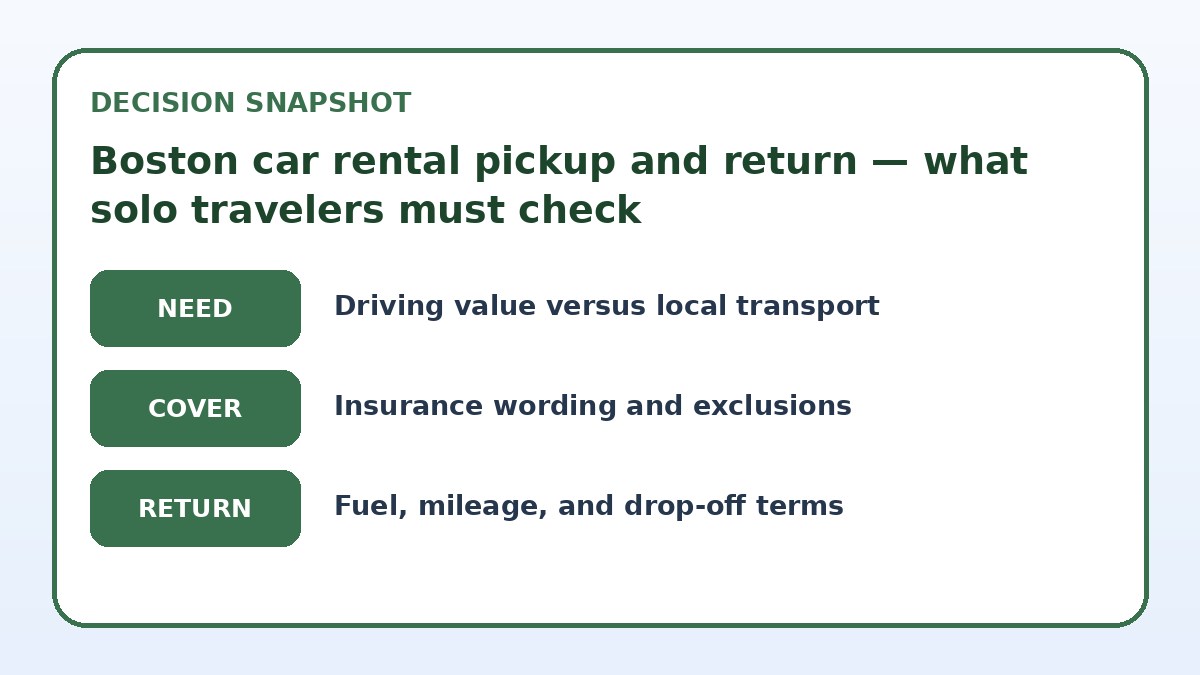
Route value: when a Boston car rental truly helps
Decide by comparing the value of flexible departure times and direct access against parking and city congestion. Boston’s core neighborhoods are compact and well served by MBTA subways, buses, and commuter rails; if you’ll stay mainly in the city and rely on transit-friendly itineraries, a car adds cost without much convenience. But if your plan includes Cape Cod beaches, the Berkshires, or small coastal towns with limited transit, a car turns hours of connections into door-to-door travel and opens remote viewpoints, farms, and side roads public transit doesn’t reach.
Think about trip structure: a single long day trip from Boston can justify a rental if it replaces an awkward multi-leg train-plus-bus schedule. Compare travel time door-to-door versus transit schedules and remember peak traffic patterns — morning commute and rush-hour corridors can lengthen driving time. Also factor parking: overnight garages in neighborhoods like Beacon Hill or the North End are expensive and limited, while suburban destinations usually have free or low-cost parking. In short, use driving when route value—time saved and access gained—outweighs parking and congestion costs.
Decide whether driving earns its place
| Mobility strategy | Best for | Cost or friction to check |
|---|---|---|
| Rent a car for the whole trip | Solo travelers needing repeated flexibility for multiple out-of-city day trips. | Higher parking costs, deposit holds, and full responsibility for refueling and inspections. |
| Rent only for specific day trips | Travelers who want driving benefits without city parking and long rental charges. | Extra logistics for pickups and returns; possible shuttle time to offsite lots. |
| Rideshares and taxis | Solo visitors prioritizing convenience for airport transfers or late-night travel. | Can become costly for long or repeated trips; variable wait times during peak demand. |
| Public transit, bike, and walking | City-centered itineraries focusing on neighborhoods, museums, and dining with minimal luggage. | Limited reach for remote day trips and dependence on schedules and transfers. |
Check live rental choices only after the route test
Use the exact driver, dates, pickup point, and return plan to compare current conditions.
Insurance and coverage wording to check before you book
Insurance language is where the loudest unanswered questions live. Rental agreements typically offer loss-damage waiver (LDW), collision damage waiver (CDW), liability supplements, and personal accident coverage. Don’t assume your personal auto policy or credit card covers everything: check whether any coverage is primary or secondary, what deductibles apply, and whether coverage excludes certain vehicle classes or geographic areas. On the provider’s final booking page, verify exact wording on liability limits, CDW terms, roadside assistance, and whether theft protection applies when a car is left unattended.
Also inspect specific exclusions and procedures: some policies exclude loss from unauthorized drivers, driving on unpaved roads, or incidents caused by driving under the influence. Confirm what documentation the rental company requires to make a claim, how inspections are handled, and whether you must prepay for damage claims or repairs. If you rely on a credit-card benefit, call the card issuer and get the claim rules in writing or a reference number to show the rental counter. These checks prevent surprises and reduce the temptation to buy redundant coverage at pickup.
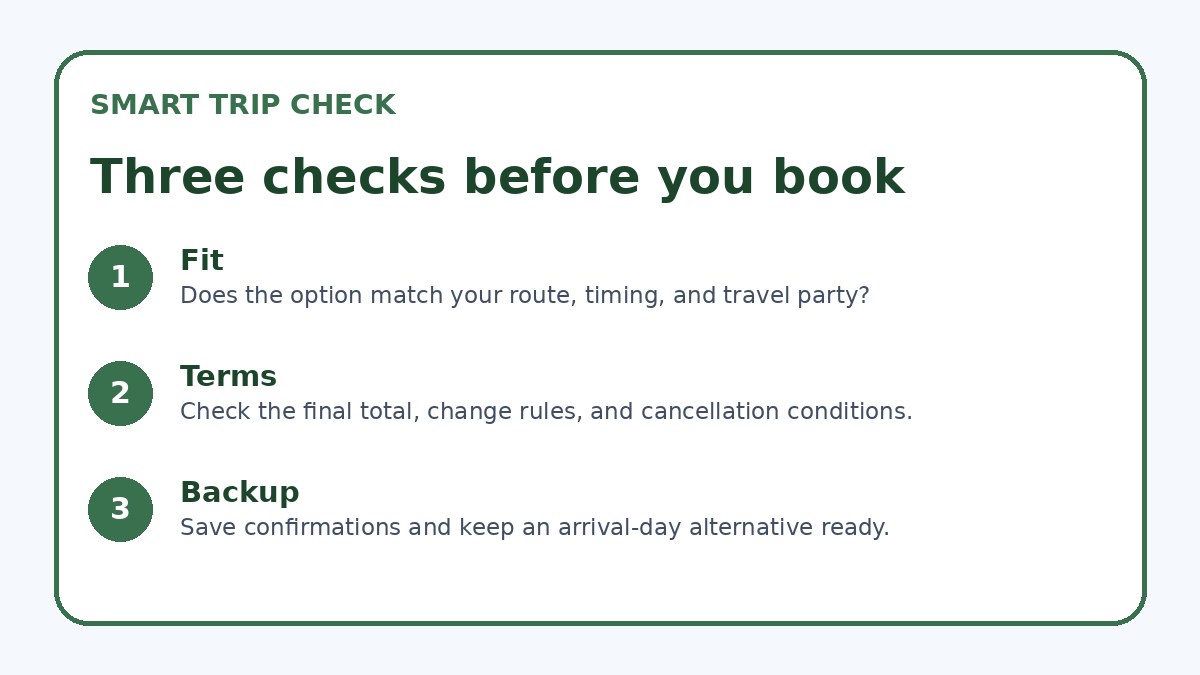
Compare the full rental conditions
Confirm insurance wording, exclusions, deposit, fuel, mileage, and return terms on the final page.
Pickup and return friction: practical pitfalls to avoid
Pickup friction often comes from paperwork, required holds, and counter queues. Airports and downtown locations may place a substantial hold on your credit card for incidentals; check the hold amount and whether debit cards are accepted. Ask your booking page what documents are mandatory—international driver’s permits, proof of onward travel, or a return flight details can be requested by some operators. Also confirm pickup location specifics: airport offsite lots, shuttle requirements, or multi-level garages add transfer time that a solo traveler may find inconvenient with luggage.
Return hurdles include after-hours drop-off rules, fuel penalties, and inspection timing. Verify whether you must return the tank full, and whether the company charges based on market fuel or a premium refueling rate. Learn the after-hours drop-off procedure (key drop box, recorded inspection, or scheduled post-return inspection) and whether you need to sign anything at pickup to authorize late returns. Take time-stamped photos of exterior and interior at pickup and just before return, and keep the inspection or return receipt until any hold is released from your card.
Car rental terms to verify
- Compare door-to-door travel time between driving and transit for each planned day trip before deciding to rent.
- On the provider’s final booking page, confirm insurance wording: LDW/CDW details, deductibles, and whether your personal or card coverage applies.
- Check pickup location details—airport desk, offsite lot, or shuttle—and factor in transfer time to your schedule.
- Confirm the exact return policy: after-hours procedures, refueling rules, and whether an on-site inspection is required.
- Photograph the car’s exterior and interior with timestamps at pickup and return and save the inspection or drop-off receipt.
- Verify accepted payment methods and the expected credit-card hold amount so you can manage available funds.
If you decide not to drive: strong non-driving fallbacks
Boston’s transit network covers most tourist and business needs inside the city: the MBTA subway (the 'T'), buses, commuter rail, and ferries connect neighborhoods and nearby suburbs. For reach beyond transit lines, rideshares and point-to-point regional buses fill gaps efficiently for solo travelers who prioritize convenience over strict budgets. For day trips where transit is slow, consider a one-way commuter rail to a town and then use local shuttle services, or join guided day tours that handle transportation so you avoid rental logistics entirely.
Mix-and-match often works best: use transit for in-city movement, rideshare when you have luggage or late-night travel, and a short-term rental just for the day you need it. If you plan multiple remote day trips, compare renting for just those days rather than the full trip. Also check Trip.com or similar sites to compare current availability and pickup/return terms across providers before booking, but always reconfirm critical terms—insurance, after-hours returns, and deposit holds—on the provider’s final booking page you select.
Car Rental & Road Trip questions travelers ask
Do I need an International Driving Permit (IDP) to rent a car in Boston as a solo traveler?
Most U.S. rental companies accept foreign driver’s licenses in English, but requirements vary by provider and the renter’s country of issue. Check the rental company’s final booking page for ID requirements and whether an IDP is recommended or mandatory. If your license is not in the Roman alphabet, an IDP or certified translation is often required. Carry both your home license and passport; have digital copies available but present the physical documents at pickup. If you’re uncertain, contact the provider directly before arrival to avoid being turned away at the counter.
What should I do if my flight arrives late and the rental office might be closed?
Confirm the company’s after-hours pickup and drop-off policy on the booking page. Some operators have key boxes and a recorded inspection process; others require arranging an after-hours pickup in advance, often with a fee. If your flight delay looks likely, call the rental desk or the emergency number provided in your reservation to alert them and get explicit instructions. Consider booking at a location with late hours or arranging pickup the next morning and using a rideshare or airport shuttle for the first night to avoid no-show penalties.
How can I avoid damage or refueling charges when returning a rental in Boston?
Avoid surprise charges by documenting the car’s condition at pickup and return with clear, time-stamped photos of all sides, wheels, and interior. Inspect the car together with the agent and request a damage report or check-in note if possible. Follow fuel rules: if the contract requires a full tank, refill within reasonable distance of the drop-off and keep the receipt until charges clear. Ask the agent to confirm whether the return will be inspected immediately; if not, get written confirmation of the drop-off procedure and the representative’s name or return receipt to dispute any later damage claims.
Final decision note
For most solo travelers staying inside Boston, public transit, rideshares, and walking offer simpler, lower-stress mobility than a full-trip rental. Rent a car when your itinerary includes multiple out-of-city destinations or when driving saves substantial time door-to-door. Whatever you choose, read pickup and return terms carefully: confirm ID and payment requirements, insurance wording, after-hours procedures, and fuel policies on the provider’s final booking page. Use targeted short rentals for single day trips if you want driving benefits without the city hassles, and keep time-stamped photos and receipts to defend against unexpected charges.
Continue planning
Check current options and final conditions
Use the provider page to confirm live availability, the final total, cancellation terms, and every condition that matters to your trip.
This evergreen planning guide was created with AI-assisted drafting and a structured quality review. It does not display live prices, schedules, availability, visa guidance, or provider rankings. Verify current details before booking. Some links are affiliate links; we may earn a commission at no additional cost to you.