If you’re moving a family between Bangkok and Ayutthaya, the practical decision is less about a single ‘best’ option and more about building a flexible multi-city ground-transport plan that fits your children’s ages, luggage, pacing preferences, and connecting stops. Start by choosing whether you prioritize door-to-door convenience, cost control, or the comfort of a reserved seat, then layer on how many stops you want en route—markets, temples, or a park break. This article gives the quick answer up front, followed by the tradeoffs and decision criteria families commonly use when planning ground travel across central Thailand. I’ll show how to compare rail, private transfer, and public bus/train combinations, what to verify on provider pages, and how to assemble the legs of a family-friendly day or overnight itinerary.
See current options before you compare the details
Availability and final conditions change. Open Trip.com now or keep reading for the practical comparison.
Quick decision: how to pick the right approach
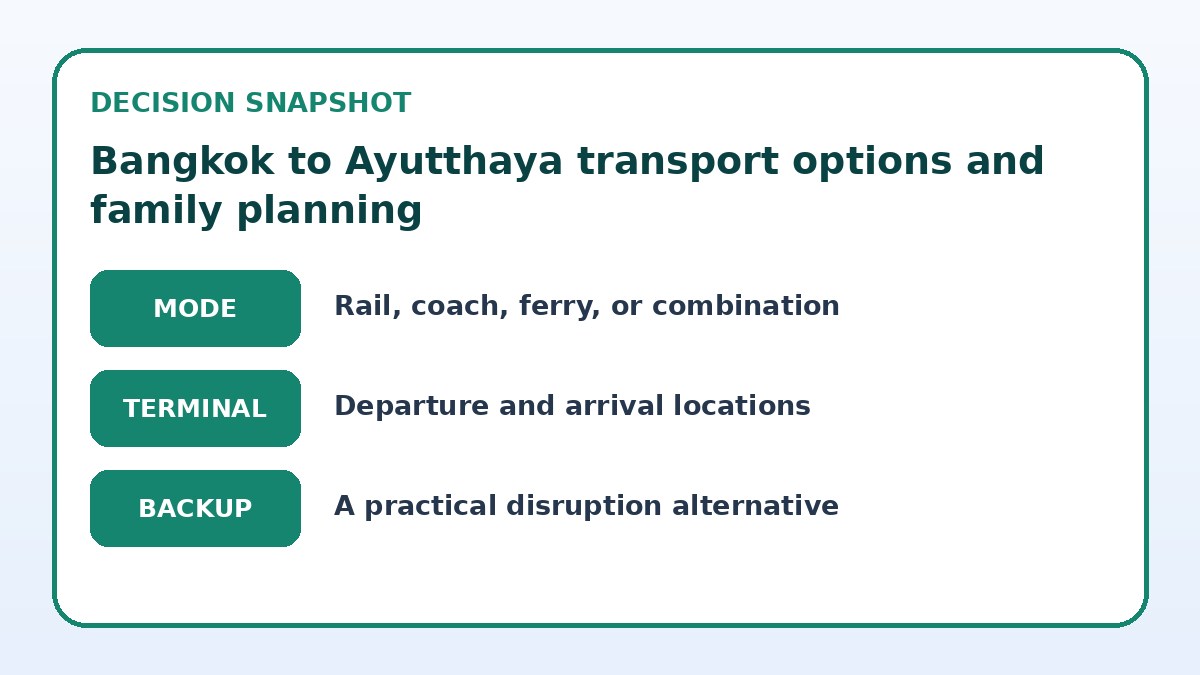
Families usually choose between three practical approaches: reserved intercity train service, public coach/bus, or a private transfer (van or car). Reserved trains offer a smoother ride for young children who may sleep and avoid highway motion discomfort; coaches are often frequent and flexible but require moving luggage into and out of a terminal. Private transfers give door-to-door convenience and adjustable timing but add cost. Start by listing your non-negotiables—departure window, maximum travel time, and how much you will move with children and strollers—then eliminate any approach that clearly fails those basics.
Next, map any desired stops and how they affect the routing. Trains and buses usually serve main stations with short walks or local taxis to attractions, while private transfers can drop you at a temple gate or river pier. If your family needs rest breaks, choose an option that accommodates a quick stop without losing a scheduled connection. Finally, decide whether you want a single straight leg or a multi-city plan that includes intermediate stays; that choice determines whether you book each leg separately or use a single provider for the whole sequence.
Comparing comfort, logistics, and kid-friendly features
Comfort for families depends on seating type, space for carriage of strollers and bags, and restroom access. Trains often have wider aisles and longer legroom than coaches, with the advantage that family members can walk to stretch legs. Coaches might be newer and climate-controlled, but luggage space can be limited and guarded in a luggage bay. Private vehicles win for door-to-door convenience and the ability to carry more gear without repeated handling. Consider whether reserved seating is available and whether you need child seats—if so, check that the provider confirms installation options on their booking page.
Logistics include transfer times to and from stations, the effort of changing vehicles, and how you’ll handle meals and restroom breaks. Trains and long-distance buses usually follow set station times that make it simpler to plan connections, but they can require local taxis or tuk-tuks for final miles. If your plan involves multiple stops—say an afternoon temple visit followed by a night in Ayutthaya—factor in the time needed to re-board and potential delays. When comparing options, make a checklist of connection windows, luggage handling, and whether you’ll need private taxis for last-mile transfers.
| Approach | Best for | Tradeoff to check |
|---|---|---|
| Reserved intercity train | Families wanting steady ride, legroom, and opportunity to walk | Less door-to-door convenience; may require local transfers at each end |
| Public coach/bus | Families needing flexibility and frequent departures | Luggage handling and onboard facilities vary; seating can be cramped |
| Private transfer (van or car) | Families prioritizing door-to-door service and adjustable timing | Higher cost and potentially limited availability during peak demand |
| Multi-leg mixed plan | Families who want to stop between cities or combine experiences | Requires more coordination and buffer time to avoid missed connections |
Ready to check the option that fits your plan?
Use your exact dates and traveler details so the provider page can show the current total and conditions.
Building a multi-city ground-transport plan step by step
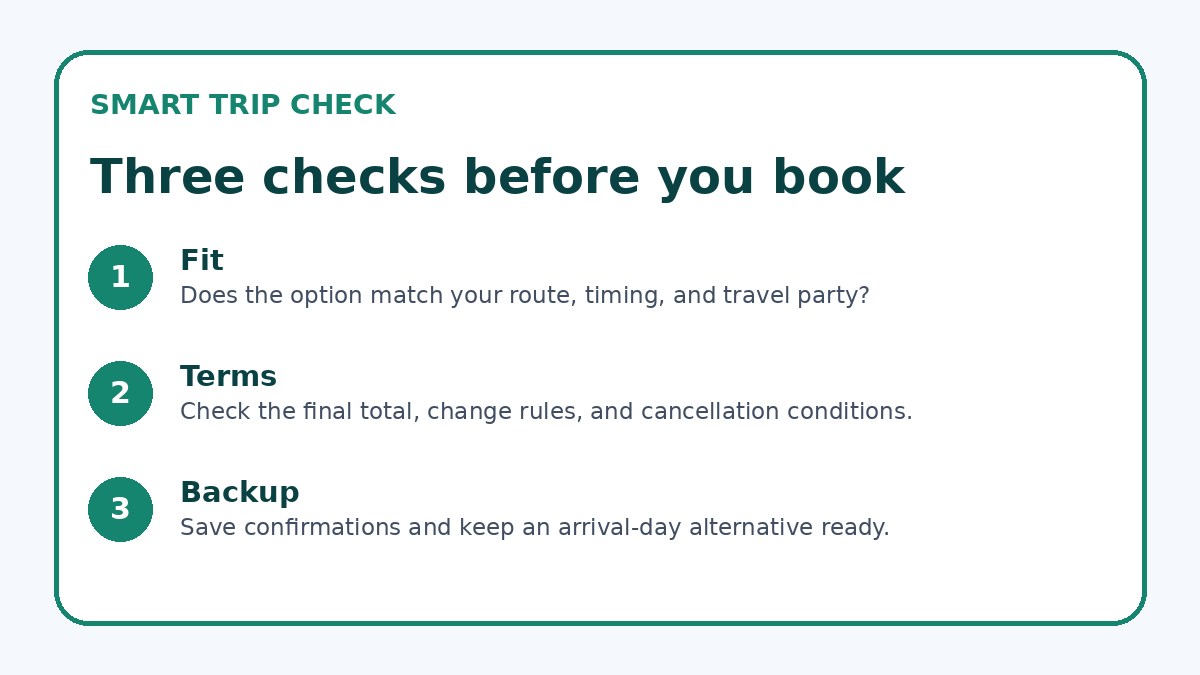
Start with a route map and mark each overnight stop or sightseeing pause. For each leg, note the station or terminal names, estimated travel duration (use current provider pages for specifics), and how you will move from arrival point to your accommodation. If you plan to combine a train and a coach, schedule at least 45–90 minutes between arrivals and departures for family contingencies—more time if you must collect checked luggage or transfer across the city. Write down the local transport options at both ends: walking, taxi, ride-hailing, or hotel pickup.
When booking, decide whether to buy all legs at once or as independent reservations. Single-provider itineraries can reduce coordination but may limit flexibility. Independent bookings let you tailor each leg—easier to change one day without affecting the others—but you carry the risk of missed connections if an earlier leg is delayed. Always check the final booking page for baggage allowances, child policies, and whether seat reservations are required. Use tools like Trip.com for a quick comparison of availability, but confirm details with the carrier before finalizing.
Before you book
- List all trip legs and desired stopovers, then draw a simple timeline showing earliest and latest acceptable departure times for each leg.
- Confirm seat reservations together for your family on trains or buses and request child seats in private transfers if required, with provider confirmation.
- Check baggage allowances, how luggage is handled at each transfer point, and whether short-term storage is available near stations.
- Note exact pickup and dropoff locations (station name, platform/entrance, hotel lobby) and save supplier contact numbers and booking references.
- Build buffer time into every connection—plan at least 45–90 minutes between scheduled arrivals and departures for family contingencies.
- Capture screenshots or PDFs of final booking pages showing cancellation, change, and baggage policies before you travel.
Family-specific tips and what to verify before booking
Before you commit, verify four critical facts: seating reservation rules and how to select seats together, baggage allowances and how large items are handled, child or infant fare and age rules, and any accessibility needs such as wheelchair access. Don’t assume a booking includes child seats in a private transfer—ask the provider and get confirmation on the booking page. If traveling by train, check whether you can reserve an entire compartment or a block of seats to keep kids nearby; if by bus, ask about onboard restrooms and whether luggage bays are accessible during the journey.
Also check pickup and dropoff details: exact station names, terminal entrances, and whether your hotel offers direct pickup. If you are planning intermediate stops, confirm whether providers allow short-term storage of luggage or whether you’ll need private lockers. Finally, note the provider’s change and cancellation terms, and whether refunds or rebooking fees apply for each leg. Keep screenshots or confirmations of the provider’s booking page that show these policies in case you need to reference them while traveling.
Frequently asked questions
Can I bring a stroller and large bags on trains or coaches between Bangkok and Ayutthaya?
Most families can bring a stroller and one or more bags, but handling rules differ by mode and provider. On trains you can often keep a folded stroller in your seating area or a luggage rack if space allows; coaches typically store larger bags in a luggage bay beneath the vehicle. Always verify the carrier’s baggage allowance and any size or weight limits on the final booking page, and ask how they handle strollers during boarding. If you depend on the stroller on arrival, plan a single transfer leg to avoid repeated folding and carrying.
Is it better to book a private transfer for young children?
Private transfers offer the convenience of door-to-door service, flexible stops, and easier luggage handling, which can make travel with young children much less stressful. However, private transfers are usually more expensive and you should confirm whether child seats are provided or can be fitted. If budget is a concern, a reserved train with assigned seats and easy station access is a strong compromise. Whatever you choose, confirm pickup details, seat allocation, and child safety options on the booking confirmation page.
How should I plan sightseeing stops en route without risking missed connections?
If you want to stop at markets, temples, or parks between cities, plan each stop as an independent leg and allow generous buffer time between booked departures. Choose flexible booking options where possible, and book the more constrained legs (for example, a reserved train) first. For a smooth experience, pick attractions close to stations to minimize local transfer time, or use a private transfer for that segment to control timing. Verify connection times and station locations on provider pages, and keep contact numbers handy in case you need to adjust plans while on the road.
Final planning note
Building a family-friendly ground-transport plan from Bangkok to Ayutthaya is about matching priorities—convenience, cost, or flexibility—and structuring legs so that tired kids and luggage are managed with minimal stress. Choose a primary approach (train, coach, private transfer) based on your family’s tolerance for transfers and whether you plan intermediate stops; then assemble each leg with clear buffers and confirmed seating or child-safety arrangements. Before you book, verify baggage rules, seat-reservation policies, pickup/dropoff points and change/cancellation terms on each provider’s final booking page. Use comparison tools like Trip.com to check current availability, but confirm details directly with carriers to avoid surprises on travel day.
Continue planning
Check current options and final conditions
Use the provider page to confirm live availability, the final total, cancellation terms, and every condition that matters to your trip.
This evergreen planning guide was created with AI-assisted drafting and a structured quality review. It does not display live prices, schedules, availability, visa guidance, or provider rankings. Verify current details before booking. Some links are affiliate links; we may earn a commission at no additional cost to you.