If you’re planning your first family trip to Tokyo, start by deciding what you want within walking distance: convenient transit, parks and kid-friendly attractions, or a quiet base for naps and evenings. For most families the easiest approach is to pick a hotel near a major rail or subway hub that also has good access to at least one neighborhood with parks, family restaurants, and a grocery or convenience store. Consider a larger room or interconnecting rooms, and prioritize amenities like laundry, breakfast options, and luggage storage. Before you book, compare walking distances to your must-see sites, check transportation connections for strollers, and verify room capacity and bedding on the hotel’s booking page. If you want an extra comparison channel, you can check current availability on Trip.com, but always confirm final room details and cancellation rules directly with the hotel’s official page or booking confirmation.
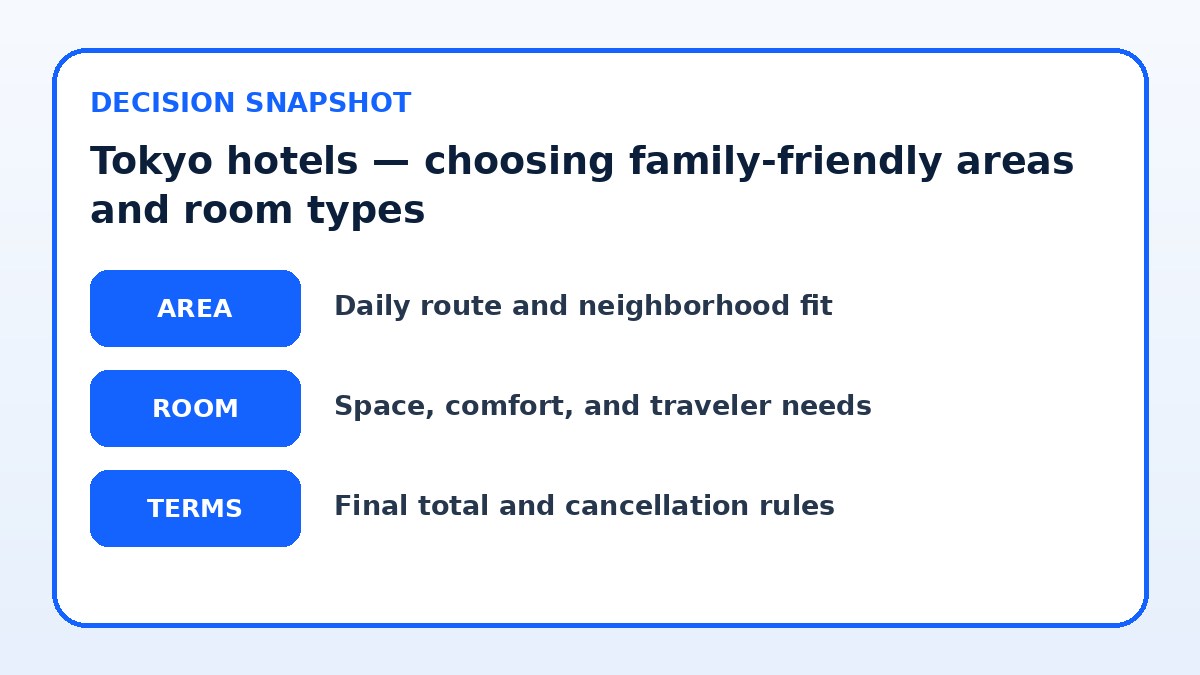
See current options before you compare the details
Availability and final conditions change. Open Trip.com now or keep reading for the practical comparison.
Pick a neighborhood based on your family’s rhythm
Tokyo’s neighborhoods vary widely in pace and attractions. Central hubs like Shinjuku and Tokyo Station put you close to major tourist lines and faster transfers across the city—handy if you plan full days seeing different districts. Shibuya and Harajuku are lively with shops and kid-focused attractions, while Asakusa offers more traditional streets and calmer daytime activity. If your family prefers quieter evenings for early bedtimes, consider neighborhoods with residential character such as Meguro or parts of Shinagawa that still provide good train access.
Think about daily rhythms: will you spend long afternoons at museums and parks, or hop between attractions? Choose an area with easy access to your most frequent priorities—parks and open spaces if you have toddlers, museums for curious older kids, or convenience stores and family restaurants if you expect late arrivals. Also check whether nearby station exits have elevators or escalators if you’ll use a stroller. Neighborhoods that balance transit convenience with family-friendly daytime options will save you time and reduce stress on travel days.
Decide room type and hotel features that reduce friction
Room configuration can make or break a family stay. Hotels in Tokyo range from compact single rooms to suites and family rooms with extra beds. For toddlers and younger children, a larger room with space for a rollaway or a room with twin beds plus a sofa bed is often more practical than squeezing into a small double. Interconnecting rooms give adults privacy while keeping children close. When you compare listings, verify exact bed sizes, maximum occupancy, and whether cribs or baby cots are provided—these details can change, so confirm them on the hotel’s booking page before finalizing.
Hotel features that matter: laundry (self-service or hotel-provided) cuts down on packing and daily stress; breakfast service or on-site dining keeps mornings simple; luggage storage allows flexible arrival and departure days; and 24-hour reception helps with late check-ins. If parking, stroller-friendly entrances, or accessibility features are important, look for explicit confirmation and photos. Some larger hotels advertise playrooms or childcare services—if you need those, ask the property to confirm availability and any related fees on their official page.
| Approach | Best for | Tradeoff to check |
|---|---|---|
| Stay at a major station hub | Families prioritizing short transit times and frequent neighborhood changes | Smaller rooms and higher ambient noise compared with quieter neighborhoods |
| Choose a quieter residential area | Families valuing larger rooms, lower noise, and relaxed evenings | Longer daily commutes to popular tourist sites and attractions |
| Book a family room or suite | Groups needing space, separate sleeping areas, and in-room conveniences | Higher nightly rate or fewer available properties in central locations |
| Pick a compact business hotel | Short city stays where location and price trump space | Limited space, fewer family amenities, and less room for strollers or extra luggage |
Ready to check the option that fits your plan?
Use your exact dates and traveler details so the provider page can show the current total and conditions.

Balance transit convenience with downtime and noise
Being near a major station reduces walking and confusing transfers, but central locations can be noisy and busy, which matters for early bedtimes or naps. If your family tolerates short commutes, choosing a slightly quieter neighborhood a few stops away often gives you larger rooms and calmer evenings for the same budget. When comparing hotels, check how many station exits you’ll use, whether the route requires stairs, and how easy it is to reach shuttle or airport transfer services—these practical details affect daily comfort more than proximity alone.
Also think about transfer complexity from the airport or port. For families, minimizing changes and avoiding long walks with luggage or strollers is a priority. Compare direct train or limousine-bus options to your chosen neighborhood versus multiple transfers; sometimes an extra 10–20 minutes on a single train is easier than two short rides plus a long walk. For each option, verify current train lines, transfer requirements, and accessibility details on operator pages and your hotel’s arrival instructions before you travel.
Before you book
- Confirm the exact bed configuration and maximum room occupancy on the hotel’s official booking page before you reserve.
- Verify elevator/escalator access at the nearest station exits if you’ll use a stroller or have heavy luggage.
- Check whether the hotel offers laundry facilities or nearby laundromats to reduce packing bulk.
- Map at least one nearby supermarket or convenience store for quick meals and emergency supplies.
- Ask the hotel about luggage storage and late check-in policies so arrival and departure days stay flexible.
- Locate the nearest pediatric clinic or English-speaking medical facility and save contact details in your phone.
Dining, groceries, and kid activities near your hotel
Easy access to family-friendly dining and grocery stores makes everyday life smoother. Convenience stores in Tokyo are ubiquitous and carry basic meals, kid snacks, diapers, and medicine—useful for unexpected needs. Look for hotels within a short walk of restaurants that offer kid portions or English menus if language is a concern. If you plan to cook or reheat meals, verify whether rooms include a microwave, fridge, or kitchenette before booking.
Plan afternoon or rainy-day activities near your stay: gardens, aquariums, planetariums, or indoor play centers reduce transit time and give predictable schedules for younger children. Universities and large department stores often host children’s events or have play spaces and family restrooms. When you choose a hotel, map the closest playgrounds, family restrooms, and pediatric clinics so you have options without a long commute. Confirm any advertised kid-friendly facilities directly with the hotel to avoid surprises.
Frequently asked questions
Which Tokyo neighborhood is best for an easy family airport transfer?
For straightforward airport transfers, consider neighborhoods with frequent airport bus or direct train services such as areas around Tokyo Station, Shinagawa, or Ueno. These hubs connect to multiple airport transit options and usually have clear signage and frequent departures—helpful with children and luggage. If you prefer fewer transfers even at the cost of a slightly longer ride, pick a hotel with documented shuttle or limousine-bus pickup; confirm scheduled stops and any extra fees on the provider or hotel’s booking pages before you travel.
How large should a hotel room be to stay comfortably as a family?
There’s no single ideal size, but many families aim for at least 25–35 square meters for two adults plus one or two small children, which allows room for beds and a play area. Families with toddlers often prefer a sofa bed or interconnecting rooms so children can nap without disturbing parents. Confirm exact room dimensions, bed sizes, and whether rollaway beds or cots are available on the hotel’s reservation page to ensure the space will meet your needs.
Are family-friendly amenities commonly available in Tokyo hotels?
Many mid-range and higher-end Tokyo hotels offer family amenities like cribs, extra beds, laundry services, and breakfast buffets with child-friendly options, but availability varies by property. Business hotels may have fewer dedicated family features but often compensate with great locations and consistent service. Always request and confirm specific amenities—cribs, kitchenette, play areas, or late check-out—directly with the hotel before booking; policies and supplies can change and the hotel’s booking confirmation is the definitive source.
Final planning note
Choosing Tokyo hotels for a first family visit is about balancing transit convenience, room layout, and daily comfort. Start with neighborhoods that cut down on complicated transfers and offer nearby parks or kid-friendly activities. Then prioritize room type and amenities—space for everyone, laundry, and easy dining options—to make days less logistically demanding. Map practical details like station exits with elevators, nearby convenience stores, and pediatric services before booking. Finally, verify all provider-specific facts (bed sizes, crib availability, cancellation rules) on the hotel’s official booking page; use comparison sites like Trip.com only to check current availability, and confirm final details directly with the hotel.
Continue planning
Check current options and final conditions
Use the provider page to confirm live availability, the final total, cancellation terms, and every condition that matters to your trip.
This evergreen planning guide was created with AI-assisted drafting and a structured quality review. It does not display live prices, schedules, availability, visa guidance, or provider rankings. Verify current details before booking. Some links are affiliate links; we may earn a commission at no additional cost to you.