If you must move between Taipei and Kaohsiung for work, focus first on the travel-day essentials: reliable transport, predictable timing, comfortable carry-on packing, and backup plans for delays or meetings. Decide whether you need the fastest door-to-door option, the most predictable schedule, or the cheapest business-appropriate choice — each requires different preparations. This article gives a compact checklist and the decision criteria to pick a train, flight, or road transfer, explains what to verify on booking pages, and highlights practical in-city logistics that affect arrival and the rest of your workday. Read the quick points, then use the sections to refine packing, timing, and contingency plans tailored to business travelers who need to arrive ready to work.
See current options before you compare the details
Availability and final conditions change. Open Trip.com now or keep reading for the practical comparison.
Choosing the right transport for the business day
Start by matching the transit option to the part of the day that matters most. If you need to minimize travel time between downtown centers, compare express trains and flights for total door-to-door time rather than published journey durations. For meetings with strict start times, prioritize options with the fewest transfers and predictable check-in or boarding procedures. If cost matters but you still need reliability, look for services with refundable or changeable reservations so the plan can flex if meetings shift.
When comparing providers, check the booking page for seat reservation options, luggage limits, and whether there are premium seats or flexible fares that reduce stress on the travel day. For any flight or train option, confirm whether there are direct services or if connections are likely; the presence of a connection changes how early you must leave your origin and how much buffer you should add for delays. Use official operator pages for the final verification and consider a comparison site such as Trip.com to view current availability, but always complete your booking on the provider’s page when you need the definitive terms.
Time management and buffers for predictable arrival
Work backwards from the time you must be ready at your destination. Allow time for commuting to the departure point, check-in or ticket validation, security or platform entry, and predictable local congestion. For morning departures, earlier trains or flights reduce the risk of city traffic affecting your station or airport arrival. If you have an afternoon or evening meeting, consider mid-day departures that leave a comfortable buffer for small delays without forcing a long wait on arrival.
Include contingency time for the travel day itself: add a buffer for last-minute changes and a plan for rapid rescheduling of meetings if delays occur. Identify alternative services on the same route that leave within an hour of your preferred departure so you can switch without needing to rebook far in advance. Keep digital copies of confirmations and a clear statement of arrival plans for colleagues or clients so they can adapt if your arrival shifts.
| Approach | Best for | Tradeoff to check |
|---|---|---|
| High-speed train (direct where available) | Travelers who need consistent schedules and a comfortable workspace. | May require more lead time to reach the station but usually avoids airport security and lengthy check-in. |
| Flight (direct or connecting) | Those prioritizing fastest possible travel time over long distances. | Air travel adds check-in and security steps; connections increase risk of missed onward meetings. |
| Private car or taxi | Door-to-door flexibility and direct transport to meeting venues. | Subject to road traffic variability and can be more costly or less predictable during peak hours. |
| Mix-and-match (train to nearby airport or ride to station) | Travelers balancing speed and convenience with access to varied schedules. | Requires careful coordination of connections and more buffer time to avoid missed legs. |
Ready to check the option that fits your plan?
Use your exact dates and traveler details so the provider page can show the current total and conditions.
Packing and tech setup for working on the move
Pack to make the travel time productive and comfortable. A single carry-on with a laptop or tablet, noise-cancelling earbuds, a compact charger and power bank, essential cables, and a portable mouse covers most business needs. Include meeting materials accessible both digitally and as a lightweight printout if you expect inconsistent connectivity. Keep any presentation files offline and synced in a second location (local copy plus cloud) in case of connectivity problems en route or at arrival.
Prepare a small comfort and emergency kit: spare shirt or tie, basic toiletries, medications, and a quick snack to avoid scrambling for essentials on arrival. Check each carrier’s policies on what may be carried onboard, particularly liquids and battery capacity, on their current booking pages. If you expect to work on the train or flight, choose a seat with power or bring enough battery to cover your devices, and pre-load any entertainment or reading material to avoid wasting productive time.
Before you book
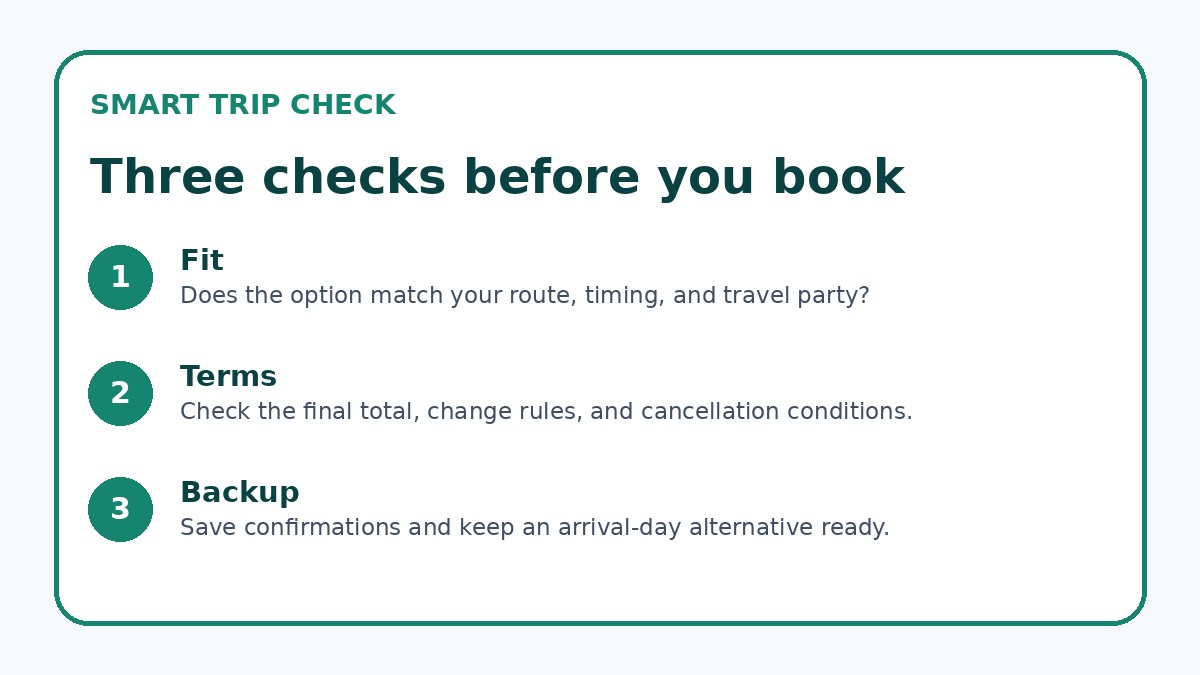
- Confirm the final booking page for your chosen provider to check seat selection, baggage rules, and change/refund policies.
- Set departure alarms accounting for commuting to the station or airport, check-in times, and an extra buffer for traffic or queues.
- Prepare a carry-on with laptop, chargers, power bank, presentation backups, and a small personal-care kit for quick refresh on arrival.
- Identify at least two last-mile options from arrival (taxi, rideshare, metro) and note the nearest exit and pickup points.
- Save digital and printable copies of tickets, confirmations, and meeting directions; share arrival details with a contact at your destination.
- Load offline copies of critical files and test device batteries and connectivity options before departing to avoid working interruptions.
Last-mile logistics and on-arrival readiness
Plan how you’ll get from the arrival station or airport to your meeting or hotel. Identify the nearest exit, which taxi ranks or rideshare pickup points are quickest, and whether there is a direct metro, shuttle, or bus that saves time. Look at walking distance if your destination is nearby; in many city-center arrivals, walking can be faster than waiting for a vehicle during peak hours. Have both cash and digital payment methods ready for local transport.
Once you arrive, set a short checklist to transition from travel mode to meeting mode: freshen up, connect to reliable local Wi‑Fi or a hotspot, and confirm the meeting room location or hotel check-in. If you use company travel support or a local assistant, alert them to your updated arrival time. Keep a small cushion before the first obligation so you can quickly address any unexpected needs, accept a short break to regroup, and present professionally on arrival.
Frequently asked questions
Should business travelers take the train or fly from Taipei to Kaohsiung?
It depends on your priorities. For most business travelers, compare door-to-door time rather than raw travel duration: include commute to the airport or station and time for check-in or security. Trains often offer predictable boarding and fewer security hassles, which can make them a better choice for tight schedules. Flights can be faster over longer distances but introduce more variables like airport transfers and potential connection risks. Check the provider pages for direct service options and seat availability to make an informed pick.
How much buffer time should I add before an important meeting after travel?
Aim for a minimum buffer that covers minor delays and time to transition: typically at least 60 to 90 minutes if you must travel from an arrival point to a meeting venue, and more if you expect traffic or long queues. If the meeting is critical, add additional contingency time or consider an earlier arrival option. Also account for the time you need to freshen up, connect to Wi‑Fi, and prepare any presentation materials. Adjust the buffer based on whether your route involves connections and the time of day you travel.
What should I verify on the booking page before finalizing transport?
Verify seat reservation options and whether they are confirmed or waitlisted, baggage allowances and restrictions, and the provider’s change and cancellation terms. Check boarding, check-in, or platform access rules that affect when you must arrive, and read any notes about transfers or required ID documents. If you rely on onboard power or special seating, confirm its availability and whether it is assigned in advance. Use the operator’s official booking page for these confirmations and consult comparison sites like Trip.com only for general availability checks.
Final planning note
Preparing the Taipei to Kaohsiung travel day for business means choosing the transit mode that matches your priorities and then removing as many variables as possible. Decide whether speed, schedule certainty, or cost matters most, verify the provider’s current terms on their booking page, and prepare a compact carry-on and tech kit so you can work on the move. Build realistic buffers, plan last-mile logistics, and keep backup station or flight options within an hour of your preferred departure. With these practical steps, you’ll arrive ready to focus on the meeting, not on recovering from travel setbacks.
Continue planning
Check current options and final conditions
Use the provider page to confirm live availability, the final total, cancellation terms, and every condition that matters to your trip.
This evergreen planning guide was created with AI-assisted drafting and a structured quality review. It does not display live prices, schedules, availability, visa guidance, or provider rankings. Verify current details before booking. Some links are affiliate links; we may earn a commission at no additional cost to you.