
If you're planning London as a couple, the fastest practical answer is this: use public transport for inner London days and consider a car rental only for specific day trips or stays outside central zones. London's Tube, buses and trains give dense coverage, leave you free of parking stress and suit couples who want to split transit and sightseeing flexibly. A rental becomes attractive if your itinerary includes countryside detours (Cotswolds, Chilterns), mobility needs, or a base far from central stations. Before you decide, weigh where you'll sleep, how much time you plan to spend inside central zones, and whether the freedom to leave on your own schedule outweighs the hassle of parking, congestion, and city driving.
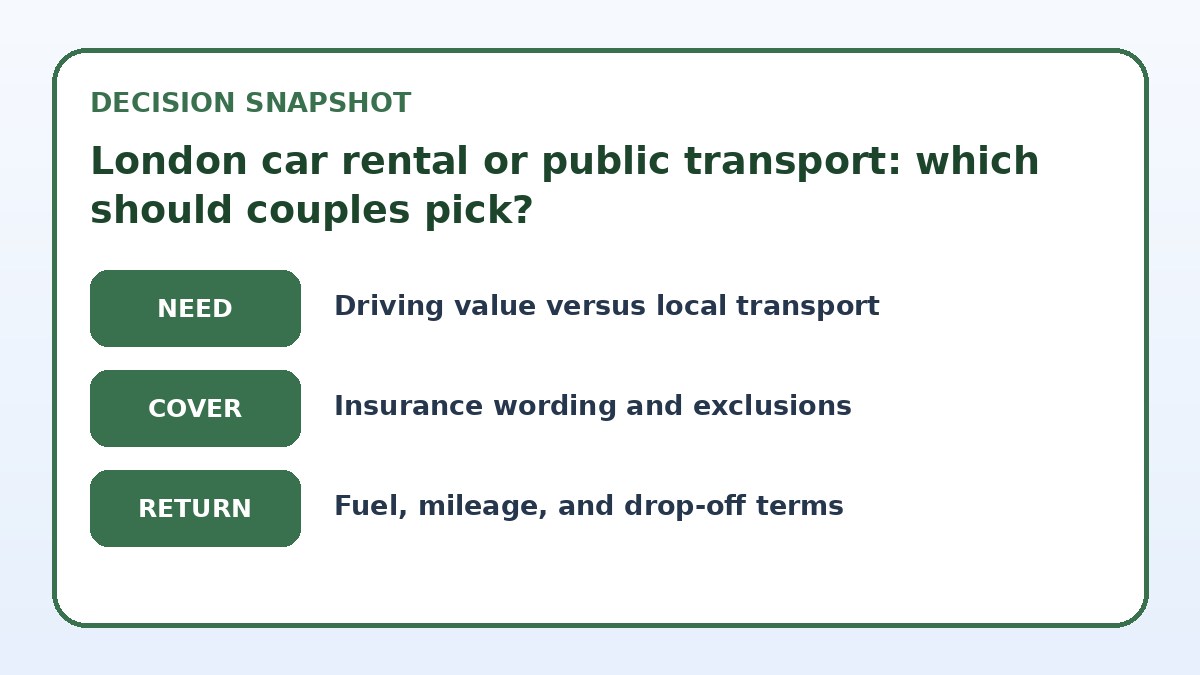
See current options before you compare the details
Availability and final conditions change. Open Trip.com now or keep reading for the practical comparison.
Where couples benefit most from London public transport
Central London neighborhoods, museums, West End theatres and riverside walks are designed around public transport and walking. For couples who want to linger over breakfasts, hop between attractions and enjoy evenings without hunting for parking, Tube and bus connections are a natural fit. Services are frequent across core zones, and a single card or contactless payment typically covers most journeys. Using transit also frees couples to drink, relax and share the navigation burden; one partner can lead on planning while the other enjoys sights without the stress of urban driving.
Choosing public transport also streamlines where to base yourselves. Staying near a major Tube, rail hub or bus corridor opens up straightforward day plans and reduces the time spent transferring. If you prefer a relaxed pace and fewer logistic details, pick accommodation close to a station or frequent bus lines. For couples focused on romantic strolls, markets and cultural venues within central London, public transport minimizes transfer time and lets you spend more of your trip together exploring rather than operating a vehicle.
When renting a car is the smarter choice for couples
A rented car makes sense when your couple itinerary extends beyond central London into the surrounding countryside or multiple towns on different days. If you plan early-morning starts for photography, flexible stops in villages, or a route with heavy luggage and less frequent train connections, driving reduces transfers and gives privacy. Renting also helps when one partner has mobility constraints or when you want the flexibility to change plans without checking timetables. The convenience of a car on rural roads can turn a busy logistics day into a relaxed mini-road-trip experience.
That said, driving into central London for sightseeing is rarely worth the hassles for couples: parking scarcity, confusing one-way streets and potential charges make it more stressful than rewarding. Consider splitting the trip: use public transport for city days and rent a car only for planned excursions that require door-to-door access. If you decide to rent, choose a compact vehicle and confirm pick-up and drop-off logistics that minimize additional inner-city driving—pick locations near major motorways or rail stations to streamline the transition between modes.
| Approach | Best for | Tradeoff to check |
|---|---|---|
| Public transport only | Couples staying inside central London who want low-stress sightseeing without parking concerns. | Less flexibility for countryside day trips and dependence on schedules and service hours. |
| Rent a car for the whole trip | Couples with rural-heavy itineraries or who prioritize door-to-door independence every day. | Higher parking, congestion charges, and urban driving stress; often unnecessary for central sightseeing. |
| Hybrid: transit in city, car for day trips | Couples who want the best of both worlds—easy city mobility and freedom for targeted excursions. | Requires careful coordination of pick-up/drop-off logistics and double-booking considerations. |
| Park-and-ride or peripheral base with car | Couples who want a rural base and occasional city visits without driving into central congestion zones. | Adds daily transfers into the city and depends on parking availability and local transit links. |
Ready to check the option that fits your plan?
Use your exact dates and traveler details so the provider page can show the current total and conditions.
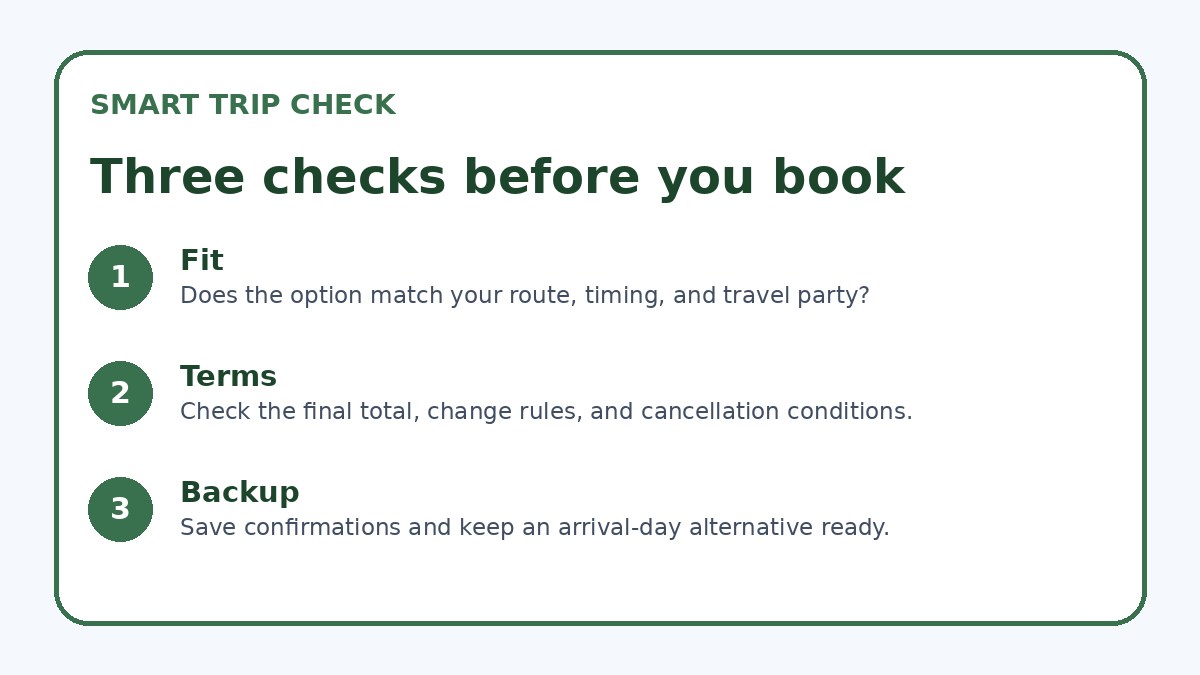
How to compare cost and practical trade-offs
Cost comparisons must go beyond headline rental rates. For a couple, add parking fees, congestion or low-emission zone charges, fuel, GPS or roaming data for navigation, and potential one-way drop fees. Public transport costs look different: factor in daily caps, railcards, and the convenience of not paying for parking or fuel. Also consider time value: how many hours will you spend hunting for parking or stuck in traffic versus waiting for a train? For many couples, predictable transit times and zonal fare caps offset higher upfront rental fees.
When you crunch numbers, simulate your actual days: list each planned stop, whether it’s better reached by car or rail, and the parking situation at each. Use a spreadsheet or simple checklist to total realistic costs and transfer times. If train or coach alternatives require connections, include those wait times and the effort of carrying luggage. Remember to verify vehicle insurance coverage, fuel policy and mileage limits on the rental provider’s final booking page before committing, and check rail timetable providers or a platform like Trip.com for current availability if you need to compare schedules.
Before you book
- List every planned day’s major stops and mark which are best reached by car versus rail or bus.
- Check where you will sleep and choose accommodation within walking distance of a Tube or mainline station if you plan to use public transport.
- If renting, confirm insurance coverage, fuel policy, mileage limits and additional driver fees on the rental provider’s final booking page.
- Estimate total parking costs and whether attractions or hotels offer secure parking; add these figures into your cost comparison.
- Verify train and coach schedules for planned day trips and check for planned engineering works or service disruptions on those dates.
- Decide pick-up and drop-off locations (airport, station, or peripheral depot) to minimize inner-city driving if you plan a hybrid approach.
Practical booking and planning checklist for couples
When you approach bookings, start with where you’ll sleep and what you’ll do each day. If most nights are in central London, prioritize transit-friendly hotels or apartments. If a car will be useful, arrange pick-up outside the congestion zones or at an airport or park-and-ride location to avoid inner-city driving. For rentals, confirm the pick-up hours, vehicle size and whether the supplier allows additional drivers—a convenience that can be useful for couples sharing driving. Always check the provider’s insurance terms, fuel policy and mileage limits on their final booking page.
For public transport, research the nearest stations, night service availability and whether your travel days intersect with planned strikes or engineering works—these can change options on specific dates. Consider travel cards or contactless payment limits for your planned zone travel and ask accommodation hosts about closest bus or Tube stops. If combining modes, plan logical handoff points: rail stations with nearby rental centres or park-and-ride hubs. Double-check directions for walking segments between stations and attractions so both partners know what to expect each day.
Frequently asked questions
Can couples rely solely on public transport to see London’s main attractions?
Yes—most central attractions are well connected by Tube, buses and short walks, making public transport a reliable choice for sightseeing couples. Using a station-focused base cuts transfer time, and frequent services let you change plans spontaneously. That said, some attractions just outside central zones or rural day trips are more convenient by car. If you plan one or two off-track excursions, consider renting only for those days rather than taking a car for the whole trip.
How should couples decide whether to rent a car for day trips from London?
Start by listing potential day-trip destinations and checking train or coach frequency and travel time. If destinations are served by direct, frequent public transport, trains often win for speed and convenience. If your route requires several small stops, early starts, or places with poor public links, a rental may be best. Factor in the extra time you’ll spend parking, local driving and potential charges. If unsure, compare a single-day rental cost against round-trip rail fares and taxi or local transfer options.
What practical things should couples check on a rental booking page before committing?
On the provider’s final booking page verify insurance inclusions and excess amounts, fuel policy (full-to-full is usually simplest), mileage limits, and whether additional drivers are included or charged. Confirm pick-up/drop-off times and locations, and any one-way fees if dropping off at a different site. Also check documentation required at collection and whether the car’s size suits your luggage needs. These details determine real costs and convenience more than the headline rate.
Final planning note
For most couples visiting London, public transport will be the most practical and relaxing choice for city days: it keeps costs predictable, avoids parking headaches and suits wander-and-stroll itineraries. Choose a hybrid plan if your couple trip includes targeted countryside excursions or mobility needs that justify a rental for a few days. Before booking, map your nights, tally realistic costs including parking and charges, and verify rental terms and rail schedules on the provider pages you plan to use. With that checklist complete, pick the option that keeps both partners comfortable and focused on enjoying time together.
Continue planning
Check current options and final conditions
Use the provider page to confirm live availability, the final total, cancellation terms, and every condition that matters to your trip.
This evergreen planning guide was created with AI-assisted drafting and a structured quality review. It does not display live prices, schedules, availability, visa guidance, or provider rankings. Verify current details before booking. Some links are affiliate links; we may earn a commission at no additional cost to you.