Practical answer first: for most couples staying inside Fukuoka city, public transport plus occasional taxis is the simpler, lower-stress choice; rent a car if your itinerary includes rural day trips, scenic coastal drives, or synchronized departure/arrival times that public transit cannot comfortably meet. Your decision hinges on where you’ll stay, how much you value flexibility versus relaxation, and whether you’re comfortable with local driving norms and parking. Couples who enjoy slow sightseeing, shared navigation duties, and the freedom to explore island beaches or nearby onsen towns will find a car appealing. If you want evenings without looking for parking, prefer walking between meals and bars, and want to avoid driving after drinks, public transport keeps the trip easy and social.
See current options before you compare the details
Availability and final conditions change. Open Trip.com now or keep reading for the practical comparison.
When public transport is the better choice
Inside the city center — Tenjin, Hakata, Nakasu and the Canal Area — Fukuoka’s subway, tram, and buses provide compact coverage that keeps sightlines short and walking pleasant. For couples who want to focus on cafés, museums, and evening strolls without the responsibility of driving, choosing trains and buses avoids parking searches and unfamiliar local signage. If you plan multiple short stops, frequent transfers are typically straightforward and let you split time between walking and transit without the fatigue of long drives.
Public transport also reduces incidental costs couples may overlook when adding a car: parking, tolls, and time spent finding legal parking spaces. It supports spontaneous dining and drinks without concern for driving afterwards, which keeps evenings sociable and flexible. Use hyperlocal route-planners for walking-transit combinations and consider buying either single tickets, day passes, or IC cards to speed boarding and avoid repeated cash transactions.
When renting a car makes more sense
Rent a car if your couple itinerary includes rural destinations, multiple day trips with limited public connections, or early departures/late returns that don’t align with schedules. A vehicle becomes valuable when travel time savings increase the time you spend together at scenic locations rather than in transfers. Small-group or two-person travel often makes fuel and toll costs reasonable per person, and a car can transform an ambitious plan — like combining a seaside lunch with a mountain shrine visit — into a comfortable day trip.
Driving also offers privacy and the ability to carry shared gear easily, such as picnic supplies, camera equipment, or a change of clothes for a day at an onsen. That extra convenience can be decisive for couples who like slow, spontaneous stops or photography-focused outings. Before booking, check whether your accommodation provides easy parking or if nearby lots are available, and consider whether you’re comfortable driving narrow rural roads and following local signage.
| Approach | Best for | Tradeoff to check |
|---|---|---|
| Public transport | City-centered couples who want low logistics and easy evenings without parking worries | Less flexibility for remote day trips and fixed schedules for early/late travel |
| Car rental | Couples planning multiple day trips to rural or coastal areas with limited public connections | Added responsibilities for driving, parking, navigation, and potential tolls |
| Mixed approach (transit + one-day rental) | Couples wanting city ease plus one or two flexible day trips without driving every day | Requires planning pick-up/drop-off logistics and may incur short-term rental premiums |
| Transit plus taxis | Couples who prefer not to drive but want door-to-door convenience for specific legs or late nights | Higher per-ride cost and possible wait times for taxis in off-peak areas |
Ready to check the option that fits your plan?
Use your exact dates and traveler details so the provider page can show the current total and conditions.
Key tradeoffs: cost, convenience, and experience
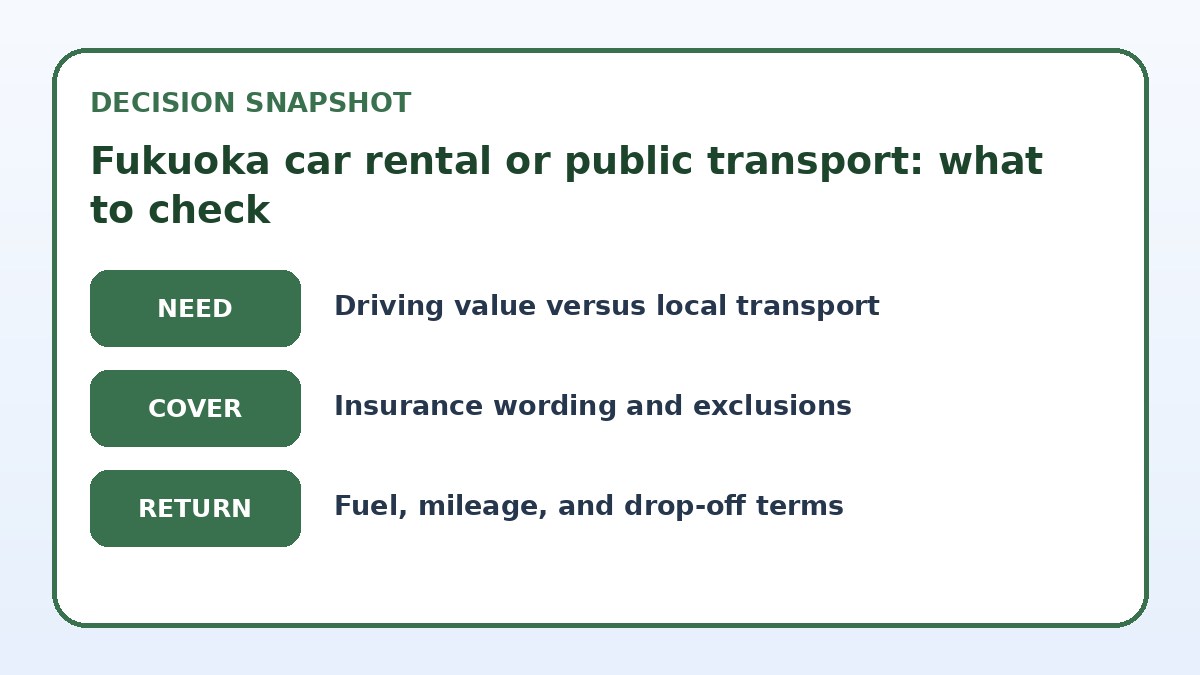
Cost comparisons are not just about rental fees. Consider fuel, tolls, parking, and the opportunity cost of time spent driving versus riding together. Public transport often suits tighter budgets for city-centered trips, while a car can add predictability and reach. Couples should model their itinerary: estimate total transit time and distance for trains/buses versus driving; if driving reduces total travel time substantially, that time saving may offset higher direct costs.
Convenience is subjective: some couples enjoy the intimacy of navigating together and scouting scenic pullouts, while others prefer one partner never to drive on vacation. Also factor in luggage handling, mobility needs, and alcohol plans; using transit or taxis for evenings can keep trips free from legal or safety concerns. Ultimately this is a values decision—decide whether flexibility (car) or minimal logistics (public transport) will make the trip feel most relaxing.
Before you book
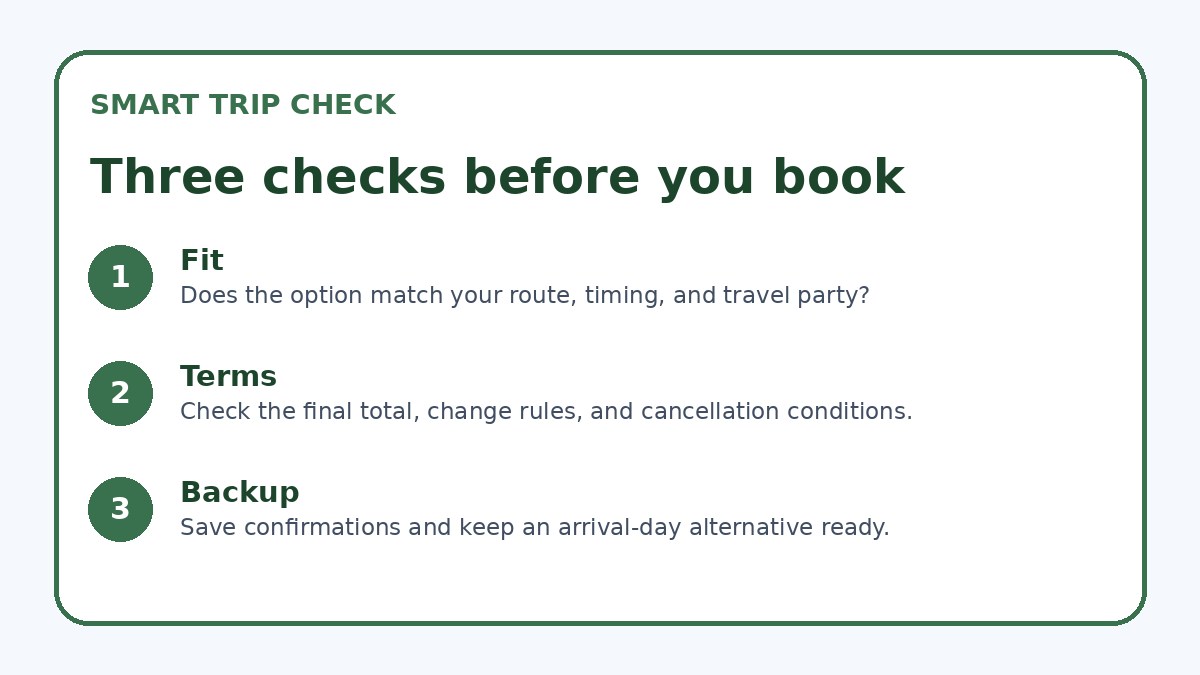
- Map every planned stop and compare door-to-door time for public transit versus driving for each day.
- Confirm whether your accommodation provides on-site parking or nearby parking lots and their access rules.
- If renting, read the rental company’s final booking page for insurance coverages, fuel policy, and extra-fee details.
- Check first/last train or bus times for days with early starts or late returns to avoid stranded evenings.
- Verify driver license requirements for foreigners, and bring any required international driving permit or translations.
- Estimate total extra costs for a car (fuel, tolls, parking) and compare them to public transport and occasional taxi fares.
Practical booking checks and local logistics
If you lean toward a rental, verify vehicle pick-up/drop-off locations and whether the provider allows pickups at airport counters or city hubs. Confirm the insurer’s coverage details, driver's license requirements, any cross-prefecture restrictions, and the company’s fuel and return policies. When comparing providers, check the final booking page for additional charges like young-driver fees, optional GPS or child-seat rentals, or specific conditions for returning off-hours.
For public transport, check route planners for first and last service times on days you’ll travel, and confirm how to buy or top-up IC cards or day passes. For both options, double-check parking availability at hotels and sights, and verify taxi and shuttle options for the last mile if you decide against a rental. Trip.com can be used to compare current availability and conditions, but always validate vehicle or ticket specifics on the provider’s own page before finalizing a booking.
Frequently asked questions
Can couples use a local driver's license to rent a car in Fukuoka?
Driver license rules vary by nationality and rental company. Many providers require either an International Driving Permit (IDP) issued under the 1949 Geneva Convention together with your valid domestic license, or an officially translated license where applicable. Always confirm the exact document requirements on the rental company’s final booking page before travel, and carry both original and translation/IDP during pick-up. If in doubt, contact the provider directly to avoid being turned away at collection.
How should couples plan parking when staying in Fukuoka city?
Check your hotel's parking availability and whether you must reserve a space separately; some central accommodations have limited spots or nearby municipal lots. If hotel parking is unavailable, research nearby hourly or daily car parks and their walking distance to your lodging. For evening plans, identify safe legal parking close to restaurants or nightlife areas; otherwise plan to use taxis or public transport for nights when parking would be difficult. Confirm final parking details before booking a rental car.
Is it easy to switch between public transport and driving during a trip?
Yes—many couples use a hybrid approach: relying on transit while keeping a one-day rental for targeted excursions. To pull this off smoothly, plan convenient pick-up and drop-off locations such as airport counters or central rental branches, and allow buffer time for traffic and paperwork. Double-check rental office hours, potential after-hours returns, and transit schedules for the same days. Confirm all practicalities on the rental company’s booking page to ensure transfers between modes are logistically feasible.
Final planning note
Choosing between a Fukuoka car rental and public transport comes down to your couple’s priorities: ease and low logistics, or flexibility and reach. For city-focused stays with evening plans and short hops between attractions, public transport keeps the trip relaxed and social. If you prioritize countryside drives, coastal stops, or private time on the road, a rental unlocks options trains and buses cover less often. A hybrid plan—using transit for urban days and renting for one or two excursions—often provides the best balance. Before booking, map your days, verify provider rules on the final booking pages, and confirm parking and license details so you both can enjoy the trip without last-minute surprises.
Continue planning
Check current options and final conditions
Use the provider page to confirm live availability, the final total, cancellation terms, and every condition that matters to your trip.
This evergreen planning guide was created with AI-assisted drafting and a structured quality review. It does not display live prices, schedules, availability, visa guidance, or provider rankings. Verify current details before booking. Some links are affiliate links; we may earn a commission at no additional cost to you.