Practical answer first: for most couples visiting central Kyoto for temples, food and compact sightseeing, public transport and walking are usually the simpler choice; rent a car if you plan day trips to rural areas (e.g., northern forests, countryside temples, or mountain drives) or if mobility, flexibility and luggage handling outweigh the hassle of parking. Your decision hinges on what you want to do, how much you both enjoy driving on narrow streets, and whether you prefer the worry-free rhythm of trains and buses. Below I explain the tradeoffs that matter to couples — time, cost structure, comfort, romantic convenience, how to handle luggage, and where to book and verify rentals. If you compare options online, consider checking a site like Trip.com for current rental availability, but always confirm fees, insurance, and return rules on the provider’s final booking page.
See current options before you compare the details
Availability and final conditions change. Open Trip.com now or keep reading for the practical comparison.
Where each choice wins — practical strengths
Public transport’s main strengths are predictability and convenience around central Kyoto. Trains connect major hubs and nearby towns, buses serve temple-heavy neighborhoods, and combining short walks with transit often beats door-to-door driving in dense zones. For couples who enjoy leisurely strolls, meals in walkable neighborhoods, and worry-free evenings without searching for parking, public transport fits a relaxed, romantic pace. It’s also easier to share time — one partner doesn’t have to handle driving the whole day — and you avoid navigating narrow historic streets that can be stressful after sunset.
Car rental shines on flexibility and access to outlying attractions. If your ideal days include early starts to rural shrines, mountain viewpoints outside the city, or hopping between dispersed spots that don’t sit on a direct public route, a car can save time and let you tailor the day. Driving also helps when transporting bulky luggage or longer itinerary legs between regions. Couples who value privacy, spontaneous detours, and the ability to set their own schedule may find the driving option emotionally and logistically freeing — provided they are comfortable with local driving conditions and parking logistics.
Costs, logistics and what to verify before booking
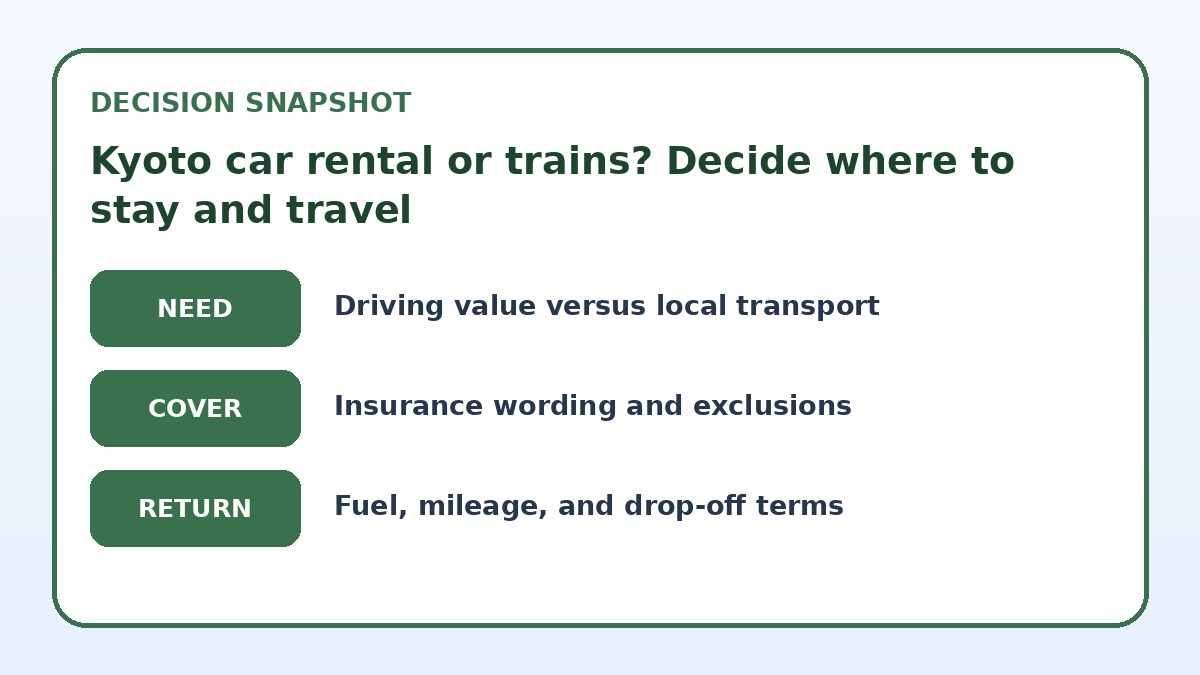
Cost comparison depends on many variables: days driven, parking fees, tolls, fuel, and supplemental insurance for rentals versus the cumulative cost of train and bus fares or day passes. Don’t rely on a headline rental rate. Verify the final booking page for fuel policy, mileage limits, insurance coverage (CDW/LDW options), additional driver fees, and deposit holds. If you use train passes or regional bus passes, check which lines are covered. When comparing total cost, estimate parking and tolls for likely stops because those can quickly erase perceived savings from a low base rental rate.
Logistics matter for couples making on-the-ground decisions. If you pick public transport, research how close your accommodation is to stations or major bus routes, and check luggage logistics for arrival and departure days. For car rental, confirm pick-up and drop-off locations relative to your accommodation and whether the supplier allows one-way returns. Always verify where to pick up the car, parking availability at your hotel or guesthouse, and whether the provider requires proof of an international driving permit. These items are subject to change, so review the provider’s confirmation and terms before finalizing any booking.
| Approach | Best for | Tradeoff to check |
|---|---|---|
| Public transport | Couples prioritizing low stress, easy evenings, and walkable sightseeing | Less flexibility for remote day trips and managing large luggage between stations |
| Car rental | Couples planning multiple rural day trips or who prefer private, flexible schedules | Time lost to parking, navigating narrow streets, and potentially higher incidental costs |
| Mixed approach (transit + single rental day) | Couples who want city convenience plus one or two remote excursions | Requires extra planning to coordinate pick-up/drop-off and may incur short-term rental penalties |
| Guided day tours with transport | Couples who want rural access without driving responsibilities | Less private time and set itineraries compared with self-driving |
Ready to check the option that fits your plan?
Use your exact dates and traveler details so the provider page can show the current total and conditions.
Comfort, intimacy and day-to-day tempo for couples
Travel style influences how comfortable each option feels for two people. Public transport can create a rhythmic, low-stress day: short walks between stops, cafe breaks, and easy evening plans that leave both partners free to enjoy Kyoto at a relaxed pace. It also removes the duty of one person being the designated driver—helpful if you want to drink, linger over dinner, or simply switch roles during the day. For couples who savor strolling together through temple gardens or along the Kamo River, public transit supports a gentle, immersive experience.
Driving offers privacy, control over music and conversation, and tight scheduling for couples who prefer a more private travel bubble. It’s appealing for honeymooners or partners who value uninterrupted time together between points of interest. However, urban driving includes stressors: narrow roads, one-way systems, and time lost finding parking. Consider how comfortable you both are with these tradeoffs — if either partner dislikes city driving, the emotional cost might outweigh the practical benefits of a car.
Before you book
- List your top five must-see spots and map whether they cluster near train stations or are spread across rural areas.
- If considering a rental, confirm on the provider’s booking page: fuel policy, insurance coverage options, mileage limits, and deposit holds.
- Check hotel or guesthouse parking availability and fees, and ask how close the nearest paid lot is if no on-site parking exists.
- Estimate total daily transit fares or passes needed and compare that to a rental’s total expected costs including tolls and parking.
- Decide how you’ll handle luggage on arrival and departure—reserve a ground transport option or factor luggage transfers into rental timings.
- If you plan to drive, verify whether you need an international driving permit and ensure your license and ID documents meet provider requirements.
Where to stay and plan your base depending on choice
If you choose public transport, prioritize accommodation near major train stations (e.g., Kyoto Station or central subway stops) or in neighborhoods with frequent bus links. Being close to a transit hub turns early mornings and late nights into easy transitions, and many romantic neighborhoods — like Gion or Pontocho — are eminently walkable from transit stops. For arrivals and departures, staying near a station reduces luggage hauling and gives you quick access to onward trains or an airport shuttle. Confirm walking times and bus stop locations before booking.
For a rental-car plan, choose a base with easy road access and reliable parking — ideally a hotel or guesthouse that offers on-site parking or can direct you to nearby paid lots. A stay slightly outside the most congested historic districts can save time and parking trouble while still keeping you close enough to walk into core attractions. If you’ll split your trip between city exploration and countryside drives, consider one central urban night or two and a separate night or two in a rural ryokan or town where driving is advantageous. Double-check parking fees and entry instructions for your accommodation on the property’s final confirmation page.
Frequently asked questions
Is driving in Kyoto difficult for visitors unfamiliar with Japanese roads?
Driving in Kyoto can be manageable but involves challenges: narrow lanes, many one-way streets, and busy downtown areas with limited parking. For visitors unfamiliar with local driving culture and signage, driving outside urban centers can be more comfortable, but within the city it often slows sightseeing due to parking searches. If one partner has anxiety about urban driving, public transport or guided options reduce stress. Before booking a car, confirm local driving rules, insurance options on the rental booking page, and whether you need an international driving permit.
Can couples rely on public transport to reach popular temples and romantic neighborhoods?
Yes — most major temples, historic districts and romantic neighborhoods in Kyoto are reachable by a combination of trains, subways and local buses, often with short walks between stops and sights. Buses are useful for temple clusters that aren’t on train lines, while trains connect longer distances and nearby towns. For mornings when crowds matter, plan early departures and check walking distances from stops to key sites. If you need current bus routes or schedules, view official transit operator pages or check a live aggregator like Trip.com for availability, and verify transfers and route details before you travel.
How should couples split time between city days and day trips if unsure which option to pick?
A balanced plan often works well: base yourselves in central Kyoto for most nights to enjoy city rhythms, using public transport for temple visits and evening outings. Reserve one or two days for rental car use or a guided day tour dedicated to rural or remote attractions. This hybrid approach reduces parking hassles while giving you flexibility for special outings. When booking a short-term rental, verify pick-up/drop-off times and any one-day rental fees on the provider’s confirmation so the logistics align with your city-based accommodation schedule.
Final planning note
For many couples, public transport plus walking gives the most relaxed and romantic experience in Kyoto’s compact city core. A rental car pays off when your itinerary includes dispersed rural sites, early starts, or heavy luggage that public transport would complicate. Think through what you want from the trip: leisurely evenings and easy moving between restaurants and temples point toward transit; privacy and full-day flexibility point toward driving. Whichever you choose, map your must-see locations, verify rental terms (insurance, fuel, deposits) on the provider’s booking page if you rent, and confirm transit connections and walking distances for a smoother, more enjoyable trip together.
Continue planning
Check current options and final conditions
Use the provider page to confirm live availability, the final total, cancellation terms, and every condition that matters to your trip.
This evergreen planning guide was created with AI-assisted drafting and a structured quality review. It does not display live prices, schedules, availability, visa guidance, or provider rankings. Verify current details before booking. Some links are affiliate links; we may earn a commission at no additional cost to you.