
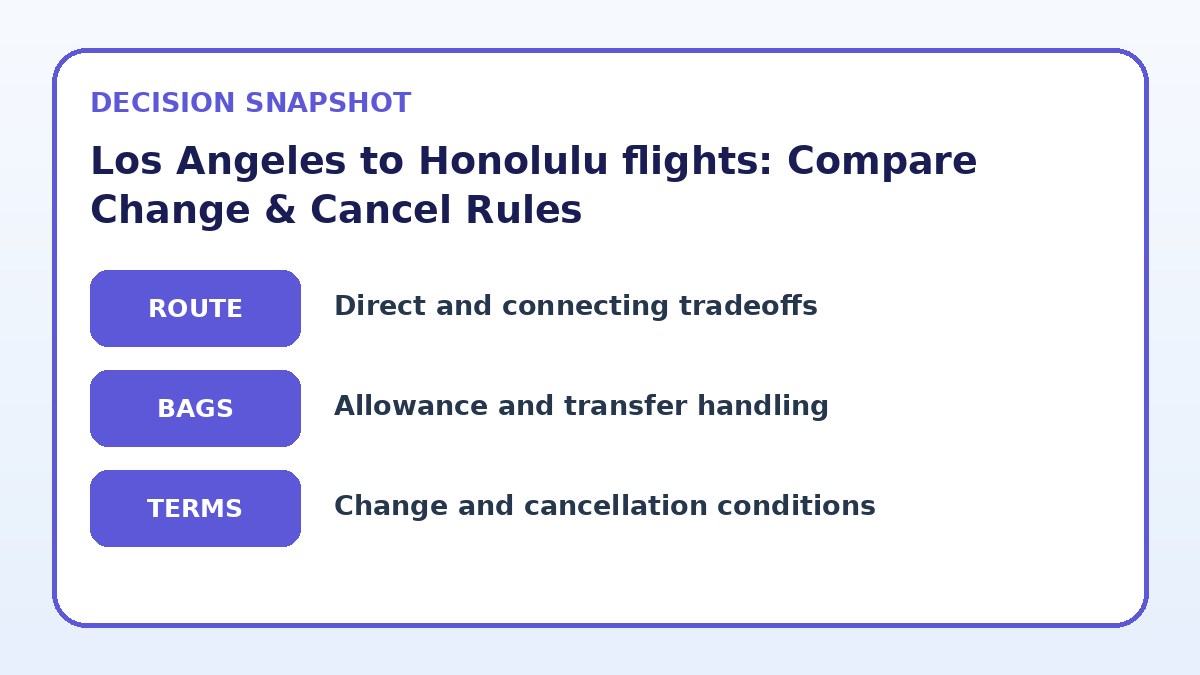
If you and your partner are booking Los Angeles to Honolulu flights, the practical first step is simple: choose a fare class and add protections that match how flexible you need to be. For many couples that means deciding between a lower fare with strict change fees and a flexible fare that allows modifications for a predictable extra cost. Before you finish payment, check the airline’s stated change window, any per-person reissue fee, whether taxes and fare differences apply, and whether the airline permits name corrections. If you prefer a one-stop comparison, you can look at Trip.com for current availability and headline policy summaries, but always verify rules on the carrier’s final booking page. This article walks through tradeoffs, decision criteria for partners traveling together, and a checklist to use before you click confirm.
Understand the basic types of fares and protections
Airlines generally sell at least three useful fare types: restrictive low-cost fares, mid-tier changeable fares, and fully refundable fares. For couples, a restrictive fare can be attractive if you’re sure of dates because it lowers upfront cost, but it usually carries specific change fees, limited refundability, and strict name-correction rules. Mid-tier fares often allow one or more changes for a fee plus any fare difference, and sometimes include the option to buy a bundle with checked bags and seat selection—conveniences that make travel together smoother.
Refundable fares give the most freedom but at a higher price, and for many couples the question is whether that premium is worth it for peace of mind. Trip protection products—sold by airlines or third parties—can add coverage for illness, work changes, or other disruptions; read their exclusions carefully. Whatever route you pick, verify whether the fare’s change policy applies per passenger or to the reservation as a whole, and confirm how the airline handles cancellations requested by one traveler in a multi-passenger booking.
How to compare change fees, fare differences, and timing
When comparing options, break the total risk into three pieces: the change fee charged by the airline, the fare difference if the new ticket is more expensive, and timing restrictions (for example, changes allowed only up to 24 hours before departure). A low change fee can be offset by a large fare jump, especially if you change to a peak travel date. Couples should run short “what if” scenarios: if one person needs to move by a week, what is the total outlay including fee plus fare difference versus buying a flexible fare originally?
Also look for same-day standby or same-day confirmed change options—some carriers allow inexpensive swaps if seats are available on the same day, which can be useful for partners who can be flexible on timing. Note whether the airline offers a free change window after booking (common with some carriers) and whether any waiver or temporary policy affects your trip. Always note exact cut-off times shown at booking: a policy may say changes are allowed but still enforce a strict deadline that could apply differently to each passenger.
| Approach | Best for | Tradeoff to check |
|---|---|---|
| Buy restrictive fares for both travelers | Couples who are certain of dates and want lowest upfront cost | High change fees and limited flexibility if one partner must reschedule |
| Book mid-tier refundable/changeable fares | Couples wanting a balance of cost and flexibility | Higher upfront fare but lower financial pain if plans shift |
| Purchase refundable fares for one partner only | When one traveler is more likely to change plans | Protects the flexible traveler but complicates seat pairing and may cost more overall |
| Separate bookings with individual protections | Couples who want independent control of each ticket | Lose some combined perks and may pay more for seats or baggage |
Special considerations for couples traveling together
Couples have additional coordination needs: seat pairing, baggage allowances, and what happens if one partner must cancel. Some airlines will automatically keep seats together at the same fare class, while others require paid seat selection to guarantee adjacent seats—important if comfort or proximity matters. If one person cancels and the airline treats the booking as linked, it could affect the other passenger’s itinerary or fare; ask the carrier how they handle single-passenger changes within a multi-passenger reservation before you book.
If one partner is more likely to need a refund or change (for example, because of work), consider separate bookings with synchronized schedules but different protection levels—this gives each person independent control at the cost of potentially not getting adjacent seats or combined savings. For couples seeking minimal hassle, buying a mid-tier flexible fare for both travelers simplifies management of the reservation and ensures consistent rules across both tickets.
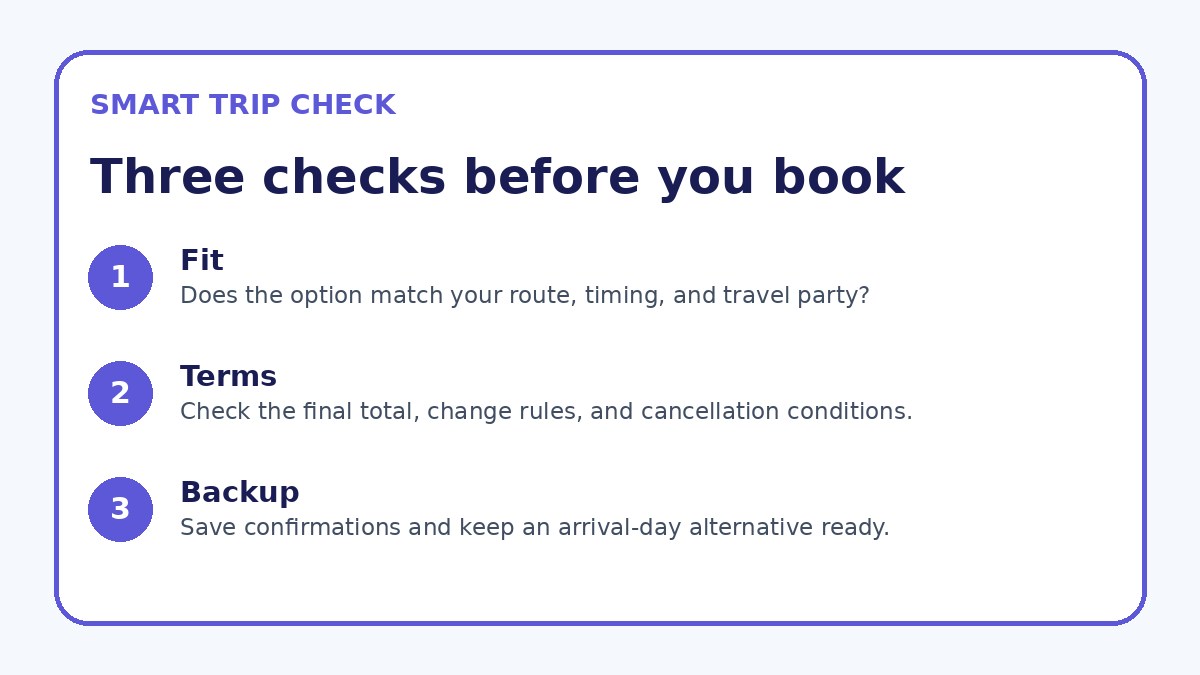
Before you book
- On the airline’s final booking page, confirm the exact per-passenger change fee, refundability, and cut-off times before completing payment.
- Decide whether to buy refundable or mid-tier fares versus add-on protections based on each partner’s schedule risk.
- If you need seat adjacency, verify seat selection rules and costs for each fare option and reserve seats immediately if required.
- If one person is likely to cancel, ask the carrier how single-passenger cancellations within a reservation are handled and whether it affects the other ticket.
- If using third-party insurance or a travel agent, save the policy number and read claim conditions about who is covered and permitted reasons for reimbursement.
- Store screenshots or a PDF of the fare rules and confirmation; include change codes, voucher conditions, and contact numbers for faster future edits.
Verifying policies and extra protections at booking
Never treat a headline policy as definitive: always scroll to the carrier’s full change and cancellation terms on the payment page and print or save the confirmation that itemizes the fare rules. Look for the exact wording on name changes, whether vouchers or credits are refundable, how refunds are processed and how long they take, and whether the change fee is waived for certain loyalty statuses or credit card protections. If you bought travel insurance or a third-party protection, read the insurer’s claim triggers, required supporting documentation, and time limits.
If you use a third-party site to compare fares, confirm the final terms with the airline before completing the purchase—booking platforms sometimes display simplified policy summaries. If you expect to possibly change travel dates, ask the airline agent or the booking platform whether rebooking costs include only the fare difference or also taxes and agency fees. Keep emergency contact numbers handy and add any waiver codes or confirmation numbers to your shared travel notes so both partners can manage changes if one person must handle the booking later.
Frequently asked questions
Should couples book on the same reservation or separate reservations?
Booking together can simplify check-in, seat assignments, and baggage handling, and often keeps fares linked. However, a shared reservation may tie both passengers to the same change and cancellation consequences—if one person cancels improperly it might affect the other. Separate reservations give each traveler independent control and can be useful if one person faces uncertain plans, but they may require paying twice for seat selection and could complicate boarding together. Decide based on how likely either partner is to change plans and whether seat proximity is essential.
How do vouchers or credits work if a couple cancels one ticket?
Airlines differ in how they issue credits: some issue per-passenger vouchers tied to the original ticket number, others may credit the entire reservation. Vouchers often have expiration dates and restrictions on fare classes or blackout dates. When cancelling one passenger, confirm whether the credit will be issued in the name of the person who cancelled, whether it’s transferable, and how taxes and fees are handled. Always verify voucher terms on the airline’s final booking confirmation since third-party summaries may omit critical limitations.
Can I change passenger names or correct spelling after booking?
Minor name corrections are usually allowed, but full name changes that transfer a ticket to a different person are often restricted or treated as cancellations with new-ticket purchase required. Airlines typically specify what constitutes a small correction (typo, missing middle name) versus a full name change. If you expect name edits—common with recent marriages—review the airline’s exact name policy at booking and consider holding flexible fares or refundable options until the correct documents are ready. Ask the carrier to document any permitted corrections in writing.
Final planning note
For couples flying Los Angeles to Honolulu, the right approach depends on how certain each partner is about travel dates and how you value peace of mind versus lower upfront cost. Start by comparing total risk—change fees, fare differences, and timing rules—rather than focusing solely on the ticket price. If one traveler is more likely to change plans, consider asymmetric protection (flexible fare for that person or separate tickets). Always verify the airline’s full change and cancellation terms on the final booking page, save confirmation details, and consider travel insurance for non-routine risks. These steps will make last-minute shifts less stressful and keep both partners ready to enjoy the trip together.
Continue planning
Check current options and final conditions
Use the provider page to confirm live availability, the final total, cancellation terms, and every condition that matters to your trip.
This evergreen planning guide was created with AI-assisted drafting and a structured quality review. It does not display live prices, schedules, availability, visa guidance, or provider rankings. Verify current details before booking. Some links are affiliate links; we may earn a commission at no additional cost to you.