Practical answer first: if you’re traveling to Sydney with extra luggage, choose an area that minimizes transfers, gives rooms with extra floor space or storage, and offers flexible booking terms that explicitly list luggage and late-arrival policies. Prioritise either a CBD hotel with wide corridors and lift access for short transfers, an airport-area stay if you want to limit cross-city hauling, a transit-hub location to balance transit options and walking distance, or a low-rise coastal/suburban option if you plan to rent a car and need parking space. Before booking, check each listing’s room dimensions, luggage handling/porter services, elevator access, and the precise cancellation and modification rules on the provider’s final booking page. Use these criteria to shortlist neighbourhoods, then confirm on the hotel or booking platform (Trip.com can be used to compare current availability and terms) whether their stated baggage accommodations match your needs.
Check live stays in the areas that fit
Use your dates and party size to compare current rooms after you narrow the neighborhood fit.
Neighborhood fit: where to base yourself in Sydney with heavy bags
Start by choosing the kind of trip you’ll be doing in Sydney. If you’re staying mostly in the CBD for museums, restaurants and short business trips, book near Circular Quay, The Rocks or Martin Place for short walks and straightforward taxi or rideshare access. Those central spots tend to have larger hotels with dedicated porter teams and baggage storage; still, specific room layouts vary, so check photos and descriptions for luggage space and elevator access before you book.
If you plan day trips along the coast or prefer quieter mornings, consider inner suburbs like Paddington, Surry Hills or Bondi-adjacent areas where low-rise hotels and serviced apartments often have bigger rooms and on-site parking. For overnight or early departures, airport-adjacent hotels reduce hauling time. Lastly, if you rely on trains to move across greater Sydney, pick a hotel next to a major station (Central, Town Hall) to limit the distance between platform and room.
Choose an area-selection strategy
| Area approach | Best for | Tradeoff to check |
|---|---|---|
| CBD-centred stay (Circular Quay, Town Hall) | Travelers wanting short city walks, built-in porter services and minimal transfers across central attractions. | Higher pedestrian traffic, stairs in older buildings, and potential limits on vehicle drop-off space for large transfers. |
| Airport-area hotels | Arrivals or departures with heavy luggage who prefer to minimize haul time to the terminal. | Farther from city sights; you may need a car or public transport for inner-city trips, adding complexity if you have many bags. |
| Transit-hub adjacent (Central, major stations) | Those combining intercity train travel and local transit who want short platform-to-lobby routes. | Peak-time crowds and luggage storage competition; verify elevator sizes and step-free access on each route. |
| Suburban/coastal stays (Bondi, Paddington) | Travelers who value larger rooms, parking and a quieter base when using a rental car. | Longer transfers to city attractions and potential extra cost or time to return luggage if you need to head into the CBD. |
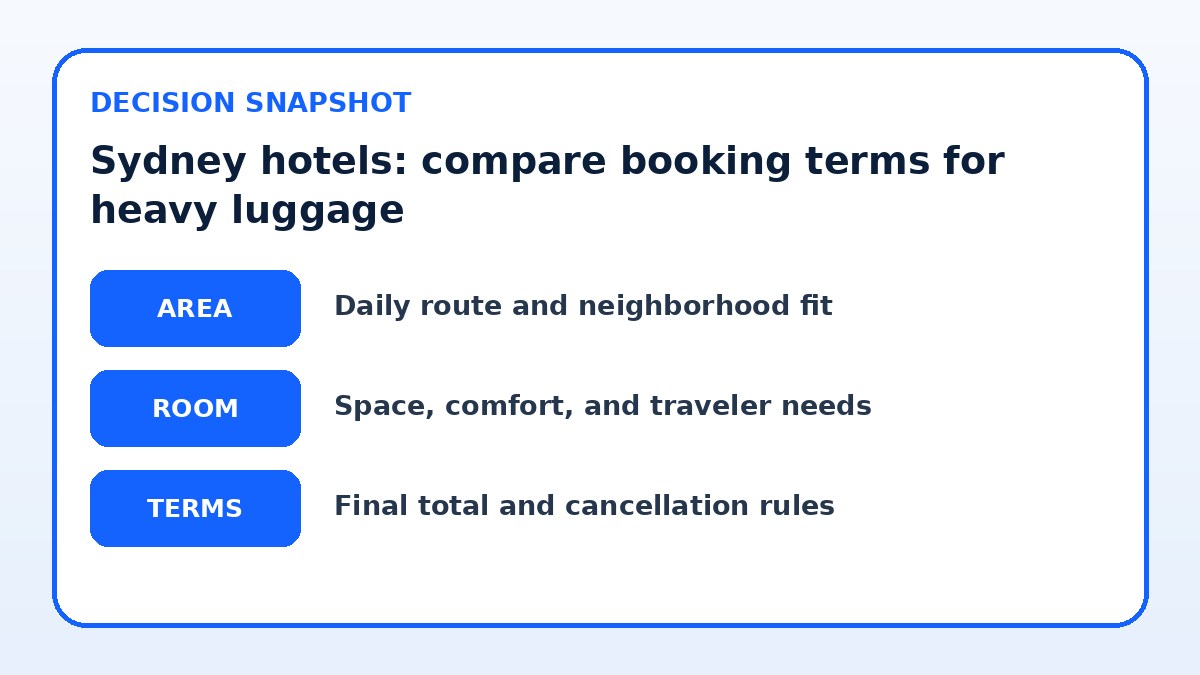
Daily-route friction: reduce haul time between transport and room
Map your arrival route before selecting a hotel. Large suitcases are harder on ferries, busy trains, or long walks with stairs, so factor in lifts, ramps and curb cuts at the station or ferry wharf. A hotel that’s a short taxi ride from the terminal might still be faster overall than a supposedly ‘close’ walk that includes staircases and long corridors.
Also think about last-mile logistics: if you have multiple bags, can the driver unload at the door? Does the hotel offer porter help or luggage carts on request? When comparing hotels, read recent guest notes about elevator size and corridor widths and confirm on the booking page whether they list porter services, arrival check-in windows, or storage options for early arrival or late departures.
Now compare like with like
Keep the same dates, guests, room needs, and cancellation preferences while you compare the final choices.
Room and party needs: pick the right room type and amenities
A larger room type or serviced apartment can be worth the extra cost when you have oversize luggage or multiple suitcases. Look for room descriptions that mention square metres, separate living areas, or in-room storage. If you travel as a family or with a group, check whether connecting rooms are available and whether extra beds or cots will reduce usable floor space for luggage.
Don’t assume standard photos show the actual layout you’ll get — confirm the precise room size, whether there’s a luggage rack or wardrobe space big enough for packed suitcases, and whether housekeeping will consolidate items if you need additional storage. On the booking page, verify cancellation windows and modification rules that matter if your plans change and you need a different room configuration.
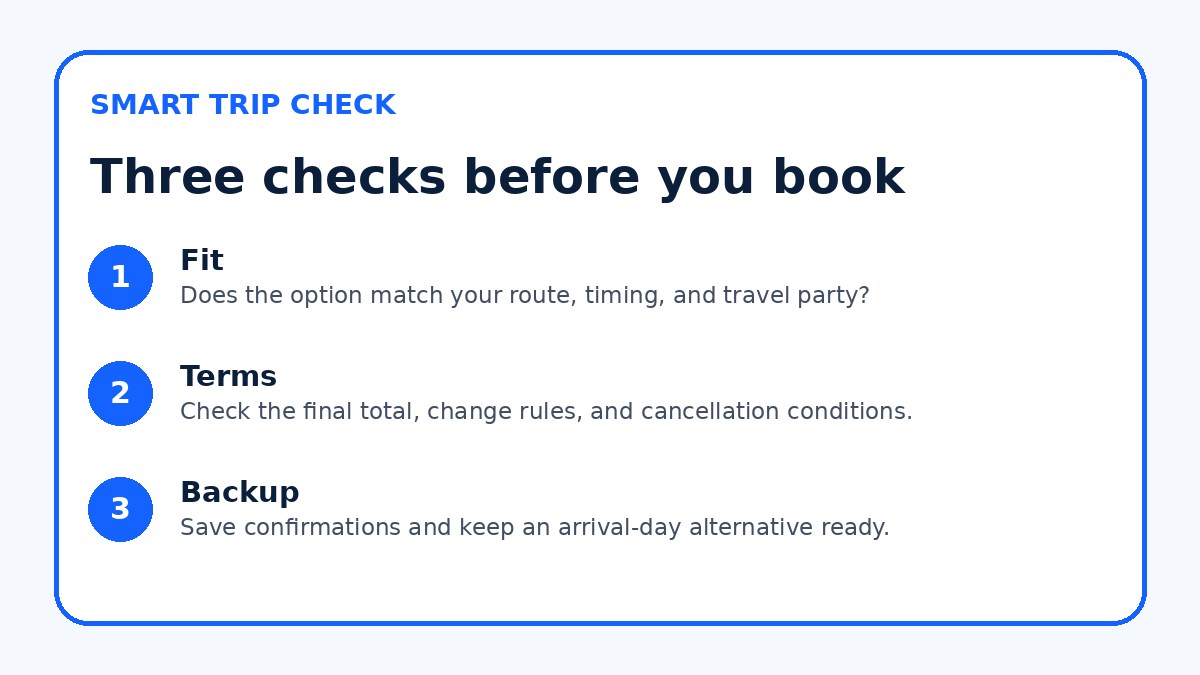
Hotel booking check before payment
- Measure and list your luggage dimensions and count before searching; compare them to room photos and wardrobe sizes on the hotel page.
- Confirm elevator dimensions, stair access and whether the hotel has ground-floor check-in or a dedicated luggage drop area.
- Ask the property to confirm porter service, luggage storage availability and any size/weight restrictions in writing on the booking platform.
- Compare refundable and non-refundable rates, then choose a flexible option if travel dates or party size might change.
- If using public transport, plot the station-to-hotel route and verify step-free access and ramp availability for each leg.
- If driving, check on-site parking, driveway drop-off rules and whether parking space can fit a vehicle loaded with luggage.
Final booking terms: what to confirm before you click reserve
When you’re ready to book, compare four contractual points: cancellation and modification flexibility, explicit luggage and porter policies, check-in/check-out windows and late-arrival handling, and any size or weight restrictions that might trigger an extra charge. Never rely on a generic ‘contact property for details’ note — request written confirmation on the booking page or directly from the hotel so there’s no ambiguity around extra or oversize luggage.
If a booking platform lists non-refundable or limited-change rates, weigh that against the convenience of the location. For travellers with extra bags, the small premium for a flexible, refundable rate with confirmed porter service and free luggage storage can offset the hassle and extra local transfer costs. Always review the final terms the provider shows at checkout and, if needed, contact the property to list the sizes and number of items so they can confirm they can accommodate them.
Hotel Guide questions travelers ask
How can I tell if a Sydney hotel actually has porter service or luggage storage?
Look for explicit mentions of porter, bell service or luggage storage in the hotel amenities list on the booking page. If the listing is vague, message the property or the booking platform asking for written confirmation of porter hours, whether the service is complimentary, and any peak-time limitations. Also ask about storage policies for early arrivals and late departures — some hotels hold bags free for a set number of hours, others may charge. Keep a screenshot or saved message from the provider confirming the arrangement.
Should I book a serviced apartment or a hotel room when traveling with multiple suitcases?
Serviced apartments often offer more floor space, separate living areas and larger wardrobes, which make unpacking and organising multiple suitcases easier. They may also include in-room facilities like a kitchenette that reduce trips to communal areas. However, hotels can provide porter services, daily housekeeping and on-site storage. Decide based on whether you need space to spread out (choose serviced apartment) or prefer porter support and central drop-off (choose hotel), and verify cancellation and luggage policies on the listing.
What booking terms should I prioritise to avoid extra charges for oversize baggage?
Prioritise bookings that explicitly mention luggage allowances, porter inclusions and free luggage storage; then check the cancellation and modification terms so you can change plans if a hotel can’t accommodate your bags. On the booking page, search for notes about oversized items or special handling fees and ask the property to state any extra charges in writing. If using a third-party platform, confirm whether special requests (e.g., oversized luggage) are accepted and documented before arrival to avoid surprises.
Final decision note
Shortlisting a Sydney neighbourhood before you open live inventory saves time and limits surprises when you’re travelling with extra luggage. Start by matching your itinerary to one of the four practical area types—CBD for short walks and porter services, airport hotels for minimal transfer time, transit-hub adjacency for mixed transit, or suburban/coastal stays for larger rooms and parking. Then compare room size, elevator access, porter and storage policies, and the exact cancellation and modification terms shown at checkout. Don’t forget to request written confirmation from the hotel about luggage handling and any potential fees. With those checks you can confidently narrow options and pick the area that keeps hauling to a minimum.
Continue planning
Check current options and final conditions
Use the provider page to confirm live availability, the final total, cancellation terms, and every condition that matters to your trip.
This evergreen planning guide was created with AI-assisted drafting and a structured quality review. It does not display live prices, schedules, availability, visa guidance, or provider rankings. Verify current details before booking. Some links are affiliate links; we may earn a commission at no additional cost to you.