Practical answer up front: for most solo travellers, the easiest multi-city ground plan links a main rail or coach spine between Sydney and Melbourne with shorter local segments by coach, regional train or rideshare to reach towns or accommodations not directly on the line. Choose rail if you prioritise onboard space and a simpler transfer chain; choose coach for more flexible stopping patterns and sometimes simpler ticketing across small towns. A combined plan—rail for the long haul, coach or regional services for side visits—usually balances luggage friction, terminal fit and timing flexibility. As you build an end-to-end door-to-door itinerary, map every transfer step, check luggage limits and allowed connections, and set at least one disruption backup for each leg. Always verify schedules, station names and baggage rules on the operator’s booking page (or a comparison site such as Trip.com) before committing.
Choose modes by practicality: rail, coach, ferry or a mixed route
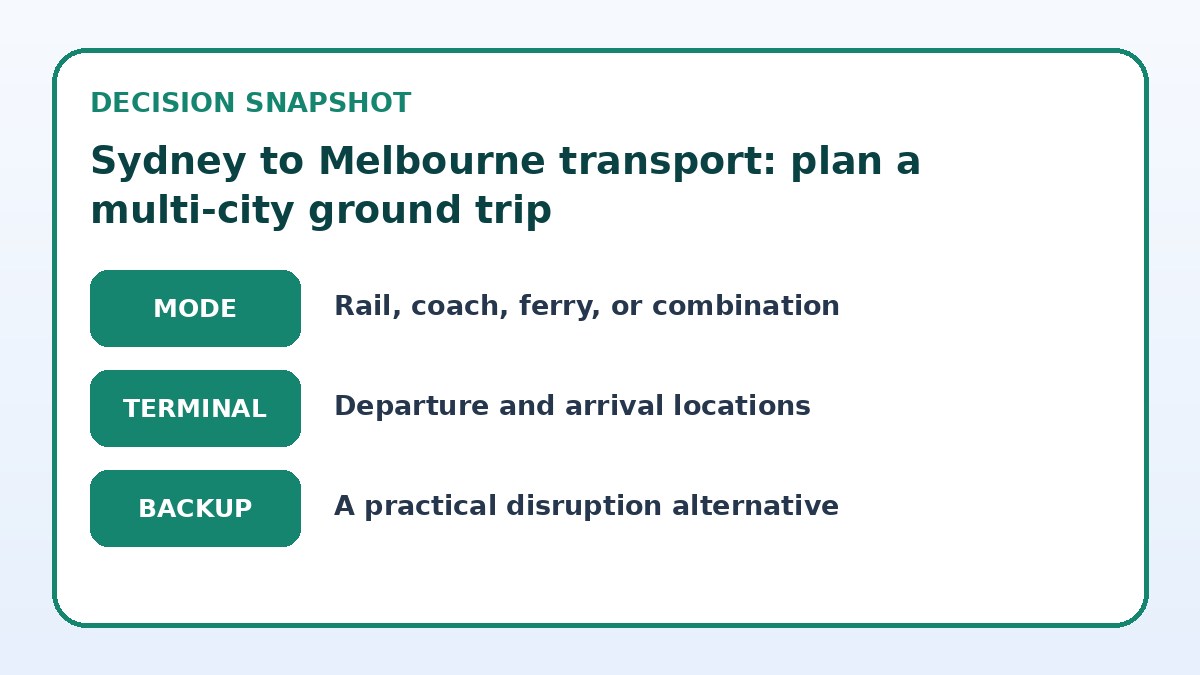
When choosing modes, think about the full door-to-door chain rather than the ride alone. A long-distance train or coach can look efficient on paper, but where the termini sit in each city and how easy it is to reach your lodging matters more for a solo traveller. Factor in how many transfers you will accept, how you feel about carrying luggage over steps or between platforms, and whether you need consistent onboard power, Wi‑Fi or space to work. For day-to-day simplicity, pick the spine (train or coach) that connects most directly to the neighbourhoods and towns you plan to visit, then plug regional legs around that core.
A mixed route often gives the best balance: use rail or a comfortable coach for the longest segment and regional buses, ferries or short trains to visit coastal towns or attractions off the main corridor. Mixing modes increases flexibility to tailor stops but raises transfer friction and verification tasks. When planning combinations, draw your itinerary on a local map, mark transfer points, and list what ticket or platform each connection requires. Before booking, check each operator’s own booking page for baggage allowances, interchange rules and any required seat reservations.
Choose the end-to-end journey plan
| Journey approach | Best for | Friction to check |
|---|---|---|
| Single long-haul rail or coach trunk with local day trips | Solo travellers wanting fewer transfers and an easy central arrival. | Less flexibility to stop in small towns along the way and possible extra last-mile travel from central stations. |
| Mixed-mode plan: long train plus regional buses or ferries | Travellers who want to balance a comfortable long ride with visits to coastal or inland towns. | More transfer points increase luggage handling and require careful schedule coordination. |
| Stitched short legs between multiple towns (explorer style) | Solo travellers focused on exploring multiple stops and avoiding long stretches in one seat. | Higher transfer friction and greater need for reliable baggage and timing planning. |
| Flexible-day booking with contingency tickets and open returns | Travelers who prioritise timing flexibility and a buffer against disruptions. | Potentially more complex to manage and may require active monitoring of changes and cancellations. |
Check live intercity options
Look beyond the ride itself and compare terminals, transfers, luggage, and arrival fit.
Terminal fit and local transfers: map each first- and last-mile
Terminal fit is about more than distance: it’s the time and effort required to get in and out. Central city stations usually link directly to public transport, making onward travel by tram, metro or bus straightforward. Peripheral coach or rail terminals can require taxis, long bus rides, or multiple modes to reach central accommodation. For solo travellers, prioritize routes with terminals that reduce walking with luggage, have clear signage, and are served by reliable local transit. When terminals are less convenient, plan a single, well-timed taxi or rideshare rather than multiple transfers.
Make a transfer checklist for every terminal: nearest public-transport stop, typical taxi rank location, approximate ride time to your accommodation, and where to store or secure luggage if you arrive early. Verify these details on the operator’s site and municipal transit maps. If you’ll be arriving late or in poor weather, pre-book a local transfer or choose a route that delivers you to a better-connected terminal. Small adjustments here dramatically reduce stress and keep your day flexible if disruptions occur.
Luggage and transfer friction: pack and plan for every handoff
Luggage rules differ by operator and mode and are a major factor for solo travellers. Decide how much you are willing to carry across platforms, through station crowds, or down to street level. Fewer, longer legs reduce the number of times you must move bags; shorter, exploratory legs increase flexibility but multiply handoffs. Consider a bag with wheels plus a lightweight daypack so you can leave the larger case secured at a hotel or luggage facility when taking short local hops.
At booking time, confirm baggage allowances, size restrictions and whether you’ll need to stow bags in overhead racks or dedicated storage areas. When combining services, note whether you must collect and re-check luggage between legs. If a transfer is tight or involves stairs, arrange for portage help, use luggage transfer services where available, or allow extra connection time. Never assume two operators will handle through-checked baggage—explicitly verify on their booking pages.
Compare the practical alternatives
Use the final page to confirm what is actually offered on your dates and save a workable fallback.
Intercity travel checklist
- Map each transfer: note terminal names, platform areas, estimated walk times and nearest taxi ranks.
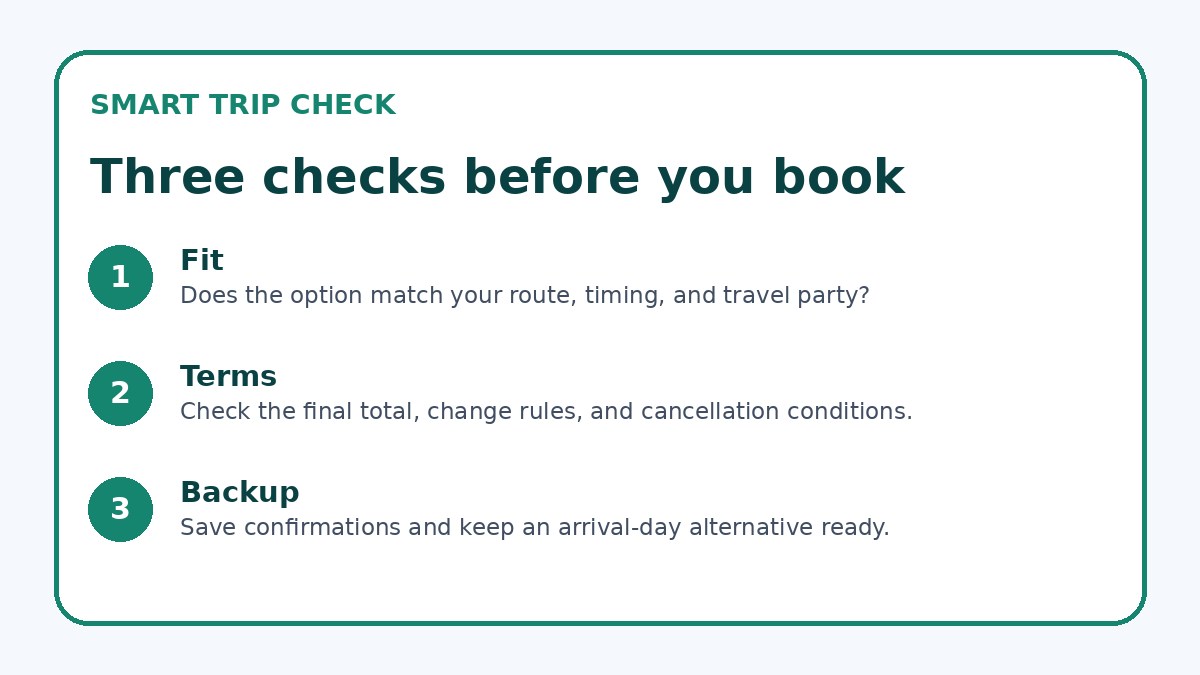
- Confirm baggage allowances and re-check requirements on every operator’s official booking page before purchase.
- Set scheduling buffers of at least one realistic connection window per transfer for delays or navigation.
- Pre-book last-mile transfers for late arrivals or remote terminals to avoid searching for transport on arrival.
- Save contact numbers, station addresses and an alternate route offline in case you lose mobile data.
- Buy tickets that allow reasonable changes or cancellations, and know the operator pages to modify reservations.
Timing flexibility and disruption backups that keep you moving
Solo travellers should build cushion time into every connection. Aim to book legs with a realistic buffer to handle delays, loading, and navigation between terminals. If you prefer minimal waiting, choose fewer but longer legs; if you like exploring en route, accept more connections and plan generous margins. Consider departure windows (morning vs evening) based on your comfort with late arrivals and local safety. Also think about personal energy levels—an overnight ride may save time but can leave you less able to explore on arrival.
For each leg, list at least one backup option: a later train, an alternative coach route, or rideshare range to your next stop. Know where to find live status and how to modify or cancel bookings on the operator’s site. If a disruption could strand you overnight, identify a nearby neighbourhood with several hotels and one or two public-transport options. Keep a simple offline copy of contact numbers, station names, and a quick-change alternate route in case digital access is limited.
Rail & Intercity Transport questions travelers ask
Should I travel direct or break the Sydney–Melbourne trip into stops?
It depends on your priorities. A single direct long-haul ride reduces transfers and luggage handling, which suits travellers who prize simplicity and a quick arrival. Breaking the journey into stops gives you flexibility to explore towns, change pace, and avoid long sitting periods; it’s better for travellers who want to see coastal or inland highlights. When deciding, compare the extra transfer time and baggage friction against the sightseeing benefit. For any option, check operator booking pages for connection rules and whether through-ticketing is offered.
How much buffer time should I allow between connecting ground services?
Allow a realistic buffer that accounts for disembarkation, luggage retrieval and navigation across the terminal—often more than public guidance suggests. For urban transfers where platforms and exits are easy, shorter buffers may work; for transfers involving different terminals, buses, or taxis, add significant time. Consider your mobility, luggage weight, and whether you need to buy tickets onsite. If you’ll be changing operators, increase the buffer because you may need to collect and re-check bags or reprint tickets. Verify transfer constraints and recommended minimum connection times on the operators’ pages before booking.
What should I verify on a provider’s site before booking any leg?
On every provider page, check departure and arrival station names, precise terminal locations, baggage rules and whether seats require reservation. Confirm the change and cancellation policy, permitted modifications and how refunds are handled. Look for any notes about through-ticketing or mandatory ticket collection at the station. If using multiple operators, verify whether they coordinate transfers or if you must collect luggage and rebook. For safety, also note contact numbers and where live updates are posted so you can react quickly to disruptions.
Final decision note
Planning Sydney to Melbourne transport as a solo traveller is less about choosing a single ‘best’ mode and more about designing a door-to-door chain that fits your comfort, sightseeing goals and tolerance for change. Start with the spine—rail or coach—and then add regional legs only where they improve access or experience. Prioritise terminals that reduce last-mile hassle, confirm baggage rules, and build realistic buffers into every connection. Finally, prepare disruption backups and keep essential contact and terminal details offline. With a few deliberate verification steps on provider pages and a simple contingency plan, a multi-city ground journey between Sydney and Melbourne can be smooth, flexible and enjoyable.
Continue planning
Check current options and final conditions
Use the provider page to confirm live availability, the final total, cancellation terms, and every condition that matters to your trip.
This evergreen planning guide was created with AI-assisted drafting and a structured quality review. It does not display live prices, schedules, availability, visa guidance, or provider rankings. Verify current details before booking. Some links are affiliate links; we may earn a commission at no additional cost to you.