Practical answer first: for families, choose the combination that minimizes transfers and terminal walking while matching your timing flexibility — often a single direct coach or train that stops near city centers, or a drive-plus-ferry plan when you need doorstep pickup and flexible luggage. Start by mapping door-to-door time, not just ride time: include airport or station transfers, border crossing margins, stroller or car-seat handling, and where you’ll sleep on arrival. Families value fewer handoffs, predictable toilets and snack options, and a realistic disruption backup. This article walks you through how to compare rail, coach, ferry and self-drive, how terminal fit and luggage friction change the picture, and how to build a multi-city ground plan with a clear disruption contingency so you can book with confidence.
Choosing between rail, coach, ferry, or driving
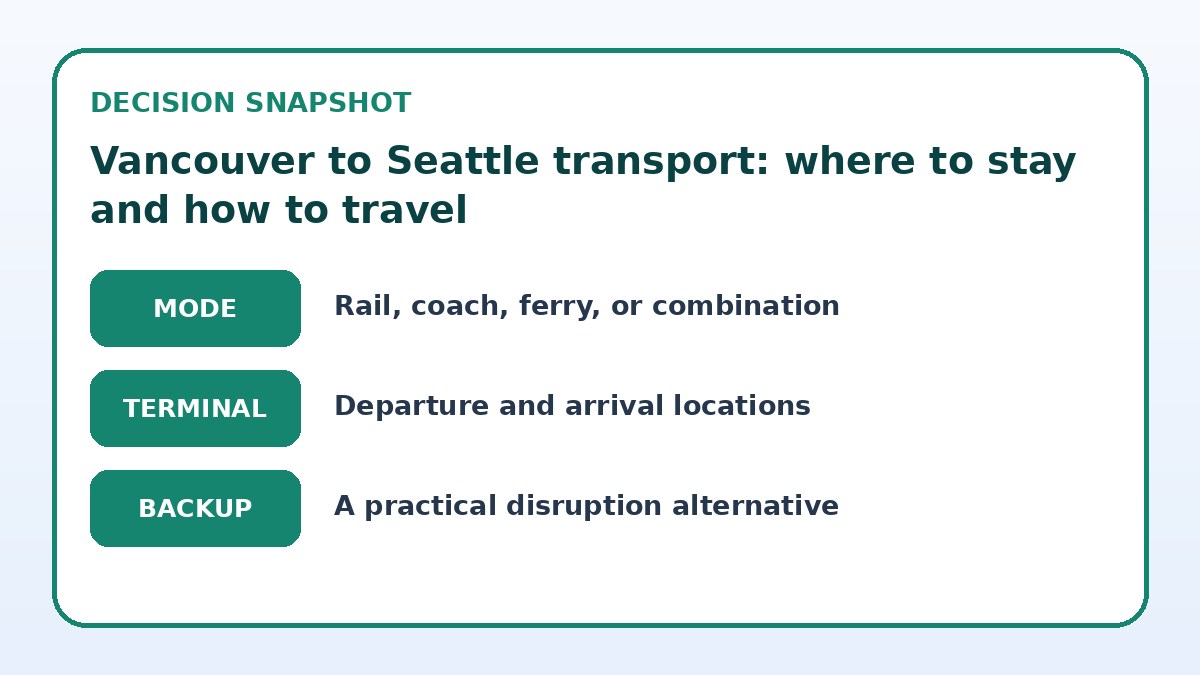
Start by matching your family’s priorities to each mode’s strengths. Rail and coach reduce driving stress and typically use central terminals that may be near family-friendly neighborhoods; they also remove the need to park. Ferries can be scenic and useful if they plug directly into short local legs, but they usually require additional ground transfers. Driving gives maximum control over schedule, luggage and stops, but adds responsibility for borders, parking and child-restraint rules. For multi-city plans, consider mixing modes: for example, drive for the rural leg and switch to rail for the city-to-city portion to avoid parking and traffic.
To evaluate each option, list the things that matter to your family: door-to-door duration, number of transfers, stroller accessibility, restroom availability, and the ease of managing car seats or booster seats. Assign a weight to each factor and score each mode. Don’t forget to verify on provider pages whether seats can be reserved together, what luggage limits exist, and whether assistance is offered at terminals. Trip.com can be a place to compare current availability, but always confirm operational details on the provider’s official booking pages.
Choose the end-to-end journey plan
| Journey approach | Best for | Friction to check |
|---|---|---|
| Single-mode direct coach or train to city-center | Families preferring simplified transfers and airport-free arrivals | Less departure flexibility and fixed schedules may require earlier planning |
| Drive door-to-door (self-drive) | Families needing full control over stops, luggage, and on-the-road routines | Adds parking, border handling and driver fatigue; city parking can be costly or scarce |
| Mix: drive or ferry for scenic/stops, then rail/coach for city entry | Families who want scenic stops without city driving or parking stress | More transfers increase luggage handling and require careful timing coordination |
| Ferry plus short local transfer | Families valuing a scenic break and lower stress on open-water legs | Often requires an extra ground transfer and may have limited departure windows |
Check live intercity options
Look beyond the ride itself and compare terminals, transfers, luggage, and arrival fit.
Terminal fit and luggage/transfer friction
Terminal fit matters more for families than for solo travelers. A service that arrives at or near a downtown hotel or short taxi ride saves time and reduces stress. When comparing options, map the exact terminal addresses, typical transfer modes (taxi, rideshare, shuttle), and how those options handle car seats or large luggage. Consider whether stations have elevators and sheltered waiting areas for children. Even if a ride looks faster on paper, a long transfer or stairs with a stroller can erase that advantage quickly.
Luggage friction includes more than the number of bags allowed. Think about how many times you will load and unload, whether you’ll need to carry gear between platforms, and if staff can assist with heavy items. If using a coach or train, check whether kids can stay with you at seats and whether luggage goes under the coach or in a baggage car. For mixed-mode itineraries, budget time for each transfer and decide whether to ship bulky items ahead, rent locally, or reduce what you bring to simplify movement.
Timing flexibility and planning a multi-city route
Families often trade off strict departure times for predictability. Fixed-schedule services like trains and coaches force you to align your day, which can be good for avoiding traffic and ensuring connections. Driving gives departure flexibility but requires planning for border processing windows and city parking at both ends. When building a multi-city ground plan, sketch the full chain: where you leave from, how you get to the terminal, the intercity leg, arrival transfer options, and final reach to your accommodation.
If your itinerary includes stops between Vancouver and Seattle, consider breaking the trip into shorter legs with overnight stays. That reduces the strain of long travel days for kids and can give you buffer time for disruptions. Allow longer connection windows than you would solo, and time your travel to avoid sleep disruptions if possible. Always test the route mentally with your children’s routines in mind: meal breaks, nap windows, bathroom stops, and safe places to stretch at transfer points.
Compare the practical alternatives
Use the final page to confirm what is actually offered on your dates and save a workable fallback.
Intercity travel checklist
- Map door-to-door times: from your accommodation in Vancouver to your final address in Seattle, including all transfers.
- Confirm terminal addresses and nearest family-friendly accommodations before booking any ticket.
- Check luggage, stroller and car-seat policies on official operator pages and reserve assistance if needed.
- Build a written disruption backup: alternate route, emergency hotel, and local taxi numbers.
- Pack an accessible family travel kit with snacks, chargers, basic meds and paperwork for every person.
- Leave a flexible day in your schedule on arrival for recovery or unexpected delays.
Disruption backups and practical booking checks
Prepare a disruption plan before you book. Select an alternative route that uses different modes or terminals — for example, if your train is canceled, can you take a coach that arrives at a different city terminal without adding long transfers? Know a nearby hotel you could use for an unplanned overnight and keep a list of local taxi or rideshare services that operate at the terminals. Carry printed or offline copies of reservations and ID for everyone, and have spare snacks, chargers and a basic medical kit accessible.
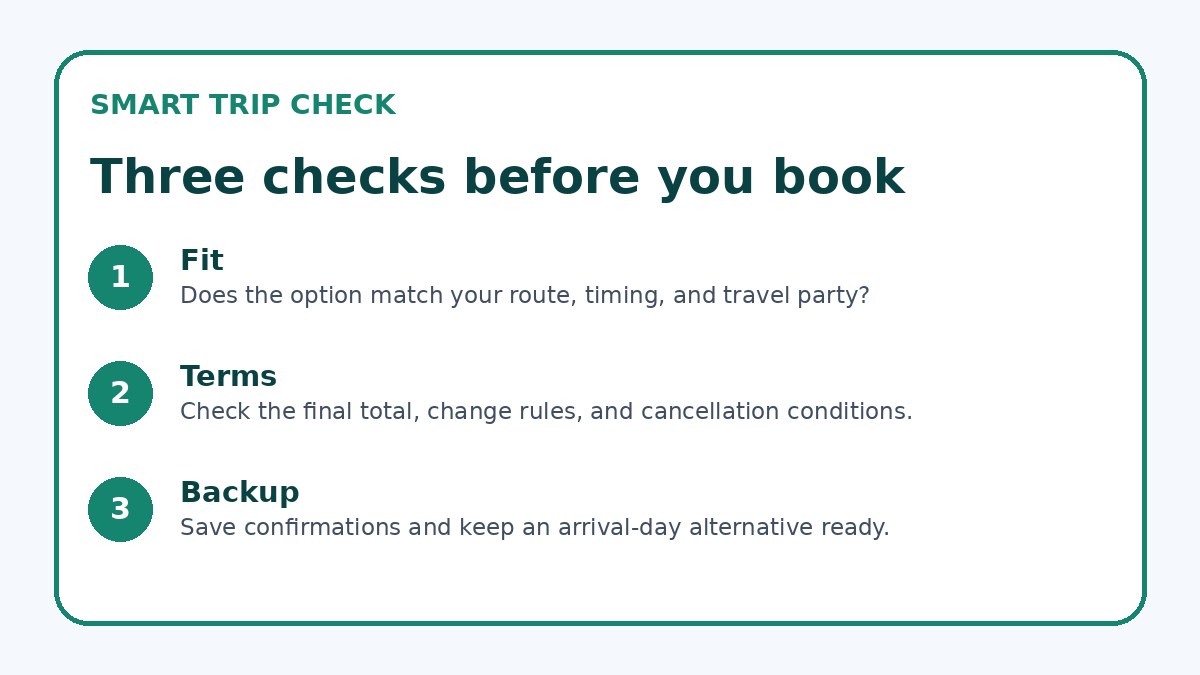
Before final booking, verify three things on the provider’s official pages: exact terminal locations and transfer options, luggage and car-seat policies, and the supplier’s change and cancellation rules. If an itinerary spans operators, check each operator’s terms and whether separate tickets break through-check possibilities. For cross-border travel, check government guidance on documentation and entry requirements directly from official sources, and reconfirm any family-specific assistance or seating needs with the provider.
Rail & Intercity Transport questions travelers ask
How do I decide whether to drive or take public transport with kids between Vancouver and Seattle?
Decide by weighing control versus convenience. Driving offers total control over timing, stops and luggage, useful for heavy gear or staggered family schedules. Public transport removes the stress of driving, parking and border navigation, and usually delivers you closer to central hotels. Compare door-to-door time, number of transfers, and how many times you’ll need to load and unload children and luggage. If you choose public transport, verify the operator’s stroller and car-seat policies and whether you can keep seats together. If you drive, plan for parking at both endpoints and a simple disruption backup in case of border or traffic delays.
What practical checks should I make for luggage and car seats before booking?
On each operator’s official booking page, check the allowed luggage pieces and dimensions, whether strollers fold for gate-checking, and if staff assistance is available at terminals. If you’re booking mixed operators, check each provider independently — luggage allowances often don’t transfer. For car seats, decide whether to bring and install your own or use rentals; confirm that rental options exist at your destination. Also plan how many times you’re willing to transfer luggage and set up a simple packing system to keep essentials for children in a carry-on you’ll keep with you.
How should I build a disruption backup that actually works for a family?
A usable backup is realistic and pre-booked where reasonable. Identify an alternate operator or route (for example, a coach if a train is canceled) and note its terminal and how you’d get there. Choose a nearby hotel you can cancel same-day if needed and save its contact. Keep emergency funds accessible for a taxi or last-minute room. Store offline copies of bookings and IDs, and share your plan with a contact at home. Finally, ensure children’s routines have flexible buffers so a delayed arrival doesn’t derail the first day completely.
Final decision note
Making a family-friendly Vancouver to Seattle transport plan means prioritizing door-to-door practicality over headline ride times. Start by deciding which tradeoffs your family accepts: the strict timings of public transport in exchange for fewer transfers, or the flexibility and control of driving at the cost of parking and border chores. Build your multi-city plan by mapping terminals, luggage steps, and final transfer options, then pick a realistic disruption backup and verify critical policies on official provider pages. With a short checklist and a clear alternative route, your family can travel confidently and keep the journey part of the trip, not an ordeal.
Continue planning
Check current options and final conditions
Use the provider page to confirm live availability, the final total, cancellation terms, and every condition that matters to your trip.
This evergreen planning guide was created with AI-assisted drafting and a structured quality review. It does not display live prices, schedules, availability, visa guidance, or provider rankings. Verify current details before booking. Some links are affiliate links; we may earn a commission at no additional cost to you.