If you’re traveling from New York City to Toronto with more than the usual carry-on, the practical question is simple: how do you pick a flight and schedule enough airport time to move through check-in, security, baggage drop, and cross-border arrival procedures without last-minute stress? Start by deciding whether you value a cheaper fare that may impose tight connection or baggage constraints, or a smoother travel day with later deadlines and fewer transfer risks. This guide leads with that tradeoff, then walks through routing choices, baggage and connection risk, schedule fit, and what to verify on the airline’s booking page. Prepare exact travel dates, the number and weight of checked pieces, any oversized items, and traveler details (passport, frequent flyer info) before you search. Having those specifics will let you compare fare conditions and allowable baggage so you can choose the option that balances cost and certainty.
See live routes for your exact travel day
Compare direct and connecting choices with the same baggage and traveler details.
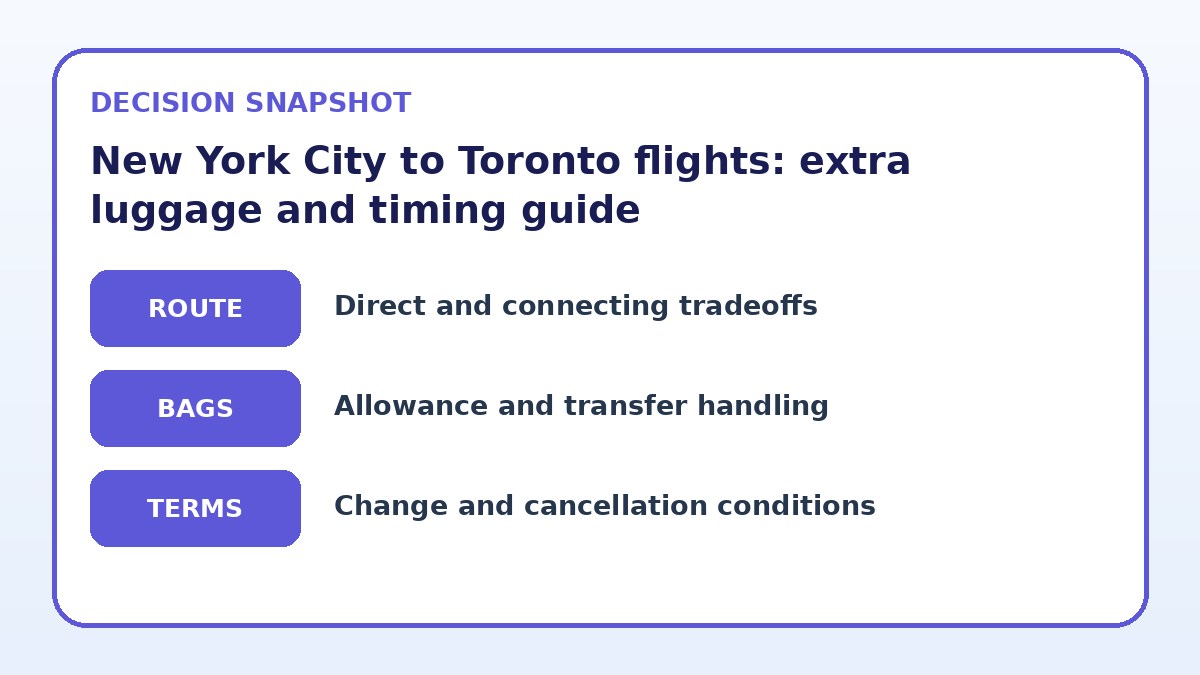
Routing: direct vs connecting flights and how luggage changes the decision
For New York City to Toronto flights the simplest routing decision is direct versus connecting. Direct flights minimize the number of times checked bags are handled, reducing the chance of misrouting or delay, and they remove the need to recheck or clear customs mid-journey. If you are traveling with oversized or fragile items, a nonstop itinerary keeps handling to a minimum and makes coordinating gate-to-baggage-claim logistics easier. Direct flights also simplify timing: you only need to meet one airline’s check-in deadlines and aren’t exposed to the cascading risk of a missed connection.
Connecting flights can offer lower fares or more departure options, but they often complicate luggage handling. If the connection requires changing carriers or clearing customs at an intermediate U.S. airport, you may need to collect and recheck bags—plan for extra time and verify whether the two tickets are on a single itinerary. When comparing routes, check whether the airline offers through-checked baggage and a protected transfer; if not, the perceived savings can be offset by fees, extra time, and added stress getting bags through a connection.
Baggage and connection risk: what to verify before booking
Before you buy, list every piece you plan to travel with, including weight and dimensions. Use those specifics to compare fare classes because some basic or promotional fares exclude checked baggage or cap weight at a lower limit. Also confirm fees for additional pieces and oversized/oddly shaped items; airlines can charge per piece, by weight, or both. If you’re bringing sports equipment or a large suitcase, learn how it will be processed at check-in: is it tagged to the final destination or will you need to reclaim and recheck it during a connection or at customs?
Connection risk grows when itineraries involve separate tickets, partner airlines with different baggage agreements, or short layovers. On a single-ticket itinerary with through-checked bags, your airline usually assumes responsibility for missed connections that cause bags to be delayed. With separate tickets, you are typically responsible for collecting and rechecking, which requires more time and increases the chance of missing the onward flight. Always verify minimum connection times and whether you must pass through customs or immigration between segments—those procedures add time and, with extra luggage, often require a larger buffer than a typical connection.
Compare flight-selection strategies
| Flight strategy | Best for | Risk to check |
|---|---|---|
| Book a nonstop, flexible fare | Travelers prioritizing simplicity and lower mishandling risk for extra luggage | Higher initial fare but fewer transfer and baggage complications |
| Choose a cheaper connecting itinerary on a single ticket | Cost-focused travelers willing to accept more handling if bags are through-checked | Possible longer travel time and higher connection risk, but lower ticket price |
| Buy separate tickets to get lower base fares | Experienced travelers who can manage rechecking bags and longer buffers | You assume full responsibility for connections and any baggage reclaims |
| Pay for higher baggage allowance or bundled bundles | Those with multiple heavy or oversized items who want predictable fees | Adds to ticket cost but simplifies checking and reduces surprise charges |
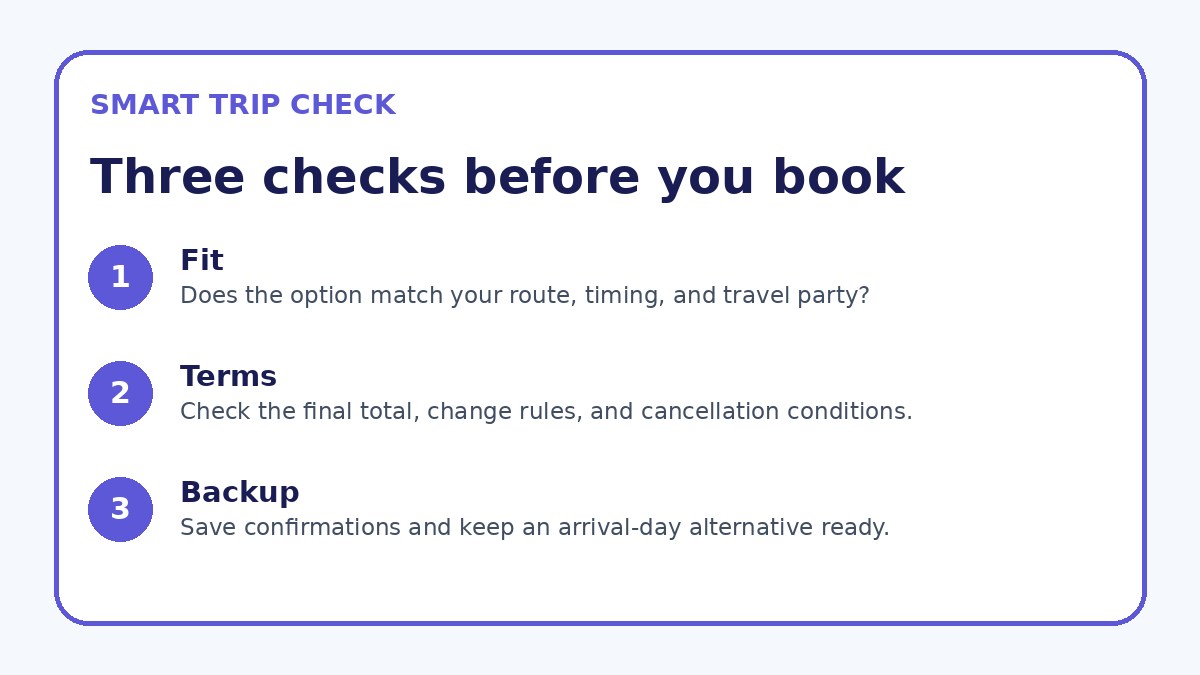
Recheck the complete itinerary
Confirm airports, connection handling, baggage, and change conditions before deciding.
Schedule fit: how much airport time to build into your plan
For departures from New York City area airports, give yourself extra time when you have oversized or many checked bags. Aim to arrive earlier than the standard recommendation: add a cushion to the airline’s stated check-in and baggage drop deadlines for the time it takes to weigh, tag, and process multiple pieces. If you’re traveling during busy holiday periods or early morning/late evening peaks, add further padding. Also consider transit time to the airport and potential traffic or public transit delays; unpredictable delays at this stage turn into missed flights and costly rebooking when large bags are in play.
When your itinerary includes a connection, build a generous buffer between arrival and departure. If the airline does not guarantee through-checking, you’ll need time to clear immigration (if applicable), collect luggage, and recheck. Even with through-checked bags, mechanical delays or deplaning time can be longer when many passengers gate-check items. Practically, add at least 45–90 minutes above the airline’s minimum connection time for domestic–international transfers when you have extra luggage; adjust upward for separate tickets, unfamiliar airports, or when you must switch terminals.
Flight details to verify
- Count and weigh every bag, noting dimensions and any oversized or fragile items before you start price comparisons.
- Gather exact travel dates, passport information, and traveler ages to input into search tools for accurate baggage rules.
- On each airline’s booking page, confirm checked-bag allowance, piece and weight limits, and fees for extras or oversize items.
- If your itinerary includes a connection, verify whether bags are through-checked or must be collected and rechecked during transit.
- Plan arrival at the New York City airport earlier than usual to allow time for weighing, special-item handling, and any customs formalities.
- If using separate tickets, add at least 90–120 minutes between flights for baggage reclaim and check-in, or opt for a single-ticket alternative.
Fare conditions and booking checks: what to confirm on the airline page
When you’re ready to book New York City to Toronto flights, verify the fare conditions line-by-line on the airline’s final booking page. Confirm whether the fare includes checked baggage and what the allowance is per passenger; look for exact weight limits, piece limits, and the fee structure for extra or oversized items. Check change and cancellation policies if you anticipate itinerary changes—flexible fares can save time and hassle when luggage adds uncertainty. Also confirm boarding group and seat selection rules if you want overhead space for personal items or priority baggage handling.
If you’re booking through comparison sites or third-party agents, use them to shortlist options but always click through to the airline’s page before paying. On the provider page, verify whether bags are through-checked on connecting itineraries, whether codeshare legs are treated differently for baggage, and whether special items require advance notice or reservation. Finally, note any required travel documents you must present at check-in; the airline’s booking page is the authoritative place to confirm identification and any cross-border paperwork needed for travel between the U.S. and Canada.
Flight Guide questions travelers ask
How much earlier should I arrive at a New York airport with extra checked luggage?
Aim to arrive earlier than the standard recommendation when traveling with extra bags. For domestic flights crossing into Canada, plan to add 30–60 minutes beyond the airline’s suggested check-in time to handle weighing, tagging, and any special handling. If you are traveling at peak times or have oversized items, add more buffer. Also factor in time for security lines and terminal transfers. Verify the airline’s specific baggage drop deadline on the booking page because some low-fare classes close check-in earlier.
Can I avoid rechecking bags on a connecting itinerary between New York City and Toronto?
You can avoid rechecking if both legs are on a single ticket with through-checked baggage and the airlines involved have an interline agreement. Before booking, confirm on the airline’s page that bags will be tagged to the final destination. If the connection is on separate tickets or with airlines that don’t interline, you will likely need to collect and recheck luggage, which requires extra time and may involve passing through security or customs. Always verify through-checking policies on the provider’s booking confirmation.
What baggage details do I need before comparing fares for this route?
Record the exact number of checked pieces, each bag’s weight and dimensions, and whether you have oversized, fragile, or sporting equipment. Note traveler specifics like age and frequent flyer status, which can influence free allowances. Then compare fares including base ticket price plus known baggage fees rather than just headline fares. On each airline page, confirm permitted weight per piece, excess fees, and whether special items require advance notice or reservations—these specifics determine the true cost and practicality of each flight option.
Final decision note
When flying New York City to Toronto with extra luggage, the practical decision comes down to balancing the lower upfront cost of connecting or basic fares against the operational simplicity of direct flights and higher baggage allowances. Use exact bag counts, weights, and traveler details to compare fares and fee structures on the airline booking pages. Build extra time into your schedule for check-in and any required baggage handling, and treat separate tickets as higher risk unless you’re comfortable reclaiming and rechecking bags. Before you pay, verify through-checking rules, weight limits, and change conditions on the provider’s final booking screen. If you need a quick comparator, Trip.com can be used to view options, but always confirm baggage and fare rules on the airline’s official page.
Continue planning
Check current options and final conditions
Use the provider page to confirm live availability, the final total, cancellation terms, and every condition that matters to your trip.
This evergreen planning guide was created with AI-assisted drafting and a structured quality review. It does not display live prices, schedules, availability, visa guidance, or provider rankings. Verify current details before booking. Some links are affiliate links; we may earn a commission at no additional cost to you.