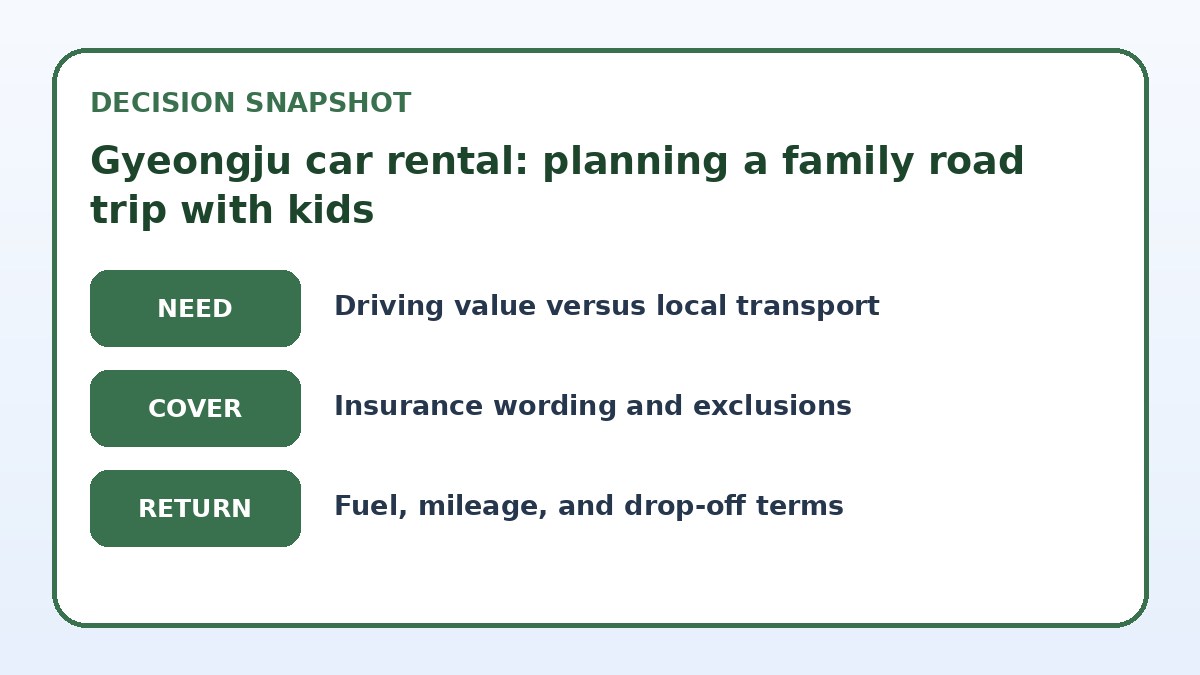
Practical answer first: renting a car for a family visit to Gyeongju usually makes sense if you want flexible access to spread-out historic sites, rural temples, and small coastal towns—especially with children and a full daypack. Driving reduces transfers and gives you control over timing for naps, snacks, and weather-dependent plans. But it adds responsibility: route choices, parking, local driving customs, and insurance options all matter. If your itinerary concentrates on central Gyeongju museums and tumuli, public transport plus taxis can be easier and cheaper. Read on to weigh route value, insurance wording, pickup and return friction, and a clear non-driving fallback so you can choose the approach that best fits your family’s energy, patience, and priorities.
Route value: when driving adds family-friendly flexibility
Gyeongju’s main attractions are spread across a wide area: royal tumuli fields, museum clusters, scenic hills, and a few coastal spots and rural temples out of town. For families, the main value of a car is control—being able to leave quickly when a child needs a break, pause for spontaneous picnics, or reach quieter sites before crowds arrive. Driving also opens up half-day side trips to quieter seaside villages and countryside trails that are otherwise slow to reach by multiple transfers.
That value declines if your itinerary focuses tightly on central Gyeongju: many museums, Bulguksa Temple overflow routes, and Cheomseongdae Observatory are connected by local buses, short taxis, or walkable routes. Compare each day: if three or more stops are off the direct bus lines or you expect to travel with bulky gear, driving is likely to save time and stress. Factor in parking availability at each stop—some historic sites have limited lots or require short walks.
Decide whether driving earns its place
| Mobility strategy | Best for | Cost or friction to check |
|---|---|---|
| Self-drive rental car | Families wanting full schedule control, side trips, and door-to-door convenience. | Higher responsibility, parking searches, insurance complexity, and pickup/return time. |
| Train + taxis | Families focused on central Gyeongju sites who prefer not to navigate rural roads. | Less flexible for dispersed sites and may cost more for many short taxi rides. |
| Guided day tours from a base | Families wanting expert routing, child-focused pacing, and ticket handling. | Fixed schedules and less spontaneous flexibility for mid-day breaks or detours. |
| Private driver or chauffeured transfer | Families seeking door-to-door service without driving responsibility. | Higher cost than self-drive and less independence for unexpected stops. |
Check live rental choices only after the route test
Use the exact driver, dates, pickup point, and return plan to compare current conditions.
Insurance wording: what to read before you sign
Rental contracts use terms that affect family risk: collision damage waiver (CDW), theft protection, third-party liability, and excess/deductible amounts. Don’t accept a vague promise of “full coverage” without confirming what events are excluded (for example, driving on unpaved roads, unauthorized drivers, or damage to tires and undercarriage). If a child seat is required by law or by your comfort standards, verify whether it’s included and confirm its installation responsibility and cleanliness policies.
When comparing policies, write down exact figures and exclusions and ask whether damage to windshields, tires, and interior counts toward the excess. Also confirm whether roadside assistance is available 24/7 and whether cross-border travel or ferry use is permitted. If a policy page uses unfamiliar legal language, ask the agent to rephrase it in plain terms before you provide payment or leave a deposit.
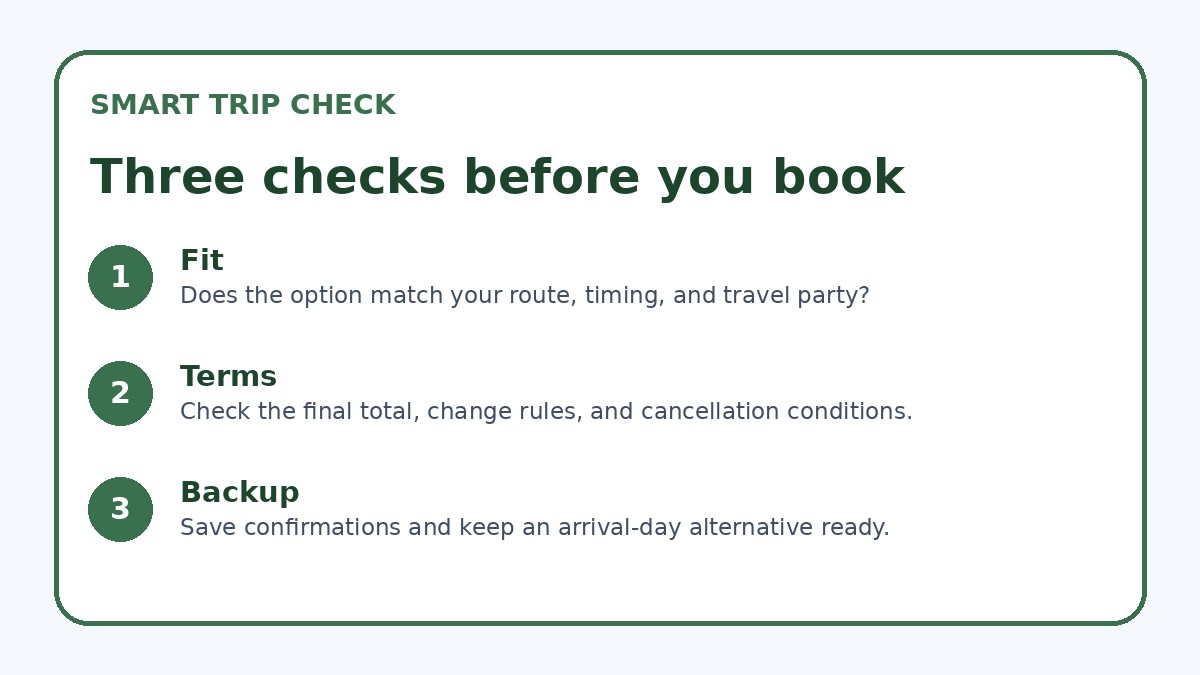
Compare the full rental conditions
Confirm insurance wording, exclusions, deposit, fuel, mileage, and return terms on the final page.
Pickup and return friction: where time hides
Pickup location and hours can add unexpected time and stress for families. Airport counters, downtown branches, and train-station desks offer different tradeoffs: airport desks may be convenient but busier; remote branches sometimes require a shuttle. Ask about exact opening hours on your pickup and return dates, the required documents (driver’s license, passport, credit card), and whether the vehicle will be inspected in your presence. Inspect the car carefully with photos or a checklist to avoid disputes over pre-existing damage.
Returning the car late, to a different branch, or outside of staffed hours can trigger fees or additional inspection steps. Confirm fuel policies—full-to-full is usually clearest—and whether the final inspection is immediate or if deposits release after a waiting period. If your family’s schedule includes late trains, double-check return windows and whether an after-hours dropbox is safe and documented to avoid surprise charges.
Car rental terms to verify
- List each planned stop and mark whether it has on-site parking, paid lots, or nearby street parking to anticipate walking between car and attraction.
- Photograph the rental car’s exterior and interior with timestamps during pickup and before return to document pre-existing damage.
- Confirm child seat type, availability, and whether installation is provided; if not, reserve and bring your own or pre-check taxi child-seat options.
- Note the exact insurance terms: excess amount, covered damage types, roadside assistance phone number, and any exclusions for specific roads.
- Record pickup and return counter hours, after-hours drop instructions, and required documents (driver license, passport, credit card).
- Plan one non-driving day using trains, buses, or a local tour as a backup in case weather or fatigue makes driving impractical.
Non-driving fallback: building an equally relaxed plan without a car
If you choose not to drive, assemble a fallback that keeps flexibility: combine an intercity train or express bus to Gyeongju with local taxis for shorter hops, and consider booking one or two guided family-friendly day tours for the more distant sites. Taxis are widely available and convenient for short distances and child naps, and day tours reduce navigation stress and often include ticket handling or fast-track access. Map out emergency taxi ranks and your hotel’s transfer options in advance.
Also plan for luggage and stroller logistics—many buses and trains have limited storage. Keep your itinerary tight: choose one or two clusters of attractions per day that minimize transfers. Use apps to estimate taxi wait times and identify family-oriented stops (restrooms, playgrounds, shaded picnic areas). If you want to compare availability and current conditions when you make bookings, sites like Trip.com can be one place to check options, but always verify provider pages for final terms and specifics.
Car Rental & Road Trip questions travelers ask
Is driving in Gyeongju difficult for foreign drivers with children?
Driving itself is not unusually difficult, but it requires attention to local signage, narrow streets around historic areas, and occasional unfamiliar traffic patterns. For families, the main challenges are parking at popular sites, managing child seats, and coordinating naps and meal stops. If you are comfortable driving in medium-density traffic and can read or have a GPS in English, a rental can be a practical choice. If you prefer to avoid those logistics, trains plus taxis or hiring a private driver reduce the stress while still getting you to most family-friendly sites.
What should I check about child seats, insurance, and driver eligibility before booking?
Ask the rental company directly whether child seats are available and what size/age they cover; confirm whether installation is included or your party must install the seat. For insurance, get a written summary of excess/deductible amounts, whether windshields, tires, and interior damage are excluded, and whether roadside assistance is included. Verify that all intended drivers are listed on the contract and meet the rental company’s age and license requirements. If any wording is unclear, request plain-language clarification and keep a screenshot or PDF of the final terms.
How do I decide between renting a car and using public transport for a multi-day family stay?
Start by mapping your daily stops and counting how many are outside central Gyeongju or poorly served by buses. If most days require multiple dispersed stops, early starts, or seaside excursions where transfer times add up, a car probably saves time and reduces stress. If your days cluster around the museum district and major tomb sites, public transport plus short taxi rides may be simpler and cheaper. Consider soft factors too—your tolerance for driving, parking patience, child-seat logistics, and whether you prefer the independence of a car or the lower hassle of guided/taxi options.
Final decision note
Renting a car for a family trip to Gyeongju is a practical choice when your days include dispersed sites, coastal side trips, or unpredictable child needs because it gives you schedule control and door-to-door convenience. The tradeoffs are real: added insurance decisions, pickup and return logistics, and the responsibility to manage parking and local roads. If your itinerary focuses on central attractions, public transport plus taxis or guided day tours can match your needs with less friction. Whatever you choose, verify insurance language, child-seat policies, pickup/return hours, and any extra fees on the provider’s final booking page before paying.
Continue planning
Check current options and final conditions
Use the provider page to confirm live availability, the final total, cancellation terms, and every condition that matters to your trip.
This evergreen planning guide was created with AI-assisted drafting and a structured quality review. It does not display live prices, schedules, availability, visa guidance, or provider rankings. Verify current details before booking. Some links are affiliate links; we may earn a commission at no additional cost to you.