Pick the right area first — that single decision shapes travel time, daily energy, and whether your kids nap, swim, or explore easily. For families planning a Bali trip, narrow your shortlist to two neighbourhood types: beach resorts with long stretches of sand and resort-style amenities; and town or village bases that make cultural day trips and markets simple. Your choice depends on children’s ages, how many full days you’ll spend at the hotel, and whether you want to drive every day. This article gives a practical checklist so you can pick an area, understand the daily friction of typical routes, match rooms to party needs, and review the booking terms you must verify before confirming. After reading you should be able to shortlist one or two Bali areas and know exactly what to check on the hotel’s booking page.
Check live stays in the areas that fit
Use your dates and party size to compare current rooms after you narrow the neighborhood fit.
Match neighbourhood to your family’s daily rhythm
Start by mapping what a typical day will look like for your family. If full-day beach time and minimal transfers are your priority — mornings at the pool, afternoons at the beach, and early dinners — look for beachfront resort neighbourhoods where amenities are clustered and you can walk from room to activity. Conversely, if you imagine split days of culture, markets, and short tuk-tuk rides between sites, a central town or village base will reduce cumulative driving time and let children rest easily midday.
Consider the ages and energy levels of every family member. Babies and toddlers favor predictability and short distances; parents often prefer a single hotel that covers most needs. Older children may enjoy switching hotels or staying in an active townbase to reach surfing lessons, temples, or adventure parks. Write down two daily itineraries — a beach day and an excursion day — then test how long each would take from candidate neighbourhoods to see which location produces less friction.
Choose an area-selection strategy
| Area approach | Best for | Tradeoff to check |
|---|---|---|
| Choose a beachfront resort neighbourhood | Families wanting easy beach access and resort amenities | Less variety for day trips and longer transfers to inland attractions |
| Base in a central town or village (Ubud-style) | Families focused on culture, markets, and shorter rural drives | Longer drives for consistent beach days and surf lessons |
| Split your stay between two bases | Families who want both beach time and cultural exploration | One extra hotel move, packing and unpacking, and potential lost time on move day |
| Pick a quieter suburban area near transport corridors | Families prioritising lower noise and easier access to multiple sites | Fewer walkable dining options and a less ‘resort’ feel |
Weigh neighbourhood fit against daily-route friction
Bali’s traffic patterns and narrow roads can make short distances feel long during peak times. Neighbourhoods like Seminyak and Canggu can be lively but congested; transfers that look short on a map may become longer during afternoons and evenings. If you plan to drive frequently (surf lessons, day tours, dining out), prefer an area with straightforward access to major routes and factor in extra time for each trip. Also check whether your hotel offers shuttle options for popular corridors — that can reduce planning stress even if it doesn’t shorten travel times.
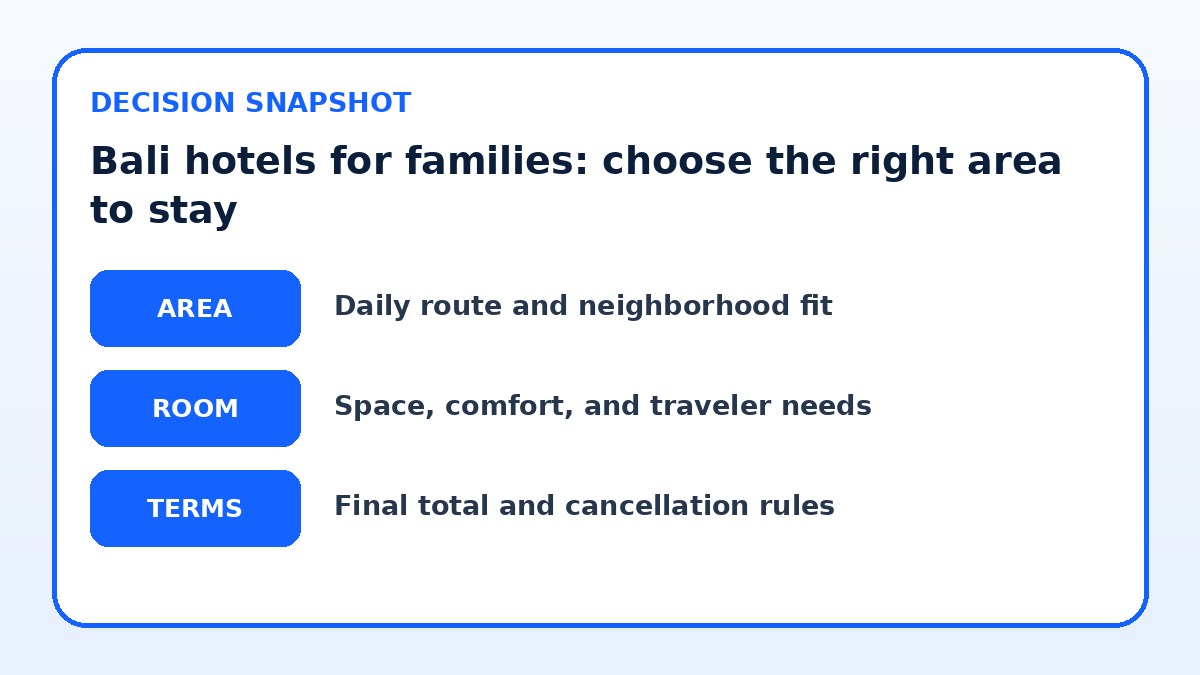
For families who want fewer transitions, choose a neighbourhood that clusters needed services: markets, pharmacies, family-friendly restaurants, and a medical clinic within a short walk or short drive. This reduces the need to hire drivers for small errands. On the other hand, if your ideal activities are dispersed — e.g., Ubud for cultural sites and southern beaches for ocean time — splitting your stay into two bases may reduce daily friction even though it adds one move.
Now compare like with like
Keep the same dates, guests, room needs, and cancellation preferences while you compare the final choices.
Pick rooms and configurations to match party needs
Room layout affects comfort more than a view for many families. Request options with connecting rooms, family suites with separate sleeping areas, or rooms that include kitchenettes for late-night bottles or picky eaters. If your booking platform doesn’t show specific room-floor plans, ask the hotel directly for measurements or photos of the setup you’ll receive. For families with infants, verify crib availability, and whether the property supplies highchairs, bottle warmers, and laundry service for quick outfit changes.
Also match bedding arrangements to sleep patterns: multiple doubles may suit older kids, while one larger suite helps parents monitor toddlers. Think about noise: pick higher floors or rooms away from bars and open-air restaurants if early bedtimes are standard. If multiple caregivers travel together, choose flexible check-in or late-check-out options where possible — confirm these terms on the hotel’s final booking page, because policies often vary by rate and room type.

Hotel booking check before payment
- List the ages, sleep schedules, and mobility needs of everyone traveling to match room types and neighbourhoods.
- Create two sample daily itineraries (a beach day and an excursion day) and time-drive each from candidate neighbourhoods during typical hours.
- Request floor plans or photos of the exact room type you’ll book, including bed configuration and any connecting doors, before final payment.
- Confirm child policies, crib availability, extra-bed fees, and any charges for early check-in or late check-out on the hotel’s booking page.
- Verify practical amenities: pool depth, lifeguard presence, on-site dining hours, and the nearest clinic or pharmacy for emergencies.
- If you need airport pickup or car seats, request vehicle size and child-seat availability in writing or on the booking confirmation.
Final booking checks and what to verify on the hotel page
Before you confirm, verify the property’s child policy, extra-bed fees, and whether connecting rooms are guaranteed or allocated on arrival. Also check cancellation and modification windows that match your family’s comfort level — look for clear language about refunds, rescheduling, and any blackout dates. If the hotel mentions airport pickup, confirm vehicle size and any extra charges for child seats; if they don’t provide child seats, plan to request one from the driver in advance or bring a travel seat.
Confirm listed amenities that matter to your family: pool depth and kiddie areas, lifeguard presence if a beach is near, on-site dining options with child-friendly menus, and available childcare or kids’ clubs. When provider-specific facts might change, the hotel’s booking page and contract will have the final details — check exact room photos, bed layout, and bedding configuration there. You can compare current availability and conditions on platforms like Trip.com, but verify all critical policies directly with the property before booking.
Hotel Guide questions travelers ask
How do I decide between staying in Seminyak/Canggu versus Ubud with kids?
Ask what will fill most of your days. Choose Seminyak or Canggu if beach time, easy dining, and short walks to restaurants matter — they suit older children who can handle beach play and families wanting resort-style mornings. Choose Ubud if your priority is short drives to temples, rice terraces, and craft markets, or if you prefer a quieter, greener setting where daytime walks are child-friendly. Also consider traffic: transfers to the south from Ubud are longer; if you plan many southern beach days, either split your stay or accept extra commute time.
What room features should I prioritise for a comfortable family stay?
Prioritise connecting rooms, family suites with separate sleeping areas, or rooms with kitchenettes so you can handle late-night bottles and picky meals. Confirm whether cribs, highchairs, and laundry service are available and if they are free or charged. Noise control is important: request rooms away from bars and open-air restaurants and consider higher floors for less street noise. Always ask for exact bed layouts and photographs of the specific room type on the final booking page so there are no surprises at check-in.
How can I reduce daily-route friction for day trips with kids in Bali?
Minimise friction by basing in a neighbourhood that's central to most of your planned activities or by splitting your stay into two bases to avoid long back-and-forth drives. Schedule mornings for longer excursions and reserve afternoons for quieter activities or hotel naps when traffic tends to be heavier. Use local shuttles or trusted drivers recommended by your hotel to avoid navigation stress, and build buffer time into every trip for rest stops and unexpected delays. Confirm pickup times and vehicle size with the driver or hotel before each excursion.
Final decision note
Choosing where to stay in Bali with children is a decision about daily life, not just the hotel’s amenities. Prioritise the neighbourhood that aligns with typical days you want to spend — beach-focused relaxation, culture-heavy excursions, or a mix that warrants two bases. Match room configuration to sleep patterns and verify child policies, crib and extra-bed terms, and emergency services near the property. Before paying, confirm exact room photos, bed layouts, and any transport or shuttle specifics on the hotel’s booking page. With a clear shortlist and the checklist above, you’ll be ready to compare live availability and pick a Bali hotel that keeps family days simple and pleasant.
Continue planning
Check current options and final conditions
Use the provider page to confirm live availability, the final total, cancellation terms, and every condition that matters to your trip.
This evergreen planning guide was created with AI-assisted drafting and a structured quality review. It does not display live prices, schedules, availability, visa guidance, or provider rankings. Verify current details before booking. Some links are affiliate links; we may earn a commission at no additional cost to you.