If you’re traveling to Los Angeles alone and want to use shoulder-season timing to stretch your budget and avoid crowds, start by deciding whether a package or separate bookings fits your priorities. The practical answer: compare the same travel dates, the exact number of travelers, identical cancellation and change rules, and every inclusion—especially transfers and baggage—before assuming a bundled deal saves you money. Shoulder seasons in LA typically mean milder weather and more available options for hotels and tours, but they also change how suppliers price and limit inventory. This guide walks solo travelers through the checklist of what to compare, how to value flexibility versus convenience, and which terms on a supplier’s final booking page you must verify to avoid surprises.
Test package value fairly
| Booking approach | Best for | Tradeoff to check |
|---|---|---|
| All-in-one package (flight + hotel + tours) | Travelers who prioritize logistics and having a single confirmation and contact. | Often less flexible; changing one component can affect the whole booking and fees may be high. |
| Flight separately + bundled hotel and transfers | Solo travelers who need flexible flight change options but want local logistics handled. | Adds a step in booking but can balance price and flexibility; verify bundled transfer details carefully. |
| Book everything separately (flight, hotel, tours) | Experienced solo travelers who want full control and to avoid double-occupancy assumptions. | More time-consuming and risk of higher aggregate cost if you miss savings from bundled inclusions. |
| Hotel-first booking with add-on activities later | Travelers prioritizing location or a refundable room while deciding activities later. | May miss lower-priced, prepackaged tour slots; check cancellation rules before committing to activities. |
Check current package and separate options
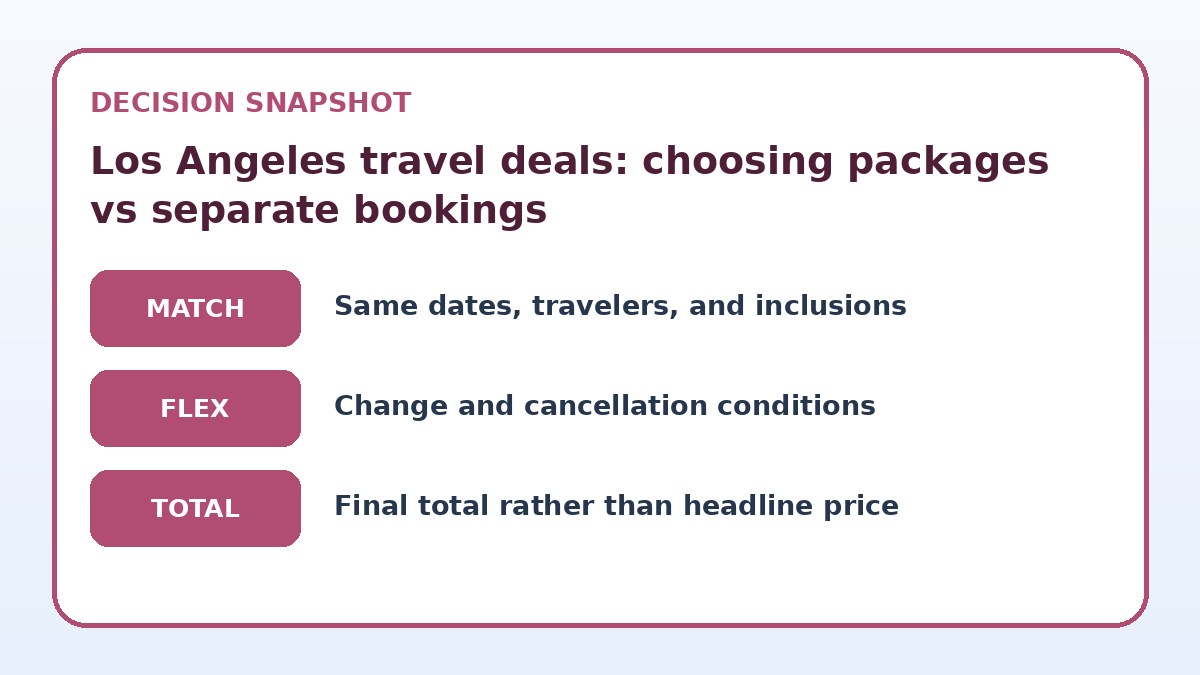
Use identical dates, travelers, room needs, baggage, and flexibility so the comparison stays meaningful.
What to compare before judging a package
Before you consider a package as a good deal, put it side-by-side with separate bookings using the same inputs. That means identical arrival and departure dates, the same solo traveler profile, and the same room type or seat class. Compare total door-to-door costs after adding taxes, mandatory fees, baggage, and in-city transfers. If the package bundles a tour or activity, verify whether it charges per person or has a group minimum; some experiences are sold as ‘included’ but require an extra per-person fee if the operator’s minimum isn’t met.
Next, check the small-print calendar rules for each component: change windows, nonrefundable periods, and how credits are issued when a flight or hotel cancels. Suppliers sometimes show a low combined price but attach strict nonrefundable terms to one component, effectively locking your itinerary. For shoulder-season travel, cancellation flexibility can be especially valuable because weather, event scheduling, and local school calendars sometimes shift demand unexpectedly. A true comparison also factors in time and hassle: booking separately may cost more money but save stress if you need to change just the flight or the hotel.
Inclusions and traveler-specific value for solo visitors
Solo travelers should quantify inclusions that disproportionately affect one person: single-room supplements, private transfers, and the availability of single-seat fares. Some packages quote a per-person price assuming double occupancy; that can hide a sizeable solo surcharge. Include ground transfers, baggage allowances, breakfast, and Wi-Fi when calculating value—frequent solo travelers often prefer a hotel with included breakfast and a straightforward airport transfer over a slightly cheaper room lacking those conveniences. Also ask whether tours in the package run with guaranteed departures or if they require a minimum number of participants to operate.
Traveler-specific value also means accounting for what you care about most: safety, location, or flexibility. If staying near transit or in a walkable neighborhood reduces your need for rideshare costs, that can offset a higher nightly rate. Packages that include a hop-on hop-off pass or museum entry can save time and money for a first-time solo visitor but may be useless if you prefer self-guided exploration. Being explicit about which inclusions matter to you personally helps decide whether the package’s conveniences are worth any loss of flexibility.
Look past the headline total
Compare inclusions and change conditions before deciding whether a package is genuinely useful for this trip.
Deal comparison checklist
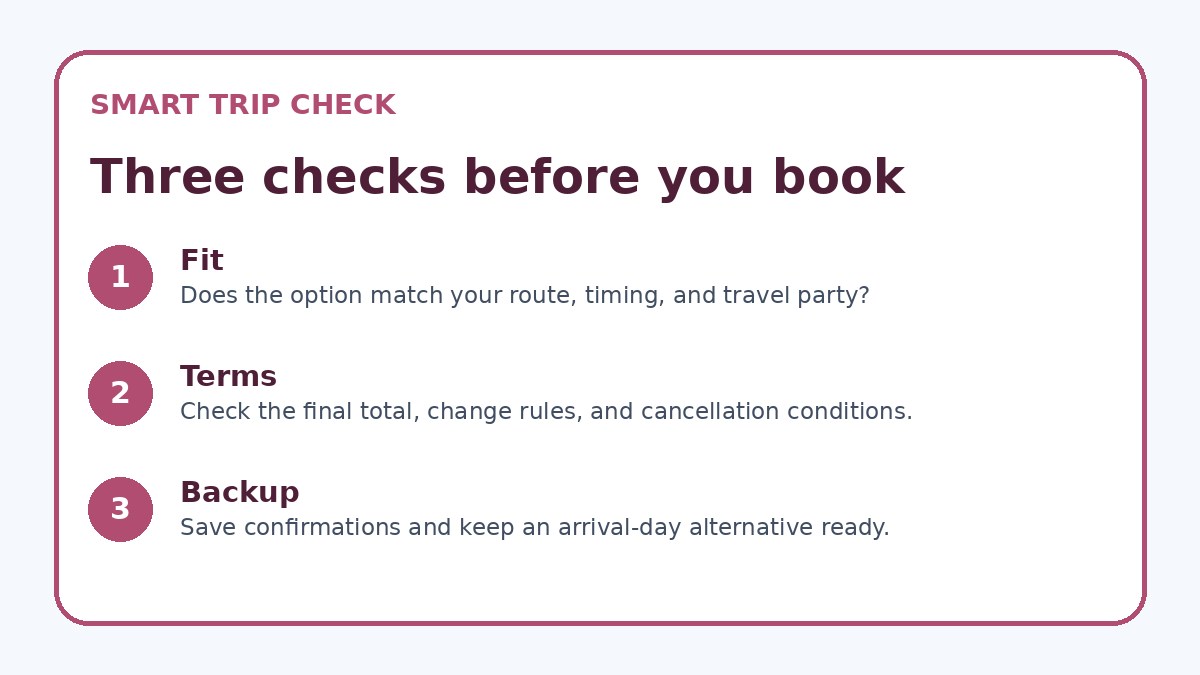
- Match the exact travel dates, traveler count, and room/seat class when comparing a package versus separate bookings.
- Confirm single-occupancy pricing or solo surcharges in any package quote before assuming per-person rates apply.
- Read the change and refund terms for each component on the provider’s final booking page and save screenshots.
- Verify all inclusions explicitly: baggage, transfers (private or shared), taxes, resort fees, and tour minimums.
- Decide which components must be flexible (usually flights) and prioritize refundable or changeable options there.
- Keep contact details for each supplier and clarify who handles rebooking or refunds if one element of your trip is canceled.
Flexibility versus convenience: tradeoffs to weigh
A package can consolidate confirmation numbers, reduce coordination, and sometimes include extras like airport transfers that simplify arrival logistics. That convenience is attractive for solo travelers who prefer a hands-off trip. However, packages often limit your ability to swap components without penalties: changing a flight might force a new hotel booking with new terms, or replacing a tour could void part of the bundled saving. If you expect your dates or plans might change, favor options with flexible cancellation, refundable fares, or the ability to alter only the component you need without losing the whole package value.
For shoulder-season travel, the right balance leans toward moderate flexibility: book refundable or changeable flights if those are a major risk, but accept nonrefundable hotel nights if you’ve locked in a particularly well-located, reviewed property and you’re confident about dates. Another practical approach is a hybrid: buy the flight separately with flexible terms and bundle hotel plus local transfers or experiences if that bundle offers clear logistical advantages. Always read the provider’s final booking page to confirm how changes and refunds work across the whole package, and ask specifically how credits, rebooking fees, and refunds are handled.
Final terms to verify on the provider’s booking page
When you reach a supplier’s final booking screen—whether it’s an OTA, a tour company, or an airline—verify five core items: what is refundable, the exact change-fee schedule, inclusions (with explicit counts and descriptions), how taxes and mandatory fees are applied, and who is responsible for rebooking if a component is canceled. Don’t assume a line labeled “taxes and fees included” covers everything; some agencies show local resort or city fees as an extra at checkout. If the package lists ‘airport transfer included,’ confirm whether it’s private or shared, who meets you, and any blackout times that could require an additional charge.
Also confirm documentation and contact pathways: a single point of contact for the whole package can save time, but you must know how to reach them if something goes wrong. If the package contains vouchers for activities, read the voucher terms for redemption deadlines and operator contact details. For solo travelers, inspect any single-occupancy rule, and if the deal requires a minimum number of bookers for an included tour, ask what happens if the minimum is not met. If you use Trip.com or another comparison site, use it only to compare availability and verify final terms on the actual provider pages before you click pay.
Travel Deals & Booking Strategy questions travelers ask
Are shoulder-season travel deals in Los Angeles worth it for solo travelers?
Yes, shoulder seasons can offer milder weather, lower crowd levels at popular sites, and more hotel availability, which can be useful for a solo traveler seeking flexibility. However, value depends on what you prioritize: packages that include transfers and centrally located hotels can reduce stress, while separate bookings may give better control over single-occupancy pricing. Always compare identical dates and inclusions and verify change and cancellation terms because shoulder-season pricing can shift if local events are rescheduled.
How do I avoid false savings when a package looks cheaper than separate bookings?
To avoid false savings, compare total costs using the exact same inputs—dates, traveler count, room type, baggage, and transfers—and include mandatory taxes and fees. Check whether the package’s lowest price depends on nonrefundable terms or double-occupancy assumptions, and examine potential single-person surcharges. Finally, read the final booking page to confirm what is truly included and how changes or cancellations are handled; sometimes a small fee or an added transfer charge at checkout erases any perceived saving.
If I want both convenience and flexibility, which booking approach works best?
A hybrid approach often works well: buy flights with flexible change rules separately, then book a bundled hotel-plus-transfer or book a hotel with free cancellation and add organized activities later. This preserves the convenience of having local logistics handled while keeping the element most likely to change—the flight—flexible. Before booking, confirm on provider pages how modifications affect the bundle and whether any credits or rebooking fees apply if you alter just one component.
Final decision note
Solo travelers planning Los Angeles during shoulder seasons should balance convenience and flexibility by comparing like-for-like offers and reading final booking terms carefully. Start by matching dates, traveler count, and included items when comparing packages and separate bookings, and treat single-occupancy pricing and transfer details as decisive factors. If you value low hassle on arrival, a package that includes transfers and centrally located lodging can be attractive, but protect yourself with flexible flights or refundable hotel nights. Always verify change fees, refund rules, and exactly what is included on the provider’s final booking page before you pay, and keep supplier contacts handy in case plans shift.
Continue planning
Check current options and final conditions
Use the provider page to confirm live availability, the final total, cancellation terms, and every condition that matters to your trip.
This evergreen planning guide was created with AI-assisted drafting and a structured quality review. It does not display live prices, schedules, availability, visa guidance, or provider rankings. Verify current details before booking. Some links are affiliate links; we may earn a commission at no additional cost to you.