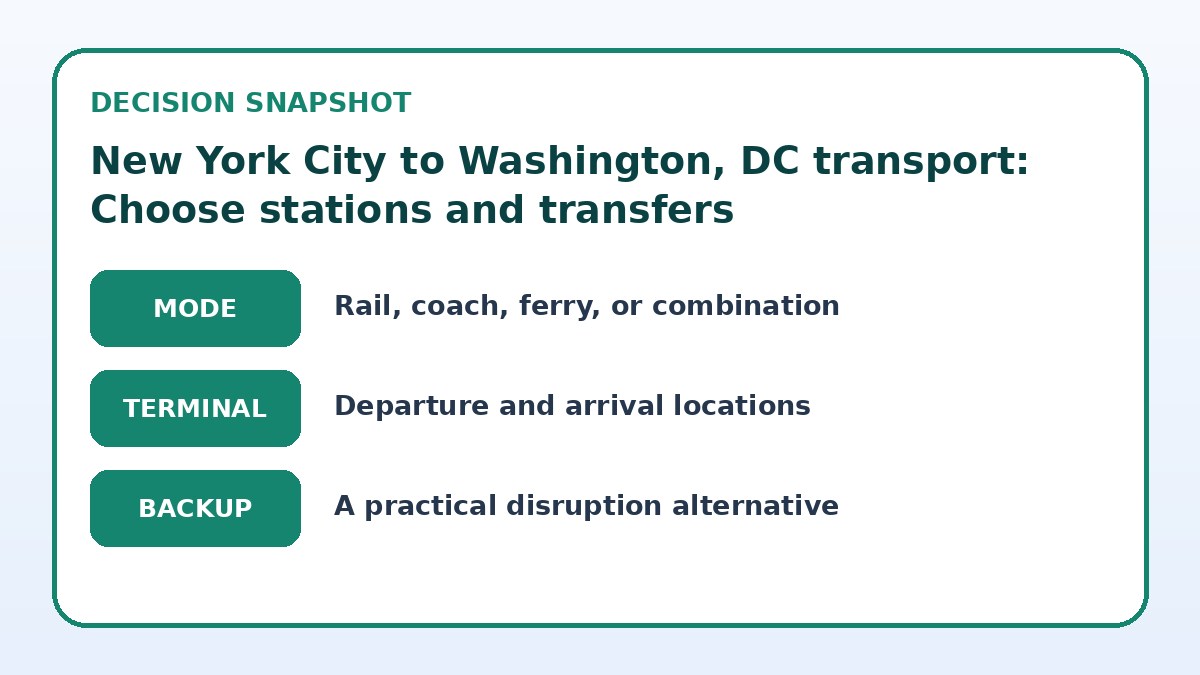
For families deciding how to travel from New York City to Washington, DC, the practical question isn’t only which carrier to pick but how each terminal or station affects the door-to-door journey. Choose rail if you want simpler transfers between central stations and less luggage handling; choose coach if cost and drop-off locations near suburban stops matter; consider a mixed route if arriving from boroughs with limited rail access. Start by mapping home-to-terminal time, expected luggage, stroller needs, and how a missed connection would cascade through the day. This article focuses on terminal fit, luggage and transfer friction, timing flexibility, and a realistic disruption backup—so you can pick the option that minimizes stress for kids and caregivers rather than only optimizing the travel time on the map.
Terminal fit: pick stations that match your family’s start and end points
When planning New York City to Washington, DC transport for a family, start by matching terminals to your door locations. In NYC, consider whether reaching a major rail station or a curbside coach stop requires an extra subway ride, taxi, or long walk with luggage and children. In DC, think about whether you want to arrive close to a hotel or attractions—some stations are more convenient for downtown hotels while others sit near transit hubs that require another short transfer. Choosing a terminal that keeps walking short and transfers simple will save energy and time, especially during arrival or when managing toddlers, strollers, and suitcases.
Also check terminal amenities that matter for families: accessible elevators, family restrooms, nursing rooms, luggage trolleys, and clear signage. These features reduce friction during short connection windows and when you need to settle kids before the onward leg. Don’t assume every stop will have ramps or staffed assistance—verify accessibility options directly on the provider’s booking page and the station’s official information so you can plan who carries what and where you can pause for snacks or diaper changes.
Choose the end-to-end journey plan
| Journey approach | Best for | Friction to check |
|---|---|---|
| Direct intercity rail between central stations | Families prioritizing minimal transfers and central arrivals | May require longer initial trip to a major station but reduces intermediate handling of luggage and strollers |
| Curbside coach with neighborhood pick-ups | Families wanting more convenient local pickup and potentially lower frequency departures | Often involves more luggage handling at curb and fewer onboard family amenities |
| Mixed-mode (local transit + intercity rail or coach) | Families starting far from major terminals who need flexible routing | Adds an extra transfer leg—plan buffer time and protected routes between modes |
| Taxi/rideshare door-to-door for the entire route | Families with young children, many bags, or mobility needs seeking simplest transfers | Most straightforward but typically the most costly and subject to traffic variability |
Check live intercity options
Look beyond the ride itself and compare terminals, transfers, luggage, and arrival fit.
Luggage and transfer friction: minimize carrying and waiting
Luggage rules and how transfers are handled often determine how tolerable the trip will be with children. For each option, estimate the total number and size of bags plus strollers or car seats, and ask whether bags are checked, loaded by staff, or carried to an overhead. If transfers involve changing stations or modes—say from a regional train to a coach—plan for how bags move between curbs, platforms, and ticket halls. A single big station transfer with elevators might be preferable to multiple short walks across streets.
Think beyond the main ride: door-to-door practicality includes waiting areas, covered walkways, and protection from weather. If you must change terminals, decide if you’ll hire a local taxi or rideshare to bridge the gap, which is more expensive but reduces carrying and walking. Where possible, book through itineraries that include protective layovers and check the provider’s final booking page for baggage allowances and transfer assistance options before you finalize plans.
Timing flexibility: build realistic buffers for families
Families need realistic schedules, not tight connections. Plan excursions around children’s routines and aim for buffer time at each transfer: enough time for bathroom breaks, snack changes, and dealing with unexpected delays. When comparing rail, coach, and mixed options, look at the frequency of departures and whether the operator offers an easy rebooking option in case you miss the connection. Morning rush hours, peak travel periods, and station crowding can turn an otherwise simple transfer into a stressful scramble, so allow extra minutes for security lines or elevator waits.
Also consider the value of direct versus connecting journeys. A direct service avoids intermediate terminal transfers and is usually simpler, but a slightly longer route with predictable, comfortable transfer points can beat a tight direct schedule if it reduces last-minute carrying or lining up with a toddler. When booking, review the provider’s transfer and reissue policies on their official booking page; if flexibility matters, prioritize itineraries that explicitly outline easy same-day changes or alternative departures.
Compare the practical alternatives
Use the final page to confirm what is actually offered on your dates and save a workable fallback.
Intercity travel checklist
- Map door-to-terminal and terminal-to-destination transit times for each option before you book to compare total door-to-door duration.
- Confirm elevator, ramp, and stroller access at departure and arrival stations on the station’s official information page.
- Pack an easily accessible day bag with snacks, medication, chargers, and a change of clothes for each child.
- Build at least 30–60 minutes buffer for each transfer point when traveling with young children or heavy luggage.
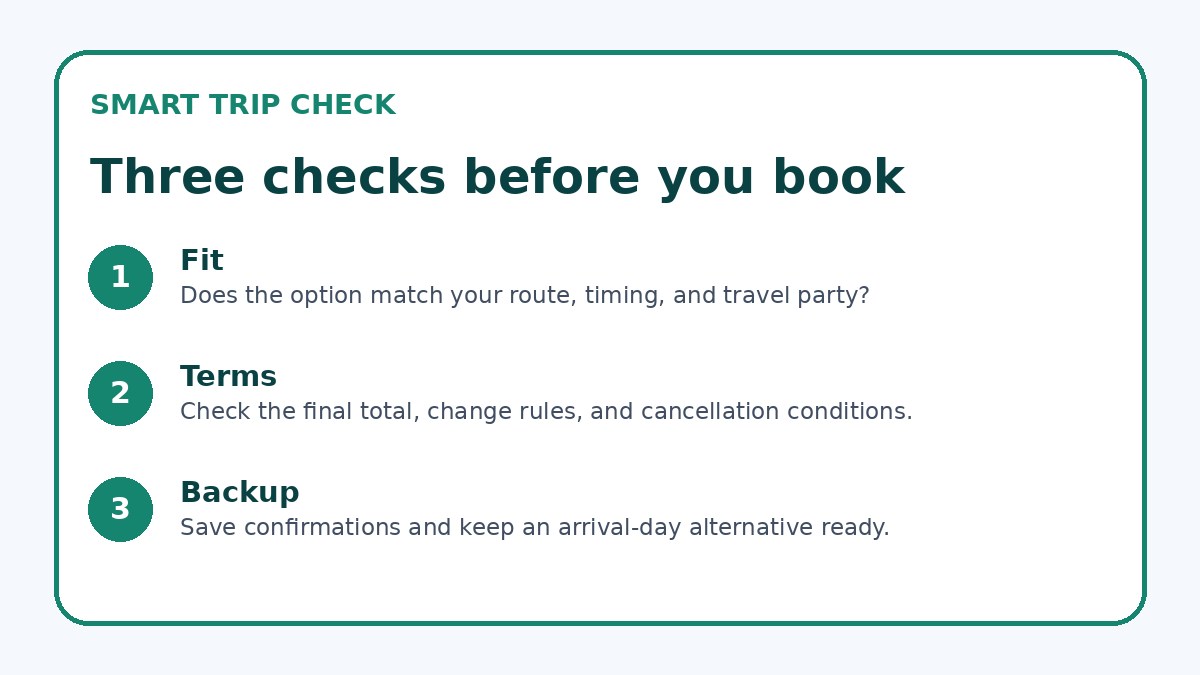
- Verify baggage allowances and transfer handling details on the provider’s final booking page before completing purchase.
- Pre-install rideshare apps, save pickup locations for each terminal, and note an indoor meeting point in case family members separate.
Disruption backup: a simple plan that reduces stress
Create a short disruption plan you can follow if something goes wrong: who calls for alternate rides, where to regroup if you miss a connection, and what to do with checked luggage. Identify one nearby taxi/rideshare pick-up spot and one sheltered waiting area at both departure and arrival terminals. Keep essential items—medication, snacks, a change of clothes, and important documents—together in a day bag so you don’t need to access main luggage during a disruption.
Also pre-identify one or two alternative travel modes and realistic time windows (for example, a later train or a coach). If you rely on public transit to reach a terminal, know the basic outline of an alternate route; if you plan to use a rideshare, have the app installed and a backup payment method ready. Finally, check Trip.com or provider pages for current availability only at booking time, and confirm cancellation or change terms before you depend on any contingency.
Rail & Intercity Transport questions travelers ask
Is train travel between New York City and Washington, DC best for families with strollers and car seats?
Trains often simplify transfers because they use central stations with platform access and elevators, which makes moving strollers and car seats easier than repeated curbside handling. However, not all trains permit easy bulky item storage on-board—check the carrier’s baggage policy on the final booking page and confirm onboard space for strollers. If you have a car seat you prefer to use, plan how you’ll install it during any taxi segment and whether you’ll gate-check it or carry it on board.
How much buffer time should families allow when transferring between terminals in NYC or DC?
Allow extra time beyond the advertised ride time: for families, a good rule is adding 30–60 minutes at each transfer to cover restroom breaks, elevators, crowds, and unexpected delays. If the transfer requires crossing streets or using different transport modes, err on the longer side. Check station maps and peak-hour congestion patterns before you leave so you can set realistic departure times from home and reduce last-minute rushing with children.
What’s the simplest backup plan if a missed connection leaves a family stranded overnight?
Have one or two contingency options preselected—such as a later train or a coach service—and know how to rebook them on the provider’s site or app. Also identify nearby hotels or family-friendly shelter points in case you must wait, and keep emergency cash and contact numbers. Before booking, read the provider’s change and cancellation policy on their final booking page so you know whether you can switch departures without long penalties; having a preinstalled rideshare app helps bridge short gaps without carrying bags across town.
Final decision note
Choosing how to travel from New York City to Washington, DC with family comes down to more than ride duration: it’s about which terminals and transfers fit your household’s mobility, luggage, and routine. Focus first on door-to-door practicality—how you'll get to the terminal, what facilities will support children, how many transfers the itinerary requires, and what buffer time you can realistically allow. Confirm station accessibility and baggage handling on provider booking pages before you commit, and keep a short, practiced disruption plan so everyone stays calm if plans change. For current departure and availability checks, you can look at Trip.com as one comparison tool, but always verify critical details with the operator at booking.
Continue planning
Check current options and final conditions
Use the provider page to confirm live availability, the final total, cancellation terms, and every condition that matters to your trip.
This evergreen planning guide was created with AI-assisted drafting and a structured quality review. It does not display live prices, schedules, availability, visa guidance, or provider rankings. Verify current details before booking. Some links are affiliate links; we may earn a commission at no additional cost to you.