If you’re a solo traveler thinking about a Seoul car rental, the fastest practical question is whether driving will actually improve your trip. For many visitors, Seoul’s public transit, taxis and compact road network make driving optional; yet a car can be useful for day trips outside the city, carrying gear, or reaching suburbs and parks where public transit is slow. Before you reach the rental desk, check three contract items closely: the fuel policy (how the company expects fuel to be returned and what refill charges look like), any mileage limits or per-kilometer fees, and the precise insurance wording—especially about third-party liability, roadside assistance, and coverage zones. Also plan for pickup and return friction: where the kiosk is, whether airport collections add surcharges, and how fuel or mileage disputes are documented. This guide helps you decide whether to drive, what to compare on the final booking page, and what backup mobility options to use if you skip the car.
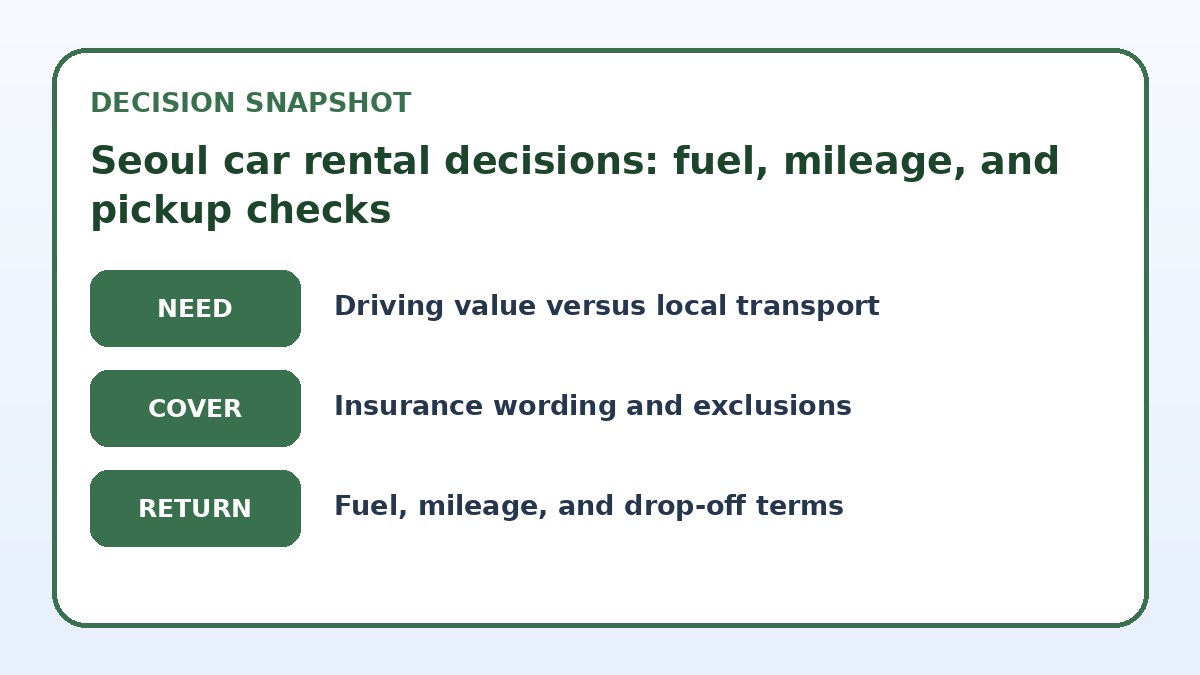
Does driving add value to a solo Seoul trip?
Start by mapping the main places you want to visit and how often you'll cross the city. Seoul’s subway, buses and plentiful taxis are typically faster than driving inside the central districts during peak hours. If your route mostly stays within central neighborhoods—Gangnam, Myeongdong, Hongdae, Insadong—or you plan several subway-accessible museums and cafés, the convenience of parking, tolls, and narrow roads may outweigh the flexibility of a car. Consider also the stress factor: solo drivers must navigate unfamiliar signage, parking rules, and possible language barriers at payment kiosks.
Driving becomes more attractive when your plan includes consistent day trips beyond the city: coastal drives, mountain access, national parks, or reaching accommodations outside the subway grid. If you’ll carry a bike, camping gear, or photographic equipment, a car reduces transit transfers and gives storage flexibility. For single-day excursions to places with limited public transit, calculate door-to-door travel time and compare it with the combined time for trains, buses and local taxis—this practical timing check will usually decide whether a car truly adds value.
Decide whether driving earns its place
| Mobility strategy | Best for | Cost or friction to check |
|---|---|---|
| Rent a car for the whole trip | Solo travelers doing multiple day trips beyond Seoul who value storage and schedule control. | Higher parking, fuel and toll hassle inside the city and more contract scrutiny on fuel and mileage terms. |
| Use transit in Seoul, rent for specific day trips | Travelers who want convenience in the city and a car only for a few long excursions. | Extra time arranging pickup; watch one-way fees and confirm mileage rules for short rental segments. |
| Public transport and taxis only | Those staying inside central Seoul or who prefer to avoid rental paperwork and driving stress. | Less flexibility for remote sites and potential higher cost for multiple taxi rides outside transit hours. |
| Guided day trips or private drivers | Travelers who prefer a turnkey option for remote excursions without negotiating rental terms. | Less personal control over pace and route; compare fuel and mileage coverage included by the tour operator. |
Check live rental choices only after the route test
Use the exact driver, dates, pickup point, and return plan to compare current conditions.
What to verify about fuel and mileage on the booking page
Fuel policy wording varies and has real cost and hassle implications. Look for explicit phrases like full-to-full, same-to-same, or pre-purchase refuel, and read the fine print about how fuel charges and claims are handled. Don’t assume a pre-purchase option is refundable; ask or check whether leftover fuel credit is returned. Note whether the company accepts fuel receipts at return or instead levies a flat administrative refill fee; if they apply a per-liter surcharge, that often exceeds local pump prices.
Mileage limits matter if you plan long day trips. The contract may list a daily or total kilometer allowance and a clearly stated excess-kilometer fee. Also search the terms for geographic limits (for example, mainland-only, no-cross-border) and whether highways, mountain roads, or certain islands are excluded. If the text is ambiguous, use the provider’s final booking page or customer service to obtain a written confirmation of the exact per-kilometer rate and how distance is measured and reported.
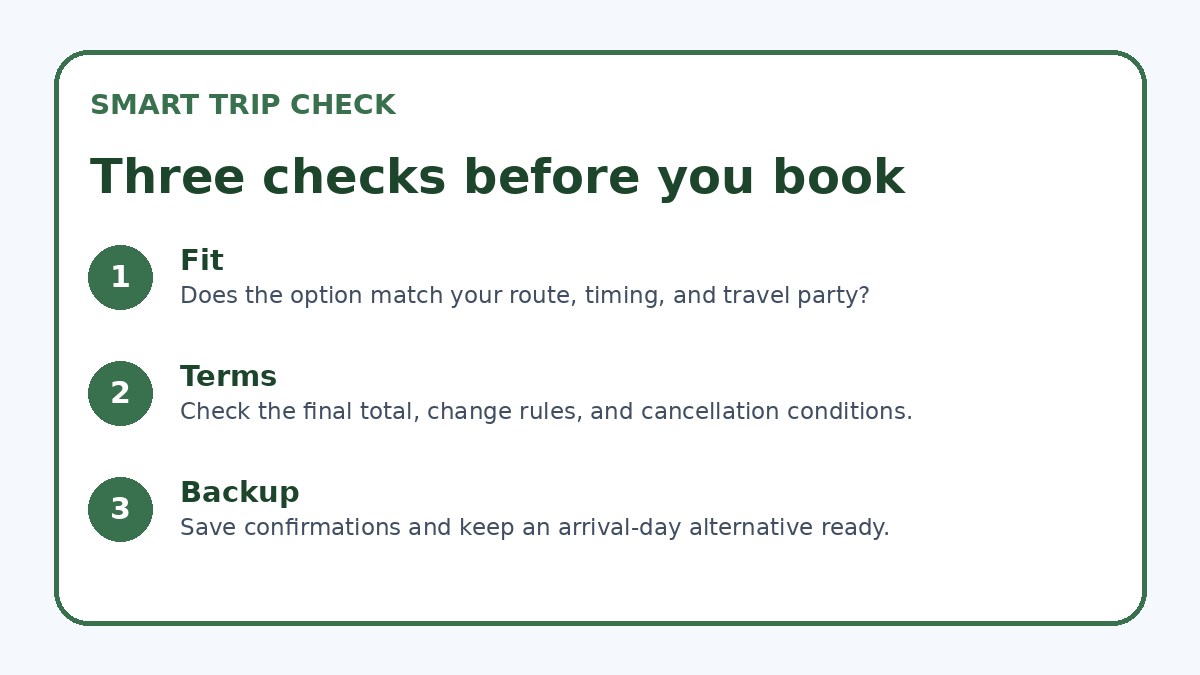
Compare the full rental conditions
Confirm insurance wording, exclusions, deposit, fuel, mileage, and return terms on the final page.
Insurance wording, pickup/return friction, and documentation
Insurance sections are where words matter. Avoid assuming that 'comprehensive' covers everything—check the exact excess amounts, which incidents are excluded, and whether collision-damage waiver (CDW), theft protection, and third-party liability are included or optional add-ons. Make sure the policy covers roadside assistance in the regions you’ll drive in and whether you’ll be liable for administrative fees for claims. Keep copies of the policy wording and confirmation emails; these are the details you’ll reference if there’s a dispute over fuel, mileage, or damage.
Pickup and return friction can turn a good deal into a stressful day. Confirm the pickup location (airport kiosk, off-airport shuttle pickup, or downtown office) and whether shuttle transfers or extra fees apply. Note return procedures: must you return with the fuel gauge at a certain point, to the same terminal, or to a different lot? Photograph the fuel level and attach time-stamped photos of odometer readings at pickup and return. If possible, allow buffer time at return to resolve any discrepancies before you leave the lot.
Car rental terms to verify
- Confirm the fuel policy wording on the final booking page—look for 'full-to-full' or explicit refill procedures and note whether receipts are required.
- Verify the exact mileage allowance and the excess-kilometer fee per kilometer, and request this in writing if unclear.
- Read insurance clauses for excess amounts, included protections (CDW/theft/third-party), and whether roadside assistance is covered in your areas.
- Photograph and timestamp the odometer and fuel gauge at pickup and at return; keep copies of both for any dispute.
- Ask about pickup and return locations, shuttle requirements, and whether airport collections add surcharges or require extra time.
- Check how tolls, parking fines, and traffic violations will be billed after rental and what administrative fees may be applied.
A realistic non-driving fallback and when to combine options
If you decide not to drive, plan a clear fallback. Seoul’s subway and buses cover most urban attractions, while intercity buses and regional trains serve day-trip destinations. For the first and last mile at suburban or remote spots, reserve a taxi or a local ride-hailing service. Pre-booked guided day trips can replace the convenience of a private car for specialized routes—look specifically for small-group or single-seater options if you prefer personal flexibility without renting a vehicle.
You can also combine approaches: use public transit inside Seoul and rent a car only for a single overnight outside the city. When combining, rent from companies with flexible one-way policies or same-location returns to avoid double fees. Confirm whether mileage charges are pro-rated for partial days and whether fuel policies change for one-way rentals. This hybrid strategy often delivers the mobility you need without commitment to a full multi-day rental contract.
Car Rental & Road Trip questions travelers ask
What fuel policy is easiest for solo travelers to manage in Seoul?
Full-to-full is generally the simplest: you collect the car with a full tank and return it full, paying only for the fuel you used. On the final booking page, confirm how the company verifies tank level and whether they accept receipts if you refuel just before return. Avoid pre-purchase refill options unless the provider explicitly states how leftover credit is refunded. Also check whether the company charges an administrative fee on top of fuel costs for any returned vehicle not meeting the agreed fuel level.
How do mileage limits affect day-trip planning from Seoul?
Mileage limits can make otherwise affordable rentals costly if you cover long distances in one or two days. Calculate expected daily kilometers for each planned excursion and compare that total to the allowed kilometers in the contract. If you're close to or likely to exceed the allowance, ask the provider about unlimited mileage options or the exact excess-kilometer rate. Confirm how distance is measured (odometer vs. GPS) and whether the rental period counts partial days pro-rated or as full days for mileage calculations.
What insurance wording should I insist on before renting?
Look beyond generic labels and check three things: the excess (how much you pay if a claim occurs), whether collision-damage waiver (CDW) reduces or eliminates that excess, and if theft protection covers personal items. Confirm that third-party liability meets local minimums and that roadside assistance includes towing and labor in the regions you plan to drive. If any coverage is offered as an optional add-on on the booking page, note the exact cost and whether it replaces or supplements the base policy—then decide based on your tolerance for risk and potential out-of-pocket exposure.
Final decision note
For solo travelers in Seoul, the right choice depends on your route and tolerance for administrative friction. Skip a car if you’ll stay inside transit-accessible neighborhoods; choose public transport and occasional taxis or guided trips to avoid fuel, mileage and parking hassles. Rent a car when multiple day trips, luggage or off-grid destinations justify the time savings—then inspect fuel policy, mileage limits and insurance wording carefully on the final booking page. Photograph odometer and fuel levels at pickup and return, and allow extra time at return to resolve discrepancies. When in doubt, consider a hybrid approach: use Seoul’s excellent transit system for the city and rent only for the specific days you need a car.
Continue planning
Check current options and final conditions
Use the provider page to confirm live availability, the final total, cancellation terms, and every condition that matters to your trip.
This evergreen planning guide was created with AI-assisted drafting and a structured quality review. It does not display live prices, schedules, availability, visa guidance, or provider rankings. Verify current details before booking. Some links are affiliate links; we may earn a commission at no additional cost to you.