For couples deciding how to get from Seoul to Jeonju, the practical choice comes down to one question: do you prioritise speed, door‑to‑door simplicity, or flexibility to add stops? Seoul to Jeonju transport works well by train, intercity coach, rental car, or a mix of those modes — and the right plan balances station/terminal fit, luggage and transfer friction, and what you’ll do on arrival. Start by mapping where you’ll be picked up and dropped off in both cities; that determines whether a single direct ride or a sequence of shorter legs makes sense. This guide walks you through choosing modes, timing and transfers, packing and luggage tradeoffs, and building a disruption backup so you and your partner can travel calmly and enjoy your time together rather than worrying about logistics.
Choosing modes: rail, coach, car, or a mix
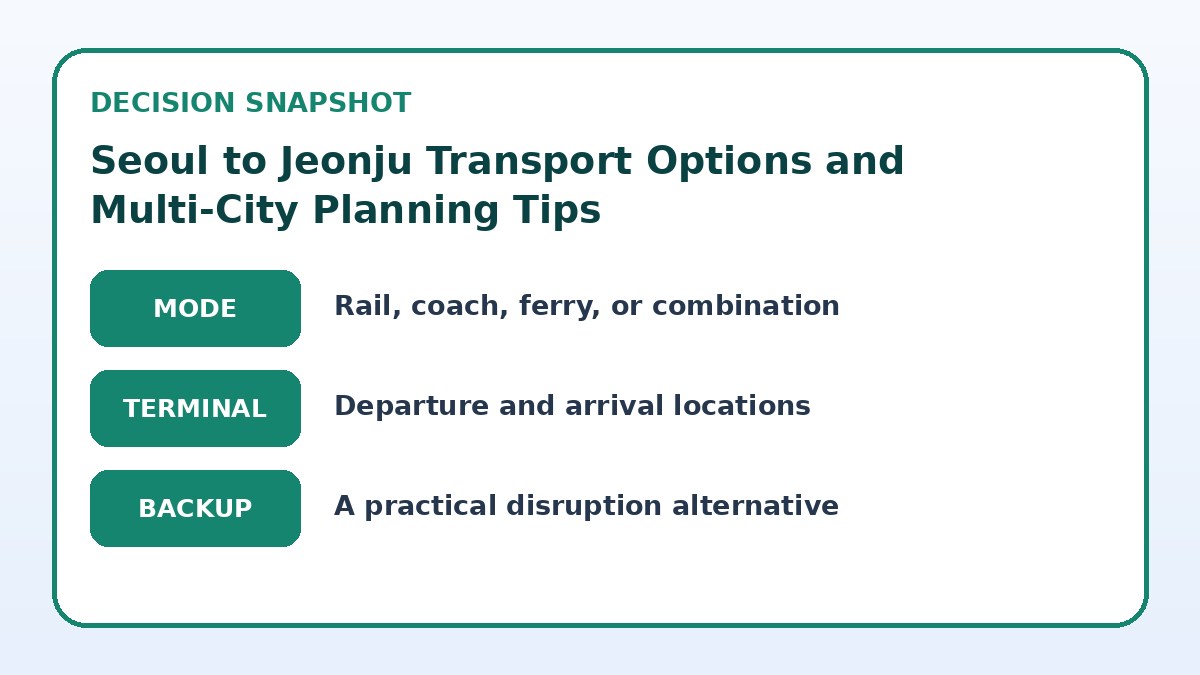
Start by comparing the fundamental strengths of each mode. Rail typically offers a predictable, station‑to‑station experience with minimal road‑traffic variability and comfortable onboard space for two. Coaches often serve city terminals that are easier to reach from central hotels, reducing last‑mile transfer time. Rental cars give you total control over the route and schedule and let you add scenic stops between Seoul and Jeonju, but they add parking and driving coordination. Think of this step as matching the journey’s character to what you want from the day together: speed and rest, central access, or freedom to explore.
Mixing modes is rarely wasteful when it reduces total door‑to‑door friction. For example, a short taxi from your Seoul hotel to a centrally located coach station can beat a long metro ride to a major rail terminal if your hotel is far from that station. Conversely, arriving by rail to a station near Jeonju’s old town could be the best option if you want to walk to accommodation. Build a plan where the chosen mode minimises transfers and luggage handling rather than only minimising in‑vehicle time.
Choose the end-to-end journey plan
| Journey approach | Best for | Friction to check |
|---|---|---|
| Rail-first plan (direct train with taxi last mile) | Couples who want predictable travel time and minimal in‑vehicle stress. | May require longer final-mile transfers if stations aren’t close to your lodgings. |
| Coach-focused plan (central terminals, simpler walking access) | Pairs who prioritize easy access from central hotels and fewer platform changes. | Subject to road traffic and potentially less onboard comfort on longer routes. |
| Rental car plan (door‑to‑door control and stops) | Couples wanting scenic detours, flexible schedules, and privacy. | Requires parking, local driving coordination, and shared driving responsibilities. |
| Hybrid plan (mix of rail/coaches plus one car segment) | Travelers seeking a balance: fast long legs plus a private short segment for last‑mile convenience. | More moving parts to coordinate and slightly higher chance of transfer friction. |
Check live intercity options
Look beyond the ride itself and compare terminals, transfers, luggage, and arrival fit.
Terminal fit, luggage and transfer friction
Always measure terminal fit against your start and end addresses. A faster ride that arrives at an out‑of‑the‑way terminal can cost you time and stress if it forces a long taxi or multiple transfers. Couples with moderate to heavy luggage should prioritise options with easy baggage handling or direct door‑to‑door legs to avoid juggling bags on steps and platforms. Also consider mobility or comfort: if one partner needs more space to stretch, a private car or premium rail seat reduces transfer stress compared with crowded coaches.
Transfer friction goes beyond the mode: check station layouts, typical crowds at your travel time, and the need to change platforms or exits. If you must transfer between modes, plan a single clear connection point and leave at least 30–60 minutes buffer depending on how comfortable you feel with short connections. Keep one carry‑on with essentials and any medication to avoid scrambling during transfers; consolidated packing makes every transfer between modes easier for two people.
Timing flexibility and building a multi‑stop itinerary
Decide whether your trip is fixed‑time or flexible. If you have strict arrival times (reservations, tours, dinner) favour more frequent services or allow longer buffers. For flexible days, intentionally plan a slower leg or a detour: a rental car or a rail-plus-local-bus combination lets you add a half‑day stop mid‑route without losing the main booking. When scheduling, look at the cadence of services — frequent departures mean you can build resilience into your plan without paying a premium.
Couples often enjoy stopping for a meal, a short hike or a cultural visit en route; plan those as extensions rather than tight connections. If you mix modes, place the stop where transfer friction is low — a town with a station and parking makes it simple to split the journey. Use travel time together: offline maps, snack breaks, or playlist curation make the trip part of the experience rather than just transit between two points.
Compare the practical alternatives
Use the final page to confirm what is actually offered on your dates and save a workable fallback.
Intercity travel checklist
- Map exact pickup and dropoff addresses in Seoul and Jeonju and measure door‑to‑door travel time before choosing a mode.
- Check baggage rules and allowed carry items on your chosen provider’s booking page and pack to minimise transfer hassle.
- Reserve flexible options or leave buffer times of at least 30–60 minutes for connections depending on how tight transfers are.
- Download local taxi or rideshare apps and save a local currency payment method for rapid booking during disruptions.
- Agree with your partner on a backup decision threshold (eg. delay length or missed connection) and an alternative route beforehand.
- Confirm terminal entry points, boarding platforms, and any special boarding procedures on the carrier’s final booking confirmation page.
Disruption backup and what to verify before booking
A practical backup plan prevents frustration. Identify at least one realistic alternative route—another train or coach line, a nearby station, or a taxi/rideshare corridor you can use if your first leg is delayed. Agree on decision rules with your partner ahead of time: for example, if a delay exceeds 45 minutes, switch to the backup route. Keep contact numbers or apps downloaded for local taxis and ride services so you can book quickly if you need to pivot.
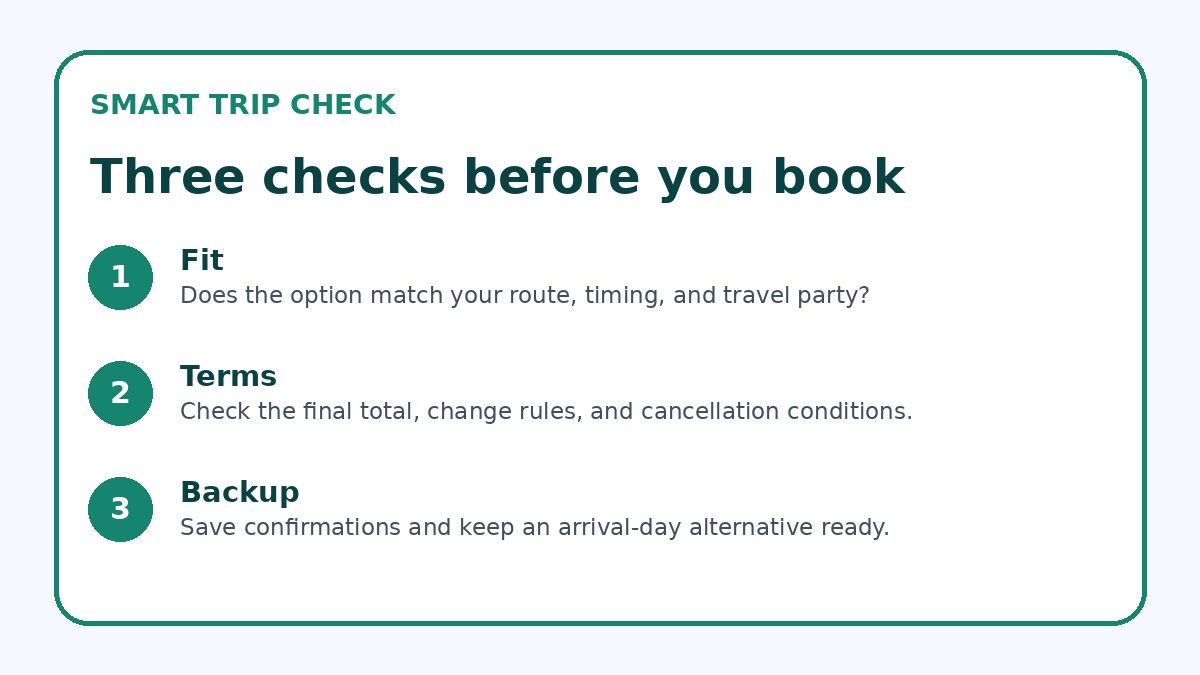
Before final bookings, verify provider pages for current departure points, platform arrangements, luggage policies and change/cancellation terms. Don’t rely solely on secondary aggregators for operational details; check the carrier’s own booking page where possible. Trip.com can be used to compare availability, but always confirm terminal addresses, boarding instructions and baggage allowances on the provider’s final booking page so your multi‑city plan remains reliable.
Rail & Intercity Transport questions travelers ask
Should couples choose train or coach between Seoul and Jeonju for the easiest experience?
It depends on what you value most as a couple. Trains usually offer more consistent travel times and a calmer onboard environment, which cuts stress for passengers who prize predictability. Coaches can be more convenient if their terminals are closer to your hotel or near easy taxi lines, reducing the number of transfers. Evaluate which terminal is closer to your accommodation, how much luggage you have, and whether you want flexibility to stop en route—those practical factors determine the easiest overall experience, not the in‑vehicle travel time alone.
How much buffer time should we leave between connections when building a multi‑city ground plan?
Leave more buffer for unknowns: 30 minutes can be fine for short, familiar transfers between adjacent terminals; 45–60 minutes is safer for transfers that require platform changes, exiting one station and re‑entering another, or if you carry significant luggage. If either partner prefers a relaxed pace, add extra time. Also consider how easy it is to rebook the next leg—frequent services reduce needed buffer because you can take the next departure, while infrequent services require larger margins.
If our main leg is disrupted, what quick alternatives should couples consider?
Identify one realistic alternative in advance: a different train or coach line that serves nearby terminals, driving the leg with a rental or taxi, or breaking the journey into two shorter, more reliable hops. Keep local taxi apps and card/cash payment options handy for immediate booking, and know the closest stations where alternative services run. Having a plan in place lets you decide calmly with your partner instead of reacting under pressure—agree on the trigger for switching to the backup, such as a delay of a set length.
Final decision note
Planning Seoul to Jeonju transport as a couple is about matching the journey to how you want to travel together: pick the mode that minimises transfers and luggage friction relative to your start and end points. Use the comparison framework here to decide whether a rail-first, coach-focused, rental car, or hybrid plan fits your priorities. Always map terminal proximity to your accommodation, build sensible buffers, and agree on a clear backup option. Confirm operational details on the provider’s final booking page and keep local ride apps installed. With those pieces in place, the trip becomes part of the shared experience rather than a logistics headache.
Continue planning
Check current options and final conditions
Use the provider page to confirm live availability, the final total, cancellation terms, and every condition that matters to your trip.
This evergreen planning guide was created with AI-assisted drafting and a structured quality review. It does not display live prices, schedules, availability, visa guidance, or provider rankings. Verify current details before booking. Some links are affiliate links; we may earn a commission at no additional cost to you.