Practical answer first: most couples visiting central Hanoi do not need to rent and drive a car inside the city; however, if your plan includes day trips outside the ring roads—Ha Long Bay transfers, Ninh Binh valleys, or remote homestays—driving can add flexibility and intimacy. The deciding factor is insurance wording: the exact exclusions, named driver rules, liability caps, and procedures for accidents or theft can turn a romantic detour into logistical stress. Read the policy language carefully before you commit, and treat it as part of the itinerary—confirm who is covered to drive, what counts as an ‘unsealed road’ or ‘authorized route’, and what documentation is required for any claim. Below I give a concise decision guide, explain common insurance terms in plain language for couples, walk through pickup/return friction you should expect, and outline a reliable non-driving fallback.
Route value: when driving actually helps a couple
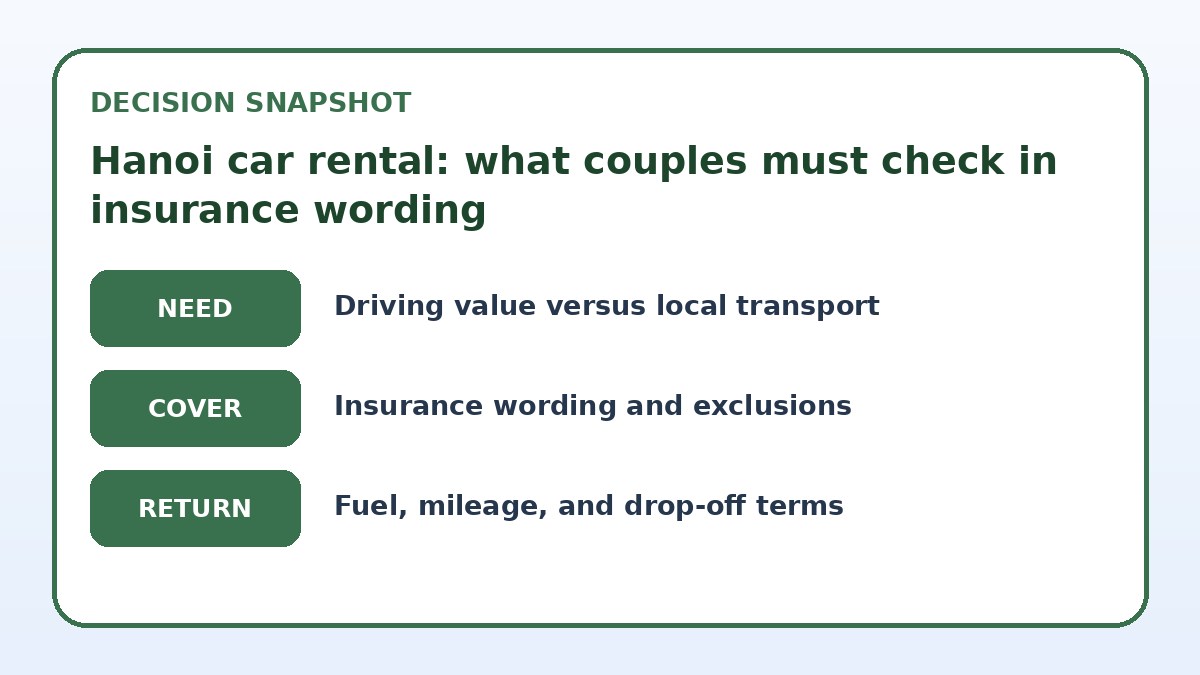
For most couples staying inside Hanoi’s Old Quarter, Ba Dinh, or Tay Ho, driving is more hassle than help. Streets are narrow, traffic is heavy, parking is limited near attractions, and walking or short taxi rides are usually faster and more relaxing. Driving becomes useful when your plans include rural day trips where schedules are tight or public transport routes are indirect: places like Ninh Binh’s countryside, remote guesthouses near Mai Chau, or flexible coastal stops beyond Ha Long’s main tourist piers. Decide if the car saves time by allowing you to leave early, linger at scenic points, or carry photography gear and picnic supplies that would be awkward on buses.
Couples should map their planned stops, estimate door-to-door travel time versus public options, and consider whether a single day-trip or multiple days of independent travel justify handling local roads. If your route requires crossing provincial boundaries or includes unpaved segments, those details will directly affect insurance wording. Many policies explicitly exclude certain roads or require prior written permission for off-highway travel—confirm these clauses against your mapped route and adjust plans or choose a local driver if needed.
Decide whether driving earns its place
| Mobility strategy | Best for | Cost or friction to check |
|---|---|---|
| Self-drive rental adding both partners as named drivers | Couples wanting maximum privacy and flexible stops | More paperwork, higher excess, and potential coverage gaps on unpaved roads |
| Rental with local driver included (driver-guided car) | Couples focusing on comfort without dealing with Hanoi traffic | Less privacy and higher daily cost, but insurance and licensing typically handled by provider |
| Private transfer or point-to-point car for day trips | Couples who want door-to-door convenience without long-term rental responsibilities | Limited spontaneity between booked pickup and drop-off times |
| Public transport, taxis, and ride-hailing apps | Couples prioritizing low cost and no rental insurance concerns | Less control of schedule and possible wait times during peak hours |
Check live rental choices only after the route test
Use the exact driver, dates, pickup point, and return plan to compare current conditions.
Insurance wording explained for two drivers
Policies differ by provider, but the central terms to parse are named drivers, liability caps, collision damage waiver (CDW), excess/deductible, theft protection, and third-party liability. Named drivers means only the people listed on the rental contract are covered; if your partner drives without being added, claims can be refused. CDW limits the renter’s financial responsibility for damage—often with an excess you must pay first. Theft protection can be conditional on whether the keys were left inside or the vehicle was locked. Third-party liability relates to damage to others and is often governed by a national minimum; extras may be offered to raise those limits.
For couples, pay close attention to how the policy defines ‘authorized driver’ and what evidence is required for claims: police reports, witness statements, original rental agreement, and timely notification. Watch for language like ‘commercial use excluded’ or ‘off-road activity excluded’ and for clauses that void coverage for drivers under influence, unlicensed drivers, or drivers not listed. If the rental company or insurer uses ambiguous phrases like ‘may be excluded’ or ‘at our discretion’, get definitive confirmation in writing before you sign.
Compare the full rental conditions
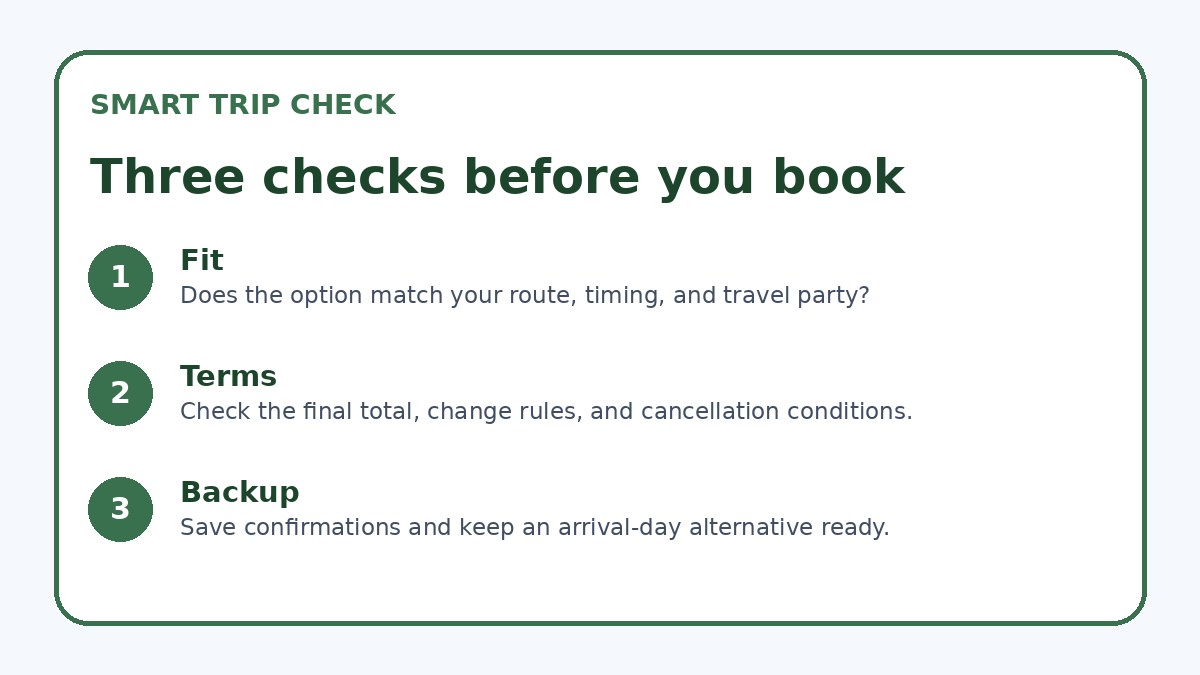
Confirm insurance wording, exclusions, deposit, fuel, mileage, and return terms on the final page.
Pickup and return friction: what to expect and verify
Pickup and return choreography creates the most common disputes. At pickup, read the contract with your partner present. Confirm the listed drivers, the vehicle condition report, existing scratches noted in writing, and whether any extra equipment (child seats, GPS) impacts insurance. Ask exactly what documents the company wants if you need to file a claim—local police report, original keys, fuel receipts, or photos—and make sure both of you keep copies on your phone. If the company insists on signing away specific coverages at pickup, pause and request a manager or alternate options.
On return, expect inspections and potential hold on your deposit or credit card for damage assessment. Note that many policies require immediate reporting of incidents; failing to do so can be used to deny a claim. If you drop the car outside office hours or with a key drop, photograph the vehicle and take a timestamped photo of the handover location. Finally, when comparing booking pages, verify whether the insurance is offered by the rental operator or a separate insurer—different processes apply and you’ll need the correct contact details for claims.
Car rental terms to verify
- Map your exact route and mark any unpaved or rural roads to check against policy exclusions before booking.
- Request the rental contract’s full insurance wording by email or screenshot and save it to your phone for pickup verification.
- Ensure both partners are listed as named drivers on the rental agreement, and confirm any extra fee for adding a second driver.
- Document the vehicle condition with timestamped photos from multiple angles at both pickup and return.
- Ask the provider for a written list of required documents for claims (police report, receipts, witness details) and store copies separately.
- If insurance language is unclear or has large excesses, arrange a private driver or transfer instead of self-driving.
Non-driving fallback: keeping plans romantic and practical
If insurance wording is restrictive, unclear, or would impose a high excess for typical risks, choose a non-driving fallback that preserves privacy and flexibility. Hiring a driver-guide for day trips gives you freedom to stop where you want while keeping insurance and licensing responsibility with a local professional. Private transfer services let couples travel door-to-door without navigating traffic or parking, and they often include standardized cancellation and liability procedures that are easier to verify than individual rental policies.
Ride-hailing apps and metered taxis work well for short hops inside Hanoi and are cost-effective for most sightseeing. For multi-stop itineraries, consider booking point-to-point private cars for longer legs and local drivers for rural exploration. When you choose a non-driving option, still check cancellation, waiting-time, and luggage policies. And if you later decide to rent a car for a single day, plan to add both partners as named drivers at pickup and get signed confirmation of the insurance terms you rely on.
Car Rental & Road Trip questions travelers ask
If my partner drives for a few minutes, will that void the insurance?
It depends on your contract’s named-driver clause. Many policies explicitly require every person likely to drive to be listed on the agreement; otherwise, claims related to a secondary driver can be denied. If your partner plans to take short stints behind the wheel—parking, navigating a one-way street, or relieving the main driver—add them as a named driver at pickup. If the rental company refuses to add a second driver without extra charges, get that price and the inclusion confirmation in writing so you can weigh the cost against the risk.
How do ‘excess’ and ‘deductible’ work on Vietnamese rentals?
Excess or deductible is the portion you must pay first if damage or theft occurs, even if the rental provides collision protection. Policy wording will state the amount and whether it’s reduced by buying additional cover at the desk. Some quotes show a low excess but only if you accept a more expensive insurance package; others may allow you to deposit a security hold on a credit card to cover the excess. Before you accept any offer, verify on the booking or reservation page how the excess is handled, what payment forms are accepted, and how long the hold may remain on your card.
What documentation should couples keep during the rental to support a claim?
Keep both drivers’ passports and international or domestic driver’s licenses, the original rental agreement showing named drivers, timestamped photos of the vehicle at pickup and drop-off, and any fuel or bridge receipts. If an incident occurs, obtain an official police report and written statements from witnesses when possible. Also record the rental company’s accident-report contact details and claim submission timelines. Having digital and physical copies of these documents will speed up communication with the provider and insurer and reduce the chance of disputes over coverage.
Final decision note
For couples, the core decision is whether driving adds meaningful value to your shared itinerary or simply increases paperwork and stress. If your route focuses on rural flexibility—early departures, scenic stops, or carrying equipment—self-driving can be rewarding, but only if both drivers are properly named and the policy explicitly covers your planned roads. If insurance wording is vague, has high excesses, or raises many conditional exclusions, take the non-driving fallback: hire a driver, book private transfers, or rely on taxis and ride apps for city exploration. Verify everything on the rental provider’s final booking page, store contract screenshots, and prioritize solutions that preserve time together and minimize post-trip disputes.
Continue planning
Check current options and final conditions
Use the provider page to confirm live availability, the final total, cancellation terms, and every condition that matters to your trip.
This evergreen planning guide was created with AI-assisted drafting and a structured quality review. It does not display live prices, schedules, availability, visa guidance, or provider rankings. Verify current details before booking. Some links are affiliate links; we may earn a commission at no additional cost to you.