Should a couple drive in Phuket? A quick practical answer: often yes for freedom to reach beaches, viewpoints and quiet restaurants, but only if you understand the insurance wording and accept the extra logistics. Phuket’s roads and parking can be narrow and busy; rental cover limits, excesses, and exclusions determine whether a minor scrape becomes a stressful bill. Read policies for named drivers, cross-border rules, third-party liability minimums, theft and windscreen cover, and whether damage to undercarriage, tires or keys is excluded. If you prefer to avoid uncertainty, choose a non-driving fallback with taxis, rideshares and private transfers. Below you’ll find a route-value assessment, a plain-language insurance breakdown, pickup and return friction points, and a realistic non-driving alternative so you and your partner can decide with confidence.
Route value: when driving genuinely improves a couple’s Phuket trip
Driving is worthwhile when your itinerary includes multiple dispersed stops—early-morning island overlooks, small beaches like Laem Singh or Nai Harn, markets at different towns, and restaurants off the main tourist roads. A car lets you leave when you want, carry beach gear, and mix scenic detours without coordinating each leg with a driver. For couples who prize spontaneity and plan several day trips across the island, driving often enhances privacy and timing, particularly for golden-hour viewpoints that public transport doesn’t serve well.
If your plan clusters around a single beach resort area, relies on nightlife in Patong, or you prefer to drink and not drive, the route value drops. Consider distance between planned stops, the need for parking at each destination, and whether you’ll frequently navigate congested areas. Balance the convenience against the time you’ll spend finding parking and managing fuel or charges. That calculation should guide whether you proceed to parse insurance wording closely or opt for alternatives.
Decide whether driving earns its place
| Mobility strategy | Best for | Cost or friction to check |
|---|---|---|
| Self-drive rental | Couples who want flexibility, private schedules, and remote beach access. | Requires careful insurance reading, parking, and handling potential excesses or claims. |
| Rent with reduced-excess upgrade | Couples wanting self-drive but lower out-of-pocket risk in case of damage. | Higher daily rental cost and check that reduced terms are clearly stated in writing. |
| Private driver/transfer | Couples preferring convenience, local knowledge, and stress-free navigation. | Less privacy and schedule control; ensure the driver’s insurance and liabilities are clear. |
| Mix of taxis and rideshares | Short itineraries, nights out, or couples avoiding driving responsibilities. | Can be more expensive for multiple long day trips and depends on availability in remote areas. |
Check live rental choices only after the route test
Use the exact driver, dates, pickup point, and return plan to compare current conditions.
Insurance wording: plain-language checkpoints couples must read
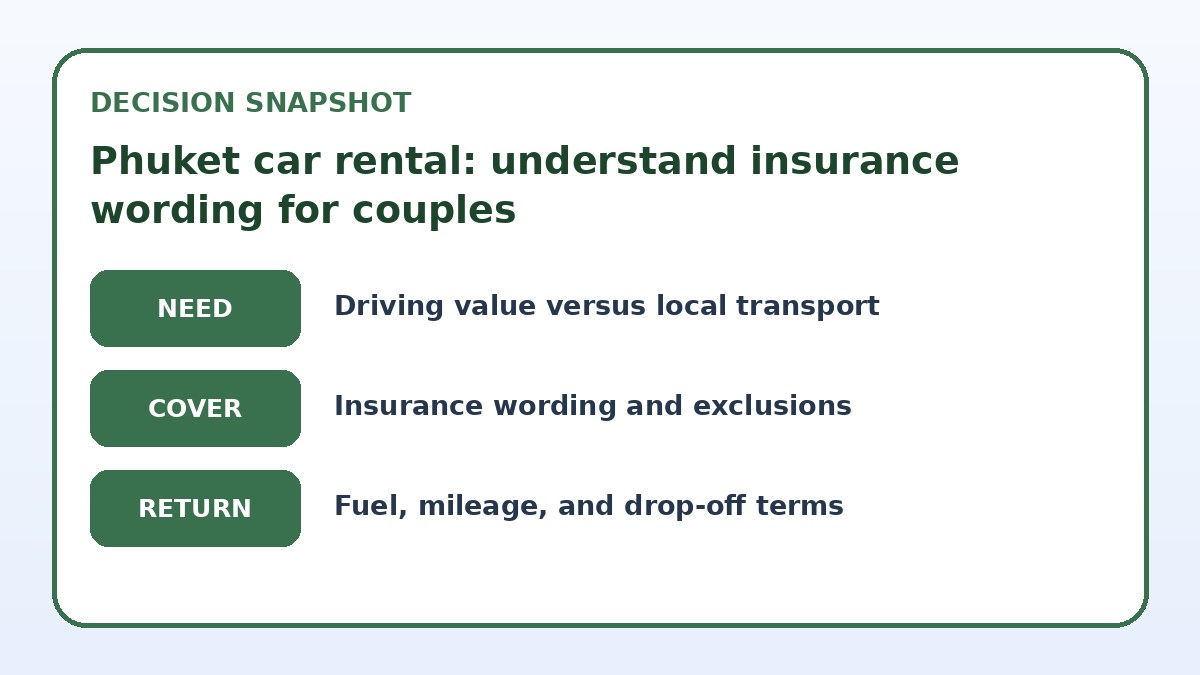
Start with the headline items: collision damage waiver (CDW) and loss damage waiver (LDW) limits, third-party liability, theft protection, and exclusions listed in bold. Look for the stated excess (the maximum you would pay after a claim) and whether the provider offers a reduced excess for an added daily fee. Confirm whether the policy names additional drivers, whether spouses/partners are automatically covered, and whether policies require you to be of a certain minimum driving experience or age to be eligible.
Watch for common exclusions that catch couples out: damage to tires, windscreen, undercarriage, roof or interior; incidents off-pavement; failure to use the correct fuel or to lock the vehicle properly; and consequences for unregistered drivers or driving under alcohol influence. Read the obligations section closely—some policies require police reports, original keys, or reaching a local office within a set period. If any language is unclear, ask the rental company to provide a written clarification or a policy excerpt before you book.
Compare the full rental conditions
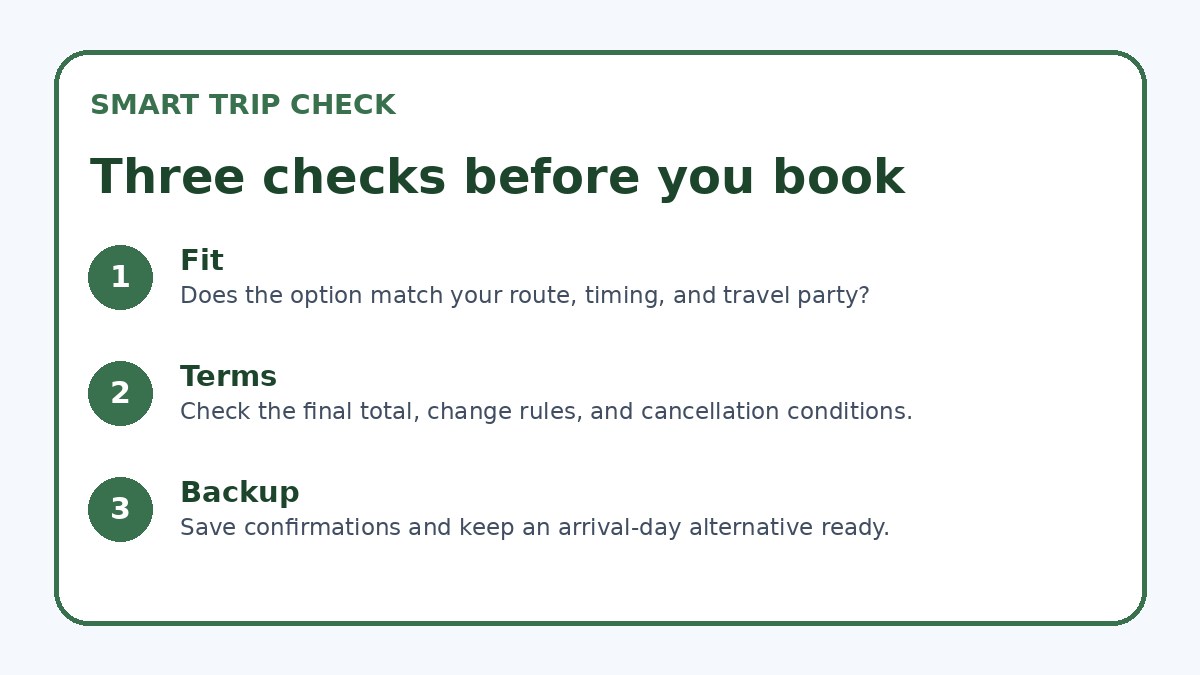
Confirm insurance wording, exclusions, deposit, fuel, mileage, and return terms on the final page.
Pickup and return friction: steps to avoid disputes
Expect friction at both pickup and return if you haven’t documented the car’s preexisting condition. At pickup, walk the vehicle with the agent and photograph every panel, the roof, undercarriage if visible, tires, and inside the cabin—timestamped photos on your phone are ideal. Ensure the inspection sheet lists all existing marks; insist the agent initials items you point out. Ask for a clear statement of fuel policy and a copy of the insurance wording showing excess and exclusions so you have a snapshot of coverage on the day you take the car.
On return, park in a well-lit area and repeat the photo process with the same angles. If you spot new damage, request the agent to document it on the sheet before leaving; do not sign a blank or unsigned damage acceptance form. Always get a final receipt or handover record noting fuel level and odometer reading. These steps reduce the chance of surprise charges and make any claim process more straightforward should you need to invoke the policy.
Car rental terms to verify
- Photograph the car from all angles at pickup with timestamps and keep the inspection sheet signed by the agent.
- Confirm the exact excess amount and whether a reduced-excess option is available in writing before payment.
- Check the policy for named driver rules and add your partner if required to be covered.
- Look for explicit exclusions for tires, windscreen, undercarriage, and roof damage and ask for confirmation in writing.
- Note fuel policy, where to refuel or return with a full tank, and request a fuel level record on return.
- Keep contact details for local emergency assistance, the rental company’s claims desk, and a backup non-driving transfer option.
Non-driving fallback: realistic alternatives for couples
If the insurance wording or logistics don’t sit well, Phuket offers alternatives that keep your trip stress-free. Rideshares and taxis work well for short hops and evenings; private transfers are convenient for excursions and longer day trips. Many resorts and activity operators offer pick-up and drop-off, which avoids navigating parking and local driving laws. For island hopping, book speedboat day trips or private boat charters that include transport to and from central piers so you don’t need a car for sea-based adventures.
Plan the fallback by mapping your top five must-see spots and comparing transfer costs versus a rental’s combined cost plus excess risk. If you’ll be drinking at meals or prefer complete relaxation, non-driving options free you from liability concerns and the need to understand every line of an insurance contract. Keep local taxi numbers, the rideshare app, and a trusted private driver contact handy—this mix often delivers the island’s highlights without the paperwork or risk.
Car Rental & Road Trip questions travelers ask
If the insurance wording is ambiguous, should we still drive?
If phrasing about excesses, exclusions, or named drivers is unclear, treat that as a material risk. Ask the rental company to email a written clarification or a copy of the exact policy wording before you sign. If you don’t receive a clear answer or the clarification adds significant cost, choose a non-driving alternative. For couples, that uncertainty risks an expensive charge after a minor incident—better to accept a clear-priced transfer or driver than unclear liability.
Does adding my partner as an additional driver usually increase insurance costs?
Some providers include a spouse or partner at no extra charge, while others levy a daily fee. The only reliable way to know is to check the rental contract or ask the provider to list additional-driver fees in writing. Verify also whether the additional driver must be present with ID at pickup and meet age or license requirements. Don’t assume automatic coverage—ask for the policy clause that references additional drivers so you can document coverage.
What immediate steps should we take after a minor scratch or bump?
Stop in a safe place, photograph the scene and the vehicle damage from multiple angles, and exchange contact details with any other party involved. Report the incident to your rental company and request instructions; many insist on getting a police report or filling their internal incident form. Keep receipts for any emergency repairs or towing. Follow the policy’s claim notification timeline exactly—failure to report within required windows can jeopardize coverage.
Final decision note
For couples planning time in Phuket, deciding whether to drive hinges on itinerary shape and how comfortable you are with insurance wording. Driving delivers flexibility for dispersed sights and private moments, but ambiguous policy language, high excesses, and exclusions can turn a small incident into an unpleasant expense. Read or request written policy excerpts that name additional drivers, list excess amounts, and state explicit exclusions. If the wording remains unclear or the added cost for reduced excess is unacceptable, use taxis, rideshares, private drivers, or organized transfers instead. Either way, document the car’s condition at pickup and return and keep digital copies of the contract—those steps safeguard both your trip and your relationship in case of a dispute.
Continue planning
Check current options and final conditions
Use the provider page to confirm live availability, the final total, cancellation terms, and every condition that matters to your trip.
This evergreen planning guide was created with AI-assisted drafting and a structured quality review. It does not display live prices, schedules, availability, visa guidance, or provider rankings. Verify current details before booking. Some links are affiliate links; we may earn a commission at no additional cost to you.