Practical answer first: if you’re carrying extra or oversized luggage, prioritize routes and tickets that explicitly allow larger baggage or let you change bookings without heavy penalties—usually higher-tier rail fares or coach operators with flexible baggage policies. For many travelers the best balance is a direct high-speed train or an express coach that lists baggage allowances, because they reduce transfers and the physical hassle of moving suitcases. Ferry can work when you need to carry bulky gear and aren’t rushed, but it adds terminal transfers and timing constraints. Whatever you choose, check the provider’s baggage rules, change/cancellation terms, and where luggage is stored during the journey before you book. Use this guide to compare terminal fit, transfer friction, timing flexibility, and disruption backups so you can decide by door-to-door practicality rather than just ticket price.
Terminal fit: where your luggage matters most
Terminal fit means how well departure and arrival points handle baggage from curb to vehicle. Major railway stations often have lifts, wide concourses and luggage racks on trains; regional coach terminals vary widely and can be cramped with stairs. Before booking, map the exact station or bus terminal location relative to your accommodation and check if there are escalators, elevators, or porter services. If you must change between modes, measure walk distances and count transfers—each transfer multiplies the effort of handling heavy suitcases.
Also consider curbside logistics: some intercity coaches load luggage under the bus from a single curb which is easier than maneuvering suitcases through crowded underground pedestrian tunnels at a rail junction. Ferry terminals can require long walks, security checks, and vehicle ramps that are inconvenient with rolling luggage. Factor in where taxis or pre-booked car transfers can meet you; a short paid transfer that handles baggage may be worth the extra cost if it eliminates a difficult terminal transfer.
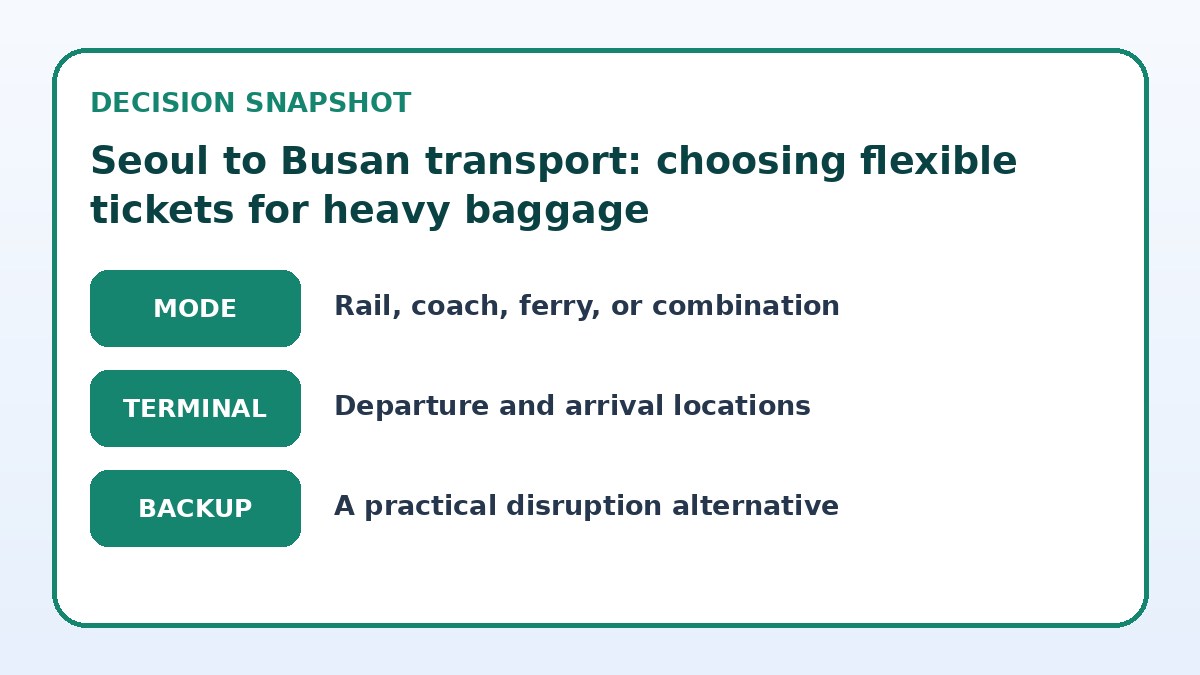
Choose the end-to-end journey plan
| Journey approach | Best for | Friction to check |
|---|---|---|
| Direct high-speed rail (single-seat, limited changes) | Travelers who value fewer transfers and faster door-to-door times with moderate luggage. | Higher-tier tickets may have stricter baggage rules or lower refund flexibility; verify change policies and onboard storage before booking. |
| Express coach (hold luggage with staff loading) | People carrying bulky items or multiple large bags who need easy loading and lower transfer lift. | Longer travel time and potential for limited legroom; check baggage size limits and whether staff will load/unload heavy pieces. |
| Ferry-inclusive route (minimal size limits but slower) | Very bulky or oddly shaped gear that’s hard to fit on trains or coaches and when time is abundant. | Adds terminal transfers and strict boarding windows; verify terminal shuttles, boarding procedures, and where luggage is stored during sailing. |
| Blended door-to-door (train or coach plus private transfer) | Travelers prioritizing low transfer friction and hands-off luggage handling despite higher cost. | Higher total cost and extra coordination, so verify pickup/dropoff times, vehicle capacity, and cancellation terms. |
Check live intercity options
Look beyond the ride itself and compare terminals, transfers, luggage, and arrival fit.
Luggage and transfer friction: packing for the whole door-to-door journey
Think beyond strict baggage allowances and imagine the physical path of each bag. Rolling suitcases are easiest on smooth station platforms and coach loading zones; soft bags work better on crowded pedestrian links and ferry ramps. If your route includes stairs or narrow passages, hard-shell luggage can be awkward. Check whether the provider allows oversized items, whether items go into a hold or remain with you, and whether staff will load and unload heavy pieces—these operational details determine how much lifting you’ll do.
When combining modes, plan where you will store bags during a wait; some stations have short-term lockers but sizes vary. If you’ll need luggage storage at either end, verify hours and sizes. For multiple transfers, aim for one provider that will accept a transfer of liability for luggage across legs, or arrange a single door-to-door transfer to reduce handling. Always pack immediate-need items in a carry-on to avoid repeated unpacking during transfers.
Timing flexibility: how flexible tickets reduce stress with extra baggage
Travelers with lots to carry often move slower, so allow buffer time for boarding and transfers. Flexible tickets that permit same-day changes or refundable options reduce the pressure of missing a connection after struggling with luggage. When comparing fares, focus on change fees, same-day exchange rules, and advance rebooking windows. If an operator’s online booking page shows restricted tickets or heavy change penalties, treat that as likely to increase stress if delays occur.
Also consider frequency of service: on routes with frequent departures, a tighter ticket with a small penalty may still be practical because you can switch to the next run with little delay. On limited-schedule ferry crossings or less frequent coaches, pay more attention to cancellations and rebooking terms since missing a scheduled departure with heavy luggage can lead to long waits and complicated transfers.
Compare the practical alternatives
Use the final page to confirm what is actually offered on your dates and save a workable fallback.
Intercity travel checklist
- Confirm the exact station or terminal names and map the walking distance between each transfer point and your accommodations.
- Read the provider’s baggage policy on the booking page for dimensions, weight limits, and whether items go in a hold or stay with you.
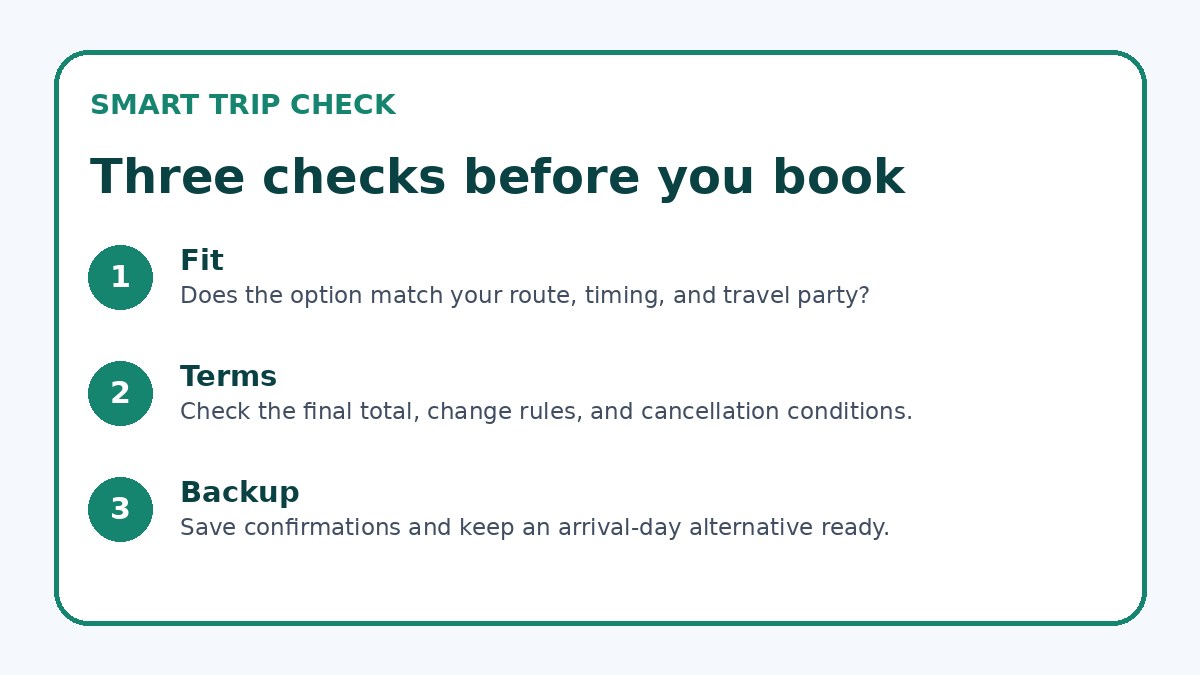
- Check ticket change and cancellation rules, focusing on same-day exchanges and the process for rebooking after missed departures.
- Plan a door-to-door option by pricing a short taxi or private transfer that can meet you curbside with space for your luggage.
- Prepare a small carry bag with essentials (documents, medications, chargers) so you don’t need to open large suitcases during transfers.
- Take photos of your bags and keep screenshots of bookings and baggage rules to show staff quickly if a dispute arises.
Disruption backup: practical safety nets for luggage-heavy travelers
Plan a disruption backup tailored to your baggage. Options include booking travel insurance that covers missed connections, choosing fares that allow free or low-cost changes, or adding a short private transfer as a contingency. If your luggage contains fragile or time-sensitive items, consider a courier or luggage shipping service for the most reliable door-to-door option; though not always economical, it can eliminate transit friction entirely. Make sure backups are feasible geographically—some rural terminals have limited taxi availability.
Keep digital and physical copies of booking confirmations, baggage policies, and emergency contact numbers. If you must rebook at short notice, having screenshots of refundable-ticket terms speeds up agent decisions. Pre-arrange a meetup point for transfers and label all bags with contact details and your accommodation address. Practical small touches—lightweight straps, a wheeled daypack for essentials, and a collapsible trolley—make backups easier to execute when disruptions happen.
Rail & Intercity Transport questions travelers ask
How much extra time should I allow for transfers when I’m traveling with heavy luggage?
Allow at least 30 to 60 extra minutes per transfer when you have heavy or multiple bags, but adjust for station layout and mobility. Busy stations with multiple levels, security checks, or long distances between platforms require more time; small coach terminals or single-level train stations need less. If your route includes a ferry terminal or a rural bus stop with limited services, pad time more generously. Also consider time needed for porter service, locker access, or buying a short taxi ride if you want to avoid carrying bags across long distances.
Can I ship excess luggage instead of carrying it from Seoul to Busan, and is that practical?
Shipping luggage can be practical for bulky or valuable items that you don’t need en route, and it reduces transfer friction. Check availability of luggage-forwarding or courier services at your departure point and the delivery window to your destination address. Factor in pickup/dropoff convenience, insurance for items in transit, and the provider’s handling policies. If timing is tight or the courier requires you to be present for delivery, the benefit may be limited—verify pickup and delivery options before choosing this as your primary plan.
What should I verify on the booking page to avoid surprises about baggage and changes?
On the booking page, specifically look for baggage size and weight allowances, any fees for oversized or extra pieces, where luggage will be stored (hold or cabin), and whether staff loading is provided. Also check the fare rules for changes and cancellations—how much notice is required, same-day change allowances, and whether refunds are partial or full. If combining tickets from different providers, confirm transfer windows and whether each operator will accept delays; if the booking page links to a full terms PDF, download it and save a copy.
Final decision note
For Seoul to Busan transport with extra luggage, the practical choice balances terminal convenience, baggage handling, and ticket flexibility. Direct trains reduce transfers and handling, coaches often accommodate bulky items more easily, and ferries suit oversized cargo if you can accept slower door-to-door times. Adding a short private transfer raises costs but can eliminate most friction and make an otherwise awkward journey manageable. Before you book, verify the provider’s baggage rules and change policies on the final booking page, plan realistic transfer time, and consider a pre-arranged backup. Choosing with door-to-door practicality in mind will save time, sweat, and stress on travel day.
Continue planning
Check current options and final conditions
Use the provider page to confirm live availability, the final total, cancellation terms, and every condition that matters to your trip.
This evergreen planning guide was created with AI-assisted drafting and a structured quality review. It does not display live prices, schedules, availability, visa guidance, or provider rankings. Verify current details before booking. Some links are affiliate links; we may earn a commission at no additional cost to you.