If you’re flying Seoul to Singapore with more baggage than usual, the practical decision is balancing route flexibility and fare terms with the realities of moving heavy or bulky bags through airports. Start by collecting exact travel dates, traveler counts, and realistic weights/dimensions for every checked item before searching fares. That lets you compare direct versus connecting itineraries, checked-bag allowances and fees, and how much transfer time you’ll need. This guide gives the quick decision first—pick the simplest routing that keeps connection handling limited and allows you to buy checked-bag bundles or seat/transfer protections on the booking page—then explains tradeoffs, schedule fit, and what to verify on carrier and airport pages before you hit purchase.
See live routes for your exact travel day
Compare direct and connecting choices with the same baggage and traveler details.
Routing: choose simplicity when luggage is heavy
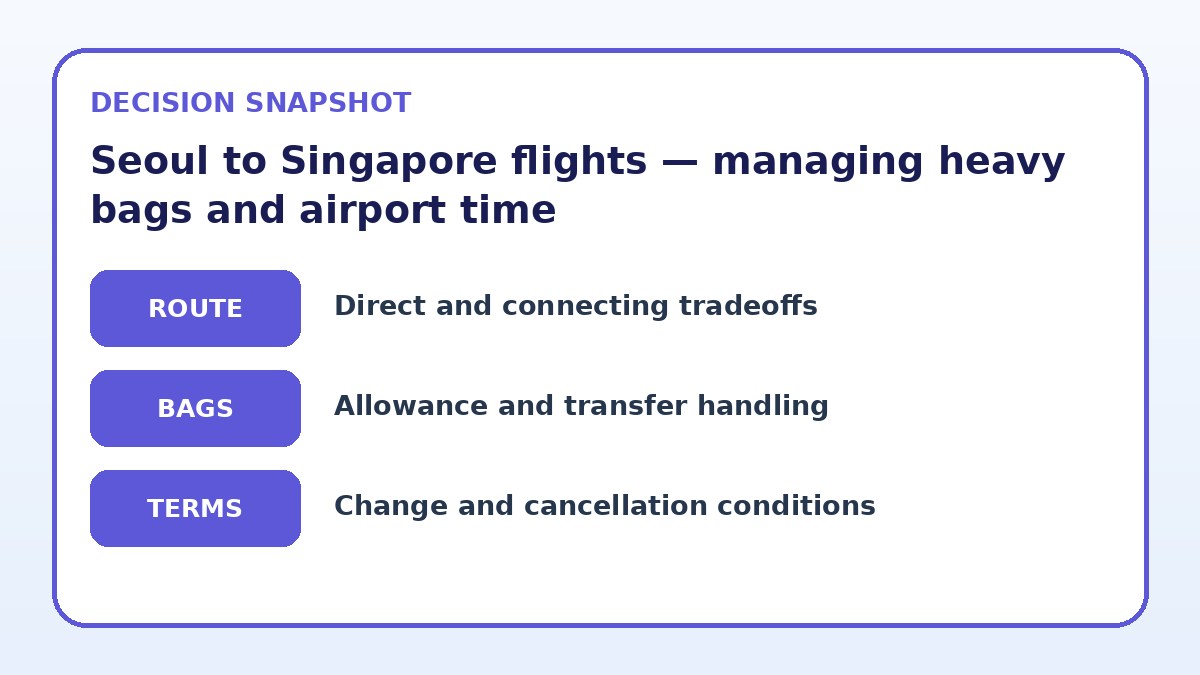
Start by comparing direct and connecting itineraries as separate decision paths. A nonstop or single-leg option reduces the number of times staff must handle your bags, limits terminal transfers, and decreases the number of check-in/claim cycles. For travelers with bulky sports equipment, multiple suitcases, or business shipments, prioritize itineraries that minimize ground transfers even if the base fare looks slightly higher. When comparing options, write down total elapsed travel time, number of transfers, and whether connections require you to change terminals or re-clear security—these details determine how much physical handling your luggage will endure.
If you must consider a connection, evaluate the type of connection carefully: same-airline or interline bookings usually let a carrier transfer checked bags through, while separate tickets can force you to claim and recheck luggage. For separate-ticket routing, allow ample time and check whether both carriers accept oversized items without manual re-tagging. Also assess airports: large hubs can be efficient but spread out, so a short layover may be riskier than a longer one at a compact airport. Before booking, note any required terminal changes and verify baggage-transfer procedures on the carrier booking pages.
Baggage and connection risk: rules, fees, and handling
Gather exact baggage weights, dimensions, and counts next—don’t rely on default allowances. Low or basic fares may exclude checked bags, or include a limited weight that won’t cover heavy items, while higher fare classes and bundled extras often come with larger allowances. Check each option’s fare terms on the carrier’s official booking page: look for maximum weight per piece, total number of pieces allowed, and extra charges for oversize or overweight items. If your items exceed piece/weight limits, compare the cost of pre-purchasing extra allowance during booking versus paying gate/airport fees, because airport fees are commonly higher and can complicate transfers.
Handling risk increases with connections and oversized items. Ask the carrier about special-handling procedures for bulky or fragile luggage like skis, musical instruments, or trade show crates, and whether they issue special tags or offer dedicated service desks. On interline itineraries, confirm that both carriers accept through-checked oversized items; if not, prepare to claim and recheck them yourself and build extra transfer time into your schedule. Keep photographs and digital notes of each bag’s condition at check-in, keep fragile items well packed, and carry critical items and documents in your cabin bag in case of delays or temporary separation.
Compare flight-selection strategies
| Flight strategy | Best for | Risk to check |
|---|---|---|
| Direct nonstop or single-leg flight | Travelers who want minimal baggage handling and fastest door-to-door time | May have higher base fare or less schedule flexibility compared with connecting options |
| Single connection with same-airline/interline transfer | Those balancing lower fare choices with acceptable baggage-throughcheck protection | Slightly higher risk than nonstop; verify through-check for oversized items on both carriers |
| Separate tickets (different carriers) | Price-driven travelers willing to manage luggage claim and recheck themselves | Highest risk for luggage delays and lost time; requires long transfer buffers |
| Buy flexible fare or baggage bundle on booking | Travelers wanting peace of mind and documented baggage allowance on the ticket | Higher upfront cost but reduces surprises and gate/airport fee exposure |
Recheck the complete itinerary
Confirm airports, connection handling, baggage, and change conditions before deciding.
Schedule fit: how much airport time to build in
Plan airport time conservatively on both ends of your trip. For check-in and checked-bag processing, busy departure airports or peak travel periods require more time than off-peak windows. If you have oversized or unusually shaped luggage, add extra minutes for special screening and manual handling. For connecting itineraries where you must change terminals or recheck luggage, add a substantial buffer to cover walking time, shuttle transfers, immigration if applicable, and any unexpected queueing at the transfer desk. When in doubt, double the airline’s recommended minimum connection time for itineraries involving heavy or multiple bags.
Consider how your arrival time in Singapore affects onward travel and baggage reclaim. If you land late at night or early morning, baggage services may be reduced and ground-transport options limited; plan accordingly. If you’re meeting a ground agent, arrange a clear meeting point and confirm whether they can assist with heavy luggage from the arrivals hall to vehicles. On return legs, factor in the time to repack or redistribute items if you purchased different allowances outbound and inbound. Before confirming travel times, write down planned arrival and departure windows and compare them to local transport schedules and any host or hotel check-in constraints.
Flight details to verify
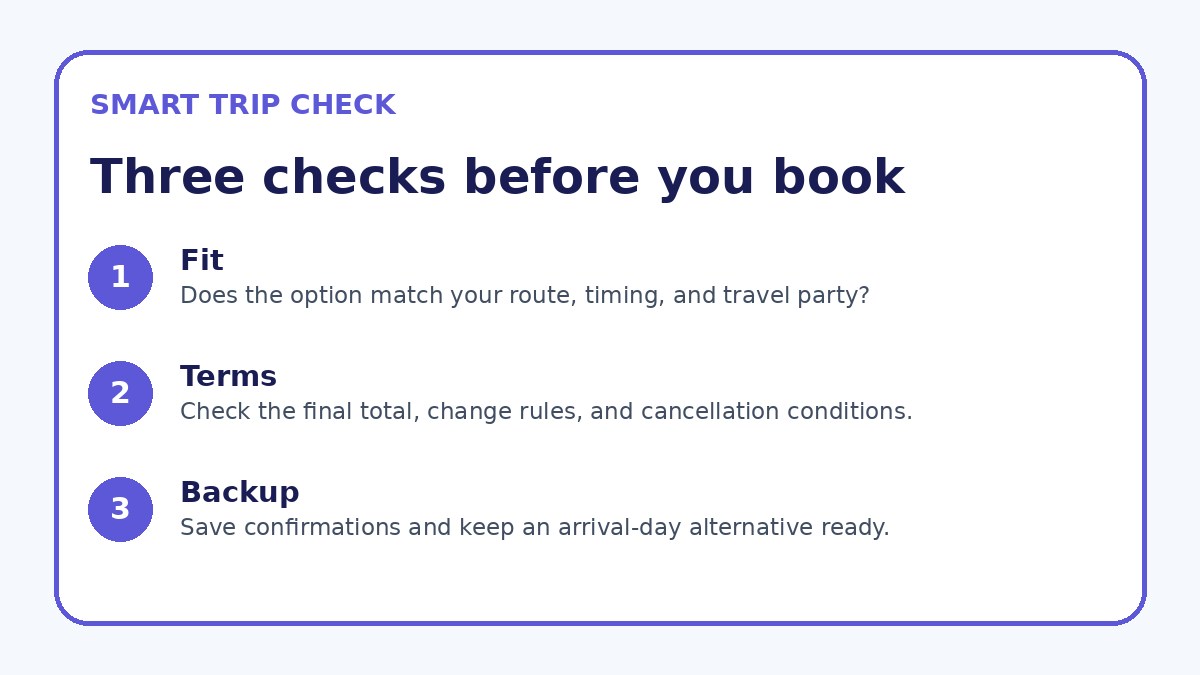
- List exact travel dates, number of travelers, and each bag’s weight and dimensions before searching flights.
- Compare direct and connecting itineraries, noting number of transfers and whether connections are same-airline or separate tickets.
- Open the carrier’s official fare conditions and copy the exact baggage allowance, overweight rules, and any special-handling notes.
- Purchase extra-piece or overweight allowance during booking if needed, and save screenshots or PDFs of the confirmation.
- Add conservative buffer times: extra minutes for check-in, oversized-item screening, terminal transfers, and recheck points.
- Pack critical items and documents in carry-on and photograph checked bags at drop-off to document condition and contents.
Fare conditions and what to verify on booking pages
When reviewing fares, pay attention to the exact baggage allowances printed on the carrier’s booking confirmation page and the fare conditions annex. Many carriers publish base allowances that differ by route and fare class; do not assume an allowance you’ve seen elsewhere applies. Verify whether the fare allows online purchase of additional pieces or weight, whether extras are refundable, and whether small changes to itinerary incur fees that could affect a planned connection. If your trip includes separate tickets or partner carriers, check interline agreements and whether baggage will be checked through—this is critical for minimizing manual bag transfers.
Before finalizing payment, confirm any special-service requests such as oversized-baggage handling, fragile-item labelling, or priority handling, and ensure these services are recorded on the booking. Keep screenshots or saved PDFs of the baggage allowance and any purchased add-ons; these will be necessary if disputes arise at check-in. If you use a third-party site to compare availability, cross-check the carrier’s official page for the final rules—Trip.com can be used as one place to compare current availability and conditions, but always verify the final baggage terms on the operating carrier’s booking confirmation.
Flight Guide questions travelers ask
How much extra time should I add at Seoul airport if I have oversized or many bags?
Add significantly more than the minimum recommended time. Allow time for queueing, oversized-bag processing, and possible manual handling: arrive earlier than usual, and if you have a connection, add a generous buffer beyond the airline’s minimum connection time. Also factor in walking between terminals or shuttle transfers if your itinerary requires them. Before you travel, confirm special-handling locations at the departure terminal on the airport and carrier websites so you know where to go when you arrive.
Can I check through oversized bags on connecting flights when flying from Seoul to Singapore?
Possibly, but you must confirm on the operating carriers’ booking confirmations. Same-airline or interline itineraries often permit through-checking of oversized items, while separate-ticket itineraries usually require you to claim and recheck baggage. Look for explicit statements about through-checked pieces in the fare rules or contact the carrier’s baggage desk. If the booking pages are unclear, call the carrier’s baggage or reservations line and request written confirmation, and keep that documentation with your booking.
Is it better to pre-pay baggage online or wait and pay at the airport?
Pre-paying online is usually the more predictable choice for travelers with extra luggage because it locks in allowance and often costs less than airport rates. It also ensures the booking record reflects the allowance, which helps at connections. However, only pre-pay if you’re sure of the total weight and pieces. If you expect variability, consider buying a flexible baggage bundle or an extra piece during booking and keep the receipt. Always verify the carrier’s refund or change policy for baggage add-ons on the final booking page.
Final decision note
When traveling Seoul to Singapore with extra luggage, the single most practical move is to plan with concrete measurements and conservative time buffers. Choose the simplest routing you can afford—nonstop or single-leg options reduce risk—then confirm baggage allowances on the carrier’s booking page and buy any required extras before you travel. Prepare for connections as if you will need to manage bags yourself unless the ticket explicitly confirms through-check, and keep all baggage receipts and confirmations easily accessible. Following these steps will reduce stress at check-in and improve the odds that your luggage arrives with you.
Continue planning
Check current options and final conditions
Use the provider page to confirm live availability, the final total, cancellation terms, and every condition that matters to your trip.
This evergreen planning guide was created with AI-assisted drafting and a structured quality review. It does not display live prices, schedules, availability, visa guidance, or provider rankings. Verify current details before booking. Some links are affiliate links; we may earn a commission at no additional cost to you.