Pick the neighborhood first, then pick the flexible rate. For a solo traveler in San Francisco, the right area determines how often you’ll rely on public transit, how late you’ll return to your room, and which flexible booking features matter most—free cancellation, easy date changes, or refundable deposits. Start by matching your typical day plan (museum mornings, evening food markets, or late-night music) to neighborhoods that minimize transit friction. Then compare room rules: refundable vs nonrefundable, deadlines for free cancellation, and whether the property charges a deposit or extra for late check-out. I’ll walk you through neighborhood fits, how each area affects daily routing, what room types and party sizes work best, and the exact booking terms you must verify on a hotel’s page before committing.

Check live stays in the areas that fit
Use your dates and party size to compare current rooms after you narrow the neighborhood fit.
Neighborhood fit: choose by daily rhythm, not just sights
Think about what a typical day in San Francisco looks like for you, then pick the neighborhood that keeps the bulk of that day simple. If you plan museum and cultural mornings, staying near the Civic Center, Hayes Valley, or the Polk/Alamo Square corridor shortens morning transit and gives quick access to museums and cafés. If evenings and nightlife are your priority, neighborhoods like SoMa or the Mission limit late-night rides and offer multiple transit choices. For a slow, walkable trip centered on seawater views and long strolls, Fisherman’s Wharf or the Marina make sense but expect longer transfers to downtown sites.
Neighborhood character also affects booking flexibility that matters. Areas with many business travelers might list more corporate-friendly refundable rates and last-minute availability; tourist-heavy neighborhoods sometimes price more for peak nights and offer stricter nonrefundable deals. If your schedule is fluid, favor areas where multiple hotels and room types are offered so you can switch properties without a long detour. Before booking, check how easy it is to move your reservation to a nearby property within the same neighborhood and whether the hotel’s booking page allows date changes or only voucher credits.
Choose an area-selection strategy
| Area approach | Best for | Tradeoff to check |
|---|---|---|
| Central downtown (Union Square / SoMa) | Short transit to theaters, museums, and business venues; many rate options and flexible corporate-style policies. | Higher foot traffic and occasional late-night noise; some budget flexible options may still have restrictive deposit rules. |
| Neighborhoods near museums and parks (Civic Center / Hayes Valley) | Easy morning access to cultural sites and quieter evenings; walkable to multiple galleries and cafes. | Fewer late-night transit choices than downtown; some small boutique hotels offer limited-change policies or smaller cancellation windows. |
| Residential neighborhoods (The Mission / Noe Valley) | Local cafés, nightlife, and a neighborhood feel; good for solo travelers who want evening options close by. | Transit to major tourist nodes can take longer; flexible rates may be limited to a few hotels, making last-minute swaps harder. |
| Waterfront and tourist clusters (Fisherman’s Wharf / Marina) | Scenic strolls and quick access to ferry terminals and waterfront attractions; predictable tourist services. | Distance from downtown cultural centers increases travel steps; many properties sell nonrefundable inventory for peak evenings. |
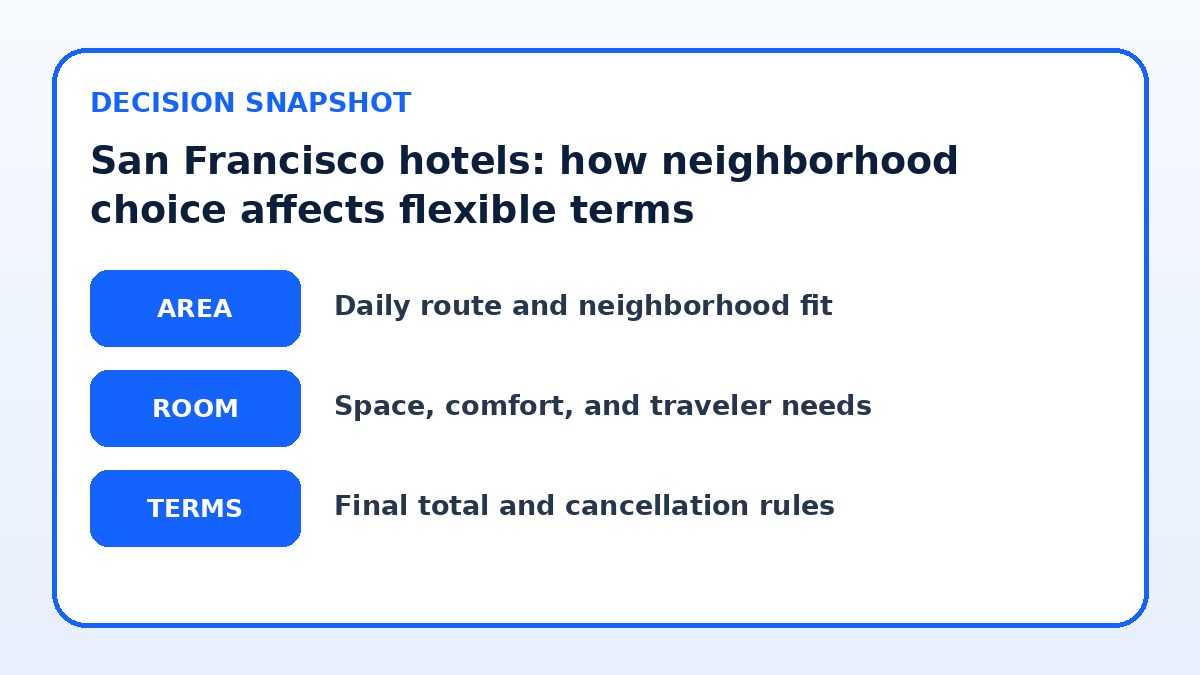
Daily-route friction: transit, walking, and late-night options
Measure friction by how many mode changes a typical trip requires: direct walk, single transit ride, or multiple transfers. Solo travelers often prefer neighborhoods that keep at least one major corridor or transit line close—BART or Muni lines and frequent bus routes reduce friction when you don’t want to navigate complex transfers alone. If you expect to arrive late or return after transit hours, prioritize areas with reliable late-night transit, plentiful rideshare activity, or accessible taxi stands. Ferry terminals and hilltop neighborhoods can add scenic value but may increase travel steps and time to enter or exit the city.
When evaluating hotels, map your common origin and destination points (airport, conference center, museums, venues) and plot walking distances and transfers. A slightly higher nightly rate with a generous cancellation policy might be preferable to a cheaper nonrefundable stay in a harder-to-reach neighborhood. Also consider mobility needs: some streets are steep and public transport stops are spaced farther apart, which increases fatigue and the appeal of rooms that offer free late check-out or flexible date changes if your plans shift.
Now compare like with like
Keep the same dates, guests, room needs, and cancellation preferences while you compare the final choices.
Room and party needs: single rooms, safety, and amenity flexibility
As a solo traveler, you usually only need a single room but different trips call for different amenities—work desk and reliable Wi‑Fi for remote work, kitchenette for longer stays, or a bed and effective soundproofing for short overnight trips. When comparing booking terms, check whether refundable rates apply equally across room types. Some hotels lock refundable options to pricier rooms or require a deposit even for single-occupancy stays. Verify if the property allows free room changes (to a different room type) and whether modifications trigger a re-evaluation of the cancellation deadline.
Safety and reception hours matter for solo trips. If you arrive late, choose hotels with 24-hour front desks or clear late-check-in instructions in their policies. Also check whether the booking terms include penalties for no-shows and the timeframe the hotel uses to hold a reservation without a credit card. Make sure the hotel page states precisely how refunds are processed—credit back to the original card, credit note, or onsite credit—so you know what to expect if a flexible cancellation is needed.

Hotel booking check before payment
- Map your typical day: list morning, afternoon, and evening priority spots and mark neighborhoods within a single transit leg or a 30-minute walk.
- On the hotel’s final booking page, note the exact free-cancellation cutoff date and local time, and take a screenshot of that policy.
- Confirm whether refunds are issued back to the original payment method, issued as a credit voucher, or processed differently.
- Check deposit and no-show rules: how much is held, when the hold is released, and whether the hotel charges a fee for late check-in.
- Compare the refundable rate to the nonrefundable rate and calculate the break-even point where flexibility is worth the extra cost.
- If booking through a third party, verify identical terms on the hotel’s own site or call the property to confirm the cancellation and change policies.
Final booking terms: the exact clauses to verify before you hit reserve
Do not rely on a rate label like “flexible” without reading the fine print. On the hotel’s final booking page verify: the free-cancellation cutoff time (date and local time), whether the rate is refundable or refundable minus a fee, the size and hold method for any deposit, and the method and timing of the refund. Also check whether date changes are allowed and if they are free or subject to rate differences. If the booking is on a third-party site, confirm identical terms on the hotel’s own site or call the property to confirm—policies sometimes differ by channel.
Pay attention to extras tied to the rate: some flexible rates exclude local taxes or mandatory fees that are only payable onsite, while others bundle breakfast or amenity access. Confirm what counts as a cancellation—does the hotel accept a phone call, an email, or must you cancel through the booking portal? If you think you might need to change or cancel, screenshot the policy and the booking confirmation and keep the reservation number handy. Trip.com can be used to compare current availability and how providers present their policies, but always verify the final terms on the hotel’s booking page before paying.
Hotel Guide questions travelers ask
How do I know if a San Francisco hotel rate is truly refundable?
A rate is truly refundable only when the booking page states the cancellation deadline, the refund method, and any applicable fees. Look for explicit language: the last day and local time you can cancel for a full refund, and whether the refund goes back to your original card or is issued as a voucher. If the page is vague, contact the hotel directly and request these details in writing. Keep a screenshot or confirmation email showing the policy and the reservation number so you have proof of the terms if you need to cancel.
Should I book refundable if my travel dates are only slightly uncertain?
If your dates may shift by more than a day or you might need to cancel, refundable rates usually provide better risk control despite sometimes costing more. Calculate the extra cost compared to nonrefundable options and decide whether the potential refund exceeds that premium. Also confirm if date changes are allowed without penalty—some hotels let you move dates for the same rate band while others require paying any difference. For short single-night stays, refundable rates are often worth it to avoid forfeiting the entire payment.
Can I rely on third-party sites for accurate cancellation policies?
Third-party sites are helpful for comparing options quickly, but policies can vary by channel. Always cross-check the exact cancellation window, deposit rules, and refund method on the hotel’s own booking page or confirm by phone. If the third-party booking shows different terms at checkout, ask for written confirmation from both the third party and the hotel. You may use Trip.com to compare how providers present their policies, but treat the hotel’s published policy as the final authority and save all confirmation emails.
Final decision note
For solo travelers in San Francisco the core decision is neighborhood first, booking terms second. Select the area that aligns with your daily rhythm—short morning routes for museum days, neighborhoods with late-night transit for nightlife plans, or waterfront zones for relaxed strolls—then prioritize hotels that advertise clear, written cancellation and refund terms. Before you reserve, compare refundable and nonrefundable options, verify deposit and no-show rules on the hotel’s final booking page, and document the policy. Doing this keeps your plans flexible, reduces travel friction, and makes changing or cancelling far less stressful when your San Francisco itinerary evolves.
Continue planning
Check current options and final conditions
Use the provider page to confirm live availability, the final total, cancellation terms, and every condition that matters to your trip.
This evergreen planning guide was created with AI-assisted drafting and a structured quality review. It does not display live prices, schedules, availability, visa guidance, or provider rankings. Verify current details before booking. Some links are affiliate links; we may earn a commission at no additional cost to you.