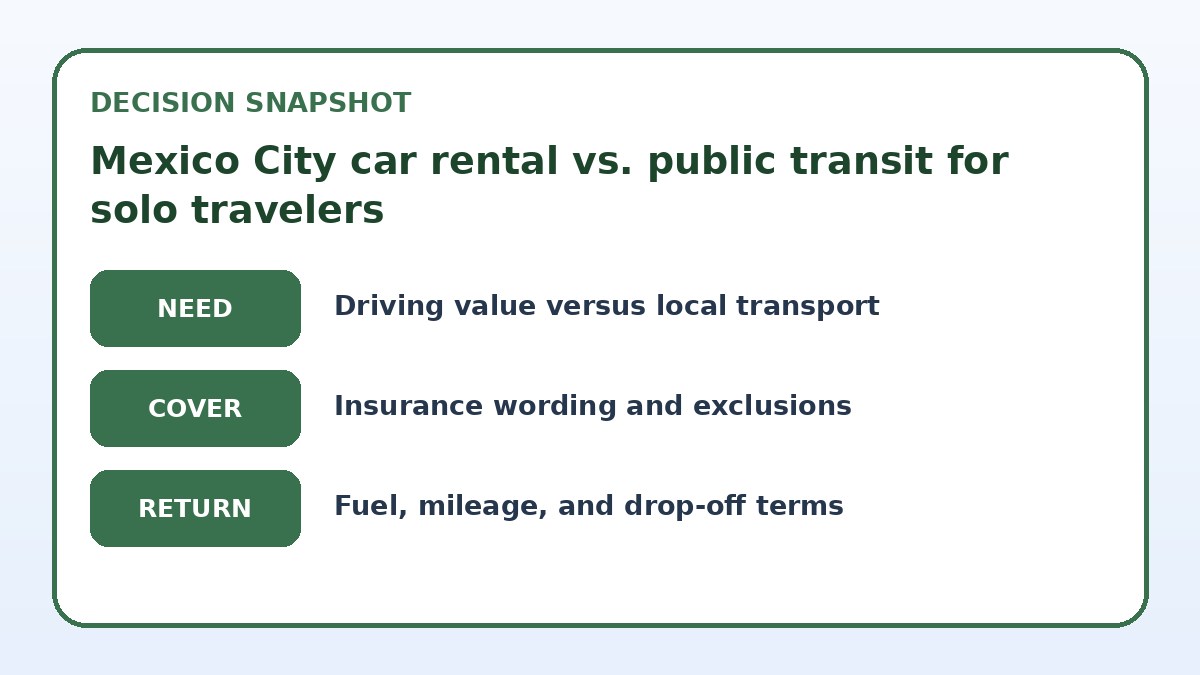
Short answer: for most solo travelers staying inside central neighborhoods, public transport and ride apps usually beat renting a car. Mexico City’s density, traffic congestion, cheap and frequent public options, and expensive, time-consuming parking make driving a real tradeoff unless your plan includes frequent trips outside the city’s core (archaeological sites, Puebla, Tepotzotlán, or multiple day trips). If your itinerary focuses on museums, markets, nightlife, and nearby neighborhoods, the metro, buses, BRT, trams, and registered ride services are often faster, cheaper, and less stressful. If you decide driving truly improves your plans, expect to add insurance reviews, pickup/return logistics, parking research, and contingency routes into your decision. This article helps you weigh route value, insurance wording, pickup/return friction, and a practical fallback when you opt not to drive.
Route value: when driving actually improves your plan
Think first about the routes that matter. Driving adds clear value when your solo itinerary requires repeated travel beyond the metropolitan ring—day trips to volcanic parks, archaeological zones without frequent buses, or multiple small towns that are poorly connected by public transport. If each day involves different distant endpoints or carrying gear for outdoor activities, a car can save time and reduce dependence on schedules. Conversely, if your stays are grouped inside well-connected neighborhoods like the Centro Histórico, Condesa, Roma, or Coyoacán, the metro, buses, and short ride-hailing trips usually cover most needs faster than driving.
Also estimate trip frequency. A single long round-trip out of town might be cheaper and simpler with a guided tour or an intercity bus rather than a rental. Conversely, several mid-distance excursions across different directions tend to justify a car. Consider parking availability where you’ll sleep: hotels and short-term rentals may charge for parking or lack secure spaces. Factor in hours you’ll travel—driving in heavy evening traffic multiplies travel time, while public transport and ride apps can use bus lanes, BRT corridors, or metro lines that avoid road congestion.
Decide whether driving earns its place
| Mobility strategy | Best for | Cost or friction to check |
|---|---|---|
| Full rental car for the whole trip | Solo travelers with multiple off-grid day trips or flexible, multi-destination rural itineraries | Higher insurance scrutiny, parking costs, city traffic delays, and pickup/return time overhead |
| Rental only for specific day trips | Those who mainly use transit but need a car occasionally for a single extended excursion | Extra pickup/return friction and potentially higher per-day rental rates; plan time windows carefully |
| Public transport plus ride-hailing | City-centered itineraries focused on museums, neighborhoods, and nightlife where parking is a burden | Less flexibility for remote destinations and possible surge pricing for night or long rides |
| Public transport plus scheduled tours/intercity buses | Solo travelers who prefer predictable, guided or intercity transfers for day trips beyond the metro network | Fixed schedules and less spontaneity; may limit time at stops compared with a private car |
Check live rental choices only after the route test
Use the exact driver, dates, pickup point, and return plan to compare current conditions.
Insurance and liability: what to read on the rental page
Insurance is where rental decisions are won or lost. On the rental company’s final booking page, verify the included coverages and the excess (deductible) you would pay after a claim. Look for collision damage waiver (CDW), theft protection, and third-party liability limits. Note whether those protections exclude certain road types or areas. If your credit card offers rental insurance, check the provider’s country exclusions and whether coverage is primary or secondary. Always read the exact wording around loss-of-use fees, administrative fees for accidents, and who pays towing and storage—these are common extras that can appear in post-rental bills.
Don’t assume verbal promises made at a counter replace written terms. If you must add extra protection, verify the cost and cancellation terms before arrival. Make sure any third-party insurance you plan to rely on explicitly covers international rentals in Mexico and the specific vehicle class. Take photos or video of the car at pickup and note existing damage on the company’s inspection form. If you’ll be driving outside Mexico City limits, confirm with the rental company and your insurer whether cross-state travel is permitted and whether any additional documentation is required.
Compare the full rental conditions
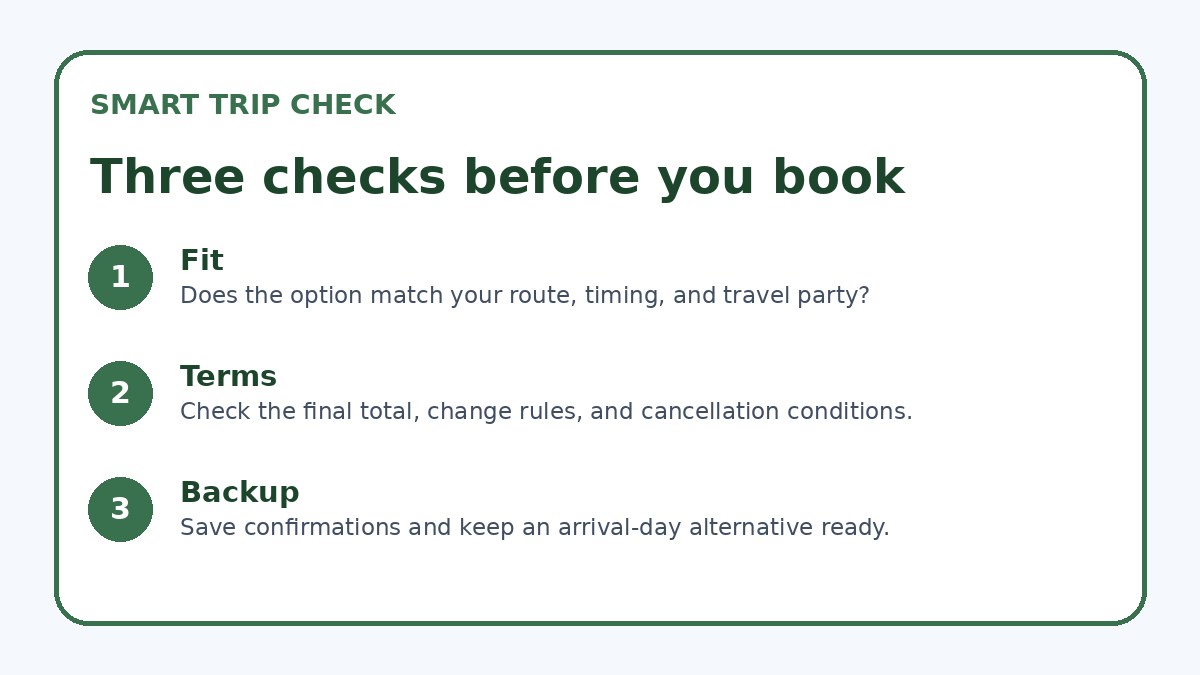
Confirm insurance wording, exclusions, deposit, fuel, mileage, and return terms on the final page.
Pickup and return friction: airports, one-way fees, and timing
Collecting and dropping a car can be much more time-consuming than it looks. Airport counters often mean lines, extra paperwork, and possible additional airport surcharges. If your flight arrives late, factor the time to get to the rental desk and complete the inspection—this is especially important for solo travelers who may be tired or need to coordinate public-transit alternatives home. Returning a car before an early flight can require allowing extra time for counter processing and airport transfer. If you plan a one-way rental, check whether the company charges a drop fee and whether office locations have compatible hours.
Also assess practical pick-up constraints at city-center locations. Some offices close early or are located far from your accommodation; that could negate the convenience you expected. Check whether the rental company requires a local address or additional ID for city pickups. Research where secure parking or overnight garages exist near your accommodation—street parking in dense areas can be limited or need permits. If you anticipate swapping rental locations, confirm inter-branch transfer logistics and the exact time window for returns to avoid late penalties.
Car rental terms to verify
- Confirm on the rental’s final booking page the exact insurance items included and the full excess (deductible) amount.
- Verify whether your credit card’s rental insurance applies in Mexico and if it covers theft, collision, and loss of use.
- Check hours and location of the pickup and return offices, plus airport counter processing times and any shuttle needs.
- Identify secure parking options at each place you plan to sleep and estimate daily parking costs or permit requirements.
- Map your planned day-trip routes and check whether public transport or organized tours provide a simpler alternative.
- Take timestamped photos and a signed condition report at pickup, and keep copies of all rental paperwork until the final invoice is clear.
Non-driving fallback: safe, efficient alternatives for solo travelers
Prepare a confident backup if you choose not to rent. Mexico City’s metro covers many cultural attractions and neighborhoods quickly; BRT corridors and commuter buses fill gaps the metro doesn’t reach. Registered ride-hailing and taxi apps provide door-to-door trips for early hours or when transit isn’t convenient. Intercity buses and organized day tours are reliable options for common day-trip routes beyond the city and remove the need to navigate unfamiliar highways solo. Familiarize yourself with metro lines and major transfer stations, and download offline maps and route planners so you can move independently even without mobile data.
If safety or late-night returns are a concern, budget for occasional app-based rides home rather than relying on street taxis. For single long-distance excursions, compare the time and door-to-door convenience of a rental versus a bus plus local transfer or a small-group tour. Keep a list of trustworthy transportation apps and the locations of major terminals for buses and trains. That way, if you decide a rental isn’t worth the complexity, you’ll still have efficient and predictable options that match your itinerary without starting from scratch.
Car Rental & Road Trip questions travelers ask
Is driving in Mexico City safe for a solo traveler who normally drives at home?
Safety depends on comfort with heavy urban traffic, defensive driving, and local signage. Mexico City features wide, busy avenues, frequent congestion, and many drivers who use aggressive lane changes and horn signals. For a solo traveler used to driving in busy cities, daytime driving in central areas can be manageable, but parking, theft risk, and long delays add stress. If you plan to drive, choose secure parking, avoid night driving in unfamiliar neighborhoods, and confirm insurance coverage. If you prefer a lower-stress option, public transit with occasional app-based rides covers most central travel needs.
How should I compare rental insurance wording and fees before I book?
Compare the rental company’s final booking page item-by-item: included CDW, theft protection, third-party liability, and the deductible amount. Look for exclusions such as unpaved roads or driving outside certain states, and read the terms about loss-of-use and administrative fees after an incident. If you plan to use credit-card coverage, obtain the card issuer’s document that specifies coverage limits, required documentation, and whether coverage is primary. Save digital copies of both the rental terms and the card policy so you can present them at pickup if needed.
If I don’t rent a car, how can I reach popular nearby day trips efficiently?
Many nearby destinations are reachable by intercity bus lines, which depart from major terminals and generally offer comfortable, scheduled services. Organized day tours provide door-to-door convenience and local guides, removing the need to navigate unfamiliar roads. For places not well served by buses, compare the cost and time of a one-day rental versus a guided trip; sometimes a single-day rental still makes sense, but factor in pickup/return time and insurance. Also check regional shuttle services and small-group transfers that run to common tourist sites; they can be cost-effective while avoiding the burdens of solo driving.
Final decision note
For most solo travelers whose plans stay within Mexico City’s central neighborhoods, public transport combined with app-based rides and occasional tours will be the clearer, lower-stress choice. Driving makes sense when your itinerary includes repeated, remote day trips or lots of luggage and gear that public transit doesn’t handle well. If you opt to rent, make that decision after mapping routes, verifying the exact insurance wording on the rental page, planning pickup and return windows, and lining up secure parking. If you decide not to drive, prepare reliable public-transit routes, apps, and a few booked day trips so you have a dependable, efficient fallback that keeps your schedule flexible.
Continue planning
Check current options and final conditions
Use the provider page to confirm live availability, the final total, cancellation terms, and every condition that matters to your trip.
This evergreen planning guide was created with AI-assisted drafting and a structured quality review. It does not display live prices, schedules, availability, visa guidance, or provider rankings. Verify current details before booking. Some links are affiliate links; we may earn a commission at no additional cost to you.