Practical answer up front: if you want maximum flexibility on the Bangkok to Ayutthaya route as a solo traveler, prioritize ticket types and operators that allow easy date/time changes, simple refunds or credit, and that fit your door-to-door schedule. Choose rail for low-transfer friction if you’re near a central station and value the ability to hop an earlier or later service; opt for a coach or private transfer when you need predictable timing from a specific hotel or want fewer steps with luggage. Mixed options (train plus local taxi) can balance cost and flexibility but add handoffs. Below I explain how to compare each mode by terminal fit, luggage and transfer friction, timing flexibility, and what to do if services are disrupted. Verify final change/refund policies, permitted luggage dimensions, and pickup/dropoff specifics on the operator’s booking page (or compare providers like Trip.com to see current conditions).
Terminal fit and door-to-door practicality
Start by mapping where you’ll begin and end in both Bangkok and Ayutthaya. A train from a central Bangkok station might put you within walking distance of a hotel or tuk-tuk pickup, while buses usually use intercity terminals that require an additional taxi leg. Private transfers dispatch directly from your pickup address, which removes public-station transfers but can be impacted by urban traffic. Consider how each option integrates with your arrival time in Bangkok (airport or city) and where you plan to be in Ayutthaya — temples, the train station, or a riverside guesthouse — because the most flexible ticket is useless if it doesn't drop you near your final stop.
When thinking door-to-door, include the time and hassle of transfers: hauling luggage across platforms, waiting for a station taxi, or coordinating a meeting point with a driver. For solo travelers, fewer handoffs reduce the chance of missed connections and lost belongings. If you value a single handoff, book a private transfer or a coach that advertises hotel drops; if you’re comfortable navigating stations, a rail ticket may still be the most flexible option for changing departure times. Always check where the operator’s stop is in the town — a bus terminal can add a taxi cost and 10–30 minutes to your journey.
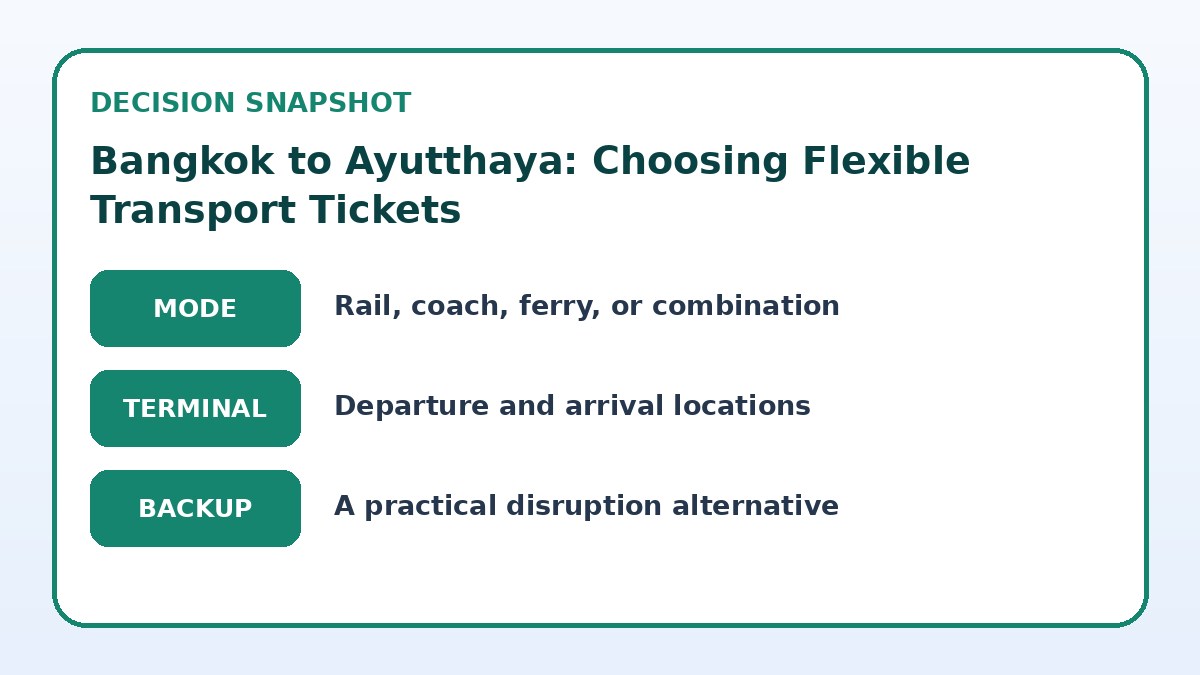
Choose the end-to-end journey plan
| Journey approach | Best for | Friction to check |
|---|---|---|
| Buy flexible rail tickets or walk-up train | Solo travelers near central stations who want multiple departure choices and low baggage hassle. | May require station transfers and depends on how change/refund policies are written by the operator. |
| Reserve a coach with a changeable ticket | Those who prefer direct terminal-to-terminal travel and fixed pickup/dropoff points. | Often less door-to-door convenience and potentially stricter change or cancellation terms than rail. |
| Book a private door-to-door transfer | Travelers prioritizing minimal transfers and predictable pickup from a specific address. | Typically locks you into a time with limited same-day flexibility and depends on traffic conditions. |
| Combine train plus taxi or tuk-tuk at either end | Solo travelers balancing cost and flexibility who can handle one extra transfer. | Adds handoffs and coordination but can keep options open for alternate departures or routes. |
Check live intercity options
Look beyond the ride itself and compare terminals, transfers, luggage, and arrival fit.
Luggage and transfer friction
Assess how much luggage you’ll carry and whether you’ll be comfortable managing it through transfers. Trains generally have carriage or platform space for bags and fewer tight doorways than small taxis, making them a good fit for backpacks or moderate suitcases. Coaches often have underfloor storage but require loading and unloading at termini, and you should confirm whether staff will help with heavy items. Private cars provide the simplest luggage handling but may have vehicle size limits; verify if larger bags or bicycles are accepted and whether they charge for extra space.
For solo travelers, friction means wasted time and added stress. If you prefer to avoid handling luggage on your own, a private transfer booked with a flexible cancellation policy is worth considering, even if per-trip costs are higher. If you opt for rail, look into carriage accessibility, whether steps are involved at stations, and how far the platform is from the exit — these small details determine whether a train stays the low-friction option it looks like on paper. Always confirm baggage rules and pickup/loading procedures on the booking page before finalizing.
Timing flexibility: changes, standby, and show-up options
Ticket flexibility varies widely: some rail tickets let you exchange for a later service the same day with minimal fuss, others are reservation-only. Coaches may offer fixed departures with limited change windows or non-refundable terms. Private transfers typically reserve a time slot and may charge for changes, but many operators will allow a short-time shift if you notify them. If your plan is loose — museum mornings, temple visits, or a late-arriving flight — favor options that advertise same-day changes, open tickets, or easy rebookings. Verify the operator’s exact change and cancellation wording on the booking page to understand any fees or notice periods.
Standby options are handy: some rail routes have frequent services where you can buy a flexible ticket or simply show up and catch the next train, while others require a reserved seat. If you rely on show-up flexibility, ensure there are multiple daily departures or that your ticket explicitly supports walk-up exchanges. Solo travelers should weigh the risk of peak-period crushes or special-event sellouts and consider booking a refundable or changeable option in busier times. Where available, buying from a provider that displays real-time availability (including via Trip.com) helps you make last-minute choices with clearer expectations.
Compare the practical alternatives
Use the final page to confirm what is actually offered on your dates and save a workable fallback.
Intercity travel checklist
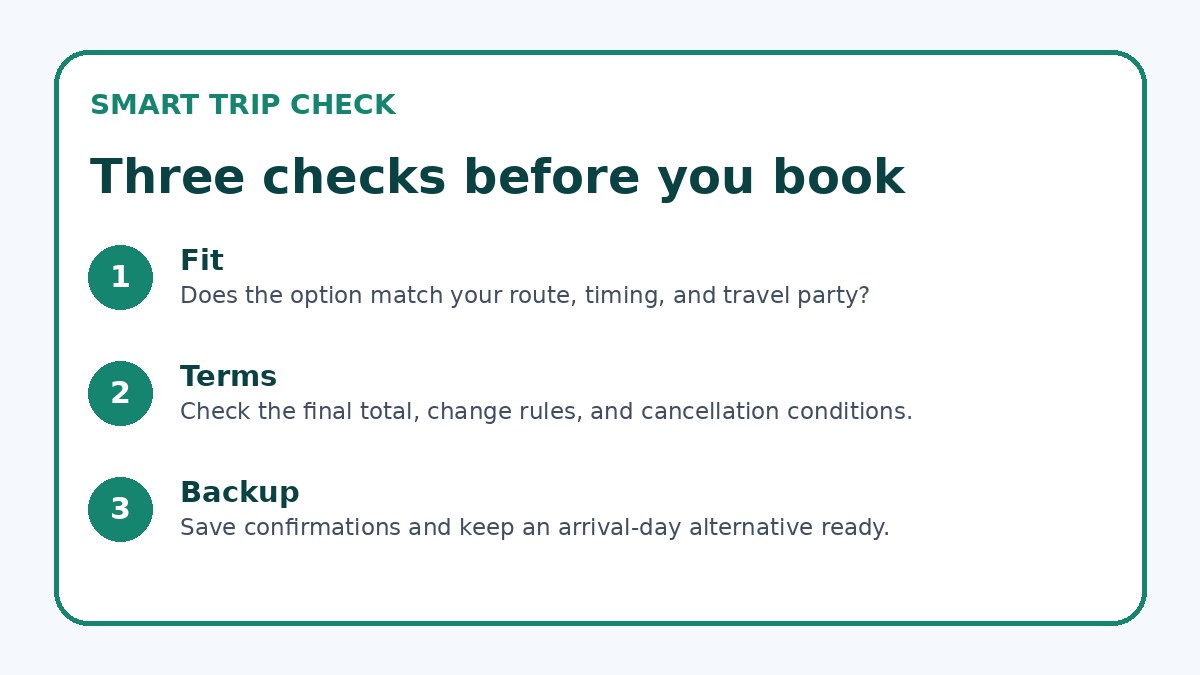
- Confirm exact pickup and dropoff points on the operator’s booking page and map them relative to your hotel or planned activities.
- Check the provider’s change and cancellation terms: how many hours’ notice, what fees apply, and whether vouchers or refunds are offered.
- Verify luggage allowances and any size/weight restrictions if you have bulky items, sports equipment, or multiple bags.
- Note alternate departure times and nearby stations/terminals so you can switch modes if your first choice is disrupted.
- Save the operator’s local phone number or messaging contact and keep a screenshot of your booking reference accessible offline.
- Pack a small day bag with essentials and photocopies of travel documents in case checked luggage is delayed during a transfer.
Disruption backup and contingency planning
Plan for delays, cancellations, or unexpected closures. For rail and coach travel, know the operator’s recommended rebooking route: can you switch to another departure without a penalty, or will you receive credit? For private transfers, confirm the driver’s contingency plans for heavy traffic or flight delays — will they wait, delay pickup, or reschedule without a steep fee? If your journey includes a river crossing or local ferry leg, check alternate land routes. Pack essentials (water, charger, a paper copy of key booking references) in your day bag so a single lost piece of luggage doesn't derail the whole trip.
Create a simple fallback hierarchy: first, switch to the next scheduled service of the same mode; second, transfer to an alternative mode (coach or taxi) that keeps you on schedule; third, book a private transfer if timing is critical and options are otherwise closed. Keep contact info for local taxi/tuk-tuk services and note where local tourist information or station help desks are located. Make sure any non-refundable bookings are insured or that you’re willing to accept the loss; a flexible ticket may cost more upfront but save you hours and stress if disruption hits.
Rail & Intercity Transport questions travelers ask
Is the train from Bangkok to Ayutthaya the most flexible option for solo travelers?
Trains can be very flexible when multiple departures run daily and tickets allow exchanges or walk-up travel. For solo travelers who start near a central station and carry manageable luggage, trains reduce handling friction and often let you board a later service if your plans shift. However, flexibility depends on the ticket type and operator policy: reserved-seat trains require a specific booking while open or unreserved services let you choose on the day. Before you book, check the booking page for the exact change rules and whether trains on your intended date have frequent departures.
When should I choose a private transfer over public transport on this route?
Choose a private transfer if door-to-door convenience, predictable pickup from your hotel or airport, and minimal luggage handling are your top priorities. Private cars are especially useful when you arrive late, carry heavy bags, or travel with equipment that’s awkward to move through stations. They also simplify timing when you have a tight schedule. But note that private transfers are typically bound to a set pickup time and may charge for changes; check the provider’s change, waiting, and cancellation terms on the booking confirmation page before committing.
How can I prepare for disruptions mid-journey between Bangkok and Ayutthaya?
Have a contingency chain: first look for the next scheduled service on the same mode; second, check nearby coach or private transfer options that can complete the trip; third, if needed, take a local taxi or ride-hail to your final destination. Keep screenshots of your bookings, operator contact details, and a map of nearby stations/terminals for rerouting. If you bought a ticket with changeable terms, know the notice period and how to request a change. Finally, carry essentials in a day bag so short delays don’t leave you stranded without food, water, or chargers.
Final decision note
For solo travelers choosing Bangkok to Ayutthaya transport, the right balance of flexibility and door-to-door practicality depends on where you start and end, how much luggage you have, and how fixed your schedule is. Trains often minimize baggage friction and allow walk-up flexibility when services are frequent, while coaches can be convenient for terminal-based drop-offs and private transfers offer the fewest handoffs. Combining modes can unlock savings and maintain options but adds coordination risk. Before booking, read the operator’s change and cancellation terms on the final booking page, confirm pickup/dropoff locations, and keep simple fallback plans for delays — these steps will keep your solo journey calm and adaptable.
Continue planning
Check current options and final conditions
Use the provider page to confirm live availability, the final total, cancellation terms, and every condition that matters to your trip.
This evergreen planning guide was created with AI-assisted drafting and a structured quality review. It does not display live prices, schedules, availability, visa guidance, or provider rankings. Verify current details before booking. Some links are affiliate links; we may earn a commission at no additional cost to you.