If you’re traveling from Rome to Florence with more or oversized luggage than normal, the practical choice comes down to minimizing transfers and lifting, not just ride time. For most people with bulky bags, a direct intercity train that departs from Roma Termini and arrives at Firenze Santa Maria Novella reduces the number of times you handle bags and keeps walking short. If your luggage won’t fit comfortably on a train or you need door-to-door convenience, a private car or transfer can be easier despite higher cost and potential traffic. Coaches can be a budget-friendly middle ground if they have checked-baggage service and simple terminal layouts. This article explains how to compare options by terminal fit, luggage friction, timing flexibility, and disruption backups so you can pick the approach that actually gets you and your bags from your Rome doorstep to your Florence room with the least hassle.
Compare modes by terminal fit and door-to-door practicality
Start with where each mode drops you and how easy it is to move luggage from that point to your final door. Major Roma stations and coach terminals vary: some have elevators, covered walkways, or short taxi queues that simplify the final leg; others channel passengers through long concourses or footbridges. Trains that serve central Florence stop close to many hotels and short taxi rides, which reduces walking time. Private transfers and car hires deliver to your exact address — ideal when stairs, cobblestones, or long walks are unavoidable — but they require access for vehicles at both origin and destination.
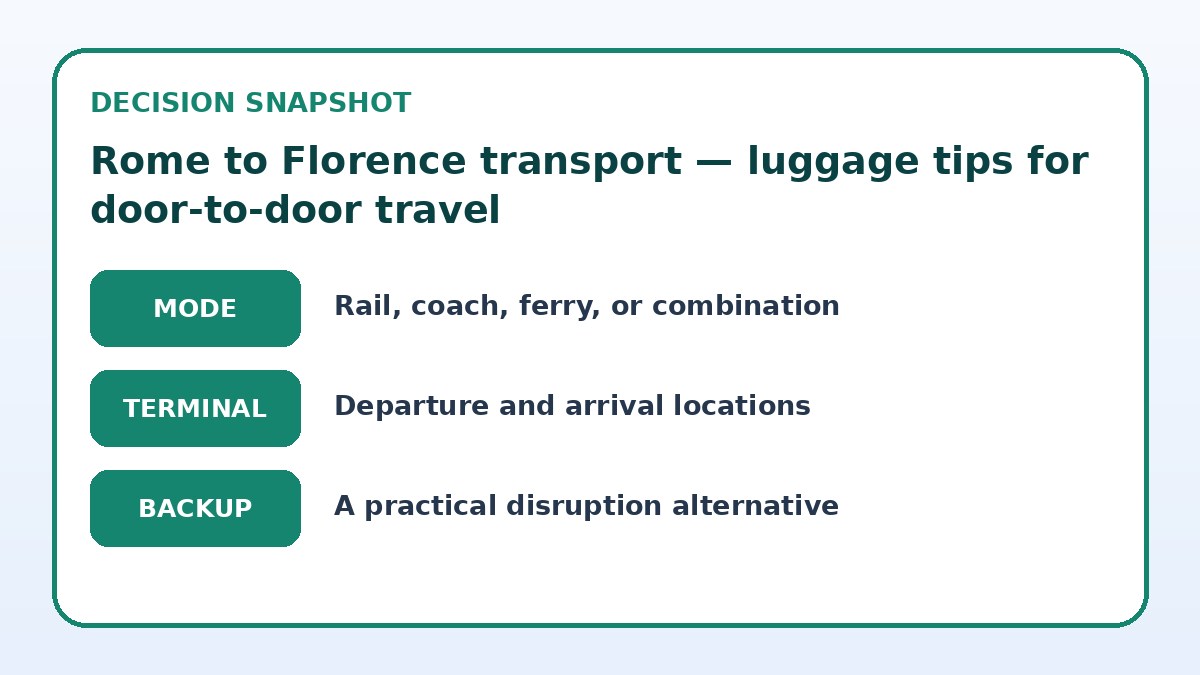
When comparing options, map the sequence: your Rome pickup point, the ride itself, Florence stop, and the expected approach to your accommodation. Consider luggage size limits and how baggage is stowed: coach undercarriage lockers, train overhead racks and luggage alcoves, or a trunk in a car. If any segment requires moving bags up stairs or across long platforms, that increases effort and time. Factor in elevator availability, platform-to-street distances, and whether station staff or porters are available to assist with large cases.
Choose the end-to-end journey plan
| Journey approach | Best for | Friction to check |
|---|---|---|
| Direct intercity train | Travelers who want fewer handoffs and a central arrival near many hotels. | May require carrying luggage across platforms and into overhead racks; no guaranteed porter service. |
| Scheduled coach with checked-baggage locker | Budget-conscious travelers with bulky bags who prefer trunk storage and lower per-person cost. | Depots may be outside city centers and transfers can create extra last-mile handling. |
| Private car or airport-style transfer | Those prioritizing door-to-door convenience and minimal lifting, including families and older travelers. | Higher cost and potential delays in heavy traffic; needs vehicle access at both pickup and drop-off points. |
| Mixed approach (train plus local transfer) | Travelers balancing cost and convenience: use a central train station then a short hired transfer to the hotel. | Still involves at least one handoff and coordination between separate bookings. |
Check live intercity options
Look beyond the ride itself and compare terminals, transfers, luggage, and arrival fit.
Assess luggage and transfer friction during connections
Connections are where luggage friction compounds. If your itinerary includes a transfer — a different train, a bus, or a shuttle — count each handoff. Trains labeled direct still may require moving between cars or platforms, and a coach transfer could mean unloading into a depot area. For oversized items, verify whether the chosen operator permits them in cabins or requires prebooking special baggage handling. When you must change platforms or terminals, add time for elevators, ticket gates, and possible crowds. A single comfortable transfer often beats a slightly faster but more complex multi-leg journey.
If you plan to store luggage temporarily (left-luggage services, station lockers, or hotel hold), confirm size limits and opening hours. Many travelers with bulky gear choose to ship excess items ahead or use hotel pre-delivery if the accommodation accepts it. Evaluate the physical strain: can you reasonably lift and wheel your bags on cobblestones, up short staircases, or across a taxi rank? If not, build in paid help — prebook a porter or a transfer with assistance — and include that cost and coordination in your decision-making.
Timing flexibility and booking considerations when carrying extra bags
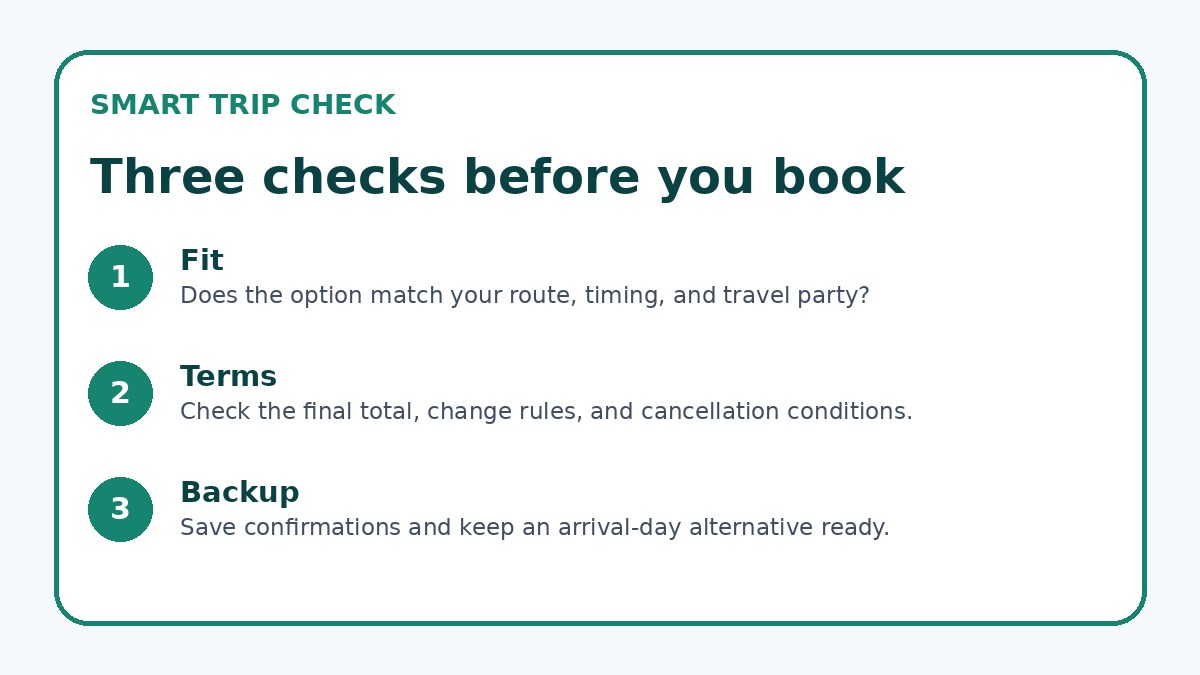
Extra luggage affects how early you need to arrive and what kind of flexibility you should book. Trains and coaches that allow reservations are helpful for guaranteeing a spot near a luggage area; a seat reservation can reduce the chance you’ll be forced to stand with a heavy case in the aisle. If you’re using a private transfer, set a pickup window that anticipates check-out delays from your Rome lodging and potential traffic through the Apennines. Avoid tight connections that leave zero margin for elevator queues, long security lines, or luggage inspections.
When comparing departures, prioritize options with multiple daily runs or flexible change policies so you can swap to a later service without excessive penalty if needed. Confirm the provider’s stated luggage rules and what happens in case of missed connections: can you change to another vehicle or service easily? For trains, note whether there are many direct services across the day; for coaches, check how often they stop and whether stops are at convenient terminals rather than distant highway depots.
Compare the practical alternatives
Use the final page to confirm what is actually offered on your dates and save a workable fallback.
Intercity travel checklist
- Confirm elevator and luggage-route details for your Rome pickup and Florence drop-off stations or terminals.
- Measure and photograph oversized bags; verify size and weight rules on the operator’s final booking page.
- Book a seat reservation or checked-baggage space where available to reduce on-board handling uncertainty.
- Schedule extra time for station arrival and platform changes, adding 30–60 minutes for luggage-heavy travelers.
- Save local taxi or transfer company contacts and a backup ride option in your phone before departure.
- Pack a small carry bag with essentials and documents to avoid opening large suitcases during transfers.
Prepare a disruption backup that keeps your bags moving
Disruptions happen: strikes, delays, or last-minute closures can strand passengers and luggage. Have at least two fallback plans that prioritize moving your luggage with minimal extra handling. One fallback should be an alternative direct train or coach later the same day; a second could be a local private transfer or taxi provider able to take your bags straight to your Florence accommodation. Keep the local numbers or app details for these services easily accessible and have digital copies of tickets and booking references to speed up changes.
If you rely on a prebooked transfer, confirm the provider’s contingency policy and how they communicate changes. For station-based travel, locate the nearest staffed ticket office and customer service desk; staff can sometimes flag luggage space or advise on alternative services. Consider travel insurance that covers missed connections due to transport disruption and read the fine print about baggage assistance. Small proactive steps — extra time, contact lists, and a paid fallback — often save more time and stress than any last-minute hustle.
Rail & Intercity Transport questions travelers ask
Is it easier to take a train or a private transfer between Rome and Florence when I have oversized luggage?
A private transfer is simpler for door-to-door convenience since the driver handles loading and unloading and you avoid station stairs and platform distances. However, transfers are susceptible to traffic and require vehicle access at both addresses. Trains often mean faster overall travel through the corridor and central station drop-offs, but you must manage platform transfers and stowage limitations yourself. Compare expected door access, the physical effort your luggage requires, and how comfortable you are lifting or rolling bags on uneven surfaces before choosing.
Can I leave extra luggage at stations or coach depots if I want to sightsee in Florence first?
Many major stations and some coach depots offer left-luggage or luggage lockers, but size limits, operating hours, and availability vary. If you plan to store large or irregular items, check the operator’s and the station’s official pages for size restrictions and opening times before relying on the service. Alternatively, ask your Florence hotel if they will hold luggage on early arrival — this can be the simplest option, but confirm acceptance and any handling fees in advance.
How should I plan time buffers when traveling with extra bags between Rome and Florence?
Add more time than you normally would: plan for earlier station arrival to allow for elevator queues, ticket gates, and finding assistance if needed. When booking connections, leave at least 30–60 extra minutes for transfers that involve platform changes or moving across terminals. For private pickups, allow a wider pickup window to accommodate check-out delays and traffic. If your itinerary is tight, opt for an option with multiple daily departures or a flexible booking policy so you can switch to a later service without undue complication.
Final decision note
Choosing the right Rome to Florence transport when you have extra luggage is a balance between minimizing hands-on transfers and accepting tradeoffs in cost or travel time. Direct trains reduce the number of handoffs and drop you near central Florence, while private transfers remove heavy lifting and deliver to your door. Coaches with checked-baggage service can be cost-effective if terminals align with your route, and mixed solutions let you tailor convenience against budget. Before you book, verify luggage allowances, terminal access, and contingency policies on the operator’s final booking page, save local backup contacts, and allow extra time for each leg. Those few planning steps will make the journey between Rome and Florence far easier for you and your bags.
Continue planning
Check current options and final conditions
Use the provider page to confirm live availability, the final total, cancellation terms, and every condition that matters to your trip.
This evergreen planning guide was created with AI-assisted drafting and a structured quality review. It does not display live prices, schedules, availability, visa guidance, or provider rankings. Verify current details before booking. Some links are affiliate links; we may earn a commission at no additional cost to you.