Practical answer first: if you travel alone to Seoul, use flexible dates to compare the exact same itinerary components—flights, nights, transfers, and cancellation rules—before accepting any bundled deal. Flexible-date search tools are best used to surface cheaper day combinations, but the money only matters when the comparisons are apples-to-apples: same cabin, same room type, identical baggage, and equivalent change/cancel terms. Start by picking two realistic trip windows (one weekday-focused, one weekend-focused), then compare package prices versus separately booked flight and hotel for those same windows and inclusions. That process reveals whether a bundle adds convenience or simply masks restrictive rules. Below I explain what to verify on provider pages, what flexibility actually saves solo travelers, and four practical booking approaches to weigh so you can make a confident decision.

Test package value fairly
| Booking approach | Best for | Tradeoff to check |
|---|---|---|
| Prepaid package bundle (flight + hotel + transfers) | Travelers prioritizing one-stop booking and onsite support. | Often less flexible; may include strict nonrefundable terms that reduce the value of flexible dates. |
| Separate flight and hotel bookings | Solo travelers seeking maximum flexibility and control over exact inclusions. | Requires more time to match components and verify identical terms across suppliers. |
| Flight-only deal plus independent hotel | Those who find cheap airfare windows but prefer to choose accommodation by neighborhood and solo needs. | You must add transfers and insurance yourself, which can raise total cost if not checked carefully. |
| Bundle with refundable options or flexible add-ons | Travelers who want convenience but also the ability to change plans without large penalties. | Flexible or refundable packages often cost more upfront, so weigh the premium against your personal risk tolerance. |
Check current package and separate options
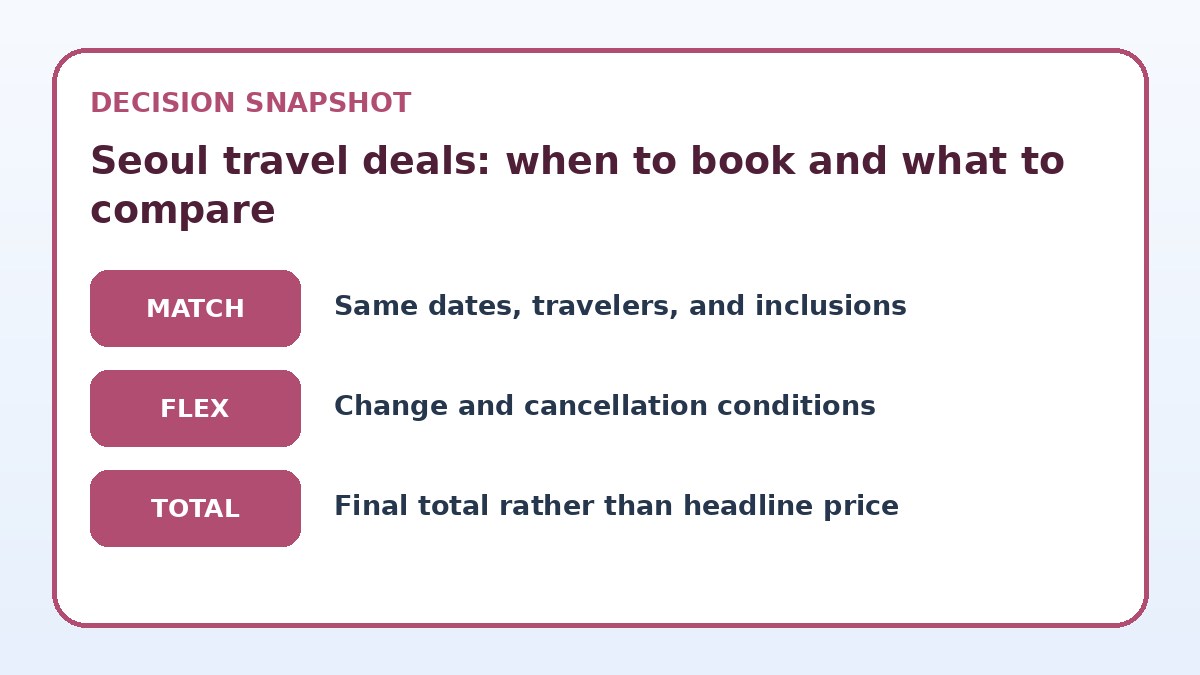
Use identical dates, travelers, room needs, baggage, and flexibility so the comparison stays meaningful.
What to compare before judging a bundle
Before deciding whether a package is worth it, list every element that affects price and experience: flight times, fare class (and baggage allowance), exact hotel room type and board basis, airport transfer or transit cards, travel insurance, and any included tours. For solo travelers, the marginal cost of single supplements and solo-friendly rooming rules matters; some packages assume double occupancy and quote per-person rates that don’t reflect solo pricing. Make sure you also capture non-price items such as 24/7 support lines or flexible check-in. Only when those items are identical between package and separate-booking comparisons can you determine if a bundle is truly advantageous.
Use the provider booking pages to verify the fine print. On flight reservations, confirm whether the quoted fare includes checked baggage and seat selection or whether those are add-ons priced later. On hotel pages, check whether the rate is refundable, whether it includes breakfast, and whether the room type is the same category shown in the package. If a package includes transfers, read where the meeting point is and whether times match your flight schedule. If any term differs, adjust the separate-booking comparison so you’re comparing like with like.
How to use flexible dates strategically
Flexible-date search tools are most useful for revealing cheaper days to fly or stay, but solo travelers should use them to build comparable alternatives rather than to chase the single lowest fare. Start with a target window and then expand by a few days either side. For flights, look for midweek departures or arrivals at off-peak times, which often lower fares; for hotels, shifting check-in by a night can change nightly rates or allow you to avoid weekend surcharges. Record the exact flight numbers, fare conditions, and hotel room category for each candidate date so you can match them when comparing bundles.
When you find a lower-cost date combination, validate the flexibility tradeoffs. Does the cheaper flight require long layovers, an overnight connection, or stricter change fees? Does the lower hotel rate come from a prepaid, nonrefundable room? Solo travelers should prefer options that balance price with the ability to change plans without large penalties. Use flexible-date searches to locate alternatives, then revert to the provider’s detailed terms page to confirm change and cancellation policies before you commit.
Look past the headline total
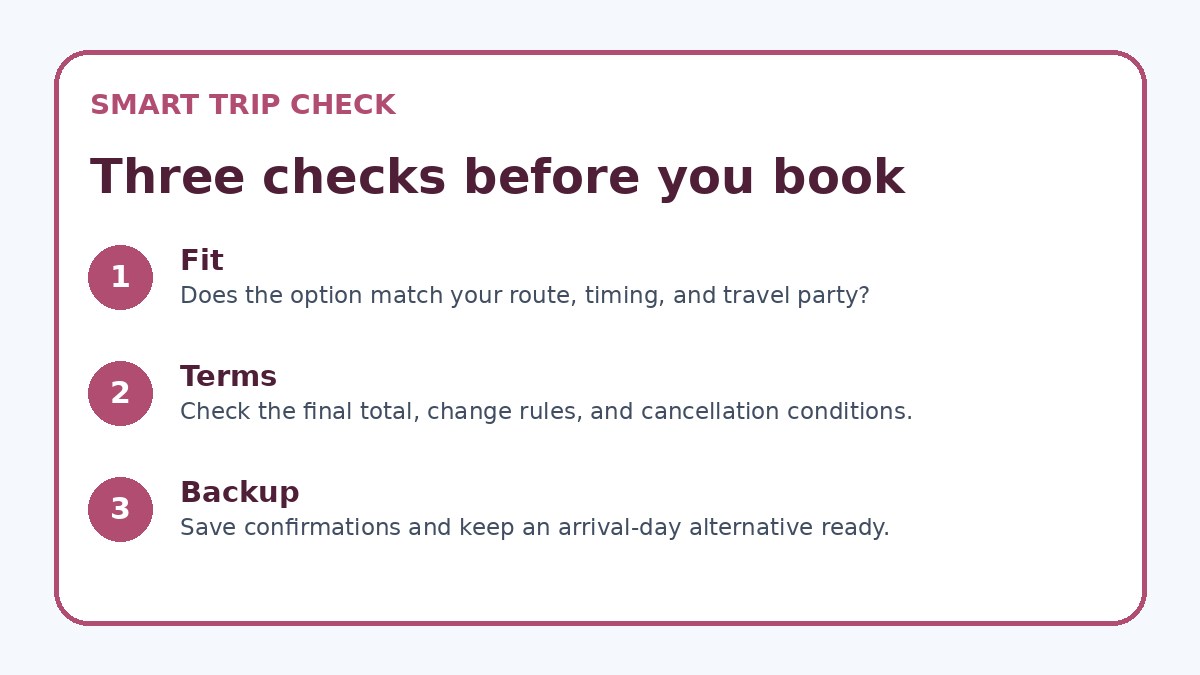
Compare inclusions and change conditions before deciding whether a package is genuinely useful for this trip.
Deal comparison checklist
- Run flexible-date searches for both flights and hotels, then record two or three candidate date ranges for direct comparison.
- On each provider page, copy the exact fare code, baggage allowance, hotel room code, and cancellation/change policy text into a comparison note.
- Compare the same traveler count (single occupancy) and identical inclusions when evaluating package vs separate bookings.
- Check transfer and meeting-point details and confirm whether included transfers are private, shared, or conditional on minimum passengers.
- Verify refund timelines and any third-party supplier clauses before paying; ask for written confirmation of terms if anything is unclear.
- Decide whether the convenience premium for bundled support is worth the potential loss of flexible-date options and changeability.
Traveler-specific value: what solo travelers need to prioritize
Solo travelers usually prioritize simplicity, safety, and predictable costs. That means focusing on single-person pricing, transport connections, and access to support if plans shift. Ask whether a bundle’s included transfer is timed to your flight and whether the pickup is solo-friendly (i.e., private transfer or a small-group shuttle with safe meeting points). Check whether hotel room rates quoted in packages reflect single occupancy or an implicit double occupancy discount—if the latter, the package may be less advantageous for a solo traveler than it seems.
Also weigh the value of included perks differently when you travel alone. Free breakfast can be useful, but included guided activities might be less compelling if you prefer self-guided exploration. Conversely, a hotline or local assistance included with a package can be worth a modest premium if you want on-the-ground support. Always confirm whether any included services are transferrable or refundable; if your plans could change, prioritize options with clear and fair change policies even if the headline price is slightly higher.
Final terms: what to verify on the provider page
When you’re close to booking, go directly to the provider’s final booking page to confirm cancellation and change fees, refund timelines, and any penalties for date or name changes. For flights, verify the exact fare code and baggage allowance; for hotels, confirm the room type code and board basis. If a package includes flights, the provider should show airline-imposed rules; if not, contact support for written clarification. If the package mentions transfers or tours, verify pickup times, meeting points, and whether the service operator enforces minimum passenger numbers that could change the arrangement.
Also check how refunds are processed and the timeline for receiving them, especially if a third-party supplier handles part of the package. Note any non-refundable service fees or administrative charges and whether travel insurance that covers cancellations is included or offered as an upsell. If you use a comparison site to start your search, follow through to the supplier’s booking page and confirm every inclusion there—don’t rely on summary text alone. Trip.com can be used to compare availability and conditions, but always verify final terms with the supplier before finalizing payment.
Travel Deals & Booking Strategy questions travelers ask
How do I know if a flexible-date saving is genuine or just a change in terms?
A genuine saving appears when two comparable itineraries—same fare code, baggage, hotel room type, and refund/change rules—show a lower total price for one date combination. To verify this, document the fare code and hotel room category for both date options and check the provider’s fine print for change and cancellation penalties. If the lower price comes from a nonrefundable prepay rate or a lower fare class with extra baggage fees, the apparent saving may be offset by stricter penalties. Only judge savings after comparing identical inclusions and policies.
Should I prioritize refundable packages as a solo traveler using flexible dates?
If your itinerary is likely to change or if you value peace of mind, a refundable or flexible package can be worth a higher upfront cost because it preserves the ability to shift dates without large penalties. However, refundable options are not always necessary: if you can travel only on a narrow window and the separate-booking alternative offers comparable terms, the nonrefundable rate may still be better value. Balance the premium for refundability against your personal tolerance for risk and the likelihood of date changes.
Where can I verify final booking conditions before I pay?
Always follow the booking link through to the supplier’s final checkout page and read the full terms and conditions before payment. Confirm fare codes, baggage, room type codes, cancellation and change fees, transfer details, and refund processing timelines. If any part of the package uses third-party operators, check their cancellation rules as well. Trip.com is an option you can use to compare listings and availability, but verify the final conditions on the supplier’s page or in written confirmation from the operator before completing payment.
Final decision note
For solo travelers planning a trip to Seoul, flexible dates are a tool to make smarter comparisons, not an argument to buy the first cheaper-sounding bundle. Start by establishing comparable date windows, then line up identical flight and hotel inclusions, single-person pricing, and change/cancellation terms. Compare bundles and separate bookings against those matched criteria so you reveal genuine savings and understand the convenience premium. Before you pay, confirm every final term on the provider’s booking page, paying special attention to fare codes, refunds, and transfer details. With that approach you’ll balance cost, convenience, and flexibility for a Seoul trip that fits your needs.
Continue planning
Check current options and final conditions
Use the provider page to confirm live availability, the final total, cancellation terms, and every condition that matters to your trip.
This evergreen planning guide was created with AI-assisted drafting and a structured quality review. It does not display live prices, schedules, availability, visa guidance, or provider rankings. Verify current details before booking. Some links are affiliate links; we may earn a commission at no additional cost to you.