If you and your partner want a stress-minimised ground journey from Bangkok to Chiang Mai, start by choosing the mode or combination that fits your travel rhythm. For most couples the practical decision balances comfort, luggage friction, and timing flexibility: overnight trains and premium coaches reduce wasted daytime but require station transfers; daytime trains offer scenery and easier mid-route exits; a multi-leg route via smaller towns lets you layer overnight stays and side trips. Decide first whether you prioritise relaxed travel with time to explore, or a single-seat transit that preserves energy for Chiang Mai. From there, compare terminals, how you will get to each terminal from your accommodation, and simple backups if a link is delayed or sold out.
How to pick between train, coach, or a mixed plan
Start by matching the mode to your couple-style: are you relaxed explorers who enjoy scenic travel and conversations, or do you want to arrive with maximum energy for Chiang Mai’s temples and markets? Trains typically offer more space and the chance to sleep without road motion, which suits couples carrying larger luggage or who want to maximise rest. Coaches often run more frequently, use different terminals, and may be cheaper, but they can mean longer transfer times and traffic exposure. A mixed plan—day train to an intermediate city then a short coach—lets you break the journey into manageable segments and sightsee without changing hotels too often.
Next, compare door-to-door time, not just the ride. Add the time and friction of getting to and from terminals, luggage handling, and the ease of late-night arrivals. For couples who prefer minimal transfers, a single through-service or an overnight train that pulls into Chiang Mai early morning often wins the tradeoff. If you want to stop en route for a night or two, build each leg so hotel check-in and luggage storage are simple. This practical prioritisation prevents surprises and ensures you and your partner start your Chiang Mai stay relaxed.
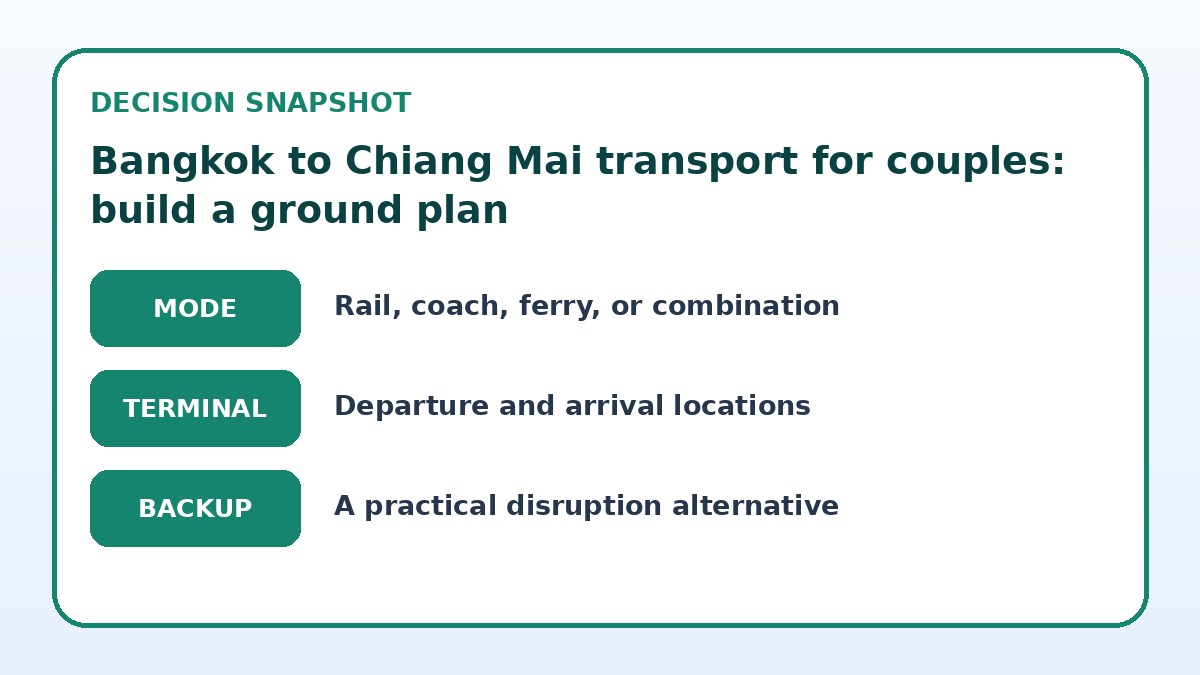
Choose the end-to-end journey plan
| Journey approach | Best for | Friction to check |
|---|---|---|
| Single-mode overnight train | Couples wanting to sleep through travel and minimise daytime transfers | Less flexibility for en-route stops and requires getting to the correct train station on time |
| Direct daytime train | Couples who prefer scenery, easier daytime arrivals, and predictable schedules | Longer seat time and potentially harder to find consecutive seats together on popular services |
| Premium coach or express bus | Couples seeking frequent departures and straightforward booking with defined boarding points | More exposure to road traffic and possible peripheral terminals requiring extra transfer time |
| Mixed multi-city ground plan | Couples who want to add stopovers, split the journey, or combine best segments of train and coach | Requires more planning, luggage handling, and buffer time between connections |
Check live intercity options
Look beyond the ride itself and compare terminals, transfers, luggage, and arrival fit.
Terminal fit, transfers and luggage friction
Assess how each terminal matches your accommodations and comfort needs. Bangkok’s major rail and bus terminals sit in different parts of the city; reaching them from your hotel may require an early taxi, a metro ride, or a ride-hailing trip. For couples carrying larger suitcases or with mobility needs, prioritise terminals with straightforward drop-off and short transfer times. Factor in whether you prefer to check bags, carry them onto a train, or store them at a hotel if you plan to explore during a long connection. Simple logistics often determine whether a nominally faster option is actually a better couple-friendly choice.
Think about luggage handling between modes: transferring from hotel to bus terminal late at night can be more stressful than boarding a bed on an overnight train. If your preferred plan includes an evening arrival, check whether the last-mile transfer is available and safe at that hour. Allow time for buying tickets, boarding with two bags, and finding seats together. If you intend to switch modes mid-route, aim for a station or terminal where luggage services, secure storage, or porter assistance is available, or plan to travel with manageable carry-ons to reduce friction.
Timing flexibility and building a multi-city itinerary
Timing flexibility matters most for couples who want to add side trips or avoid peak traffic. Decide whether you prefer scheduled predictability—depart at a fixed time and arrive at a predictable hour—or the freedom to linger in a town for a night. A multi-city plan can combine an overnight train with daytime buses to nearby attractions, or use a daytime train for the scenic section and a short coach to finish the route. When building a multi-city itinerary, leave buffer time between legs for meals, rest, and unforeseen delays so neither partner feels rushed.
Also balance pace and experience: one longer day of travel can free up days in Chiang Mai for relaxed exploration, while splitting the journey into two shorter legs creates opportunities to explore smaller towns along the way. For couples who value shared experiences, schedule at least one longer stop where you can sightsee together without luggage stress—arrange hotel baggage hold or choose a station with easy luggage storage. Make sure each onward booking allows free or low-cost changes in case you decide to stay longer in a stopover.
Compare the practical alternatives
Use the final page to confirm what is actually offered on your dates and save a workable fallback.
Intercity travel checklist
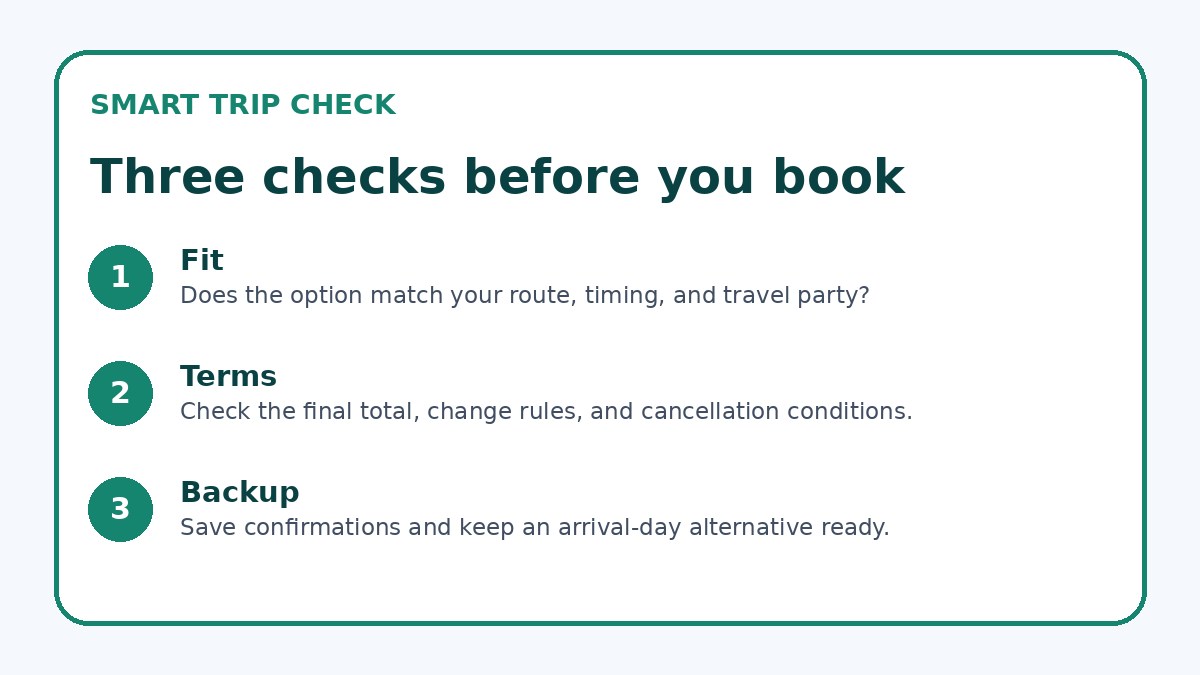
- Map door-to-door time: calculate transit from hotel to departure terminal and from arrival station to Chiang Mai lodging.
- Decide luggage strategy: pack carry-on friendly bags or confirm luggage storage options at hotels and stations.
- Select primary and backup services: book one main option and note at least one later train or coach for each leg.
- Verify terminal arrival needs: confirm taxi/ride-hailing availability and how late arrivals are handled.
- Confirm change and refund policies on the provider’s final booking page before paying.
- Save local emergency contacts, taxi apps, and your hotel’s address in Thai to show drivers if needed.
Disruption backups and door-to-door practicality
Prepare a simple disruption plan you can execute together. Identify at least one later service and one private transfer option for each leg so you can stay flexible if a connection is full or cancelled. Keep a shortlist of taxi apps and a local contact or concierge who can help arrange last-mile transfers in Chiang Mai. For couples, agree beforehand what level of inconvenience is acceptable—waiting for the next public service, paying more for a private transfer, or rearranging a night in an intermediate town—so decisions are faster when stress levels rise.
Finally, focus on end-to-end practicality: map the walk or ride from your Bangkok lodging to the departure terminal and from Chiang Mai’s arrival point to your final accommodation. Verify where you can buy water, snacks, and simple first-aid items in terminals, and whether late arrivals will still have safe and trustworthy taxi options. When in doubt, book refundable or changeable tickets and save contact details for transport providers. Planning these door-to-door details keeps the journey smooth and lets you enjoy arriving together in Chiang Mai.
Rail & Intercity Transport questions travelers ask
Should couples prefer overnight trains or daytime coaches between Bangkok and Chiang Mai?
The right choice depends on your priorities. Overnight trains can let you sleep through most of the journey and save daytime for sightseeing, which suits couples who want to maximise daytime hours in Chiang Mai. Daytime coaches and trains are better if you prefer scenic travel, easier station access during the day, or want to avoid sleeping on public transport. Consider transfer times to and from terminals, how comfortable you are sleeping while moving, and whether luggage handling between modes is acceptable for both partners.
How much buffer time should couples leave between connecting ground services?
Aim for at least one to two hours of buffer between independent legs when changing modes or terminals, more if you need time to retrieve checked luggage or travel across town. For same-mode timed connections (like a train-to-train transfer at one station), 30–45 minutes may suffice if both services use the same terminal. If your plan includes a critical overnight arrival or a tight last-mile transfer, choose a later backup or a private transfer option so a delay won’t derail your whole schedule.
What should we verify on the provider’s booking page before finalising travel?
Check terminal names and exact pickup/drop-off addresses, baggage allowances and handling rules, change and cancellation terms, and what identification or travel documentation is required at boarding. Also verify whether seats are assigned together, the expected arrival time, and any special service conditions for overnight travel. If you need assistance on arrival—such as a pre-booked taxi—confirm contact options and how to reach the provider if plans shift. If you prefer third-party comparisons, Trip.com can be used to view current availability but always confirm details on the operator’s own booking page.
Final decision note
For couples, the best Bangkok to Chiang Mai transport plan balances the style of travel you both enjoy with the practicalities of terminals, luggage, and last-mile transfers. Start by deciding whether you prefer continuous overnight travel, scenic daytime legs, or a mixed multi-city route that supports side trips. Map door-to-door times, pick primary and backup services, and agree on luggage handling so neither partner feels surprised mid-journey. With simple contingency options and clear transfer plans, you’ll arrive in Chiang Mai relaxed and ready to explore together.
Continue planning
Check current options and final conditions
Use the provider page to confirm live availability, the final total, cancellation terms, and every condition that matters to your trip.
This evergreen planning guide was created with AI-assisted drafting and a structured quality review. It does not display live prices, schedules, availability, visa guidance, or provider rankings. Verify current details before booking. Some links are affiliate links; we may earn a commission at no additional cost to you.