Practical answer up front: for most solo travelers, start by deciding whether flexibility or convenience matters more. If you prize a simple, low-risk travel day and easy airport transfers, prioritize a direct or single-carrier itinerary and accept slightly higher fare conditions or reduced change flexibility. If your trip dates are fluid, choose a fare class or airline combination with flexible change and refund options—even if it requires a connection or multiple carriers. Balance is possible: pick a single-carrier connecting flight with reasonable layover windows and a flexible fare add-on, or book a direct flight with a refundable or changeable fare. Before you search, lock in the exact travel dates, preferred departure window from Seoul, and how many free checked bags you need; these details will change which option is genuinely more convenient or more flexible for you.
See live routes for your exact travel day
Compare direct and connecting choices with the same baggage and traveler details.
Routing: direct, single-carrier connections, or multi-carrier trips
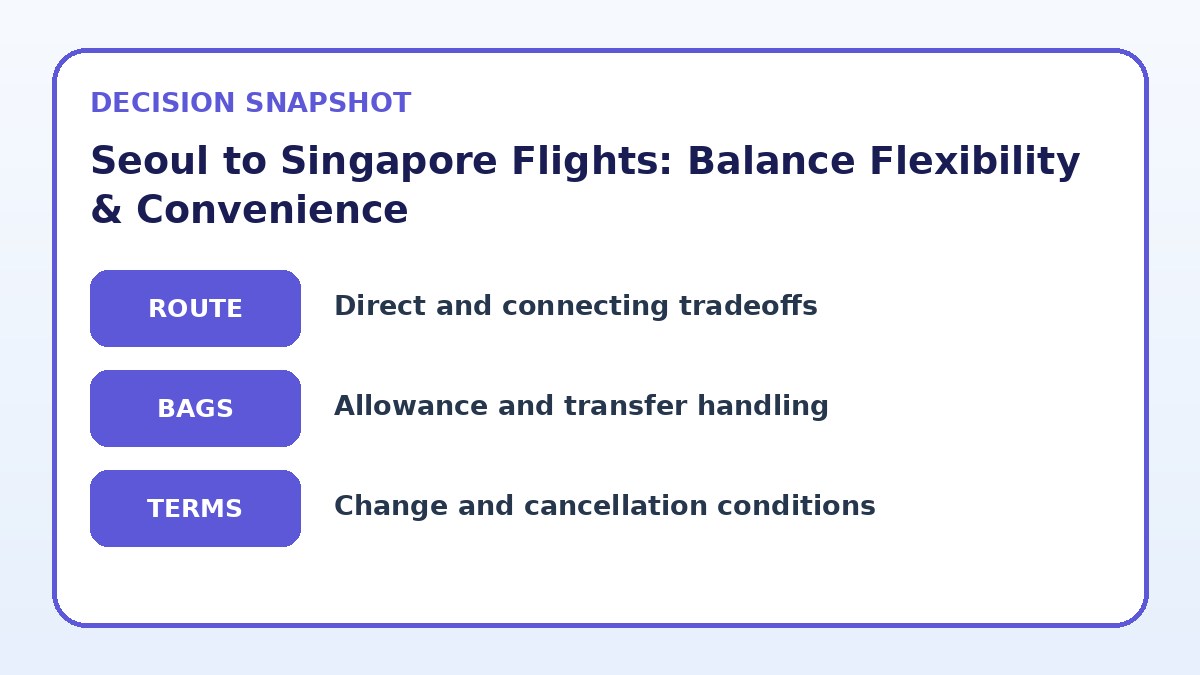
Routing choices between Seoul and Singapore usually come down to direct services versus itineraries with one or more connections. Direct flights minimize the number of touchpoints and the chance something goes wrong en route; they also simplify baggage handling and arrival logistics. Single-carrier connections keep protections like through-checked baggage and rebooking support within one airline’s system, reducing the manual work if a connection is disrupted. Multi-carrier combinations can be cheaper or unlock better schedules, but they shift responsibility: you may need to claim and recheck baggage and manage separate check-in windows.
When you compare options, look beyond the number of segments. Pay attention to total door-to-door time including transfers to and from airports, minimum connection times listed on the carrier’s booking page, and whether the airline’s website explicitly offers through-checked baggage on connecting itineraries. If a connecting itinerary looks attractive on price, verify connections with the operating carriers and confirm whether you’ll receive a single PNR or separate tickets. That single detail often determines whether the carrier will help rebook you after a delay or whether you’ll be handling missed connections yourself.
Baggage and connection risk: protecting yourself from delays and mishandled bags
Baggage policies and connection protection are critical for solo travelers who want to avoid airport headaches. If your itinerary is single-ticket under one airline or alliance, most carriers will transfer bags and assist with rebooking. For separate tickets or airlines without an interline agreement, you may need to collect and re-check luggage during a connection, increasing stress and the chance of delay. Check each airline’s baggage allowance for the fare class you’re considering and whether the booking page confirms through-checked baggage on connecting itineraries.
To manage connection risk, favor layovers that leave comfortable buffer time—long enough to navigate arrival, immigration (if applicable), and transfer procedures—without adding too many hours to your trip. Solo travelers should also consider travel insurance that covers missed connections or look for airline fare classes that include protected connections. Before you finalize a booking, verify on the airline’s final booking page what happens to baggage on each segment and whether the carrier provides re-accommodation within the same ticket in case of delay.
Compare flight-selection strategies
| Flight strategy | Best for | Risk to check |
|---|---|---|
| Direct flight with a restrictive fare | Travelers who want the simplest travel day and minimal transfer complexity | Less flexibility to change dates and often higher costs if you need a refund or rebook |
| Single-carrier connecting itinerary with a flexible fare | Solo travelers seeking balance between convenience and changeability | Typically moderate cost and connection times must be chosen carefully to avoid tight layovers |
| Multi-carrier or separate-ticket routing with flexible timing | Budget-focused travelers willing to manage baggage and connections themselves | Lower fare options but higher risk of handling missed connections and baggage reclaims |
| Direct flight with a refundable or fully changeable fare | Travelers who prioritize schedule flexibility but still want minimal connections | Often the most expensive upfront option, though it reduces rebooking stress later |
Recheck the complete itinerary
Confirm airports, connection handling, baggage, and change conditions before deciding.
Schedule fit: matching departure windows and arrival times to your solo travel style
Think about how flight times affect your arrival day in Singapore. Do you want to land with daylight for simpler transport and orientation, or are late arrivals acceptable if they mean cheaper or more flexible fares? Solo travelers often value the first few hours after arrival for settling in or dealing with immigration, so prioritize flights that place you in a comfortable arrival window. Also factor in time to get to your Seoul departure airport and back from Singapore’s airport to your accommodation—door-to-door time matters as much as flight duration.
If you’re traveling on a short trip, you may prefer tighter schedules that minimize overnight travel; if you have open-ended dates, you can use flexible fares to chase better arrivals. Use airport transfer reliability and typical peak-hour congestion when judging whether a seemingly convenient schedule truly reduces overall travel time. When comparing times, write down exact departure and arrival times and verify local airport terminals to plan transfers and estimate taxi or transit options after booking.
Flight details to verify
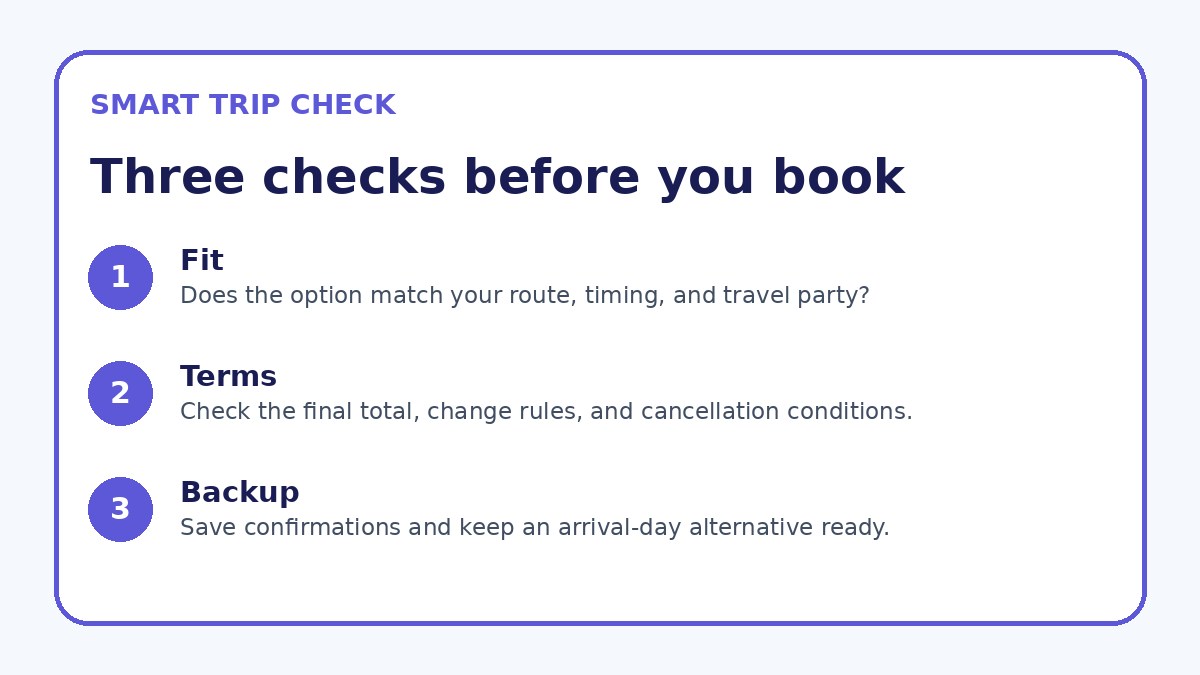
- Write down exact travel dates, preferred departure windows from Seoul, and acceptable arrival time ranges in Singapore before searching.
- Confirm whether each itinerary is ticketed on a single PNR or multiple tickets and list the operating carriers for every flight segment.
- Check the fare class rules on the carrier’s final booking page: change fees, refundability, and whether taxes differ on changes.
- Verify baggage allowances for each fare and segment; note whether through-checked baggage is confirmed on connecting itineraries.
- Calculate door-to-door travel time including airport transfers and anticipated wait times rather than relying on airtime alone.
- If booking on an aggregator, cross-check the airline’s official booking page for the same itinerary and fare conditions before paying.
Fare conditions: changeability, refunds, and what to verify before purchase
Fare conditions are where flexibility is won or lost. Low-cost fares may look attractive but often carry strict rules: limited or no free changes, baggage excluded, and additional fees for seat selection or airport services. Full-service fares usually include checked baggage and more forgiving change policies, but that convenience comes at a premium. For the flexibility-minded solo traveler, the most useful features are free or low-cost ticket changes, clear refund terms, and the ability to add or bundle services on the airline’s site without punitive fees.
Before you pay, verify three items on the airline’s final booking page: the exact change and refund rules for your selected fare class, which baggage allowances are actually included, and whether the itinerary is ticketed on one reservation or multiple tickets. If you plan to adjust dates, confirm how changes affect fare differences and taxes. When using third-party booking sites like Trip.com, cross-check fare conditions on the operating carrier’s page to ensure the protections you need are present and accurately represented.
Flight Guide questions travelers ask
Should I always pick a direct flight between Seoul and Singapore if I’m traveling alone?
Not always. Direct flights reduce the number of transfers and lower the chance of missed connections or baggage complications, which many solo travelers value. However, direct options can be less flexible on ticket changeability and sometimes cost more for the convenience. If your dates are fixed and you want a simple travel day, direct is often worth it. If your dates might shift, a connecting itinerary with flexible fare conditions could be better, provided you confirm baggage transfer policies and select sensible layover times.
How much layover time should I allow if I choose a connecting route?
Allow enough layover time to clear arrival procedures, retrieve and recheck baggage if required, and move between terminals or airports if the connection isn’t in the same terminal. The exact safe minimum varies by airport and whether your tickets are on a single reservation. As a solo traveler, err on the side of a longer connection—enough to handle delays without missing your next flight—while avoiding unnecessary overnight waits. Check the carrier’s stated minimum connection times and compare that with typical on-the-ground transfers.
What should I verify on the airline’s booking page before finalizing a flexible fare?
Confirm the specific change and refund policy for the fare class you selected, including any fees, how fare differences are handled, and whether changes can be made online or require a call center. Verify included baggage allowance, seat selection options, and any blackout conditions for changes. Also check whether the itinerary is ticketed under one PNR and whether through-checked baggage and re-accommodation are guaranteed on missed connections. If you use an aggregator like Trip.com, cross-reference these details on the operating carrier’s site before paying.
Final decision note
Balancing flexibility and convenience on Seoul to Singapore flights comes down to prioritizing what you value most on travel day versus how certain you are about your dates. For a low-stress solo travel experience, favor direct or single-carrier itineraries and ensure the fare includes the protections you need. If dates are fluid, choose fares and routing that allow changes without disproportionate fees, accepting that you may need longer connections or additional transfers. Always verify fare rules, baggage policies, and whether your itinerary is on one ticket before booking; doing this homework prevents the common surprises that turn a solo trip sideways. If you want a quick place to compare availability and conditions, Trip.com can show options, but confirm final rules on the operating airline’s booking page.
Continue planning
Check current options and final conditions
Use the provider page to confirm live availability, the final total, cancellation terms, and every condition that matters to your trip.
This evergreen planning guide was created with AI-assisted drafting and a structured quality review. It does not display live prices, schedules, availability, visa guidance, or provider rankings. Verify current details before booking. Some links are affiliate links; we may earn a commission at no additional cost to you.