If you and your partner need flexibility on the Busan to Gyeongju journey, your choice is less about fastest transit and more about how easily you can change plans, manage luggage, and handle transfers together. Start by deciding which tradeoffs matter most: the ability to switch departure times without penalty, easy door-to-door transfers with luggage, or low disruption risk if plans shift. For many couples this means weighing conventional rail against intercity coach, private car hire, or a mixed approach combining a short train and a local taxi. This article gives a practical decision path: how terminals fit your itinerary, what luggage and transfers feel like for two, which tickets offer timing flexibility, and an action-ready disruption backup so you aren’t stuck if plans change.
Terminal fit: where you start and where you end
When choosing between rail, coach, or private transfer, the terminals matter for couples. A central rail station may be easy to reach from a hotel but could involve stairs, crowds, or a long platform walk with luggage. A coach terminal sometimes sits slightly outside the city centre and might need an extra taxi or subway leg; that additional transfer changes the door-to-door time and the hassle you share as a pair. Match the terminal location to where you’re staying or to a planned activity so you avoid backtracking—this keeps the outing relaxed rather than rushed.
Also consider how much time you want before the departure: some terminals have handy waiting areas and luggage storage, others are basic. For a couple who prefers a relaxed morning, a nearby station with cafés and restrooms reduces pre-departure stress. If you’ll be juggling suitcases, check whether the terminal’s layout favors curbside loading or requires carrying bags up stairs or escalators. Verify terminal maps and access notes on the operator’s site or on general transit pages, and plan the shortest, least stressful route between your accommodation and the departure point.
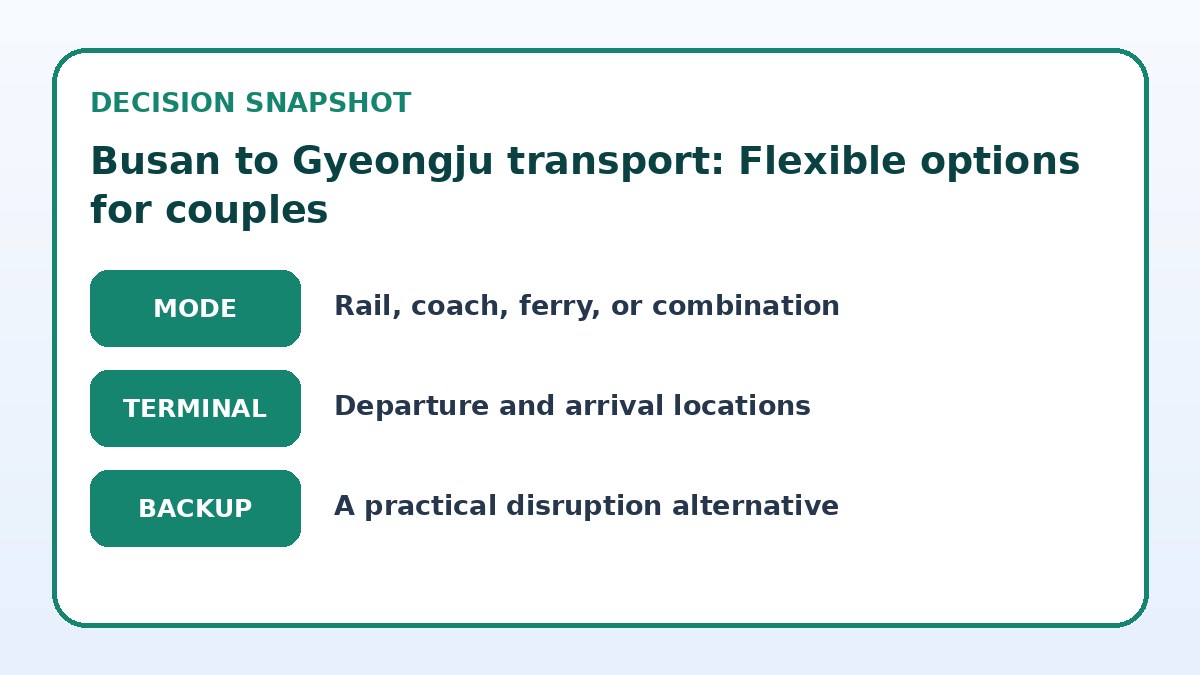
Choose the end-to-end journey plan
| Journey approach | Best for | Friction to check |
|---|---|---|
| Rail-only (intercity train) | Couples wanting a predictable station-to-station ride with multiple scheduled departures | May require extra local transfers and can have restrictive fare classes for changes |
| Intercity coach | Pairs who prefer curbside loading and simpler luggage handling | Coach terminals can be less central and fewer daily departures reduce same-day flexibility |
| Private transfer (door-to-door car hire) | Couples valuing door-to-door convenience, no transfers, and flexible departure times | Higher cost and limited refund policies if plans change; verify cancellation terms before booking |
| Mixed approach (short train + taxi or coach + walk) | Couples balancing cost and convenience, combining fast segments with local pickup | More moving parts mean more potential friction; check transfer windows and luggage handling carefully |
Check live intercity options
Look beyond the ride itself and compare terminals, transfers, luggage, and arrival fit.
Luggage and transfer friction for two
Two people traveling together often have more and heavier luggage than a solo traveler, and that changes what tickets make sense. Trains can be roomy, but if you must change platforms or use local transport at either end, those transfers multiply effort. Coaches may offer straightforward loading at the curb and spacious luggage bays, reducing the need to carry suitcases through stations. Private transfers give the smoothest door-to-door experience: suitcases go straight into the vehicle and you disembark inside the hotel or guesthouse. Weigh the physical lift and the number of handoffs when comparing fares.
Another practical point is how flexible ticket rules handle late arrivals or missed connections. If one partner steps out for coffee and misses a scheduled train, can you swap to the next service without heavy fees? If you plan to explore briefly before heading on, tickets that allow same-day changes or flexible boarding are more convenient. Always confirm baggage allowances and transfer procedures on the provider’s booking page, and ask whether last-minute vehicle swaps or coach rebookings carry an additional handling charge for luggage.
Timing flexibility: changing plans without a fight
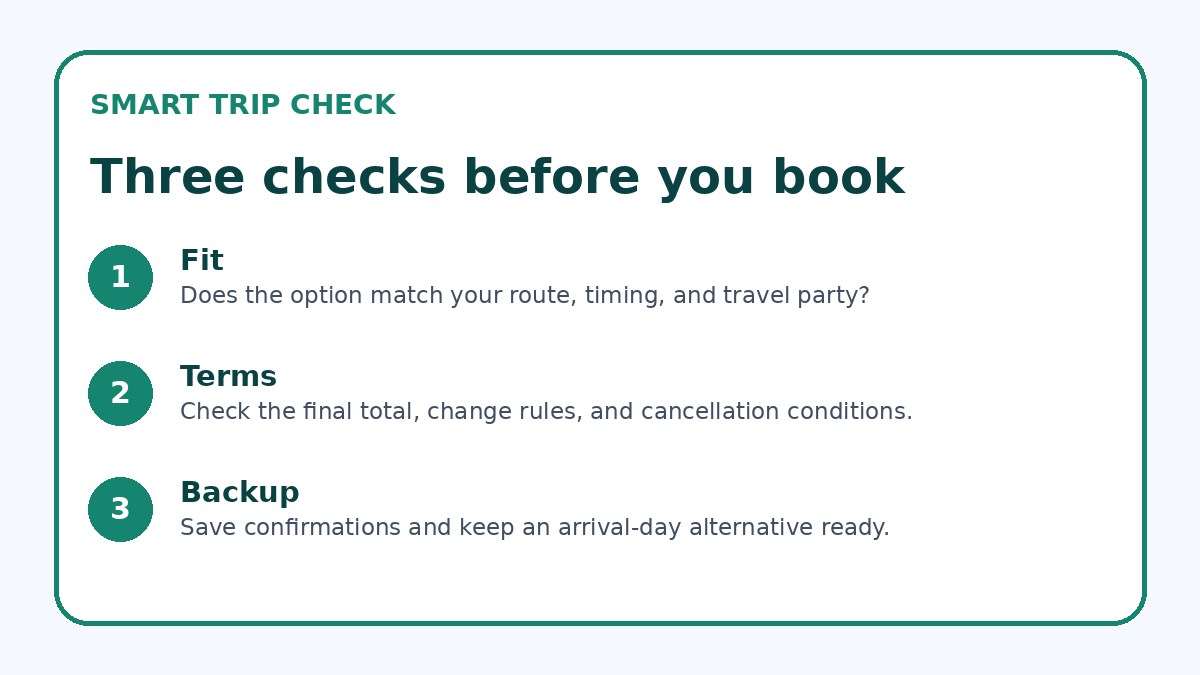
Couples often want leeway to sleep in, linger at breakfast, or extend a museum visit; that’s where ticket flexibility becomes central. When comparing options, examine whether a fare class permits changes, whether there are blackout periods, and whether the provider charges a flat fee or a percentage for alterations. Some ticket types allow date or time swaps with modest penalties, while others are non-changeable—perfect for fixed itineraries but risky if you value spontaneity. Look for explicit refund and change rules on the booking confirmation page, and keep a screenshot or PDF of the fare conditions in case policies differ at the time of travel.
Also consider how easy it is to rebook in practice. Can you make changes online or must you phone an office with business hours? Is there an on-the-day rebooking window at the terminal? For couples who prefer to stay flexible, choose services that allow quick online changes or offer multiple daily departures so you can simply take a later service. If you rely on third-party resellers or aggregators, verify return, refund, and change policies on the final seller page and save contact details you may need during the trip.
Compare the practical alternatives
Use the final page to confirm what is actually offered on your dates and save a workable fallback.
Intercity travel checklist
- Confirm departure and arrival terminal locations relative to your hotel and mark the easiest route for transfer.
- Read the ticket’s change and refund rules on the final booking page and save a screenshot of those terms.
- Identify at least two later services and one taxi or ride-hailing option at both ends before you leave.
- Compare luggage allowances and loading procedures so you know whether you need carry-on-only or checked storage.
- Decide who in your pair will handle on-the-day rebooking and save provider contact details to your phone.
- Keep a modest contingency budget for an emergency private transfer if public options are no longer practical.
Disruption backup: practical options if plans change
No matter how carefully you plan, delays or missed connections can happen. Build a disruption plan that suits two people: identify the next two departure options on each mode, note nearby taxi or ride-hailing pickup points, and know where short-term luggage storage is available at the arrival terminal. For a couple, having a single taxi ready can be cheaper and simpler than two separate rides, and a nearby café or waiting area gives breathing room while you sort rebookings. Keep a small emergency fund accessible in case the backup requires a private transfer.
Also decide who manages on-the-ground changes so decisions aren’t made under stress. Agree in advance whether you’ll wait for a later public service or switch to a private car if time is tight. If tickets are non-changeable, determine the acceptable cost threshold for buying new tickets versus staying flexible with time. Finally, save the customer-service number from the booking confirmation and, where possible, use providers that let you change online—this avoids phone queues and speeds up emergency rebooking for couples.
Rail & Intercity Transport questions travelers ask
Which ticket type usually offers the most flexibility for couples who might change plans?
Ticket flexibility depends on the provider and fare class rather than the mode itself, but generally refundable or changeable fares—often sold at higher tiers—allow you to swap times with minimal hassle. For couples, private transfers offer the most timing flexibility because you pick the departure time, while some coach and rail fare classes allow same-day changes at low cost. Always verify the exact change and refund conditions on the operator’s booking page and note whether online self-service is available for on-the-day alterations.
If one partner has mobility or heavy luggage, what transport approach reduces strain?
Door-to-door options like private transfers minimize carrying and stairs because luggage goes straight into the vehicle and to your doorstep. If you prefer public modes, look for coach services with curbside loading or a railway departure that avoids stair-only platforms. Also check whether terminals have elevators, ramps, or luggage trolleys—those details are best confirmed on the station or terminal information pages before booking so you can plan transfers and avoid physical strain during the journey.
How should couples handle a missed connection or unexpected delay en route?
Have a simple contingency plan: know the next two departures for each mode, save the booking provider’s contact information, and identify a nearby taxi or ride-hailing pickup point. Decide in advance whether you’ll wait for the next public service or switch to a private transfer if time is tight. If your fare allows changes, attempt an online rebooking first; if not, call the provider. Keep a small emergency fund for a private ride if staying on schedule is essential for your plans.
Final decision note
For couples traveling Busan to Gyeongju, the most practical choice blends ticket flexibility with door-to-door ease. If you prize spontaneity, prioritize fare classes and providers that permit online changes or refunds; if smooth transfers and minimal luggage handling matter most, favor private transfers or coaches with curbside loading. Mixed journeys can split the difference but require careful coordination of transfers and luggage. Before you book, verify terminal access, luggage policies, change penalties, and how to rebook—save the final booking page and customer contact details. For current schedules and to compare availability, you can check a booking aggregator such as Trip.com, but always rely on the provider’s final terms when confirming your ticket.
Continue planning
Check current options and final conditions
Use the provider page to confirm live availability, the final total, cancellation terms, and every condition that matters to your trip.
This evergreen planning guide was created with AI-assisted drafting and a structured quality review. It does not display live prices, schedules, availability, visa guidance, or provider rankings. Verify current details before booking. Some links are affiliate links; we may earn a commission at no additional cost to you.