Practical answer first: set targeted price alerts for specific flight times, preferred hotels, and exact traveler details, then tie each alert to a pre-decided decision rule (for example: only book if refundable fare exists or if total trip cost is below your company per-diem cap). That lets you capture opportunities without impulsively buying the first drop in price. For business travelers to Mexico City, the stakes include schedule certainty, meeting locations across the city, and company expense policies—so alerts should track the same dates, passenger names, and refund/change conditions you’ll actually need. Use alerts as signals, not triggers; pair them with a short checklist that confirms total out-the-door cost, mobility between meetings, loyalty program benefits, and cancellation windows before committing.
Test package value fairly
| Booking approach | Best for | Tradeoff to check |
|---|---|---|
| Fully packaged flight + hotel bundle | Travelers who value convenience and a single invoice. | May lock you into less flexible fares or locations; verify exact inclusions and change rules. |
| Separate flight and hotel bookings | Business travelers needing maximum flexibility and tailored schedules. | Requires more time to compare options; you must assemble a single expense record yourself. |
| Hybrid package (flight bundled, hotel booked separate) | Those who want a consolidated flight deal but a specific hotel near meetings. | Can miss cross-product discounts and still require separate cancellation terms for hotel. |
| Corporate travel platform or managed travel booking | Travelers under company policy needing compliance and pre-approved rates. | May limit alert flexibility and personal loyalty program use; check supplier invoices and change policies. |
Check current package and separate options
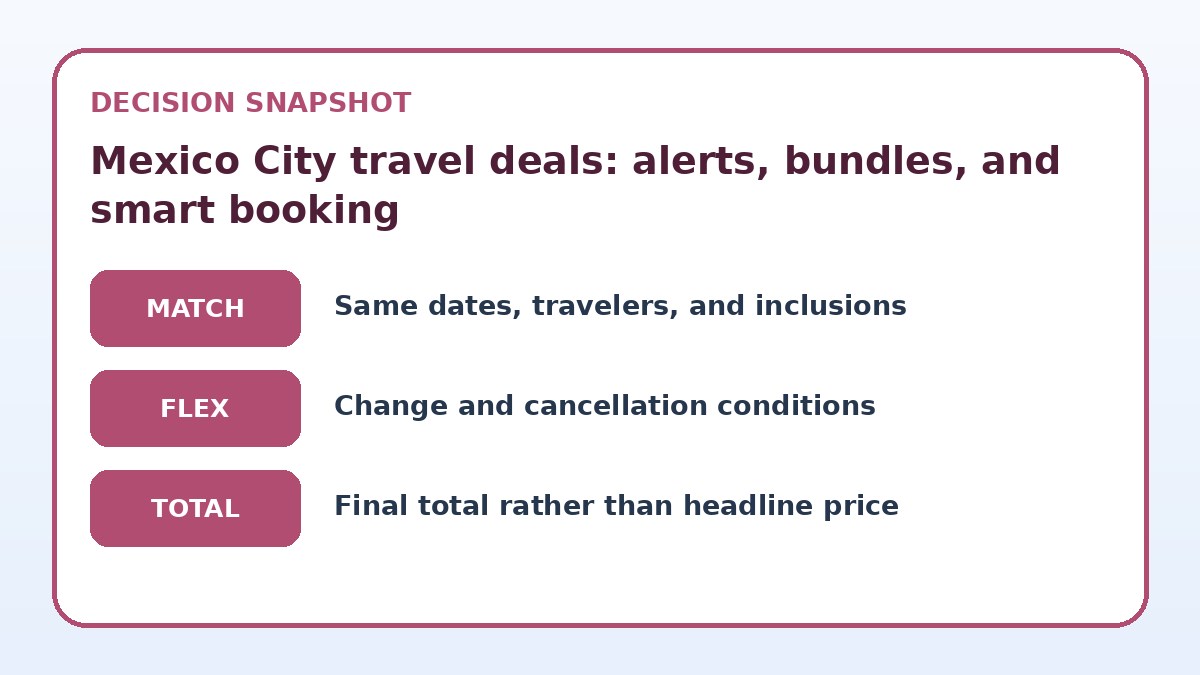
Use identical dates, travelers, room needs, baggage, and flexibility so the comparison stays meaningful.
What to compare before you judge a package
Before deciding whether a bundle is useful for a business trip to Mexico City, compare what’s actually included. Match the exact dates, number of travelers, seating class, baggage allowance, hotel room type, and whether airport transfers or breakfast are in the rate. If your schedule depends on morning meetings in Polanco or Reforma, check flight arrival windows and hotel location relative to your meeting venues. A package might look cheaper until you notice that the included flight arrives late, the hotel is outside your business district, or baggage fees apply separately.
Also check flexibility and change rules in the package’s fine print. Business travel often requires last-minute changes; a nonrefundable bundled fare with high change fees can cost more than booking separately with a refundable fare. Compare the total out-the-door price including taxes and mandatory service charges for the same cancellation and change conditions. If corporate policy requires certain receipts or vendor names, confirm the package will generate acceptable documentation rather than an ambiguous supplier label.
Inclusions vs. flexibility: the tradeoffs that matter
Inclusions like airport transfers, breakfast, lounge access, or checked bags can simplify a business trip and justify a higher headline price—if you actually use them. Evaluate whether included items align with your itinerary: an included breakfast is less valuable if meetings force an early departure, while a guaranteed checked bag may be worth more on a client visit requiring samples. For multi-leg trips, check whether inclusions apply across all segments or only specific legs, and whether bundled services are subject to partner supplier rules that limit changes.
Flexibility often comes at a price, but it saves stress and potential penalty fees. Look for refundable fares, at least one free change, or a low-cost option to buy flexibility. If flexibility is essential, compare a refundable flight plus a flexible hotel rate booked separately against a slightly cheaper nonrefundable package. Make the decision rule part of your alert settings: for example, only act on price alerts that meet your minimum flexibility criteria so you don’t unintentionally lock into a costly, rigid arrangement.
Look past the headline total
Compare inclusions and change conditions before deciding whether a package is genuinely useful for this trip.
Deal comparison checklist
- Set alerts for exact travel dates, traveler names, cabin class, and baggage allowance rather than vague city-wide notifications.
- Decide a pre-booking rule (refundability, maximum total cost, or acceptable arrival time) and stick to it when an alert triggers.
- When comparing a package, line up the same dates, passenger count, room type, and cancellation terms to avoid false savings.
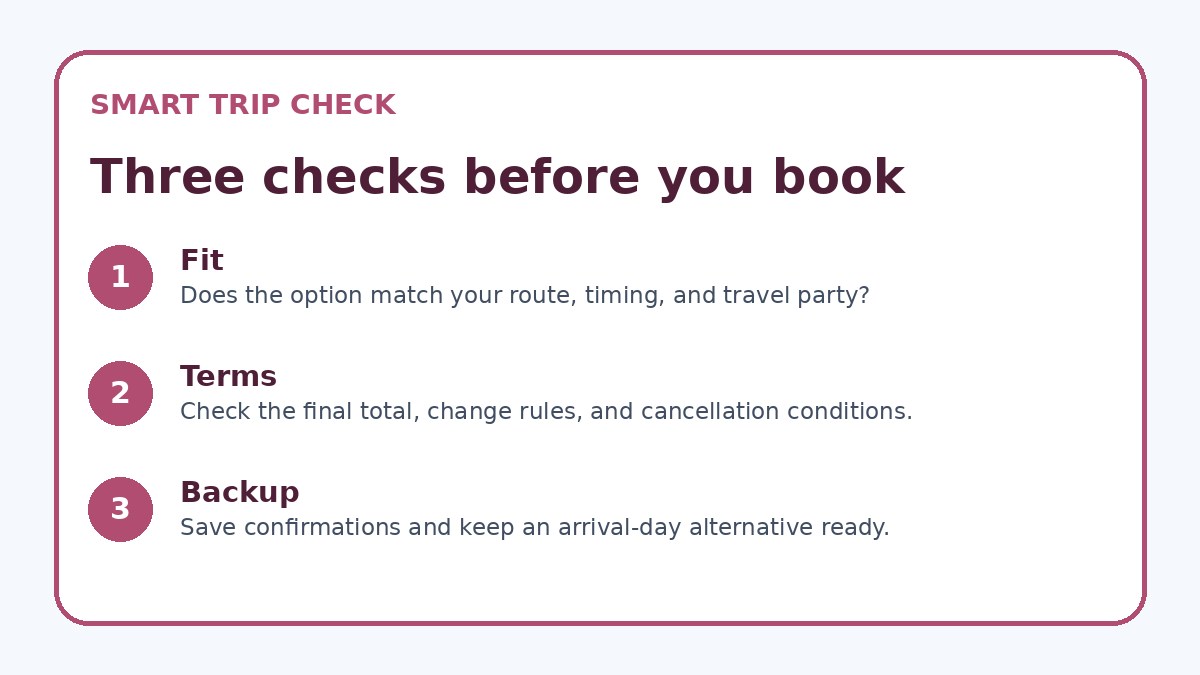
- Before purchasing, open the provider’s final checkout page and confirm fare rules, supplier name on invoice, and change/cancellation fees.
- Include transfer time and hotel location relative to your meetings when calculating total trip time and potential taxi or ride-hail costs.
- If using company travel policy, confirm the booking channel will produce the required receipts and approval records for expense reporting.
Traveler-specific value: what business travelers should prioritize
Business travelers have different priorities than leisure customers: time, predictable schedules, proximity to meeting locations, and company expense compliance are central. When evaluating Mexico City travel deals, prioritize flight times that avoid peak traffic windows for airport transfers, hotels near your meeting neighborhoods to reduce commute variability, and clear invoicing for expense reporting. If you belong to a loyalty program, factor how credits or status benefits may change the net value of a package versus separate bookings.
Also think about on-the-ground mobility: Mexico City is large, and travel time between neighborhoods can be unpredictable. A cheaper hotel outside the central business areas may increase taxi or ride-hail time and cost. Confirm whether a package’s included transfer is private or shared and whether it aligns with your meeting schedule. When alerts signal a price drop, assess whether the tradeoff in location or schedule would increase overall time or out-of-pocket commuting costs for the business day.
Final terms to verify on the booking page
When an alert prompts you to book, do not rely on summary pages: open the provider’s final booking or checkout page and verify the exact fare rules, cancellation and change fees, refund timelines, and supplier names that will appear on your invoice. Check whether the fare is agent-issued or directly from the airline or hotel; corporate accounting teams often require supplier-specific invoices. Confirm baggage allowances, seat selection policies, and whether hotel rooms are pre-paid or pay-at-property, because these details affect expense reporting and cash flow.
Also verify whether connecting flights are protected in the case of delays and whether the package uses separate tickets that could leave you exposed to missed connections. If a package includes third-party services—ground transfers or experiences—read the provider cancellation rules and contact details. Finally, ensure traveler names match your passport exactly and that corporate traveler information (frequent flyer numbers, company billing details) can be entered before purchase to secure benefits and proper expense documentation.
Travel Deals & Booking Strategy questions travelers ask
How can I use price alerts without accidentally booking a nonrefundable fare?
Configure alerts to include fare class or ticket attributes when possible—many alert tools let you filter by refundable or economy-flex fares. If the alert source doesn’t expose fare rules, treat the alert as a prompt to open the provider’s checkout page and read the fare conditions before buying. Set an internal rule that you’ll only act on alerts that meet your pre-set refundability or change criteria, and use calendar or task reminders so you don’t rush into a purchase under time pressure.
Are bundled packages ever better for business trips to Mexico City?
Yes—bundles can simplify logistics and consolidate invoices, which helps with expense reporting. They can also include useful services like airport transfers or checked baggage that you would otherwise buy separately. The key is to confirm those inclusions actually match your itinerary and that the combined fare’s change/cancellation rules suit business travel unpredictability. Always compare the bundle to an equivalent separate booking that matches dates, traveler count, and flexibility to see which is truly more practical and cost-effective.
What should I verify on the provider’s booking page before finalizing a deal found through an alert?
On the checkout page confirm the exact fare rules (refunds, change fees, and timelines), who issues the ticket or room invoice, baggage allowance, seat selection options, and whether transfers are private or shared. Check the supplier name that will appear on your invoice for corporate reporting, and ensure traveler names match passports. If connections are involved, verify protection for missed connections or whether separate tickets are used; these specifics determine real-world risk beyond headline price.
Final decision note
Price alerts are a powerful tool for business travelers to Mexico City when used with discipline. Treat each alert as a signal to run a short checklist rather than a trigger to buy. Compare like-for-like—same dates, passenger count, room types, and fare rules—before choosing a bundle or separate bookings. Prioritize flexibility and supplier documentation if your company requires specific invoices or approval records. Use alerts to shorten research time, but always verify final terms on the provider’s checkout page; you can also cross-check availability on Trip.com as one reference. With a clear decision rule and careful comparison, you can capture good value without sacrificing schedule control or expense compliance.
Continue planning
Check current options and final conditions
Use the provider page to confirm live availability, the final total, cancellation terms, and every condition that matters to your trip.
This evergreen planning guide was created with AI-assisted drafting and a structured quality review. It does not display live prices, schedules, availability, visa guidance, or provider rankings. Verify current details before booking. Some links are affiliate links; we may earn a commission at no additional cost to you.