If you need to travel to Macau for business, price alerts can be a useful tool without turning every notification into an impulse booking. The practical first step is to treat an alert as data, not a deadline: check whether the fare or package matches your exact dates, traveler count, and required flexibility before clicking purchase. For business trips this means confirming meeting times, possible schedule changes, and whether your company’s travel policy accepts package inclusions like transfers or breakfast credits. Use alerts to monitor trends and set candidate bookings, but pause to compare bundles against separate flight and hotel bookings so you only commit when the overall combination actually suits your itinerary and approval process.
Test package value fairly
| Booking approach | Best for | Tradeoff to check |
|---|---|---|
| Single supplier package (flight+hotel) | Travelers wanting a one-stop booking and standard inclusions with minimal admin. | May be less flexible and harder to amend component parts; verify change and refund rules carefully. |
| Separate flight and hotel bookings | Travelers who need maximum flexibility and control over schedules and fare classes. | Requires more time to compare and manage, and you may miss bundled convenience items. |
| Flight through corporate travel tool + independent hotel | Employees constrained by corporate suppliers but who want to customize accommodations. | Can complicate expense reporting and may forfeit package savings on transfers or extras. |
| Package with third-party add-ons (transfers, tours) | Trip organizers who want door-to-door logistics handled for a group. | Third-party elements often have separate refund rules and may not meet corporate billing requirements. |
Check current package and separate options
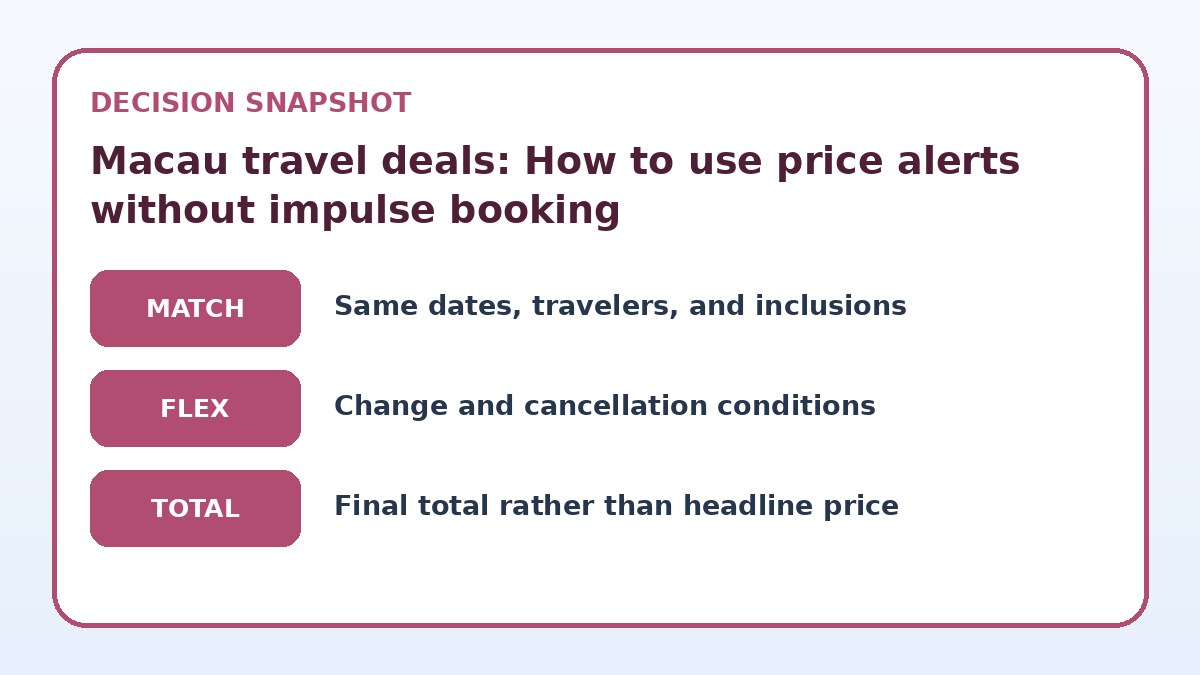
Use identical dates, travelers, room needs, baggage, and flexibility so the comparison stays meaningful.
What to compare before judging a package useful
Start by lining up the core variables: exact travel dates and times, number of travelers, class of service, and hotel room type. For business travel, small differences like an earlier flight or a refundable fare matter. When an alert shows a bundle, open the detailed breakdown immediately. Verify that the bundle’s dates and times match your meeting schedule and that the flight arrival and departure windows allow for commute and contingencies.
Next compare inclusions and exclusions side by side with separate bookings. Does the package include airport transfers, breakfast, Wi‑Fi, or late checkout? If the inclusion would otherwise be purchased separately, estimate its cost and convenience value. Also check booking and change policies: will the package allow amendments if your return date changes? These checks let you evaluate whether the bundle offers practical savings or simply bundles unnecessary elements that add rigidity.
Inclusions and flexibility: tradeoffs that matter for business
Inclusions like private transfers or a business-center friendly room can save time, which matters more than a small price difference on short business trips. However, inclusions often come with strings: packages can restrict changes or require the whole bundle be adjusted rather than just the flight. For meetings that may shift by a day or two, prioritize refundable fares, flexible ticket rules, or hotels with free cancellation up to a late date.
To measure flexibility, read the booking terms on the provider’s final page before buying. Verify how changes are handled, who charges change or cancellation fees, and whether refunds are processed to your card or as travel credit. When in doubt, calculate the worst-case cost of needing to change or cancel the trip under each option: a slightly higher, flexible fare may be a better value for business travelers who cannot risk rigidity.
Look past the headline total
Compare inclusions and change conditions before deciding whether a package is genuinely useful for this trip.
Deal comparison checklist
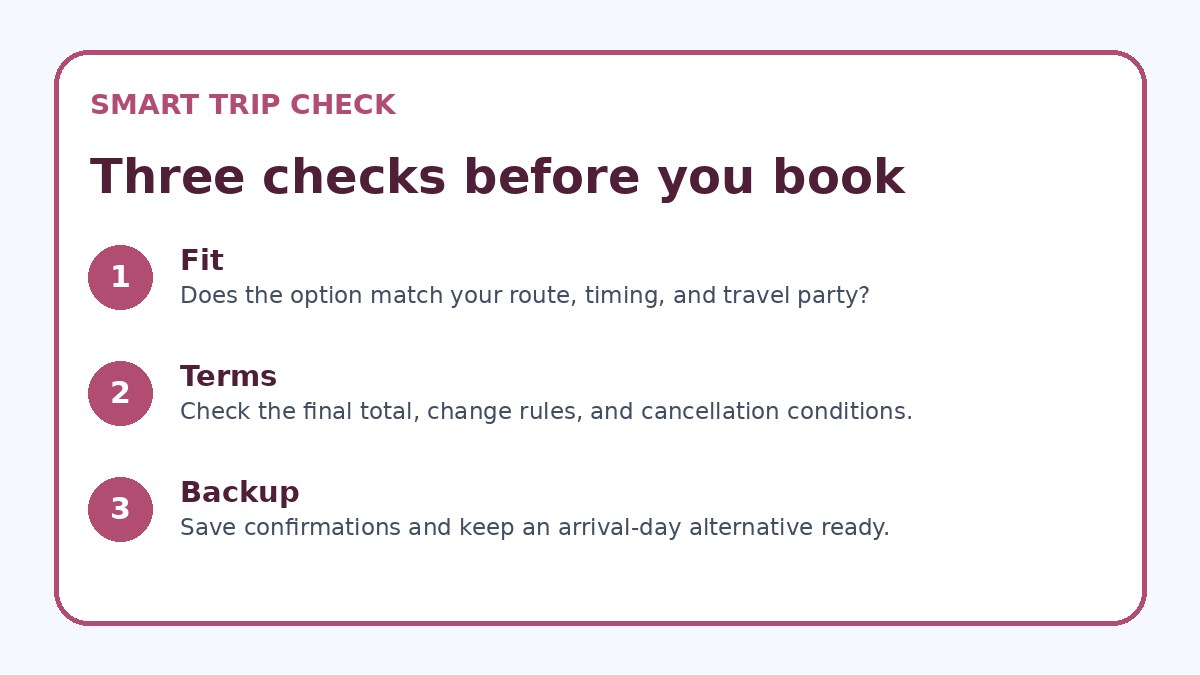
- Confirm alerted fare and package dates match your exact meeting schedule and include correct passenger details.
- Open the supplier’s booking page and read the full change and cancellation policies for each component.
- Estimate the monetary value of included conveniences (transfers, breakfast) versus their cost if bought separately.
- Check corporate travel policy for approved suppliers, fare classes, and invoicing requirements before committing.
- Set a personal approval step—email your manager or travel approver—before booking any alert-triggered deal.
- Record the booking terms and supplier contact points in your trip notes in case of schedule changes or disputes.
Traveler-specific value: what business travelers should quantify
Quantify time savings and convenience in money or business terms. If a package includes a morning transfer that avoids peak-hour traffic, estimate the extra productive hours you unlock and whether your employer values that time. Similarly, consider whether included meals or meeting-friendly hotel amenities reduce local logistics and taxi rides. For multi-person trips, packages that standardize arrangements can simplify expense reporting and approvals.
Also factor in corporate policy: some companies require bookings through preferred suppliers or require certain fare classes for reimbursement. Before acting on an alert, confirm that the bundle’s suppliers and fare rules comply with your organization’s travel policy. If the package includes third-party components, verify how each supplier documents charges for expense submission and whether the invoice will be acceptable to your finance team.
Final terms to verify on the provider’s booking page
Never finalize a booking based on an alert summary alone. Open the provider’s booking or confirmation page and confirm these essentials: exact flight times and connection details, cancellation and change fees for each component, what is refundable vs. nonrefundable, and whether the price shown includes taxes and service fees. If the bundle lists add-ons like transfer services or breakfast, check who operates those services and what proof you’ll receive for expense reimbursement.
Also check how the provider handles disputes or schedule changes caused by airlines or hotels. If an element is nonrefundable but the flight is delayed or canceled, understand who rebooks and who pays. When using price alerts to set booking expectations, make note of any time-limited promotions or voucher conditions on the final page because those conditions—not the alert—govern the transaction. Trip.com can be one place to compare live availability and terms, but always verify directly with the supplier when possible.
Travel Deals & Booking Strategy questions travelers ask
How should I use price alerts without making impulse bookings for a Macau business trip?
Treat alerts as signals, not automatic prompts to buy. When an alert notifies you, first confirm the travel dates, number of travelers, and class of service. Then compare the alert’s package against separate flight and hotel options for the same dates and traveler details. Check refundability and change fees because business schedules shift. Finally, require an approval step—either your own checklist or a manager sign-off—before converting an alert into a confirmed booking.
What specific booking terms should I verify on the supplier page for packages to Macau?
Verify exact flight times and connection details, the hotel room type, and which inclusions are prepaid versus vouchers. Read the change and cancellation policies for each element, and confirm whether taxes and service fees are included in the posted price. Check who issues receipts or invoices suitable for corporate expenses. If transfers or add-ons are included, confirm the operator, pickup conditions, and any time windows that could affect meeting schedules.
If my company prefers bookings through a corporate tool, can I still use alerts to find deals?
Yes—use alerts to gather market context and candidate itineraries, but route the final booking through your corporate tool if required. Alerts help you identify time windows and price trends; then replicate the same dates, traveler details, and fare classes in the corporate system to get an approved booking. Confirm the corporate supplier can match the same cancellation flexibility and inclusions, and document the comparison in case finance requests justification for deviating from the preferred booking path.
Final decision note
Price alerts are a useful monitoring tool for Macau travel deals, but for business travelers they must be paired with disciplined checks. Always compare alerts to identical alternative bookings—same dates, same passengers, same inclusions—before judging a package’s value. Prioritize flexibility and corporate compliance over the lowest headline price: refundable fares and clear invoicing often save time and reduce risk. Use alerts to identify opportunities, then verify terms on the supplier’s booking page and require an approval step before purchase. That approach keeps you responsive to good deals without exposing your trip or employer to avoidable complications.
Continue planning
Check current options and final conditions
Use the provider page to confirm live availability, the final total, cancellation terms, and every condition that matters to your trip.
This evergreen planning guide was created with AI-assisted drafting and a structured quality review. It does not display live prices, schedules, availability, visa guidance, or provider rankings. Verify current details before booking. Some links are affiliate links; we may earn a commission at no additional cost to you.