Decide your stay area first: that single choice will determine how much time and energy you waste getting around versus how much comfort you need in the room. For solo travelers in Manila, prioritize a neighborhood that keeps your daily walk, transit or ride-hailing routes short and predictable, then pick a room that supports rest, secure storage, and an easy evening routine. If your days are museum- and mall-focused, stay closer to those clusters; if you plan late-night dining or socializing, prioritize safer, busier districts with more late services. This article gives a clear shortlist method—neighborhood fit, daily-route friction, room and party needs, and the final booking checklist—so you can pick the right Manila hotels with confidence and avoid wasting time reopening every listing.
Check live stays in the areas that fit
Use your dates and party size to compare current rooms after you narrow the neighborhood fit.
Neighborhood fit: match area vibe to your plans
Start by listing the core activities you expect to do every day—commuting for work or study, visiting specific museums, malls, nightlife, or meeting people. Then map those to Manila districts known for those activities: central business, shopping, cultural, or entertainment clusters. Solo travelers focused on daytime logistics will prefer compact commercial neighborhoods with consistent transport links; those who plan evening social time should prioritize busy, well-lit areas with reliable ride-hailing access. This step narrows hotels from a broad set to two or three neighborhoods that align with your rhythm.
Consider safety and comfort together: busier commercial districts often feel safer at night but can be noisier, while quieter residential pockets may be calmer but offer fewer late services. Also check where your likely onward transport will originate—whether you need easy access to the airport expressway, ferry terminals, or major bus nodes—and whether the neighborhood has a predictable supply of taxis and ride-hailing pickups. Shortlist areas where your essential daily destinations are within a manageable trip rather than chasing the perceived prestige of a neighborhood.
Choose an area-selection strategy
| Area approach | Best for | Tradeoff to check |
|---|---|---|
| Stay in the central business district (CBD) | Solo business travelers who value short commutes to offices and formal meeting venues. | Higher daytime activity and potential noise; rooms may be smaller for the neighborhood convenience. |
| Stay near major train or MRT stations | Travelers prioritizing predictable, low-friction transit around the city. | Can be crowded and noisy; evening options may be limited depending on nearby businesses. |
| Stay in a shopping/mall district | Solo travelers who want food variety, daytime attractions, and easy indoor walking options. | Distance from cultural sites or nightlife; malls can close earlier than street districts. |
| Stay in a quieter residential or boutique area | Travelers prioritizing rest, lower noise, and localized neighborhood character. | Fewer late-night services and potentially longer rides to major attractions or transit hubs. |
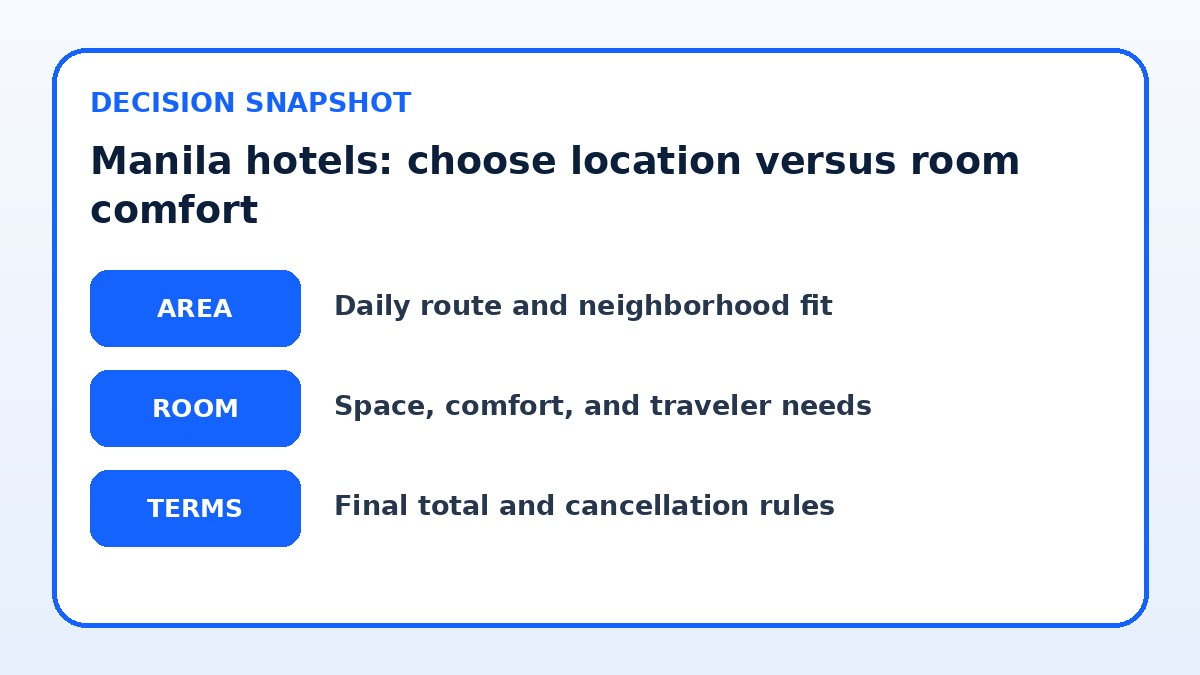
Daily-route friction: time, cost and ease of getting around
Estimate friction by building a simple representative day: add travel times between hotel, morning destination, midday plans, and evening activities using public transit, walking, and ride-hailing options. Manila’s traffic patterns vary by time of day; a short distance can take far longer during peak hours. For solo travelers, frequent short trips feel different from one long commute—more pickups increase time spent waiting and paying for rides. If you are on a tight schedule, prioritize proximity over a bigger room; if you have flexible hours, accepting longer transit in exchange for quieter accommodation can be reasonable.
Also weigh the predictability of your routes. Neighborhoods near major train stations or bus terminals offer more resilient options on days with heavy traffic or sudden changes. Check where pharmacies, 24-hour convenience stores, and late food options sit relative to a hotel—these reduce friction for solo travelers arriving late or working irregular hours. Finally, test a sample route on a mapping app for peak and off-peak times before shortlisting areas so you understand realistic travel time across the day.
Now compare like with like
Keep the same dates, guests, room needs, and cancellation preferences while you compare the final choices.
Room and party needs: what matters for a solo traveler’s stay
Think about the functions you need the room to perform. If rest is the priority, favor rooms with solid sound insulation, blackout curtains, and a comfortable mattress. If you plan to work, prioritize a dedicated desk, good lighting, reliable Wi-Fi, and accessible plugs. Solo travelers who socialize or meet contacts may prefer a hotel with a welcoming lobby or bar; if you seek low-key privacy, a business hotel or smaller boutique with controlled access can be better. Consider storage: a safe or lockable luggage option matters if you carry important documents or gear.
Single occupancy changes practical choices: a twin bed hotel rarely matters, but room size, bathroom layout, and noise control do. Also verify bedding arrangements, water pressure, and if the room has a kettle or small fridge—small conveniences minimize unnecessary errands. If you plan multi-day laundry or ordering food, check whether the property offers in-room or nearby laundry services and reliable delivery coverage. For peace of mind, prefer properties that explicitly describe their security measures and reception hours on the booking page.
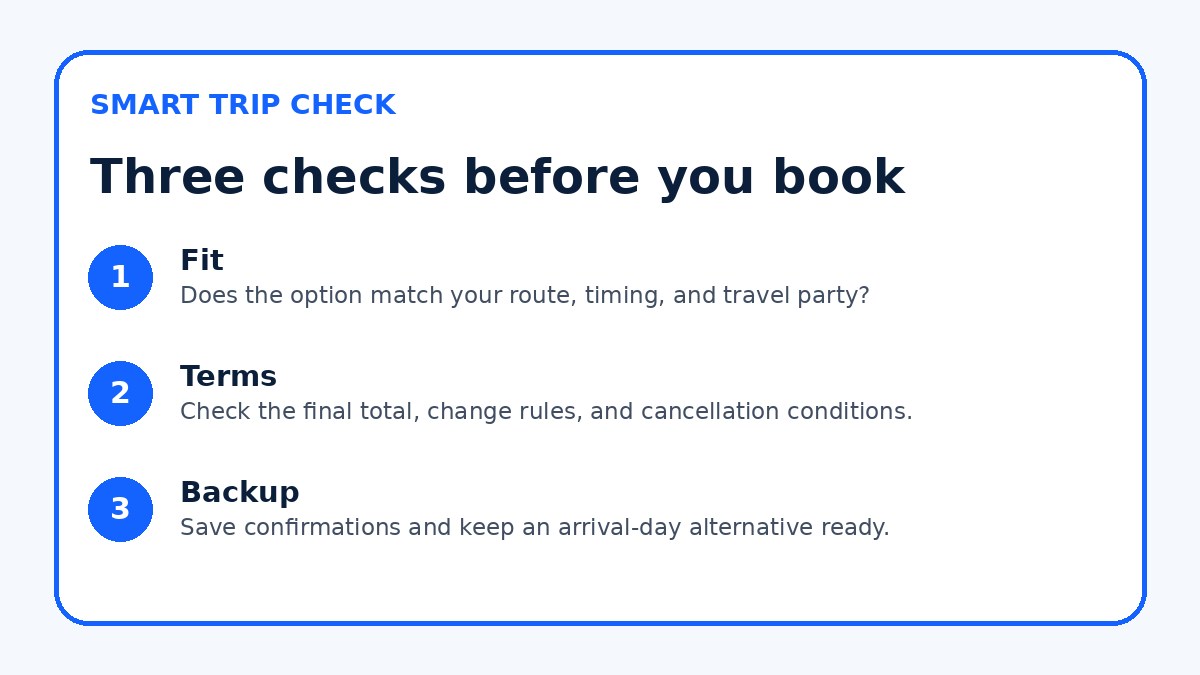
Hotel booking check before payment
- Plot your representative day and measure realistic transit times for peak and off-peak hours before choosing a neighborhood.
- Confirm the exact room type, bedding configuration, and whether the room photos match the current listing.
- Verify cancellation policy, extra fees, and identity requirements on the final booking page of the provider.
- Check how the hotel manages late check-in, security deposits, and luggage storage for early arrival or late departure.
- Confirm Wi-Fi reliability and workspace details if you need to work; ask the hotel for speed or connectivity guarantees if necessary.
- Compare three shortlisted properties across location, room comfort, and booking terms before making a final reservation.
Final booking terms: what to verify before you commit
Before you click reserve, confirm four essentials on the provider’s final booking page: the cancellation policy and any financial penalties; how identity and payment are handled at check-in; whether taxes or service fees are added at checkout; and the exact room amenities promised (Wi-Fi speed, bed type, and access to facilities). Policies and extra charges change frequently—always read the latest booking terms rather than relying on summaries or third-party descriptions. If you’re comparing multiple listings, note differences in check-in hours and whether late arrival is supported without extra cost.
Also verify arrival logistics: how the hotel handles late-night pickups, if a photo of the property on the listing matches current property images, and whether the property requires a security deposit or copies of identification on arrival. If you need special accessibility features or a specific work setup, contact the property directly and get written confirmation. For live availability and to cross-check listed terms, you can compare options on Trip.com but treat the property’s own booking page as the source of truth.
Hotel Guide questions travelers ask
Which Manila neighborhoods are safest and most convenient for a solo traveler at night?
Safer neighborhoods for solo travelers at night are typically those with higher foot traffic, good lighting, and visible commercial activity after dark. Look for areas with multiple dining options, hotels, and transport access rather than isolated residential streets. Check recent traveler reports and map pickup points for ride-hailing options at night. Verify on the property page whether the hotel has 24-hour reception and secure entry systems. Local neighborhood feel can vary block by block, so read recent guest comments focused on safety and street lighting before booking.
Should I prioritize a bigger room or a better location for a short solo stay in Manila?
For short stays, prioritize location if your days include multiple site visits or early starts—cutting commute time directly increases usable time. If your schedule is light and you plan to rest or work in your room, then upsize the room for comfort and workspace. Consider a middle option: a compact room in a convenient area with hotel common spaces for work or relaxation. Always verify room noise descriptions and ask the property about sound insulation if sleep quality is a concern.
How can I verify hotel-listed amenities like Wi-Fi, desk space, or secured storage before arrival?
Direct verification is best: contact the property by email or phone and request confirmation of the specific amenity—mention desired Wi-Fi use case, desk dimensions, and storage requirements. Ask for screenshots or written confirmation if you need reliable remote work connectivity. If the booking platform lists amenity details, compare those against the hotel’s official booking page and recent guest reviews that mention the same features. For live availability checks, you may compare listings on Trip.com, but treat the hotel’s direct page and written replies as authoritative.
Final decision note
Solo travelers should choose the Manila neighborhood that reduces daily friction first, then pick a room that fits how they will spend time inside it. Neighborhood choice shapes how much of your day is consumed by transit, how safe and convenient evenings will feel, and which services are easy to reach on short notice. Once you have an area narrowed down, prioritize room features that match rest and work needs, and verify booking terms, identity requirements, and any fees on the provider’s final booking page. Shortlist three properties across the chosen neighborhood, compare their room photos and policies side by side, and contact the property with any specifics you need confirmed before committing.
Continue planning
Check current options and final conditions
Use the provider page to confirm live availability, the final total, cancellation terms, and every condition that matters to your trip.
This evergreen planning guide was created with AI-assisted drafting and a structured quality review. It does not display live prices, schedules, availability, visa guidance, or provider rankings. Verify current details before booking. Some links are affiliate links; we may earn a commission at no additional cost to you.