If you’re finishing a trip in Auckland and have more bags than usual, your first-hour-after-landing decision is simple: pick the transfer style that fits how much luggage you have, how many people are traveling, and how firm your flight schedule is. For many travelers the fastest path is to decide before packing the last item: shuttle, taxi, ride-share, or private transfer. Each handles bulky bags and timing differently—some require more walking, others manage curbside loading for you. This guide focuses on the return trip to Auckland Airport, laying out how luggage and party size change the choice, what to do when arrivals are delayed or disrupted, where to meet your driver or group, and how to match the drop-off process at your accommodation with the vehicle you’ll take. Read this with your flight and lodging details open so you can note specifics and make a booking that fits your real constraints.
Check options for your arrival details
Use your flight, luggage, party size, and accommodation address to compare current choices.
Luggage and party size: choose the right vehicle
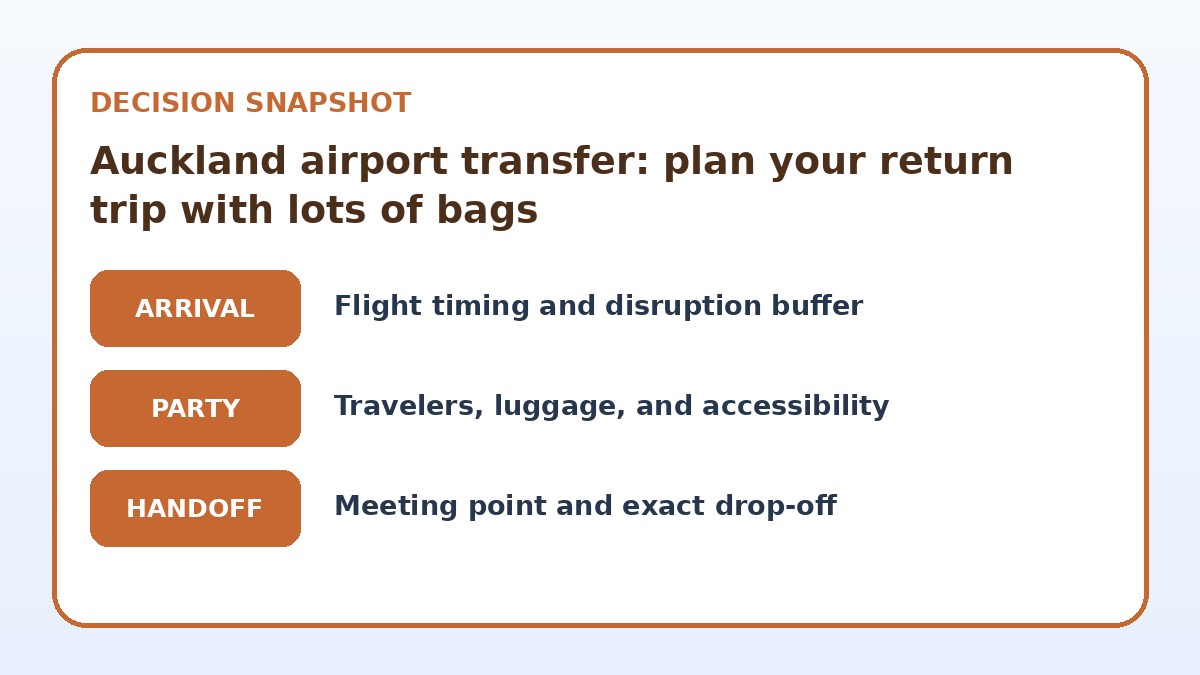
Start by making an honest inventory: count checked suitcases, carry-ons, duffels, and any oversized items like surfboards or large strollers. For solo travelers with one or two standard suitcases, taxis and regular ride-shares are often convenient; they usually accept a few bags if space permits. For a family or small group with four-plus suitcases, a booked private transfer or larger van is safer—you get guaranteed cargo space and coordinated loading. Consider whether you or someone in your party needs assistance lifting or stowing heavy bags; some services offer porter help, but you must confirm that on booking.
Also account for irregular luggage: musical instruments, sports gear, and boxes need more cargo volume than a typical car boot. Ask the provider in advance whether the vehicle has roof racks, trailer options, or long-wheelbase vans. If you plan to combine people and luggage—two adults and three large suitcases—you’ll often be better off booking a vehicle class above the default option. Keep luggage dimensions and total piece count visible when comparing quotes so you receive accurate vehicle suggestions rather than surprises at pickup.
Arrival details to have ready
- Count all bags and measure or note oversized items; include them when requesting vehicle recommendations on the booking page.
- Confirm the provider’s pickup location wording and add a screenshot or written note to your phone with terminal exit details.
- Save the transfer company’s contact number and check their policy for delays and flight monitoring on the final booking page.
- If stairs or narrow access exist at your accommodation, tell the operator and request a smaller or larger vehicle accordingly.
- Keep your airline baggage claim number and flight status link handy to share with the transfer when pickup timing changes.
- Compare at least two transfer options (taxi/ride-share and private or shuttle) and choose the one that balances luggage capacity and flexibility.
Late or disrupted arrivals: build flexibility into your plan
Flights are delayed, bags sometimes miss the same flight, and that changes everything for a return transfer. If you expect a tight connection or the possibility of delay, prefer providers who clearly state their policy for flight-monitoring and pickup flexibility on the final booking page. Some private transfers wait through short delays; others require rebooking or extra fees. When booking, capture the supplier’s contact method (phone and email) and any instructions for late pickups so you can act quickly if your arrival time changes.
If your bags might arrive on a later carousel or require customs intervention, plan extra time between landing and your scheduled pickup and choose a buffer-friendly option. Shared shuttles typically run on fixed schedules and may not wait for delayed luggage; a taxi or on-demand ride can be summoned after you collect bags, but this risks higher costs or limited vehicle availability during busy periods. Keep the airline baggage claim number and the flight’s updated status handy to share with the transfer provider if needed.
Match the transfer to your arrival
| Arrival approach | Best for | Detail to verify |
|---|---|---|
| Taxi or ride-share | Small parties with one or two standard suitcases who need on-demand pickup after baggage claim. | Limited guaranteed cargo space and potential difficulty fitting oversized or many bags. |
| Prebooked private transfer | Groups or travelers with multiple large bags who want confirmed vehicle size and curbside assistance. | Less flexible on much-later delays unless the provider explicitly offers flight monitoring and flexible pickup terms. |
| Shared airport shuttle | Solo travelers with modest luggage on a budget and fixed schedule who can handle short walks to the shuttle point. | Schedules and stops add time; shuttles may have rules limiting bulky or odd-shaped items. |
| Self-drive rental return | Travelers who prefer control over timing and can lift their own luggage into a larger hire vehicle. | You must factor in rental return procedures, fuel, and the effort of handling all bags and paperwork before the flight. |
Make the meeting plan clear
Check the final pickup instructions, waiting conditions, and exact drop-off coverage.
Meeting-point clarity: cut stress at pickup
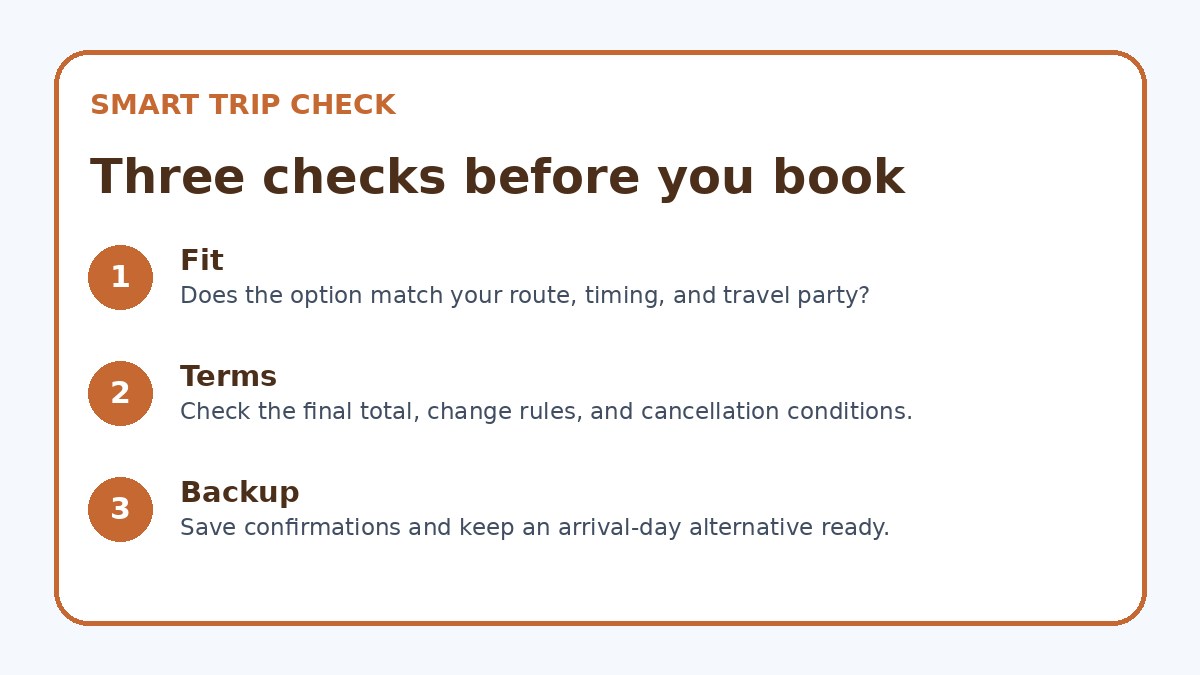
Auckland Airport separates domestic and international terminals and uses dedicated pickup zones; meeting-point ambiguity costs time. Before you book, check the provider’s stated pickup location and compare it to the terminal and exit you’ll use. Are you coming from the international arrivals hall with customs clearance, or from domestic arrivals where curb access differs? Confirm whether the company meets passengers at the curb, a specific door number, or a designated rideshare area—on the provider’s booking page verify the exact wording and any photos or maps they provide.
Also arrange how you will connect with the driver in case of confusion: exchange local phone numbers, set an agreed landmark (a café, a sign, or a numbered exit), and decide whether you’ll call or text on landing. If traveling in a group, assign one person to be communicator so instructions stay consistent. For app-based pickups, ensure your device has roaming or local data so you can share live location pins; for prebooked cars, confirm the driver’s vehicle make, color, and license plate if provided by the service.
Destination drop-off fit: parking, unloading and stairs
Think beyond getting to the airport: how easy will it be to unload at your accommodation? Hotels often have dedicated short-term drop-off areas; holiday homes or apartments sometimes have narrow driveways, limited parking, or stairs that make unloading heavy bags difficult. When you book a vehicle, tell the operator about restricted access or tight turns so they can send an appropriate-sized car or advise on a nearby drop-off point where you can transfer luggage on foot if necessary.
If your lodgings require navigating stairs, long walks, or elevators that may be too small for suitcases, ask whether the driver will assist with carrying and whether porters are available at your check-out. In some cases, it’s worth arranging a slightly larger vehicle that allows a closer curbside drop even if the drive is more expensive—this tradeoff reduces the physical strain and the time you need at arrival. Verify the driver’s drop-off instructions on their booking page and share property access or check-in notes when you confirm the reservation.
Airport Transfer & Local Mobility questions travelers ask
How much extra time should I allow between landing and a prebooked pickup at Auckland Airport?
Allow at least the time you expect for passport control and baggage claim plus a buffer for unexpected delays; for international arrivals this is typically longer than domestic. Check the transfer provider’s stated pickup window and whether they monitor flights; if they do, they may adjust automatically to minor delays—confirm this on the provider’s final booking page. If your bags are oversized or require customs inspection, add more time and notify the supplier when you book so they can plan a later window.
What if my luggage is delivered on a different flight or arrives later than I do?
If luggage delivery timing is uncertain, choose a flexible transfer option such as an on-demand taxi or a private transfer that allows wait-time options; verify wait-time rules and charges on the booking page. If your bags are arriving separately, coordinate with the airline and the transfer provider—some companies can reschedule pickup or wait for a confirmed later arrival if you provide timely updates. Keep airline tracking references to share and be prepared to arrange a new vehicle if your original pickup falls outside the provider’s tolerance for delayed luggage.
How do I handle pickup logistics if I arrive at Auckland’s domestic and my ride is scheduled from the international terminal?
First confirm which terminal your flight uses and whether your transfer provider will meet you at that terminal; some providers list separate meeting points for domestic and international arrivals on the booking page. If your transfer was arranged for a different terminal, contact the supplier immediately to change the pickup point—do this before you land if possible. If a change isn’t possible, you might need to take a short local transfer between terminals or book an on-demand ride; check the provider’s instructions and terminal connection options on their final confirmation.
Final decision note
Planning the return trip to Auckland Airport with extra luggage is mostly about matching vehicle capacity, pickup flexibility, and drop-off practicality to your real constraints. Start by inventorying bags and noting any oversized items, then decide whether you need guaranteed cargo space or on-demand flexibility. Verify meeting points, flight-monitoring and delay policies, and whether drivers will assist with curbside loading—always check those specifics on the provider’s final booking page before committing. With your flight and accommodation details open, compare at least two options and pick the one that reduces physical effort and time pressure so your final hours in Auckland feel smooth rather than stressful.
Continue planning
Check current options and final conditions
Use the provider page to confirm live availability, the final total, cancellation terms, and every condition that matters to your trip.
This evergreen planning guide was created with AI-assisted drafting and a structured quality review. It does not display live prices, schedules, availability, visa guidance, or provider rankings. Verify current details before booking. Some links are affiliate links; we may earn a commission at no additional cost to you.