If your family is weighing a Toronto car rental, start with one question: does driving add time, convenience or access that you can’t get with transit, walking and occasional rides? For many family trips centered on downtown attractions, the answer is often no — parking, traffic and narrow city streets remove some of the convenience a car brings. But if your itinerary includes day trips to Niagara, Toronto Islands by ferry, or multiple suburban stops outside the downtown core, a car can save both time and transit transfers. This guide gives the practical answer up front, then walks through the tradeoffs — route value, insurance wording to check, pickup and return friction, and a clear non-driving fallback. Use these criteria to decide whether to book a vehicle, or plan a comfortable car-free alternative for a family-friendly stay in Toronto.
Route value: when driving genuinely improves a family itinerary
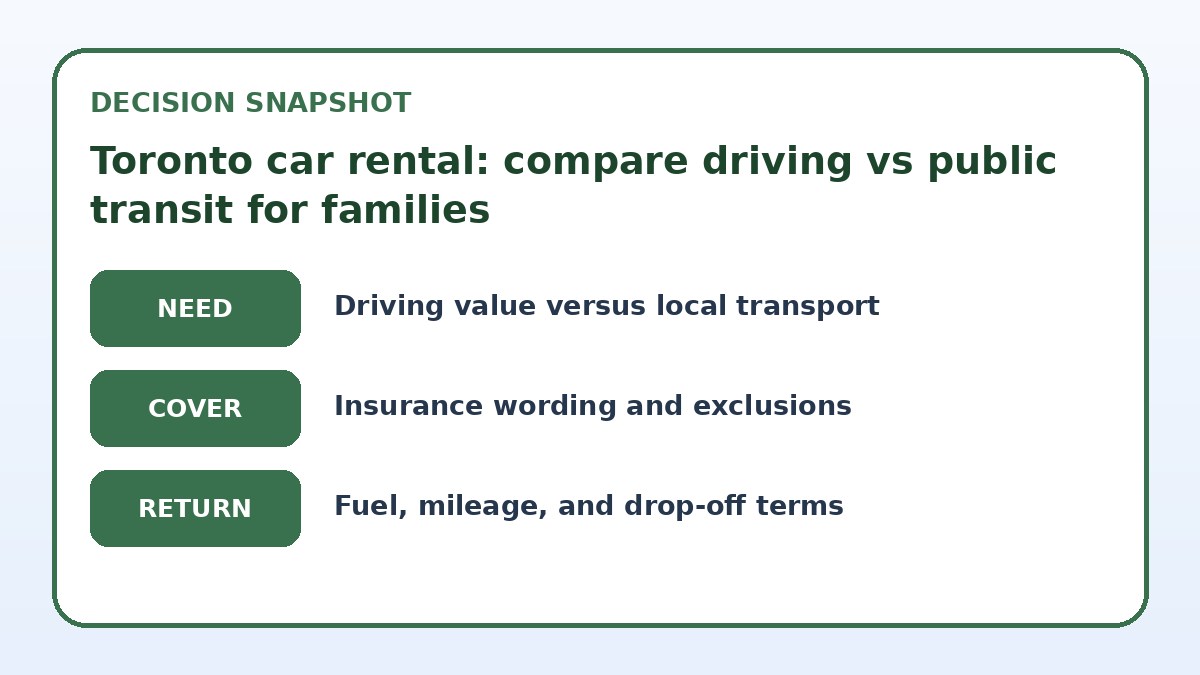
Assess each day of your itinerary by mapping door-to-door time and how many transfers children will tolerate. A car adds clear value when your family plans multiple destinations outside the city core—think parks and conservation areas, wineries or long-distance drives where transit would require several changes and long waits. It also helps when you have bulky equipment such as strollers, car seats, coolers or sports gear that would be awkward to carry across stations and platforms.
By contrast, if your schedule sticks to downtown museums, the harbourfront, the CN Tower area, and neighborhoods connected by the TTC and GO Transit, a car becomes more of a liability. Factor in parking availability and cost at each stop; a low-cost rental can still be expensive once daily parking fees and time spent finding spaces are counted. Use this route-value lens to test whether driving shortens or complicates your family days.
Decide whether driving earns its place
| Mobility strategy | Best for | Cost or friction to check |
|---|---|---|
| Full rental car for the whole trip | Families with multiple suburban day-trips, lots of luggage, or erratic schedules | Adds parking costs, traffic stress and pickup/return friction that can reduce downtown convenience |
| Transit-first with occasional ride-hail or taxi | Downtown-focused itineraries with predictable schedules and light luggage | Some trips require transfers and can be slower than driving for multi-stop suburban routes |
| Short-term car hire or hourly car-sharing for select days | Families who need a car only for one or two specific day-trips | Requires planning around availability and may lack guaranteed child-seat options |
| Private transfer for airport or long single trips plus transit | Families wanting door-to-door convenience for arrival/departure and using transit locally | Higher cost for transfers but reduces parking and drop-off hassles; not flexible for multi-stop days |
Check live rental choices only after the route test
Use the exact driver, dates, pickup point, and return plan to compare current conditions.
Insurance wording you must verify before you book
Insurance language differs between companies and booking channels; read the rental contract’s insurance section carefully. Verify whether the Collision Damage Waiver (CDW) or Loss Damage Waiver (LDW) is included or optional, the deductible amount you would be responsible for, and whether third-party liability meets Ontario legal minimums or your home-country expectations. If you plan to add a second driver, confirm whether that person is automatically covered or needs to be listed and charged.
Also check exclusions and requirements for child safety seats, cross-border travel (if you plan to drive into the U.S.), and roadside assistance. Don’t rely on promotional summaries — on the final booking page confirm the exact wording about deductibles, what types of damage are excluded (windshield, tires, undercarriage), and the process for claims. If you use your own credit card or personal auto policy to cover rentals, confirm with your insurer how it applies in Ontario and whether documentation must be shown at pickup.
Compare the full rental conditions
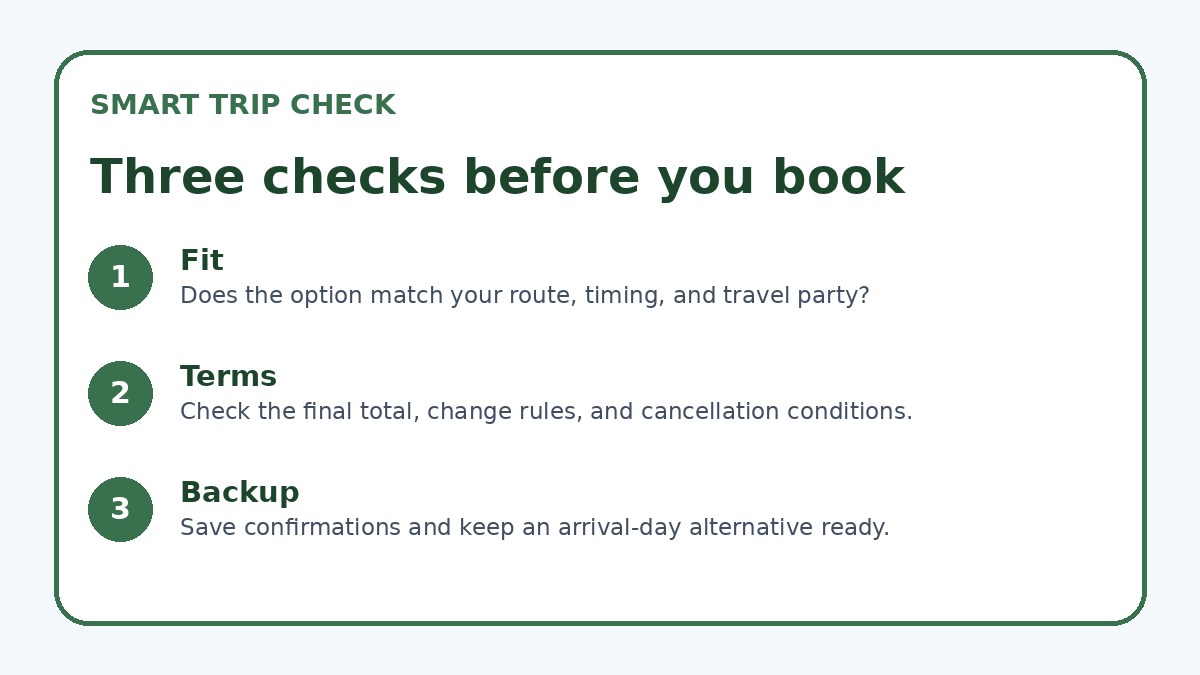
Confirm insurance wording, exclusions, deposit, fuel, mileage, and return terms on the final page.
Pickup and return friction: practical family considerations
Pickup logistics matter with kids. Airport counters can have long lines, and shuttle transfers between terminals and offsite lots add time to your arrival. Consider picking up at a downtown location to reduce transfers, but weigh whether the downtown outlet’s inventory and hours match your schedule. Check whether the company offers family-friendly extras—preinstalled car seats, stroller racks, and step-in vehicles for easier child loading—and whether those extras are guaranteed or subject to availability.
Returning a car with tired children can be stressful if after-hours drop-off instructions are unclear or airport return lanes are congested. Confirm the provider’s after-hours drop-off procedures, fuel policies (full-to-full is usually clearest), and whether charges are assessed immediately or billed later. On the final booking page verify pickup address, operating hours, required documents, and the exact drop-off instructions so you can time transfers and naps around the return smoothly.
Car rental terms to verify
- Map each day’s door-to-door time and transfers to see if a car saves total family travel time.
- Confirm insurance wording on the provider’s final booking page: CDW/LDW, deductible, and driver coverage.
- Check pickup and return hours, exact locations, after-hours drop-off instructions, and required documents.
- Estimate parking costs for each planned stop and factor them into the total rental budget.
- Decide child-seat needs and prebook seats or bring your own certified travel seats if allowed.
- If skipping a car, reserve accommodation near subway/streetcar lines and prebook timed museum or attraction slots.
A non-driving fallback: planning a comfortable car-free family trip
If you decide against a Toronto car rental, build a fallback plan that prioritizes convenience and minimizes transfers. Choose accommodation close to subway or streetcar lines, or near the Union Station hub if you’ll use regional GO trains. Pack a lightweight, easily foldable stroller and bring a forward-facing carrier for younger children to make last-mile walks and station transfers simpler. Identify nearby grocery or convenience stores to avoid unnecessary luggage trips.
Combine the TTC with targeted ride-hail trips for late nights, quick cross-neighborhood hops, or airport transfers when family fatigue is high. Reserve tickets and timed-entry passes for museums to avoid queues, and plan the longest outing for when kids are well-rested. If you want to compare availability and current conditions, Trip.com can be used as one place to check options; always verify final terms and provider policies on the company’s booking or rental contract page.
Car Rental & Road Trip questions travelers ask
Is driving in Toronto family-friendly for visitors unfamiliar with the city?
Driving in Toronto is manageable but comes with tradeoffs for families. The downtown core has heavy traffic, frequent one-way streets, and limited curbside parking; that can make short hops slower than walking or transit. If you’re comfortable with urban driving, a car helps for suburbs or regionwide day trips; if not, plan around transit and rides for a lower-stress stay. Always check parking rules at each accommodation and attraction, and verify local traffic restrictions on municipal or rental provider pages before you go.
Can I use my personal car insurance or credit card to cover a rental in Toronto?
Possibly, but coverage varies. Many personal auto policies and some credit cards offer rental coverage, but they differ in what they pay for and where they apply. Before declining a provider’s waiver, contact your insurer and credit card issuer to confirm coverage in Ontario, deductible amounts, and whether coverage applies to international rentals if you plan cross-border travel. Bring written confirmation or policy numbers to the rental counter and compare those terms with the rental agreement’s insurance wording on the final booking page.
How do I decide between picking up at the airport or in downtown Toronto?
Choose based on arrival timing, family energy levels, and parking/transfer tradeoffs. Airport pickup can be convenient if you want to leave immediately without dragging luggage through public transit, but airport counters and return lanes can be busier and may include shuttle transfers. Downtown pickup reduces shuttle time and might be closer to your accommodation, but check the outlet’s hours, inventory, and whether they allow one-way returns. Confirm exact pickup address, operating hours, and any shuttle or lot transfer instructions on the booking confirmation before scheduling.
Final decision note
For many families visiting Toronto, the right decision about a rental car comes down to routes and comfort. If your days are downtown-focused and you prefer fewer hassles, skip the car and lean on transit plus targeted rides to keep logistics simple. If you have several suburban day-trips, bulky equipment, or unpredictable schedules, a rental can deliver clear advantages despite parking and pickup friction. Whatever you choose, verify insurance wording, pickup/return procedures, child-seat availability, and parking expectations on the provider’s final booking page. That final check lets you book with confidence and shape a smoother family trip.
Continue planning
Check current options and final conditions
Use the provider page to confirm live availability, the final total, cancellation terms, and every condition that matters to your trip.
This evergreen planning guide was created with AI-assisted drafting and a structured quality review. It does not display live prices, schedules, availability, visa guidance, or provider rankings. Verify current details before booking. Some links are affiliate links; we may earn a commission at no additional cost to you.